Kim Narae, Yokobayashi Yohei
Nucleic Acid Chemistry and Engineering Unit, Okinawa Institute of Science and Technology Graduate University, Onna, Okinawa 904 0495, Japan.
Nucleic Acid Chemistry and Engineering Unit, Okinawa Institute of Science and Technology Graduate University, Onna, Okinawa 904 0495, Japan.
Mol Ther. 2025 Mar 5;33(3):1213-1225. doi: 10.1016/j.ymthe.2025.01.005. Epub 2025 Jan 10.
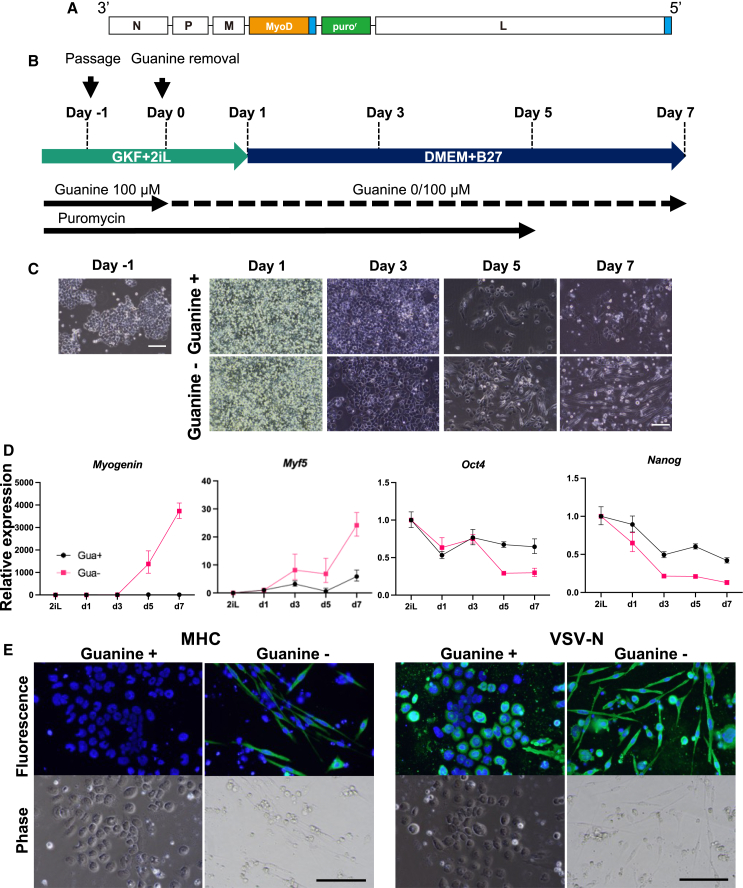
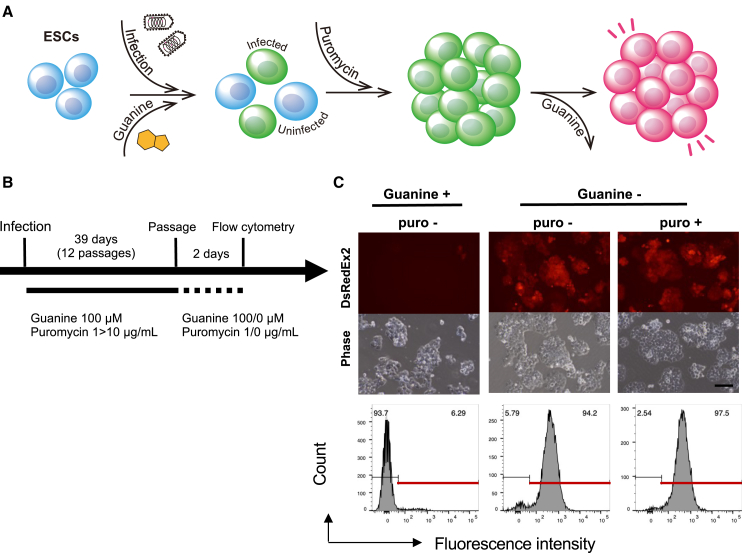
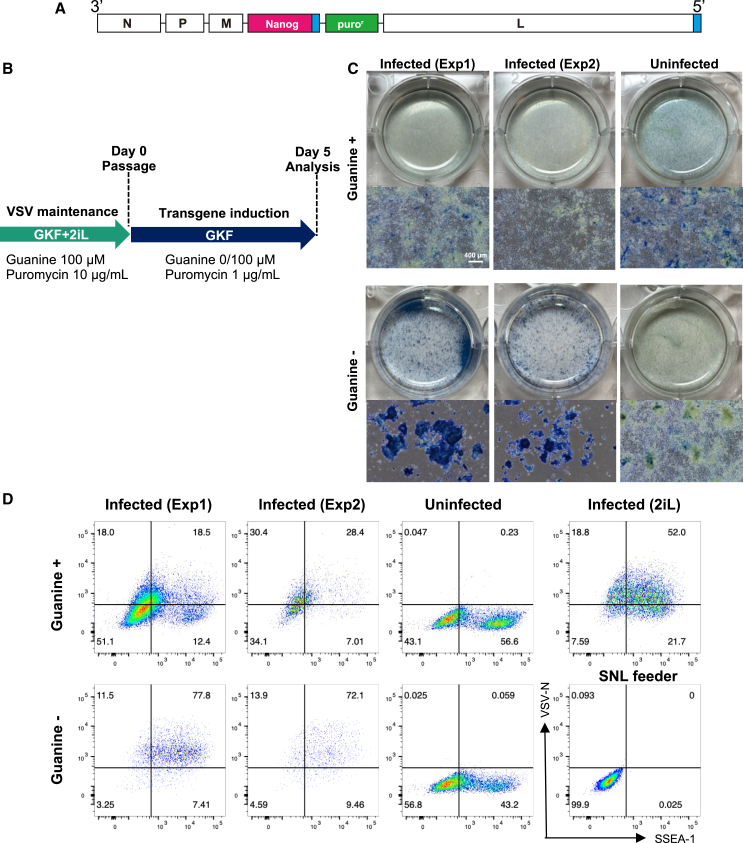
Transgene expression in stem cells is a powerful means of regulating cellular properties and differentiation into various cell types. However, existing vectors for transgene expression in stem cells suffer from limitations such as the need for genomic integration, the transient nature of gene expression, and the inability to temporally regulate transgene expression, which hinder biomedical and clinical applications. Here we report a new class of RNA virus-based vectors for scalable and integration-free transgene expression in mouse embryonic stem cells (mESCs). The vector is equipped with a small molecule-regulated riboswitch and a drug selection marker that allow temporal regulation of transgene expression and stable maintenance of the vector in proliferating stem cells. We demonstrated the utility of the vector by maintaining the pluripotency of mESCs in a differentiation induction medium by expressing Nanog and inducing myogenic differentiation by triggering Myod1 expression, without altering the mESC genome.
干细胞中的转基因表达是调节细胞特性以及分化为各种细胞类型的一种强大手段。然而,现有的用于干细胞转基因表达的载体存在一些局限性,例如需要基因组整合、基因表达的短暂性以及无法在时间上调节转基因表达,这些都阻碍了生物医学和临床应用。在此,我们报道了一类新型的基于RNA病毒的载体,用于在小鼠胚胎干细胞(mESCs)中进行可扩展且无整合的转基因表达。该载体配备了小分子调控的核糖开关和药物选择标记,可实现转基因表达的时间调控以及载体在增殖干细胞中的稳定维持。我们通过在分化诱导培养基中表达Nanog来维持mESCs的多能性,并通过触发Myod1表达来诱导成肌分化,证明了该载体的实用性,且未改变mESC基因组。