Phillips Cameron J, Gordon David L
Division of Pharmacy, SA Pharmacy, Flinders Medical Centre, Bedford Park.
School of Pharmacy and Medical Sciences, University of South Australia, Adelaide.
Integr Pharm Res Pract. 2015 Oct 21;4:145-152. doi: 10.2147/IPRP.S92850. eCollection 2015.
Vancomycin is the antibiotic of choice for the treatment of serious infections such as methicillin-resistant (MRSA). Inappropriate prescribing of vancomycin can lead to therapeutic failure, antibiotic resistance, and drug toxicity.
To examine the effectiveness of pharmacist-led implementation of a clinical practice guideline for vancomycin dosing and monitoring in a teaching hospital.
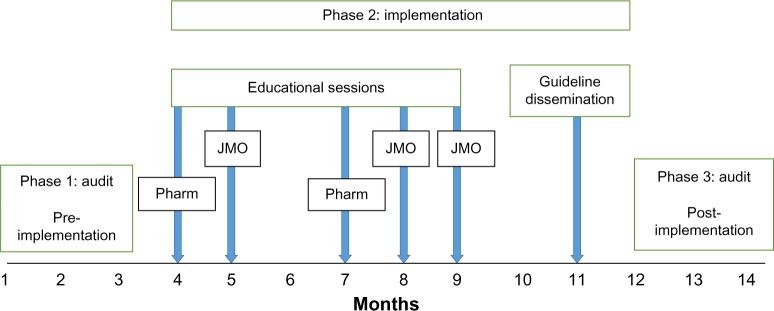
An observational pre-post study design was undertaken to evaluate the implementation of the vancomycin guideline. The implementation strategy principally involved education, clinical vignettes, and provision of pocket guidelines to accompany release of the guideline to the hospital Intranet. The target cohort for clinical behavioral change was junior medical officers, as they perform the majority of prescribing and monitoring of vancomycin in hospitals. Assessment measures were recorded for vancomycin prescribing, therapeutic drug monitoring, and patient outcomes.
Ninety-nine patients, 53 pre- and 46 post-implementation, were included in the study. Prescribing of a loading dose increased from 9% to 28% (=0.02), and guideline adherence to starting maintenance dosing increased from 53% to 63% (=0.32). Dose adjustment by doctors when blood concentrations were outside target increased from 53% to 71% (=0.12), and correct timing of initial concentration measurement increased from 43% to 57% (=0.23). Appropriately timed trough concentrations improved from 73% to 81% (=0.08). Pre-dose (trough) concentrations in target range rose from 33% to 44% (=0.10), while potentially toxic concentrations decreased from 32% to 21% (=0.05) post-implementation. Infection cure rates for patients increased from 85% to 96% (=0.11) after the guideline was implemented.
The implementation strategy employed in this study demonstrated potential effectiveness, and should prompt additional larger studies to optimize strategies that will translate into improved clinical practice using vancomycin.
万古霉素是治疗严重感染(如耐甲氧西林金黄色葡萄球菌感染)的首选抗生素。不恰当使用万古霉素会导致治疗失败、抗生素耐药性及药物毒性。
考察在一家教学医院中,由药剂师主导实施万古霉素给药及监测临床实践指南的效果。
采用观察性前后对照研究设计来评估万古霉素指南的实施情况。实施策略主要包括教育、临床案例以及在指南发布到医院内部网时提供袖珍指南。临床行为改变的目标人群是初级医务人员,因为他们在医院中承担了大部分万古霉素的处方开具和监测工作。记录万古霉素处方、治疗药物监测及患者预后的评估指标。
本研究纳入了99例患者,实施前53例,实施后46例。负荷剂量的处方开具率从9%提高到了28%(P = 0.02),开始维持剂量时对指南的依从性从53%提高到了63%(P = 0.32)。当血药浓度超出目标范围时,医生进行剂量调整的比例从53%提高到了71%(P = 0.12),首次浓度测量的正确时机从43%提高到了57%(P = 0.23)。适时谷浓度从73%提高到了81%(P = 0.08)。实施后,给药前(谷)浓度在目标范围内的比例从33%提高到了44%(P = 0.10),而潜在毒性浓度从32%降至21%(P = 0.05)。指南实施后,患者的感染治愈率从85%提高到了96%(P = 0.11)。
本研究采用的实施策略显示出了潜在效果,应促使开展更多更大规模的研究,以优化策略,从而在使用万古霉素时改善临床实践。