Centre de Coopération Internationale en Recherche Agronomique pour le Développement, UMR ASTRE "Animal, Santé, Territoire, Risques et Ecosystèmes,"Montpellier, France.
ASTRE, Université de Montpellier (I-MUSE), CIRAD, Institut National de la Recherche Agronomique, Montpellier, France.
Front Cell Infect Microbiol. 2018 Jan 4;7:521. doi: 10.3389/fcimb.2017.00521. eCollection 2017.
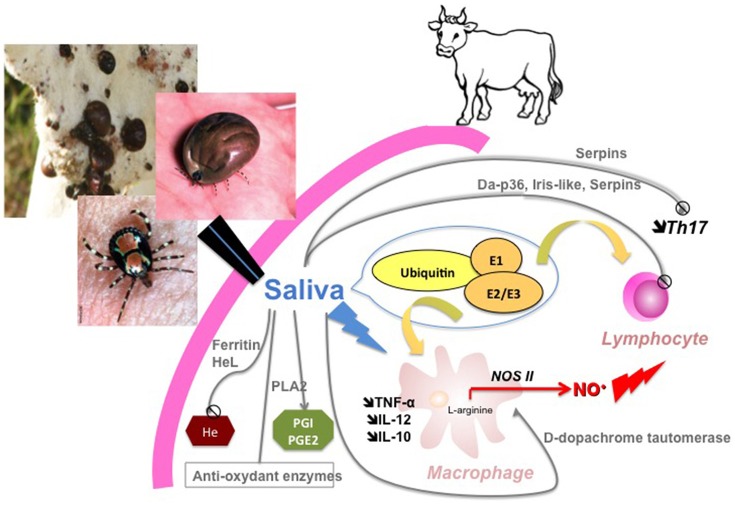
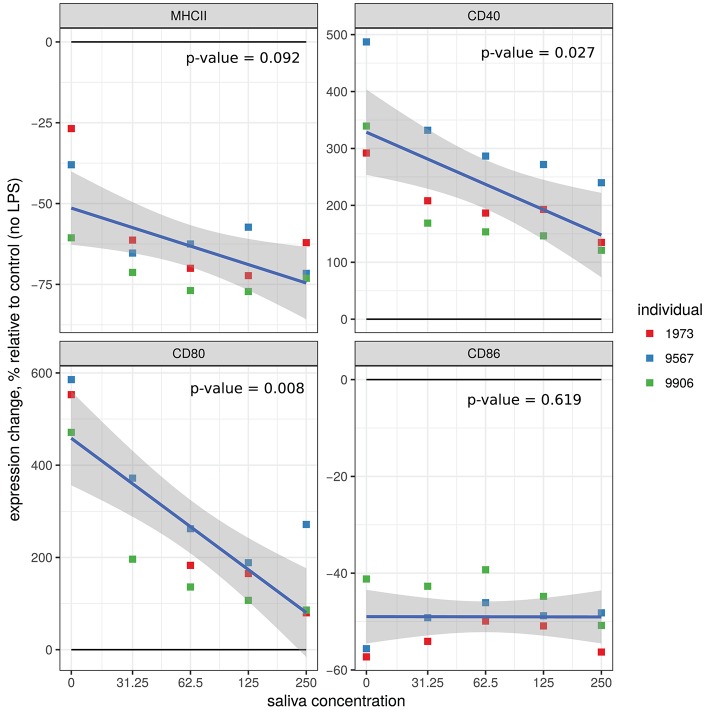
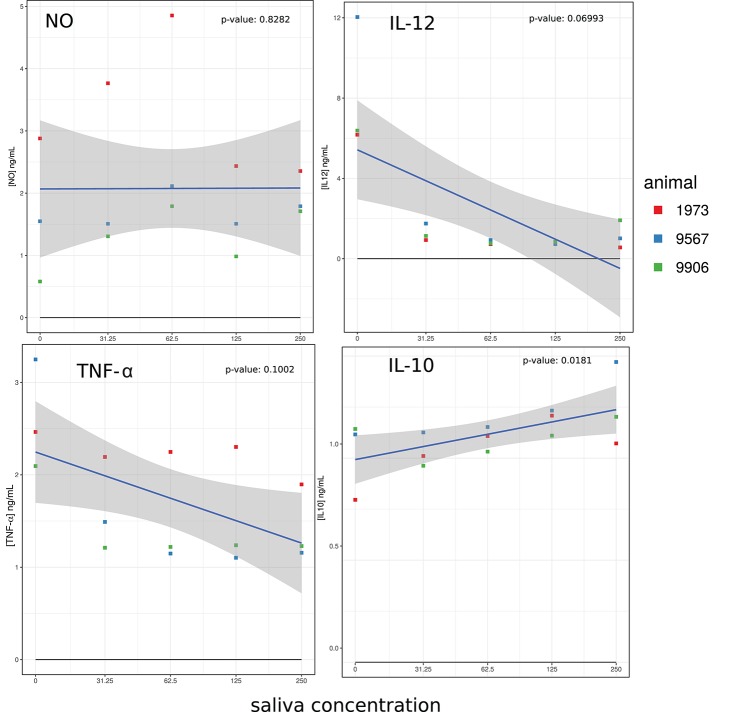
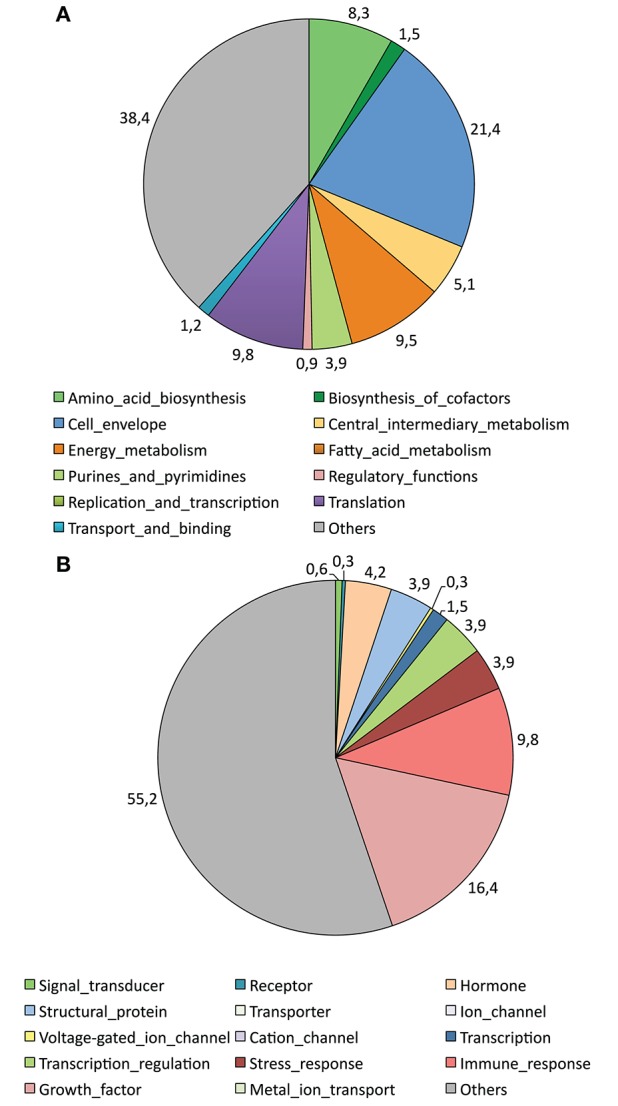
The tropical bont tick, , is a tick species of veterinary importance and is considered as one of major pest of ruminants in Africa and in the Caribbean. It causes direct skin lesions, transmits heartwater, and reactivates bovine dermatophilosis. Tick saliva is reported to affect overall host responses through immunomodulatory and anti-inflammatory molecules, among other bioactive molecules. The general objective of this study was to better understand the role of saliva in interaction between the tick and the host using cellular biology approaches and proteomics, and to discuss its impact on disease transmission and/or activation. We first focused on the immuno-modulating effects of semi-fed female saliva on bovine peripheral blood mononuclear cells (PBMC) and monocyte-derived macrophages . We analyzed its immuno-suppressive properties by measuring the effect of saliva on PBMC proliferation, and observed a significant decrease in ConA-stimulated PBMC lymphoproliferation. We then studied the effect of saliva on bovine macrophages using flow cytometry to analyze the expression of MHC-II and co-stimulation molecules (CD40, CD80, and CD86) and by measuring the production of nitric oxide (NO) and pro- or anti-inflammatory cytokines. We observed a significant decrease in the expression of MHC-II, CD40, and CD80 molecules, associated with decreased levels of IL-12-p40 and TNF-α and increased level of IL-10, which could explain the saliva-induced modulation of NO. To elucidate these immunomodulatory effects, crude saliva proteins were analyzed using proteomics with an Orbitrap Elite mass spectrometer. Among the 336 proteins identified in saliva, we evidenced bioactive molecules exhibiting anti-inflammatory, immuno-modulatory, and anti-oxidant properties (e.g., serpins, phospholipases A2, heme lipoprotein). We also characterized an intriguing ubiquitination complex that could be involved in saliva-induced immune modulation of the host. We propose a model for the interaction between saliva and host immune cells that could have an effect during tick feeding by favoring pathogen dissemination or activation by reducing the efficiency of host immune response to the corresponding tick-borne diseases.
热带草原璃眼蜱 ,是一种具有兽医重要性的蜱种,被认为是非洲和加勒比地区反刍动物的主要害虫之一。它会导致直接的皮肤损伤,传播心水病,并使牛的丹毒热重新活跃。据报道,蜱的唾液通过免疫调节和抗炎分子以及其他生物活性分子影响宿主的整体反应。本研究的总体目标是使用细胞生物学方法和蛋白质组学更好地了解唾液在蜱与宿主相互作用中的作用,并讨论其对疾病传播和/或激活的影响。我们首先专注于半饱食雌性唾液对牛外周血单核细胞 (PBMC) 和单核细胞衍生的巨噬细胞 的免疫调节作用。我们通过测量唾液对 PBMC 增殖的影响来分析其免疫抑制特性,观察到 ConA 刺激的 PBMC 淋巴增殖显著下降。然后,我们使用流式细胞术研究唾液对牛巨噬细胞的影响,分析 MHC-II 和共刺激分子 (CD40、CD80 和 CD86) 的表达,并测量一氧化氮 (NO) 和促炎或抗炎细胞因子的产生。我们观察到 MHC-II、CD40 和 CD80 分子的表达显著下降,与 IL-12-p40 和 TNF-α 水平降低以及 IL-10 水平升高相关,这可以解释唾液诱导的 NO 调节。为了阐明这些免疫调节作用,我们使用 Orbitrap Elite 质谱仪对粗唾液蛋白进行蛋白质组学分析。在 唾液中鉴定的 336 种蛋白质中,我们证明了具有抗炎、免疫调节和抗氧化特性的生物活性分子(例如丝氨酸蛋白酶抑制剂、磷脂酶 A2、血红素脂蛋白)。我们还描述了一个有趣的泛素化复合物,它可能参与了唾液诱导的宿主免疫调节。我们提出了一个 唾液与宿主免疫细胞相互作用的模型,该模型可能通过降低宿主对相应蜱传疾病的免疫反应效率,在蜱叮咬时对病原体的传播或激活产生影响。