Departamento de Imunologia, Instituto de Ciências Biomédicas, Universidade de São Paulo, São Paulo, Brazil.
Departamento de Genética e Evolução, Universidade Federal de São Carlos, São Carlos, Brazil.
Front Cell Infect Microbiol. 2017 Nov 21;7:476. doi: 10.3389/fcimb.2017.00476. eCollection 2017.
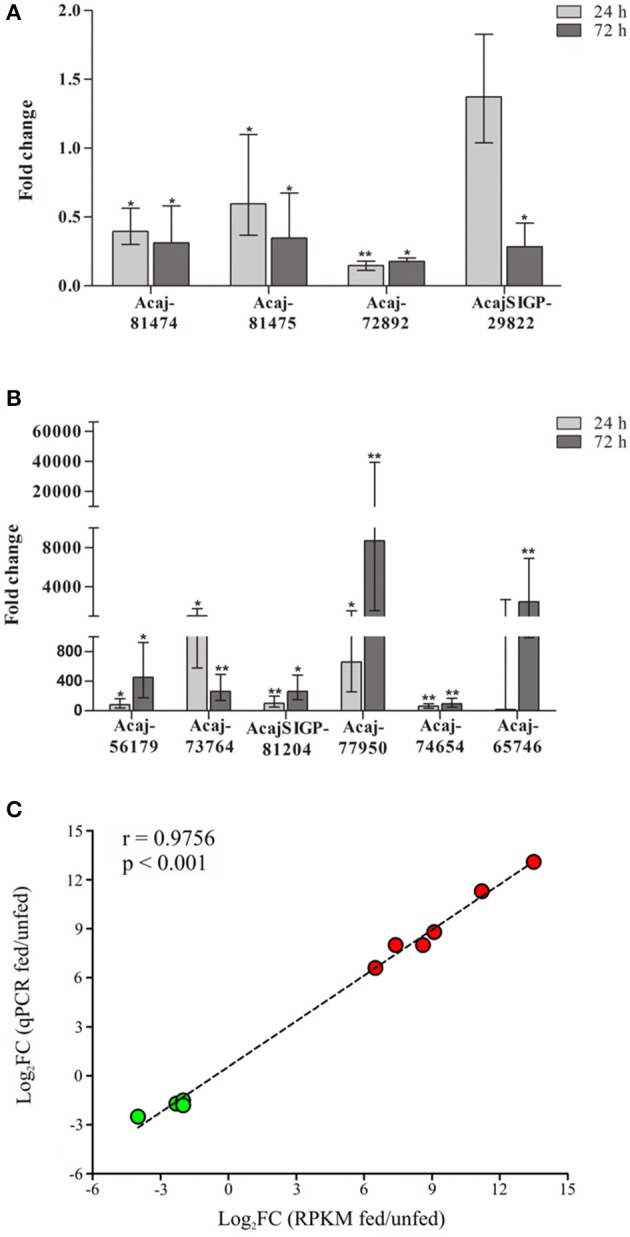
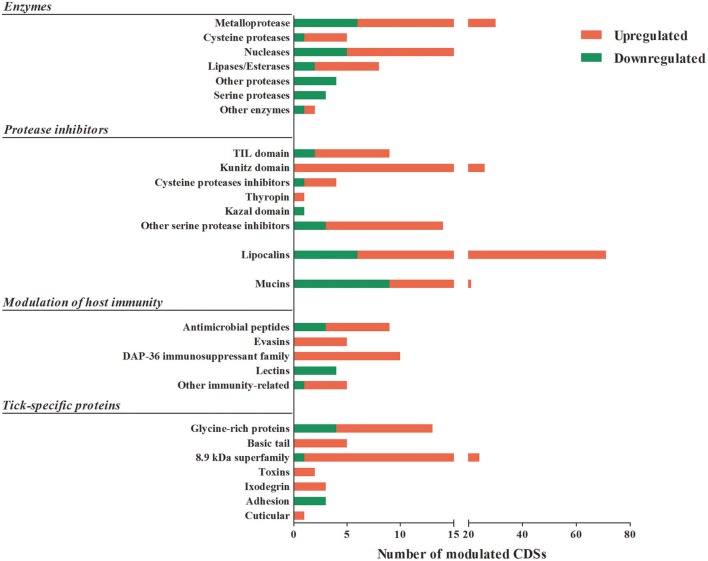
Ticks are obligate blood feeding ectoparasites that transmit a wide variety of pathogenic microorganisms to their vertebrate hosts. is vector of , the causative agent of Rocky Mountain spotted fever (RMSF), the most lethal rickettsiosis that affects humans. It is known that the transmission of pathogens by ticks is mainly associated with the physiology of the feeding process. Pathogens that are acquired with the blood meal must first colonize the tick gut and later the salivary glands (SG) in order to be transmitted during a subsequent blood feeding via saliva. Tick saliva contains a complex mixture of bioactive molecules with anticlotting, antiplatelet aggregation, vasodilatory, anti-inflammatory, and immunomodulatory properties to counteract both the hemostasis and defense mechanisms of the host. Besides facilitating tick feeding, the properties of saliva may also benefits survival and establishment of pathogens in the host. In the current study, we compared the sialotranscriptome of unfed ticks and those fed for 72 h on rabbits using next generation RNA sequencing (RNA-seq). The total of reads obtained were assembled in 9,560 coding sequences (CDSs) distributed in different functional classes. CDSs encoding secreted proteins, including lipocalins, mucins, protease inhibitors, glycine-rich proteins, metalloproteases, 8.9 kDa superfamily members, and immunity-related proteins were mostly upregulated by blood feeding. Selected CDSs were analyzed by real-time quantitative polymerase chain reaction preceded by reverse transcription (RT-qPCR), corroborating the transcriptional profile obtained by RNA-seq. Finally, high-performance liquid chromatography coupled with tandem mass spectrometry (LC-MS/MS) analysis revealed 124 proteins in saliva of ticks fed for 96-120 h. The corresponding CDSs of 59 of these proteins were upregulated in SG of fed ticks. To the best of our knowledge, this is the first report on the proteome of saliva. The functional characterization of the identified proteins might reveal potential targets to develop vaccines for tick control and/or blocking of transmission as well as pharmacological bioproducts with antihemostatic, anti-inflammatory and antibacterial activities.
蜱是专性吸血的外寄生虫,能将各种致病微生物传播给脊椎动物宿主。是落矶山斑点热( RMSF )病原体的传播媒介,这是一种最致命的立克次体病,影响人类。已知蜱通过吸血传播病原体主要与吸血过程的生理学有关。通过血餐获得的病原体必须首先在蜱的肠道中定殖,然后在唾液腺(SG)中定殖,以便在随后的唾液吸血时传播。蜱唾液中含有复杂的生物活性分子混合物,具有抗凝血、抗血小板聚集、血管扩张、抗炎和免疫调节特性,以对抗宿主的止血和防御机制。除了促进蜱的进食外,唾液的特性也可能有利于病原体在宿主中的生存和建立。在本研究中,我们比较了未进食的 和喂食 72 小时的 的唾液转录组,使用下一代 RNA 测序(RNA-seq)。总共获得的读数组装成 9560 个编码序列(CDS),分布在不同的功能类别中。编码分泌蛋白的 CDSs,包括脂类、粘蛋白、蛋白酶抑制剂、富含甘氨酸的蛋白、金属蛋白酶、8.9 kDa 超家族成员和免疫相关蛋白,大多通过吸血而被上调。选择的 CDSs 通过逆转录(RT-qPCR)进行实时定量聚合酶链反应分析,证实了 RNA-seq 获得的转录谱。最后,高效液相色谱-串联质谱联用(LC-MS/MS)分析显示,喂食 96-120 小时的蜱的唾液中有 124 种蛋白质。这些蛋白质中 59 种的相应 CDSs 在喂食的蜱的 SG 中上调。据我们所知,这是关于 唾液蛋白质组的第一个报告。鉴定蛋白的功能特征可能揭示潜在的目标,以开发用于蜱控制和/或阻断传播的疫苗,以及具有抗凝血、抗炎和抗菌活性的药理学生物制品。