Department of Neurology, University Medical School, Göttingen, Germany.
Center for Networked Biomedical Research on Neurodegenerative Diseases (CIBERNED), Barcelona, Spain.
PLoS Pathog. 2018 Jan 22;14(1):e1006802. doi: 10.1371/journal.ppat.1006802. eCollection 2018 Jan.
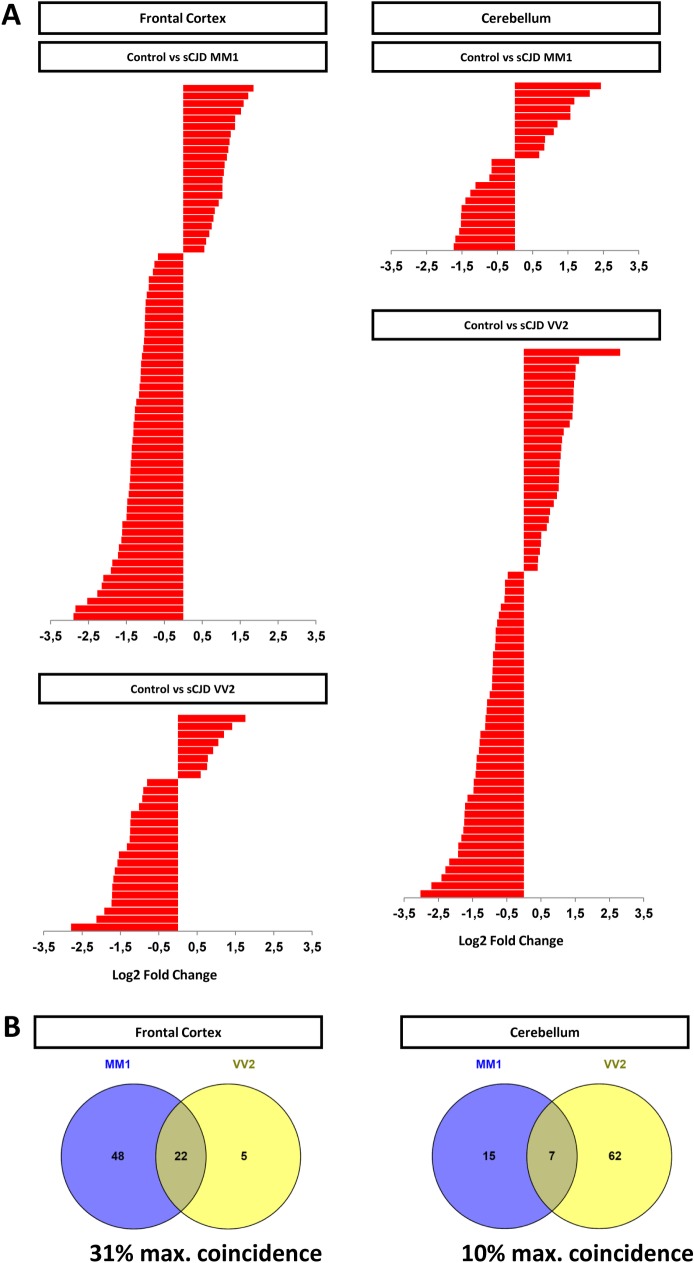
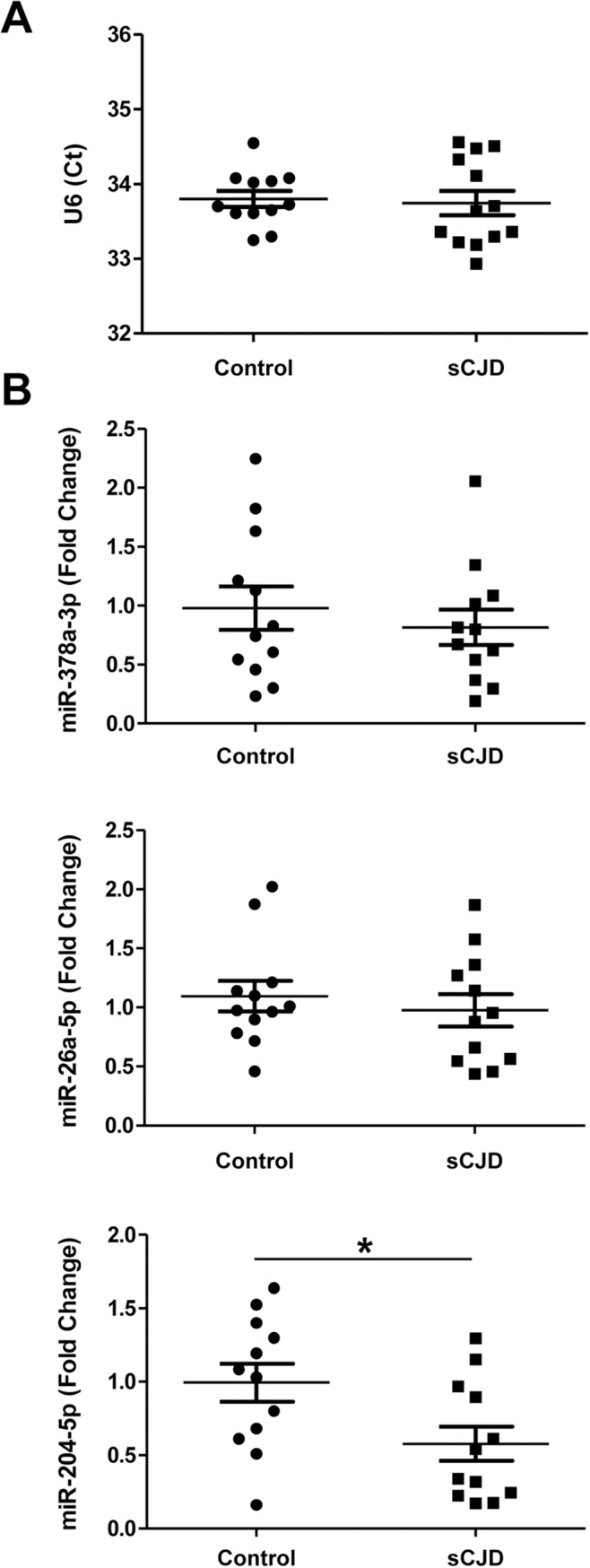
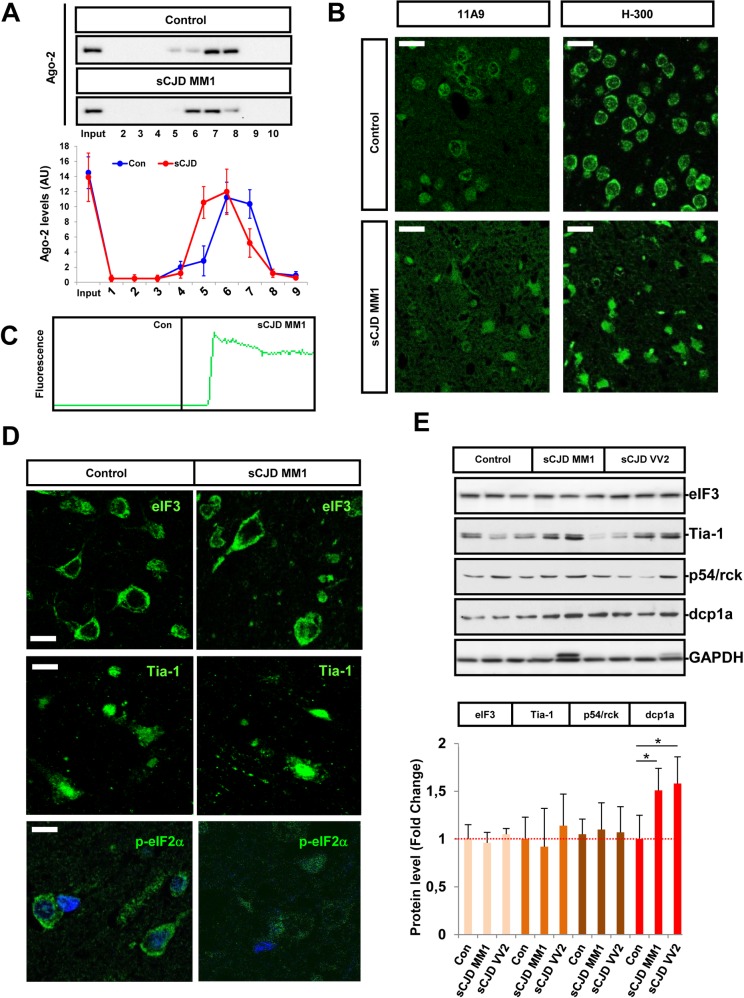
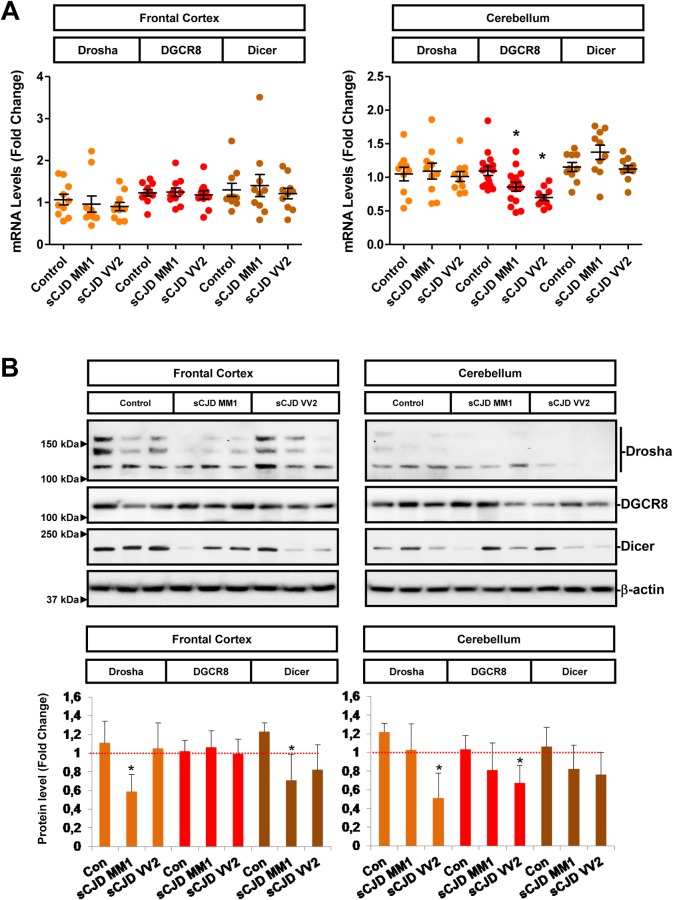
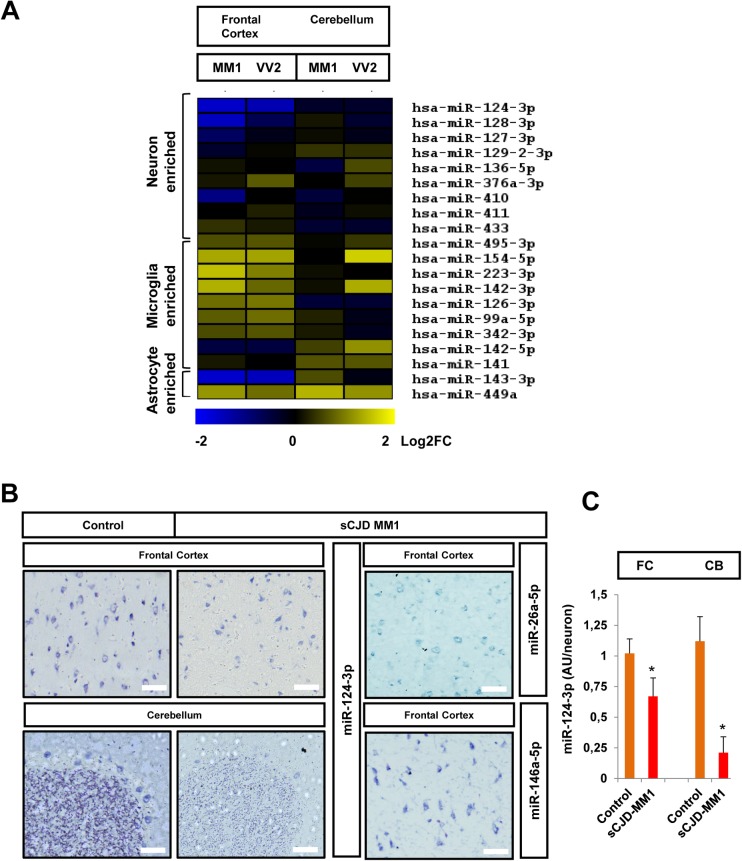
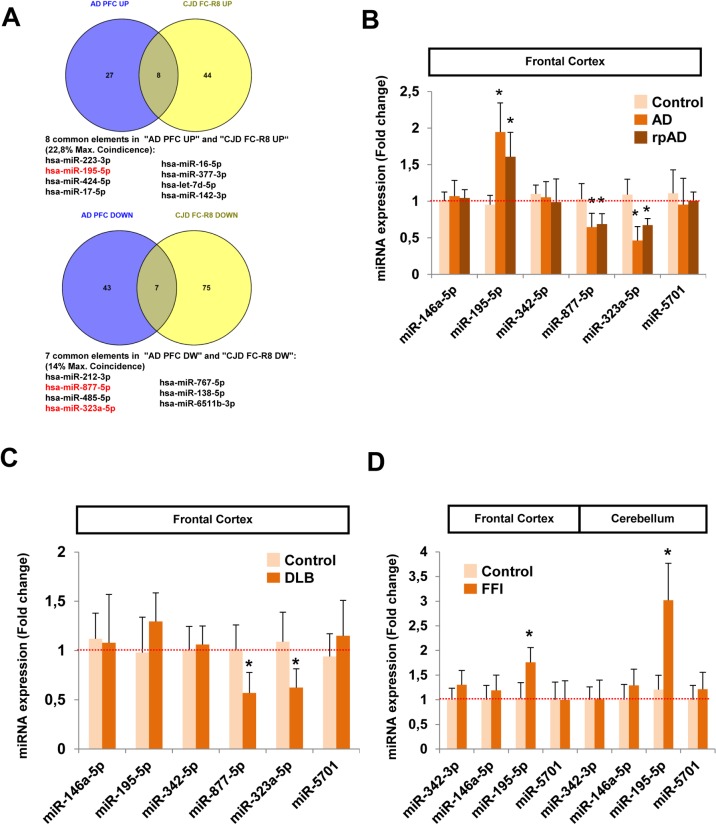
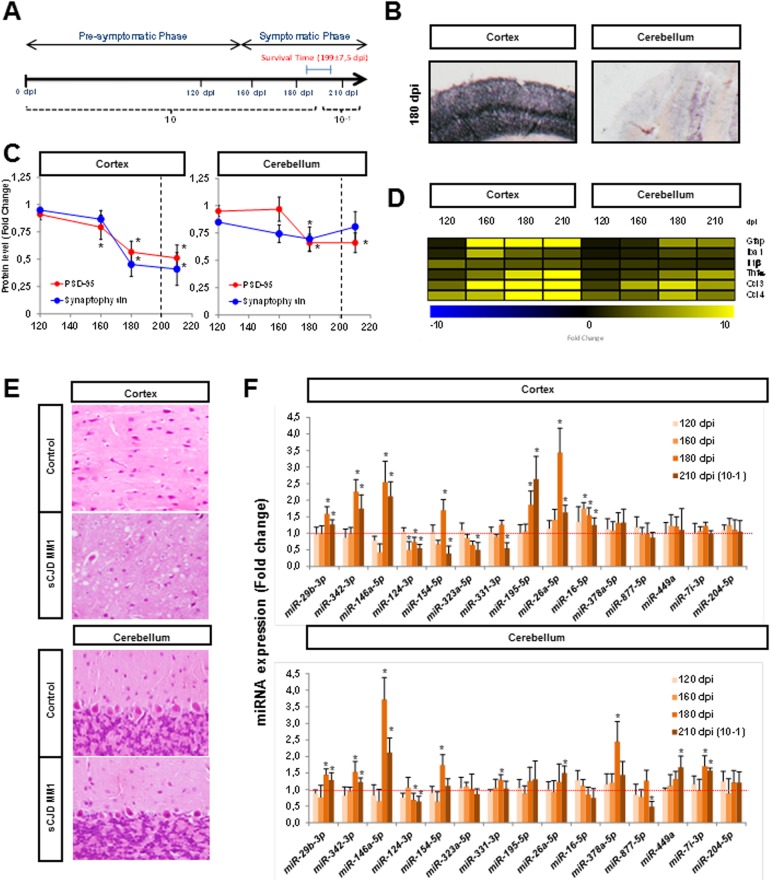
Increasing evidence indicates that microRNAs (miRNAs) are contributing factors to neurodegeneration. Alterations in miRNA signatures have been reported in several neurodegenerative dementias, but data in prion diseases are restricted to ex vivo and animal models. The present study identified significant miRNA expression pattern alterations in the frontal cortex and cerebellum of sporadic Creutzfeldt-Jakob disease (sCJD) patients. These changes display a highly regional and disease subtype-dependent regulation that correlates with brain pathology. We demonstrate that selected miRNAs are enriched in sCJD isolated Argonaute(Ago)-binding complexes in disease, indicating their incorporation into RNA-induced silencing complexes, and further suggesting their contribution to disease-associated gene expression changes. Alterations in the miRNA-mRNA regulatory machinery and perturbed levels of miRNA biogenesis key components in sCJD brain samples reported here further implicate miRNAs in sCJD gene expression (de)regulation. We also show that a subset of sCJD-altered miRNAs are commonly changed in Alzheimer's disease, dementia with Lewy bodies and fatal familial insomnia, suggesting potential common mechanisms underlying these neurodegenerative processes. Additionally, we report no correlation between brain and cerebrospinal fluid (CSF) miRNA-profiles in sCJD, indicating that CSF-miRNA profiles do not faithfully mirror miRNA alterations detected in brain tissue of human prion diseases. Finally, utilizing a sCJD MM1 mouse model, we analyzed the miRNA deregulation patterns observed in sCJD in a temporal manner. While fourteen sCJD-related miRNAs were validated at clinical stages, only two of those were changed at early symptomatic phase, suggesting that the miRNAs altered in sCJD may contribute to later pathogenic processes. Altogether, the present work identifies alterations in the miRNA network, biogenesis and miRNA-mRNA silencing machinery in sCJD, whereby contributions to disease mechanisms deserve further investigation.
越来越多的证据表明 microRNAs(miRNAs)是神经退行性变的致病因素。几种神经退行性痴呆症中已报道了 miRNA 特征的改变,但朊病毒病的数据仅限于离体和动物模型。本研究在散发性克雅氏病(sCJD)患者的额叶皮层和小脑发现了显著的 miRNA 表达模式改变。这些变化表现出高度的区域性和疾病亚型依赖性调节,与脑病理学相关。我们证明了在 sCJD 中,选定的 miRNAs 在疾病中富含 Argonaute(Ago)结合复合物,这表明它们被纳入 RNA 诱导的沉默复合物,进一步表明它们对与疾病相关的基因表达变化有贡献。sCJD 脑组织中 miRNA-mRNA 调控机制的改变和 miRNA 生物发生关键成分的失调进一步表明 miRNA 参与了 sCJD 的基因表达(去)调控。我们还表明,sCJD 改变的 miRNAs 中有一部分在阿尔茨海默病、路易体痴呆和致命家族性失眠症中也发生了改变,这表明这些神经退行性过程可能存在潜在的共同机制。此外,我们报告 sCJD 中脑和脑脊液(CSF)miRNA 谱之间没有相关性,这表明 CSF-miRNA 谱不能真实反映人类朊病毒病脑组织中检测到的 miRNA 改变。最后,我们利用 sCJD MM1 小鼠模型,从时间上分析了 sCJD 中观察到的 miRNA 失调模式。在临床阶段验证了 14 种 sCJD 相关 miRNA,只有两种在早期症状阶段发生改变,这表明 sCJD 中改变的 miRNA 可能与后期的致病过程有关。总之,本研究确定了 sCJD 中 miRNA 网络、生物发生和 miRNA-mRNA 沉默机制的改变,其中对疾病机制的贡献值得进一步研究。