MRC Cognition and Brain Sciences Unit, University of Cambridge, 15 Chaucer Road, Cambridge CB2 7EF, UK.
MRC Cognition and Brain Sciences Unit, University of Cambridge, 15 Chaucer Road, Cambridge CB2 7EF, UK.
Curr Biol. 2018 Feb 5;28(3):401-408.e5. doi: 10.1016/j.cub.2017.11.071. Epub 2018 Jan 18.
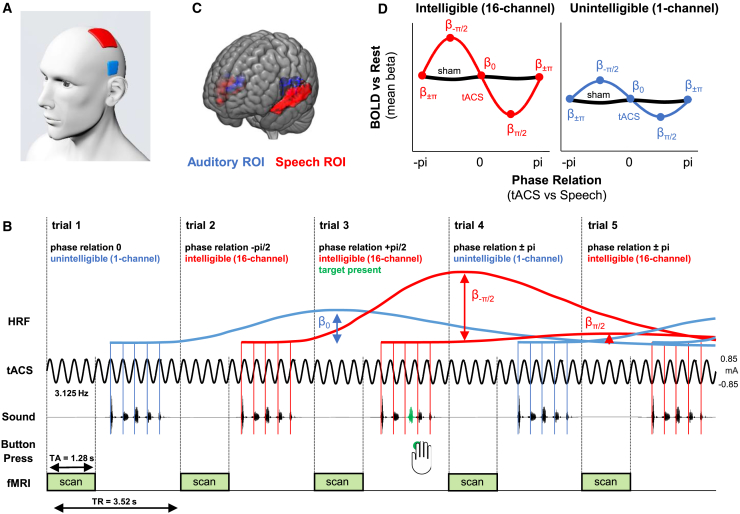
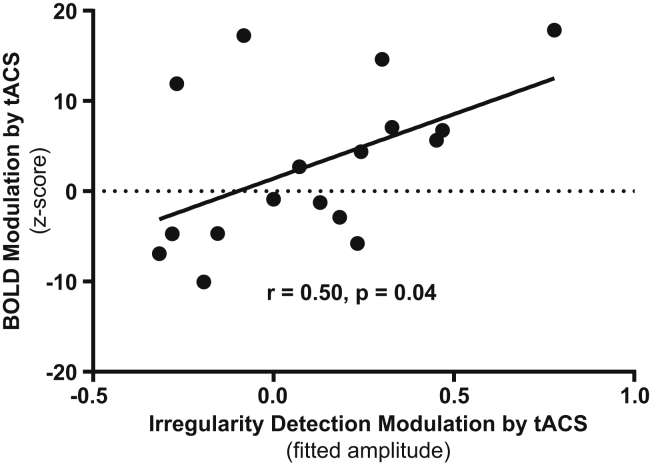
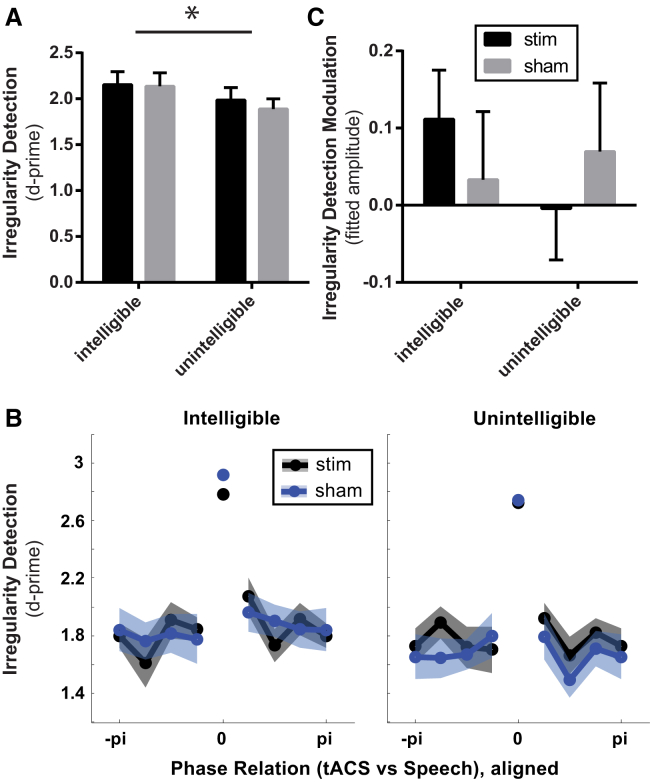
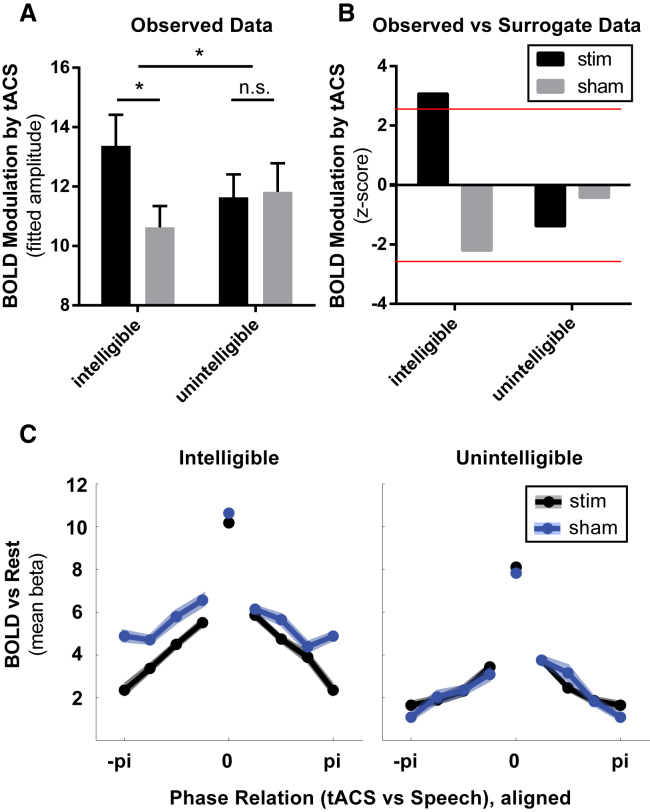
Due to their periodic nature, neural oscillations might represent an optimal "tool" for the processing of rhythmic stimulus input [1-3]. Indeed, the alignment of neural oscillations to a rhythmic stimulus, often termed phase entrainment, has been repeatedly demonstrated [4-7]. Phase entrainment is central to current theories of speech processing [8-10] and has been associated with successful speech comprehension [11-17]. However, typical manipulations that reduce speech intelligibility (e.g., addition of noise and time reversal [11, 12, 14, 16, 17]) could destroy critical acoustic cues for entrainment (such as "acoustic edges" [7]). Hence, the association between phase entrainment and speech intelligibility might only be "epiphenomenal"; i.e., both decline due to the same manipulation, without any causal link between the two [18]. Here, we use transcranial alternating current stimulation (tACS [19]) to manipulate the phase lag between neural oscillations and speech rhythm while measuring neural responses to intelligible and unintelligible vocoded stimuli with sparse fMRI. We found that this manipulation significantly modulates the BOLD response to intelligible speech in the superior temporal gyrus, and the strength of BOLD modulation is correlated with a phasic modulation of performance in a behavioral task. Importantly, these findings are absent for unintelligible speech and during sham stimulation; we thus demonstrate that phase entrainment has a specific, causal influence on neural responses to intelligible speech. Our results not only provide an important step toward understanding the neural foundation of human abilities at speech comprehension but also suggest new methods for enhancing speech perception that can be explored in the future.
由于其周期性,神经振荡可能代表了处理节奏刺激输入的最佳“工具”[1-3]。事实上,神经振荡与节奏刺激的对齐,通常称为相位锁相,已经被反复证明[4-7]。相位锁相是当前语音处理理论的核心[8-10],并与成功的语音理解相关联[11-17]。然而,降低语音可懂度的典型操作(例如添加噪声和时间反转[11、12、14、16、17])可能会破坏相位锁相的关键声学线索(例如“声学边缘”[7])。因此,相位锁相与语音可懂度之间的关联可能只是“附带现象”;即两者都由于相同的操作而下降,两者之间没有因果关系[18]。在这里,我们使用经颅交流电刺激(tACS [19])来操纵神经振荡和语音节奏之间的相位滞后,同时使用稀疏 fMRI 测量对可懂和不可懂语音编码刺激的神经反应。我们发现,这种操作显著调节了上颞叶对可懂语音的 BOLD 反应,并且 BOLD 调制的强度与行为任务中相位调制的性能相关。重要的是,这些发现对于不可懂的语音和假刺激都不存在;因此,我们证明了相位锁相对可懂语音的神经反应具有特定的因果影响。我们的研究结果不仅为理解人类理解言语能力的神经基础提供了重要的一步,而且还为未来探索增强言语感知的新方法提供了线索。