Department of Biopharmaceutics and Pharmacodynamics, Medical University of Gdańsk, Gdańsk, Poland.
2nd Department of Anaesthesiology and Intensive Therapy, Medical University of Lublin, Lublin, Poland.
Antimicrob Agents Chemother. 2018 Mar 27;62(4). doi: 10.1128/AAC.02273-17. Print 2018 Apr.
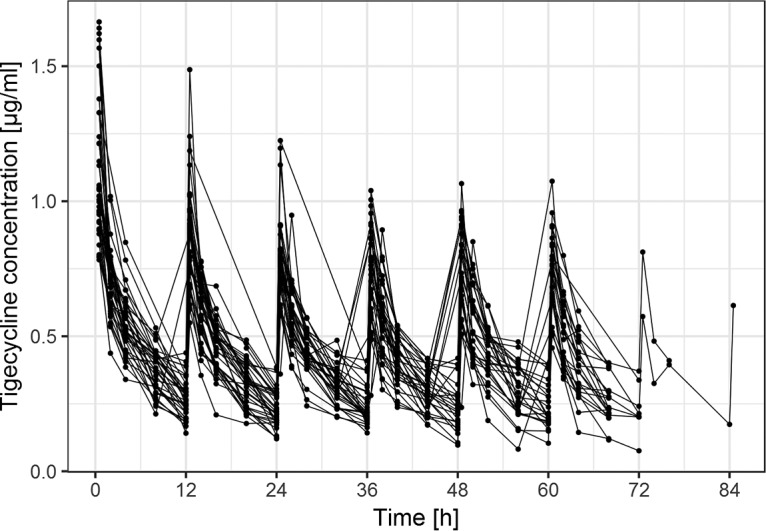
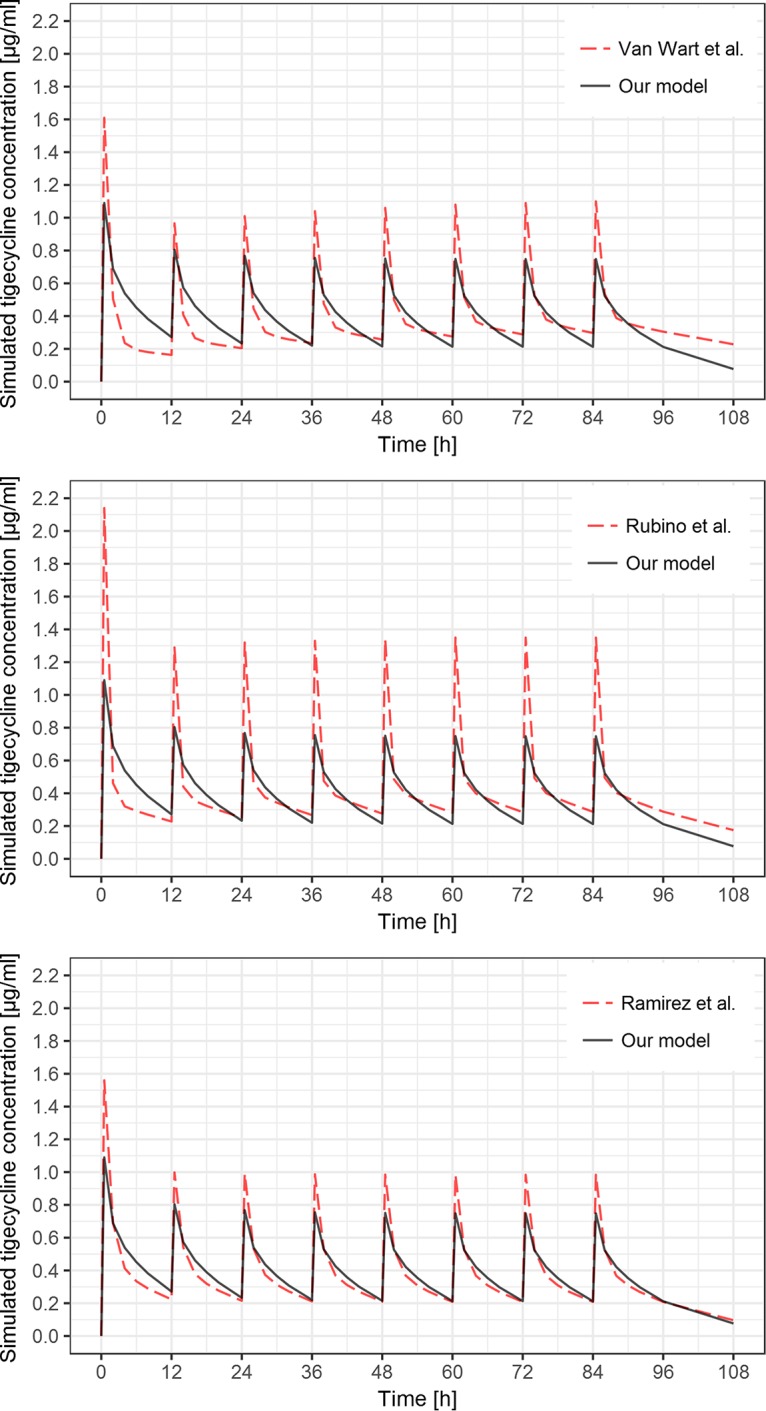
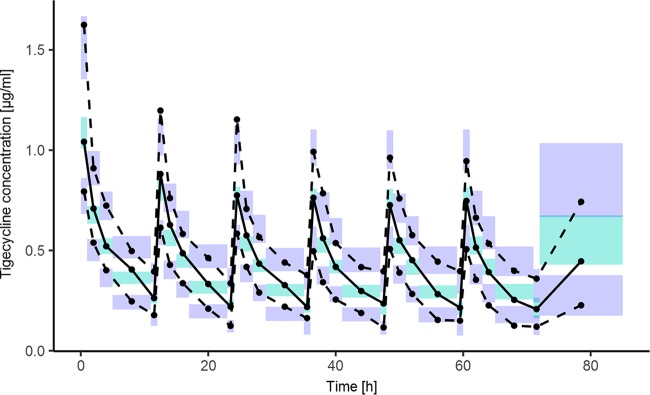
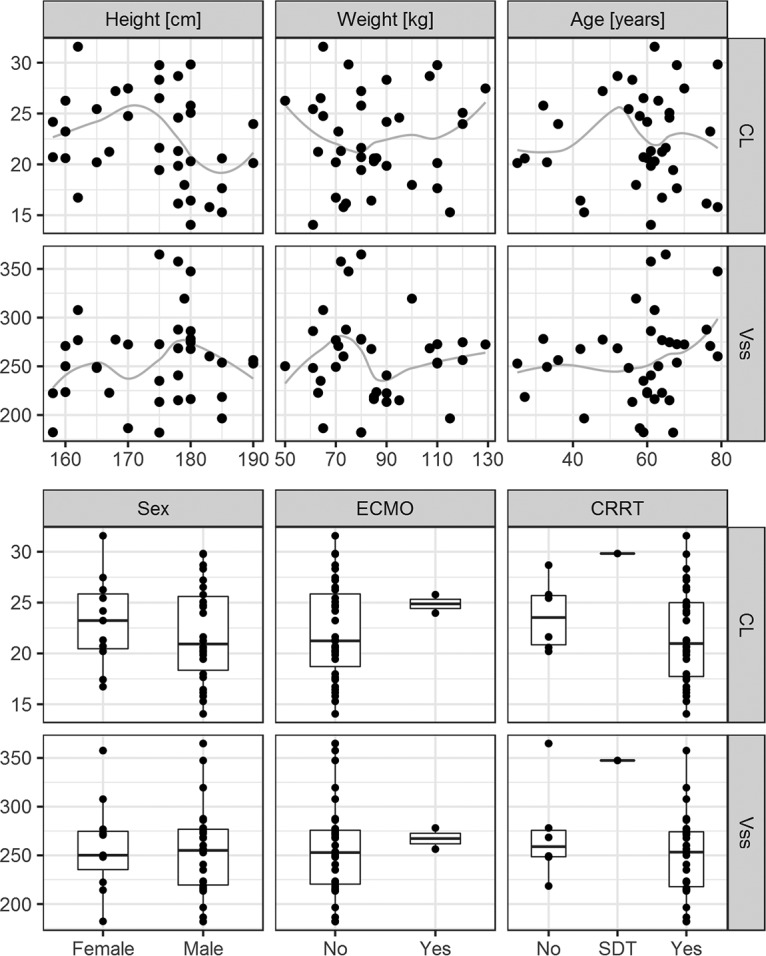
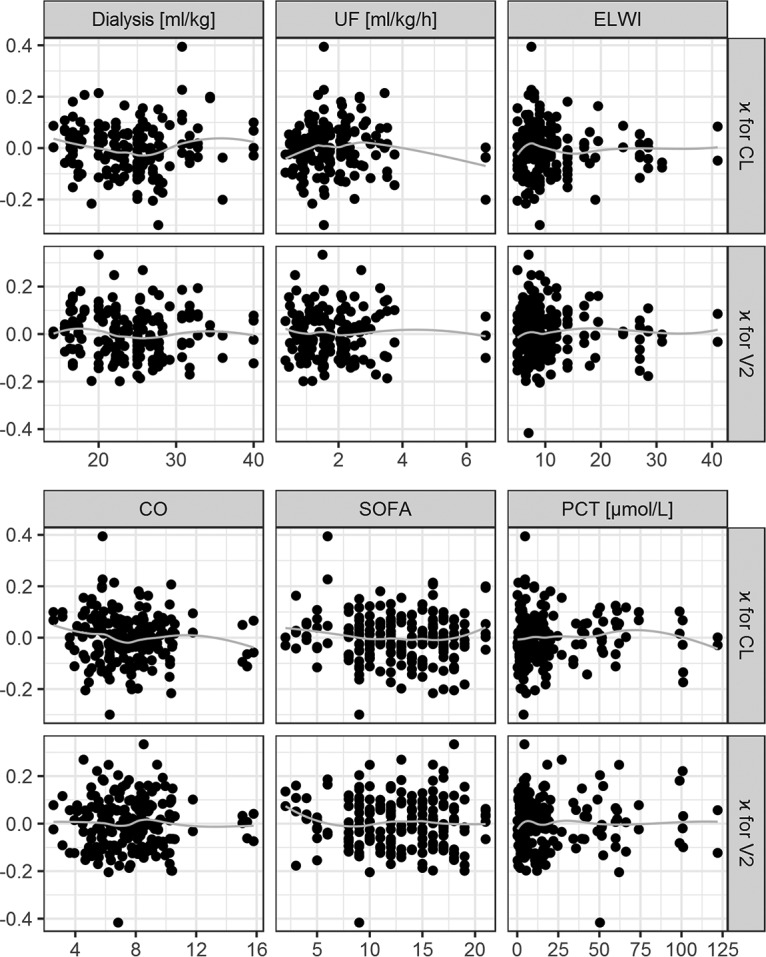
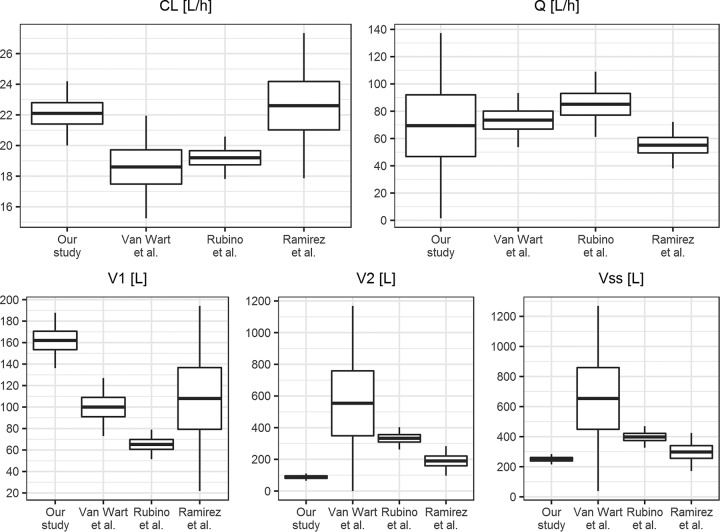
Tigecycline is a glycylcycline often used in critically ill patients as the antibiotic of last resort. The pharmacokinetics (PK) of tigecycline in intensive care unit (ICU) patients can be affected by severe pathophysiological changes so that standard dosing might not be adequate. The aim of this study was to describe population PK of high-dose tigecycline in patients with sepsis or septic shock and evaluate the relationship between individual PK parameters and patient covariates. The study population consisted of 37 adult ICU patients receiving a 200-mg loading dose of tigecycline followed by multiple doses of 100 mg every 12 h. Blood samples were collected at 0.5, 2, 4, 8, and 12 h after dose administration. A two-compartment model with interindividual (IIV) and interoccasion (IOV) variability in PK parameters was used to describe the concentration-time course of tigecycline. The estimated values of mean population PK parameters were 22.1 liters/h and 69.4 liters/h for elimination and intercompartmental clearance, respectively, and 162 liters and 87.9 liters for volume of the central and peripheral compartment, respectively. The IIV and IOV in clearance were less than 20%. The estimated values of distribution volumes were different from previously published values, which might be due to pathophysiological changes in ICU patients. No systematic relationship between individual PK parameters and patient covariates was found. The developed model does not show evidence that individual tigecycline dosing adjustment based on patient covariates is necessary to obtain the same target concentration in patients with sepsis or septic shock. Dosing adjustments should be based on the pathogens, their susceptibility, and PK targets.
替加环素是一种甘氨酰环素,常用于重症患者,作为最后的抗生素。重症监护病房(ICU)患者的替加环素药代动力学(PK)可能受到严重病理生理变化的影响,因此标准剂量可能不足。本研究旨在描述脓毒症或感染性休克患者接受高剂量替加环素的群体 PK,并评估个体 PK 参数与患者协变量之间的关系。研究人群包括 37 名接受替加环素 200mg 负荷剂量后每 12 小时给予多次 100mg 剂量的成年 ICU 患者。在给药后 0.5、2、4、8 和 12 小时采集血样。采用具有个体间(IIV)和个体间(IOV)变异性的两室模型来描述替加环素的浓度-时间过程。估计的群体 PK 参数平均值为消除和隔室清除的 22.1 升/小时和 69.4 升/小时,中央和外周隔室的分别为 162 升和 87.9 升。清除率的 IIV 和 IOV 小于 20%。分布容积的估计值与之前发表的值不同,这可能是由于 ICU 患者的病理生理变化所致。未发现个体 PK 参数与患者协变量之间存在系统关系。所开发的模型没有证据表明,基于患者协变量对个体替加环素剂量进行调整以在脓毒症或感染性休克患者中获得相同的目标浓度是必要的。剂量调整应基于病原体、其敏感性和 PK 目标。