Otis Prud'homme Guillaume, Lamhamedi Mohammed S, Benomar Lahcen, Rainville André, DeBlois Josianne, Bousquet Jean, Beaulieu Jean
Centre d'étude de la Forêt, Faculté de Foresterie, de Géographie et de Géomatique, Université Laval, Québec City, QC, Canada.
Direction de la Recherche Forestière, Ministère des Forêts, de la Faune et des Parcs, Québec City, QC, Canada.
Front Plant Sci. 2018 Jan 8;8:2214. doi: 10.3389/fpls.2017.02214. eCollection 2017.
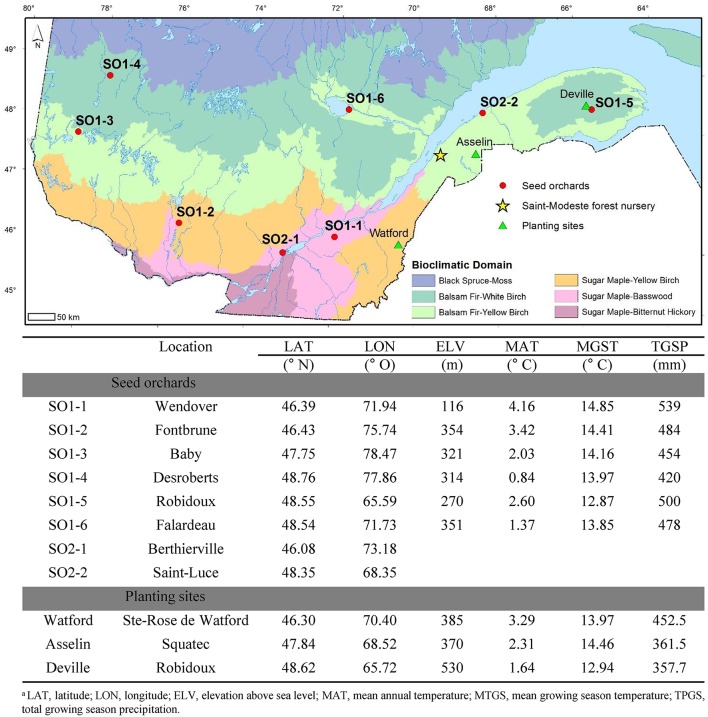
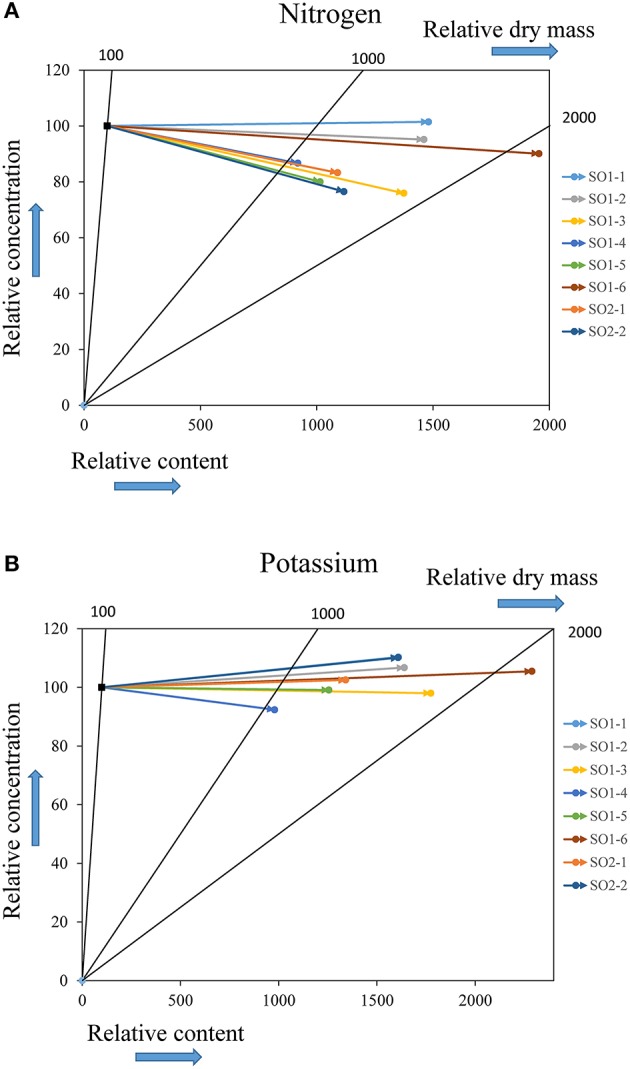
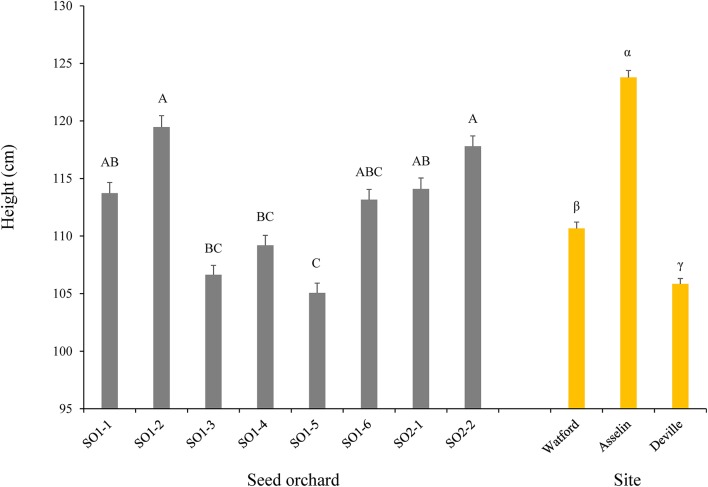
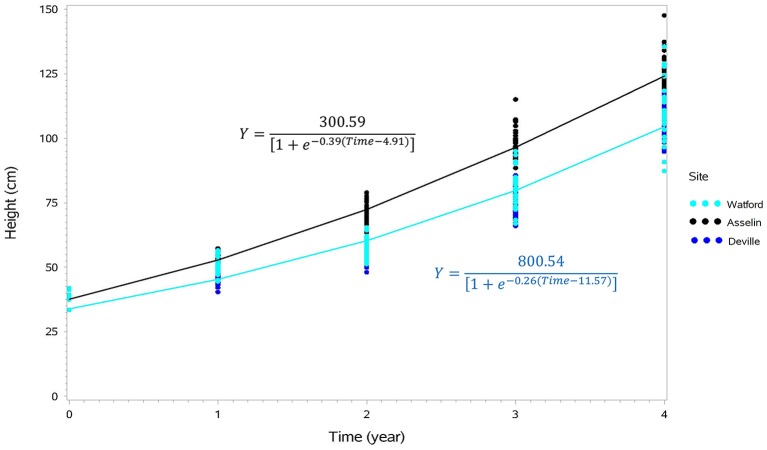
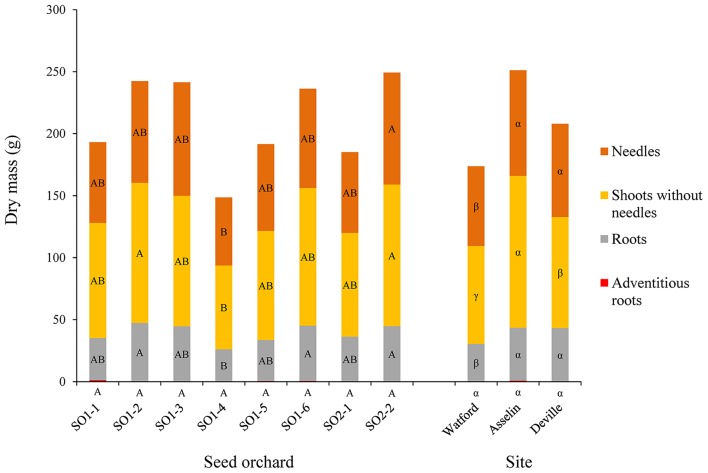
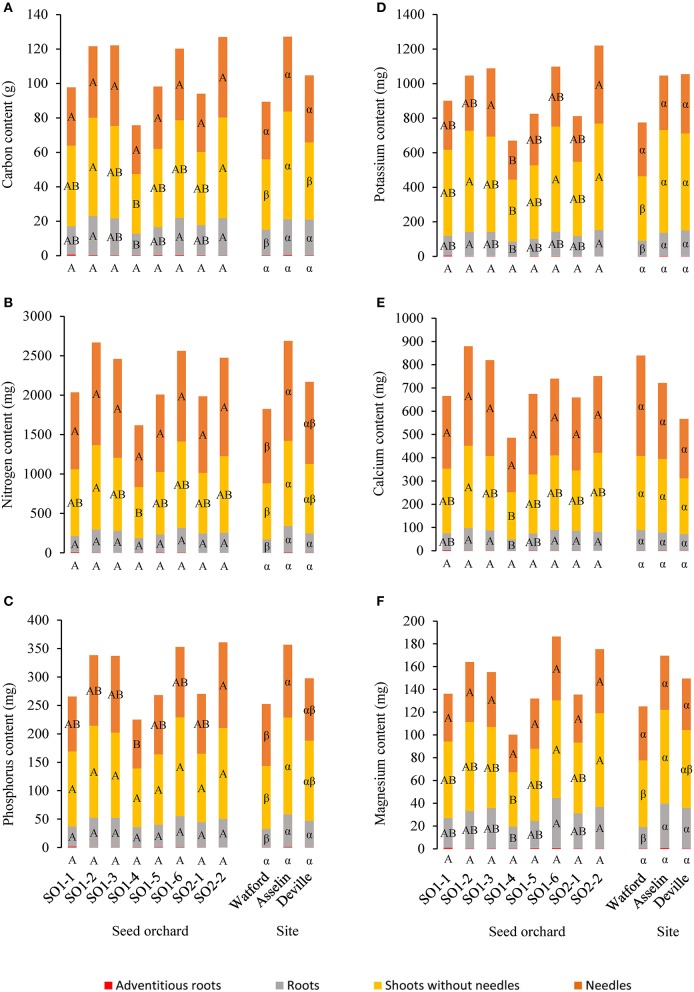
With climate change, favorable growing conditions for tree species are shifting northwards and to higher altitudes. Therefore, local populations are becoming less adapted to their environment. Assisted migration is one of the proposed adaptive measures to reduce the vulnerability of natural populations and maintain forest productivity. It consists of moving genetic material to a territory where future climate conditions correspond to those of its current location. Eight white spruce ( [Moench] Voss) seed sources representing as many seed orchards were planted in 2013 at three forest sites simulating a south-north climatic gradient of 1.7°C in Québec, Canada. The objectives were to (1) evaluate the morpho-physiological responses of the different seed sources and (2) determine the role of genetic adaptation and physiological plasticity on the observed variation in morpho-physiological traits. Various seedling characteristics were measured, notably height growth from nursery to the fourth year on plantation. Other traits such as biomass and carbon allocation, nutritional status, and various photosynthetic traits before bud break, were evaluated during the fourth growing season. No interaction between sites and seed sources was observed for any traits, suggesting similar plasticity between seed sources. There was no change in the rank of seed sources and sites between years for height growth. Moreover, a significant positive correlation was observed between the height from the nursery and that after 4 years in the plantation. Southern seed sources showed the best height growth, while optimum growth was observed at the central site. Juvenile height growth seems to be a good indicator of the juvenile carbon sequestration and could serve as a selection criterion for the best genetics sources for carbon sequestration. Vector analysis showed no nitrogen deficiency 4 years after planting. Neither seed sources nor planting sites had a significant effect on photosynthesis before bud break. The observed results during the establishment phase under different site conditions indicate that southern seed sources may already benefit from assisted migration to cooler climatic conditions further north. While northern seed sources are likely to benefit from anticipated local global warming, they would not match the growth performance of seedlings from southern sources.
随着气候变化,树种适宜的生长条件正向北和向更高海拔转移。因此,当地种群对其环境的适应性越来越低。辅助迁移是为降低自然种群脆弱性并维持森林生产力而提出的适应性措施之一。它包括将遗传物质转移到未来气候条件与当前位置相似的地区。2013年,代表8个种子园的8个白云杉([Moench] Voss)种源被种植在加拿大魁北克省的3个森林地点,模拟了1.7°C的南北气候梯度。目的是:(1)评估不同种源的形态生理反应;(2)确定遗传适应性和生理可塑性在观察到的形态生理特征变异中的作用。测量了各种苗木特征,特别是从苗圃到种植后第四年的树高生长。在第四个生长季节评估了其他特征,如生物量和碳分配、营养状况以及芽萌发前的各种光合特征。在任何性状上均未观察到地点和种源之间的相互作用,这表明种源之间具有相似的可塑性。树高生长的种源和地点排名在各年份之间没有变化。此外,在苗圃中的树高与种植4年后的树高之间观察到显著的正相关。南方种源的树高生长最佳,而在中部地点观察到最佳生长。幼树树高生长似乎是幼树碳固存的良好指标,可作为碳固存最佳遗传资源的选择标准。向量分析表明,种植4年后没有氮缺乏现象。种源和种植地点对芽萌发前的光合作用均无显著影响。在不同地点条件下的定植阶段观察到的结果表明,南方种源可能已经从辅助迁移到更北的凉爽气候条件中受益。虽然北方种源可能会从预期的当地全球变暖中受益,但它们的生长表现无法与南方种源的苗木相匹配。