Departamento de Disciplinas Filosóficas, Metodológicas e Instrumentales, Centro Universitario de Ciencias de la Salud, Universidad de Guadalajara, Guadalajara, JAL, Mexico.
Laboratorio de Inmunodeficiencias y Retrovirus Humanos, Centro de Investigación Biomédica de Occidente, Instituto Mexicano del Seguro Social, Guadalajara, JAL, Mexico.
J Immunol Res. 2017;2017:1548905. doi: 10.1155/2017/1548905. Epub 2017 Nov 22.
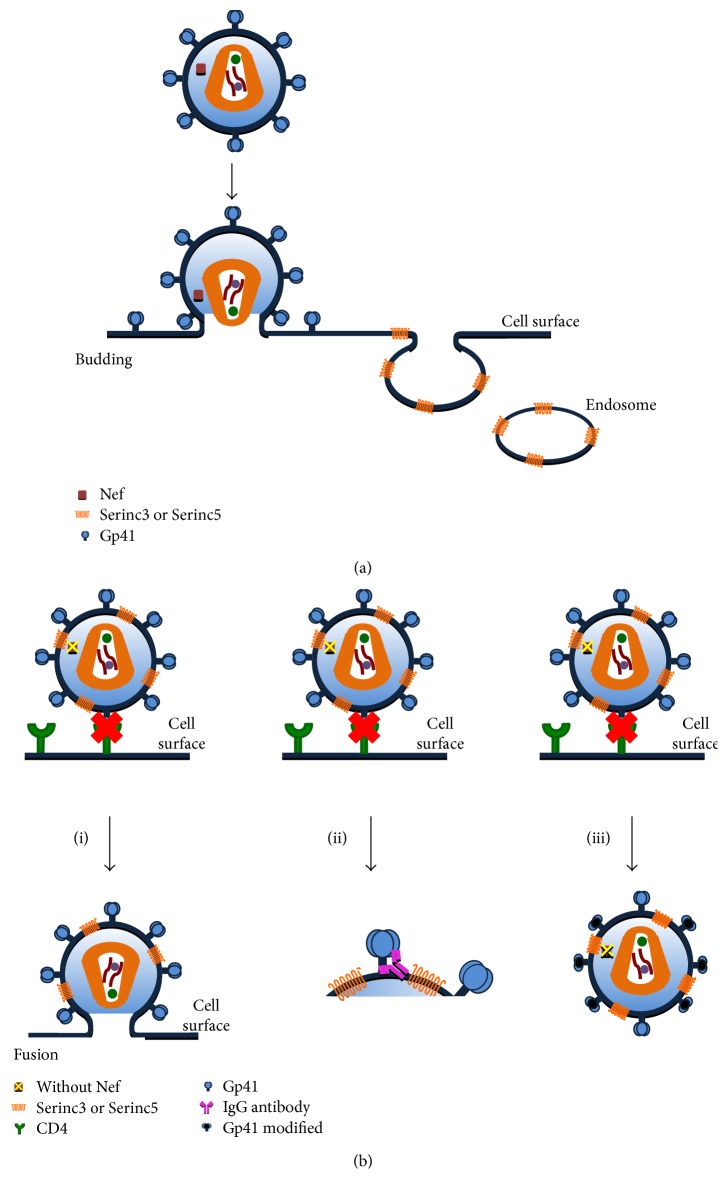
The serine incorporator 5 (SERINC5) is a recently discovered restriction factor that inhibits viral infectivity by preventing fusion. Retroviruses have developed strategies to counteract the action of SERINC5, such as the expression of proteins like negative regulatory factor (Nef), S2, and glycosylated Gag (glycoGag). These accessory proteins downregulate SERINC5 from the plasma membrane for subsequent degradation in the lysosomes. The observed variability in the action of SERINC5 suggests the participation of other elements like the envelope glycoprotein (Env) that modulates susceptibility of the virus towards SERINC5. The exact mechanism by which SERINC5 inhibits viral fusion has not yet been determined, although it has been proposed that it increases the sensitivity of the Env by exposing regions which are recognized by neutralizing antibodies. More studies are needed to understand the role of SERINC5 and to assess its utility as a therapeutic strategy.
丝氨酸整合因子 5(SERINC5)是一种新发现的限制因子,通过阻止融合来抑制病毒感染性。逆转录病毒已经开发出了对抗 SERINC5 作用的策略,例如表达负调节因子(Nef)、S2 和糖基化 Gag(glycoGag)等蛋白。这些辅助蛋白将 SERINC5 从质膜下调,随后在溶酶体中降解。SERINC5 作用的可观察到的变异性表明其他因素的参与,如包膜糖蛋白(Env),它调节病毒对 SERINC5 的易感性。尽管已经提出 SERINC5 通过暴露被中和抗体识别的区域来增加 Env 的敏感性,但它抑制病毒融合的确切机制尚未确定。需要更多的研究来了解 SERINC5 的作用,并评估其作为治疗策略的实用性。