Eudailey Joshua A, Dennis Maria L, Parker Morgan E, Phillips Bonnie L, Huffman Tori N, Bay Camden P, Hudgens Michael G, Wiseman Roger W, Pollara Justin J, Fouda Genevieve G, Ferrari Guido, Pickup David J, Kozlowski Pamela A, Van Rompay Koen K A, De Paris Kristina, Permar Sallie R
Duke Human Vaccine Institute, Duke University Medical Center, Durham, North Carolina, USA.
Department of Microbiology and Immunology and Center for AIDS Research, School of Medicine, University of North Carolina at Chapel Hill, Chapel Hill, North Carolina, USA.
mSphere. 2018 Jan 10;3(1). doi: 10.1128/mSphere.00505-17. eCollection 2018 Jan-Feb.
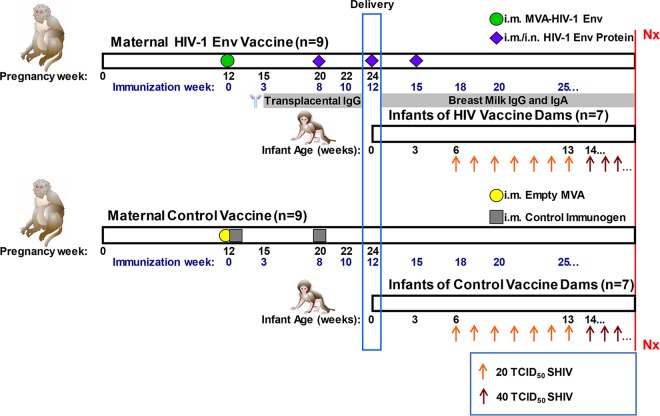
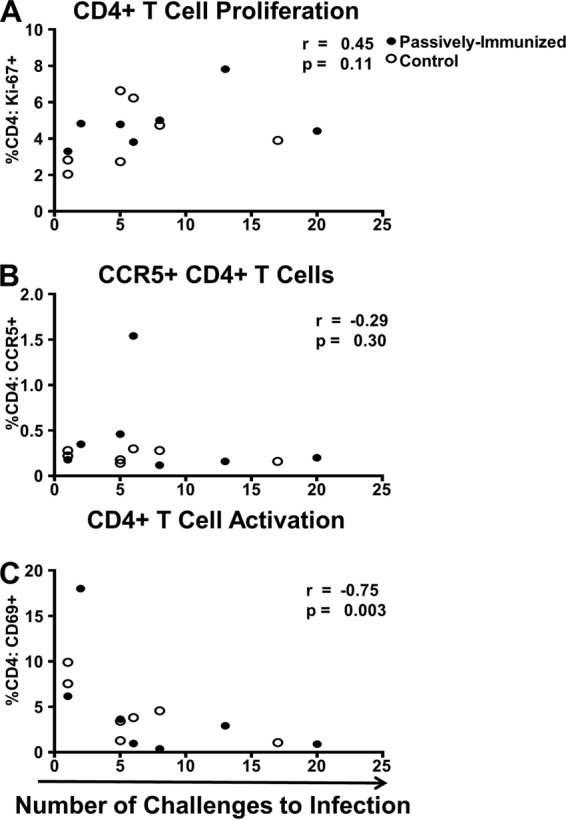
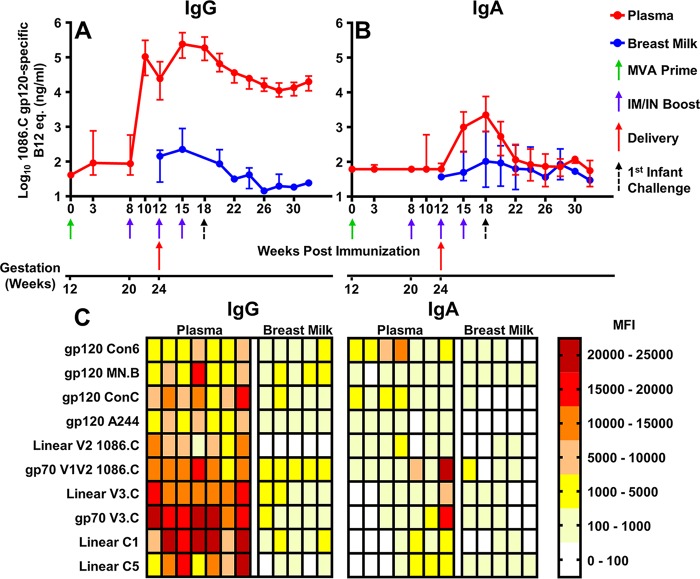
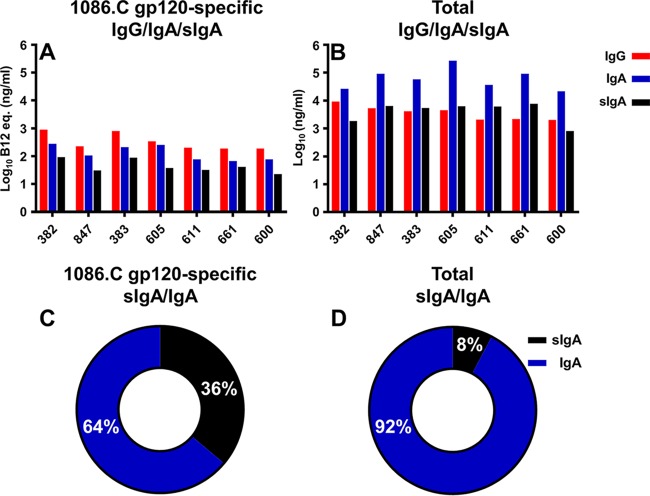
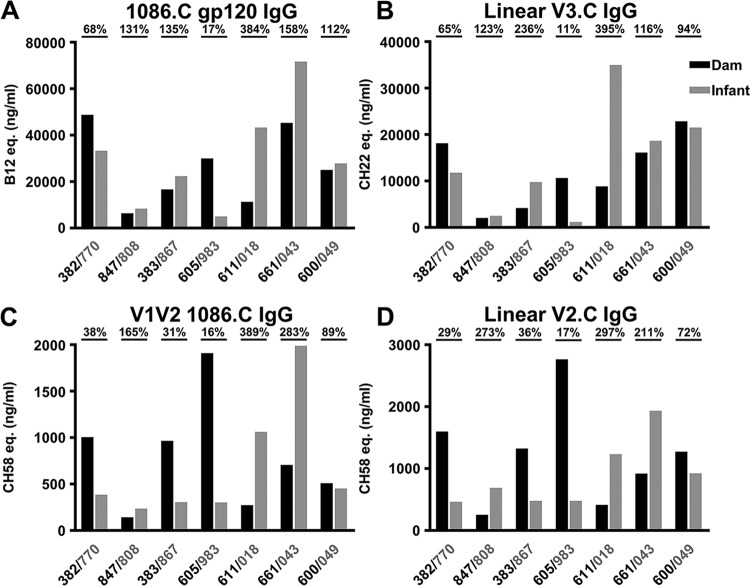
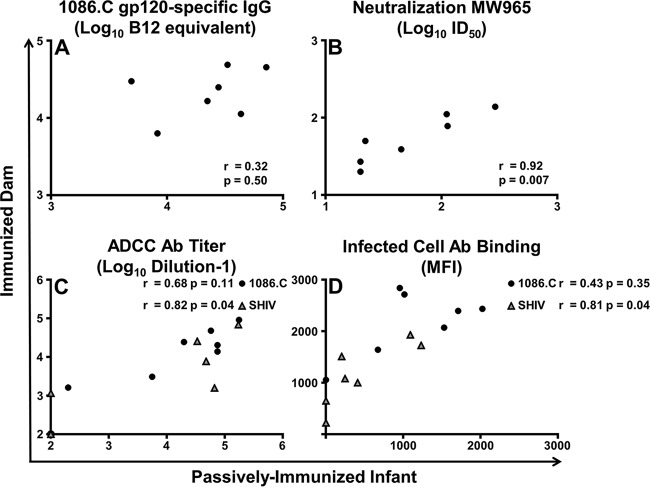
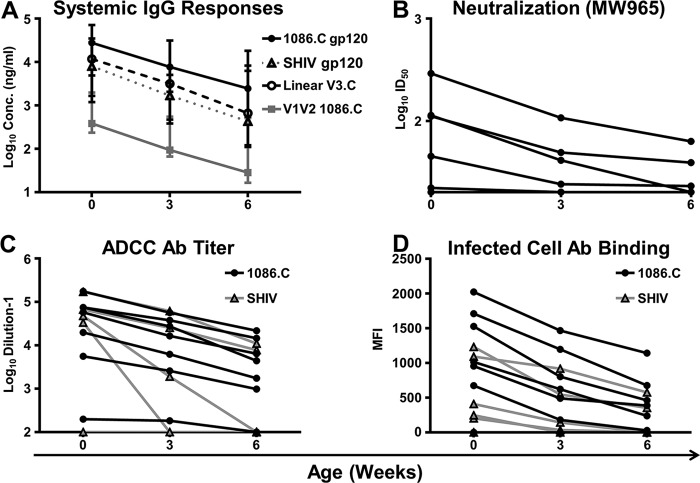
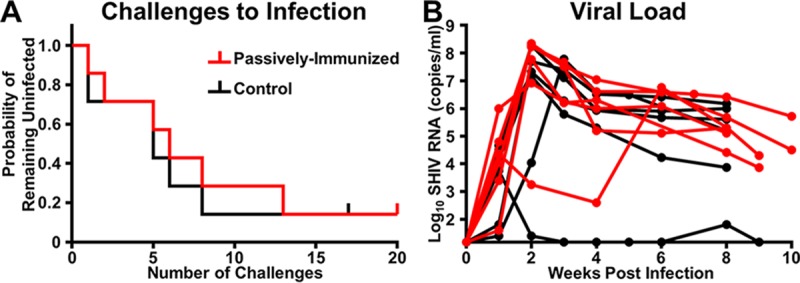
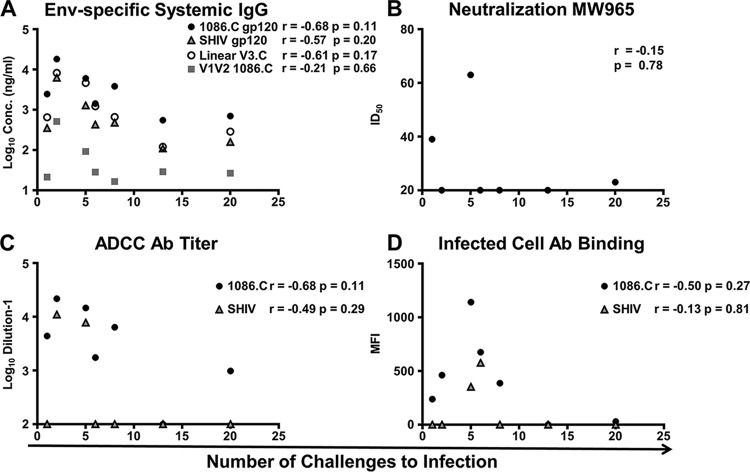
Mother-to-child transmission (MTCT) of human immunodeficiency virus type 1 (HIV-1) contributes to an estimated 150,000 new infections annually. Maternal vaccination has proven safe and effective at mitigating the impact of other neonatal pathogens and is one avenue toward generating the potentially protective immune responses necessary to inhibit HIV-1 infection of infants through breastfeeding. In the present study, we tested the efficacy of a maternal vaccine regimen consisting of a modified vaccinia virus Ankara (MVA) 1086.C gp120 prime-combined intramuscular-intranasal gp120 boost administered during pregnancy and postpartum to confer passive protection on infant rhesus macaques against weekly oral exposure to subtype C simian-human immunodeficiency virus 1157ipd3N4 (SHIV1157ipd3N4) starting 6 weeks after birth. Despite eliciting a robust systemic envelope (Env)-specific IgG response, as well as durable milk IgA responses, the maternal vaccine did not have a discernible impact on infant oral SHIV acquisition. This study revealed considerable variation in vaccine-elicited IgG placental transfer and a swift decline of both Env-specific antibodies (Abs) and functional Ab responses in the infants prior to the first challenge, illustrating the importance of pregnancy immunization timing to elicit optimal systemic Ab levels at birth. Interestingly, the strongest correlation to the number of challenges required to infect the infants was the percentage of activated CD4 T cells in the infant peripheral blood at the time of the first challenge. These findings suggest that, in addition to maternal immunization, interventions that limit the activation of target cells that contribute to susceptibility to oral HIV-1 acquisition independently of vaccination may be required to reduce infant HIV-1 acquisition via breastfeeding. Without novel strategies to prevent mother-to-child HIV-1 transmission, more than 5% of HIV-1-exposed infants will continue to acquire HIV-1, most through breastfeeding. This study of rhesus macaque dam-and-infant pairs is the first preclinical study to investigate the protective role of transplacentally transferred HIV-1 vaccine-elicited antibodies and HIV-1 vaccine-elicited breast milk antibody responses in infant oral virus acquisition. It revealed highly variable placental transfer of potentially protective antibodies and emphasized the importance of pregnancy immunization timing to reach peak antibody levels prior to delivery. While there was no discernible impact of maternal immunization on late infant oral virus acquisition, we observed a strong correlation between the percentage of activated CD4 T cells in infant peripheral blood and a reduced number of challenges to infection. This finding highlights an important consideration for future studies evaluating alternative strategies to further reduce the vertical HIV-1 transmission risk.
据估计,每年约有15万例新的人类免疫缺陷病毒1型(HIV-1)母婴传播(MTCT)感染病例。母体疫苗接种已被证明在减轻其他新生儿病原体影响方面是安全有效的,并且是产生抑制婴儿通过母乳喂养感染HIV-1所需的潜在保护性免疫反应的途径之一。在本研究中,我们测试了一种母体疫苗方案的效果,该方案包括在孕期和产后给予改良安卡拉痘苗病毒(MVA)1086.C gp120初免,联合肌内-鼻内gp120加强免疫,以给予恒河猴幼猴被动保护,使其免受从出生后6周开始每周口服C亚型猿猴-人类免疫缺陷病毒1157ipd3N4(SHIV1157ipd3N4)的感染。尽管该母体疫苗引发了强烈的全身性包膜(Env)特异性IgG反应以及持久的乳汁IgA反应,但对幼猴经口感染SHIV并没有明显影响。这项研究揭示了疫苗诱导的IgG经胎盘转移存在显著差异,并且在首次攻击前幼猴体内的Env特异性抗体(Abs)和功能性Ab反应迅速下降,这说明了孕期免疫接种时间对于在出生时引发最佳全身性Ab水平的重要性。有趣的是,与感染幼猴所需攻击次数最强的相关性是首次攻击时幼猴外周血中活化CD4 T细胞的百分比。这些发现表明,除了母体免疫接种外,可能还需要采取干预措施来限制那些导致对经口感染HIV-1易感性增加的靶细胞的活化,而不依赖于疫苗接种,以减少婴儿通过母乳喂养感染HIV-1。如果没有预防HIV-1母婴传播的新策略,超过5%暴露于HIV-1的婴儿将继续感染HIV-1,其中大多数是通过母乳喂养喂养感染。这项对恒河猴母婴对的研究是第一项临床前研究,旨在调查经胎盘转移的HIV-1疫苗诱导抗体和HIV-1疫苗诱导的母乳抗体反应在婴儿经口感染病毒中的保护作用。它揭示了潜在保护性抗体的胎盘转移高度可变,并强调了孕期免疫接种时间对于在分娩前达到抗体水平峰值的重要性。虽然母体免疫接种对幼猴后期经口感染病毒没有明显影响,但我们观察到幼猴外周血中活化CD4 T细胞的百分比与感染所需攻击次数减少之间存在很强的相关性。这一发现突出了未来研究评估进一步降低HIV-1垂直传播风险的替代策略时的一个重要考虑因素。