UCL Institute of Education, University of London, UK.
Birkbeck College, London, UK.
Br J Educ Psychol. 2018 Dec;88(4):675-697. doi: 10.1111/bjep.12211. Epub 2018 Jan 22.
Prior longitudinal and correlational research with adults and adolescents indicates that spatial ability is a predictor of science learning and achievement. However, there is little research to date with primary-school aged children that addresses this relationship. Understanding this association has the potential to inform curriculum design and support the development of early interventions.
This study examined the relationship between primary-school children's spatial skills and their science achievement.
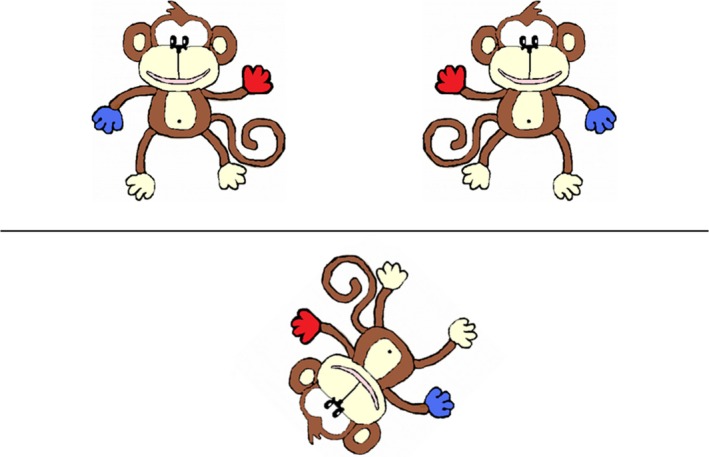
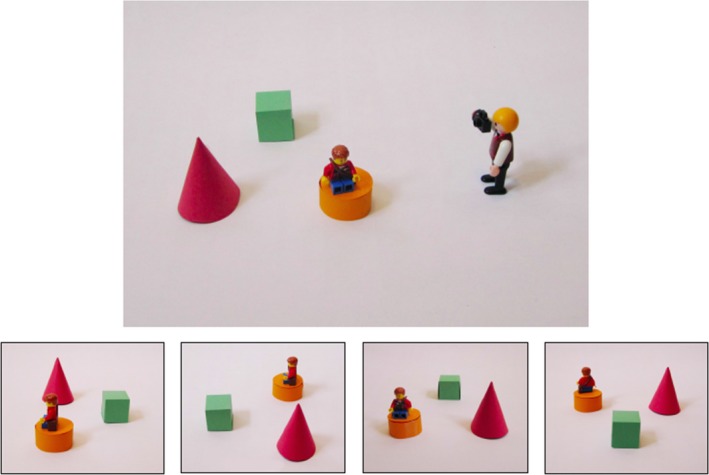
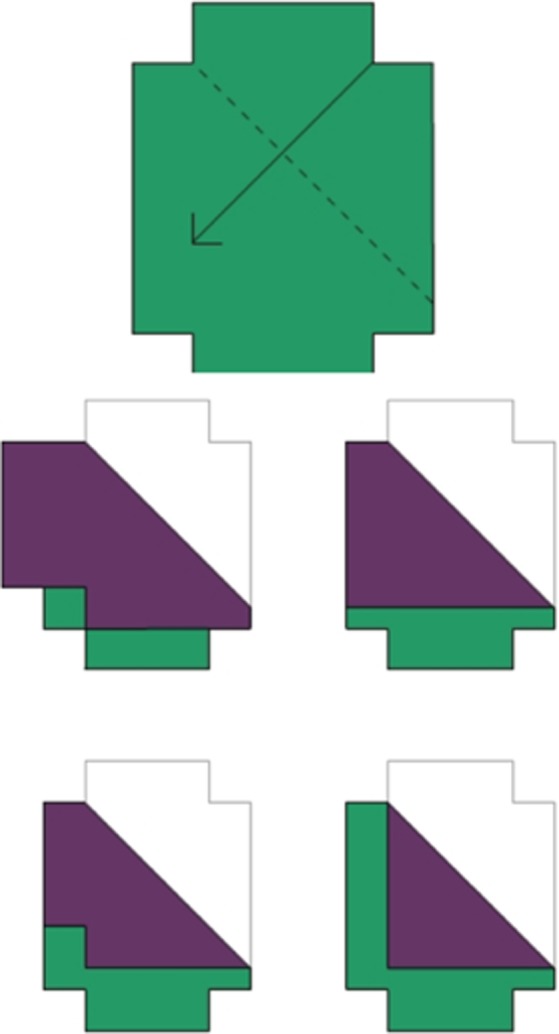
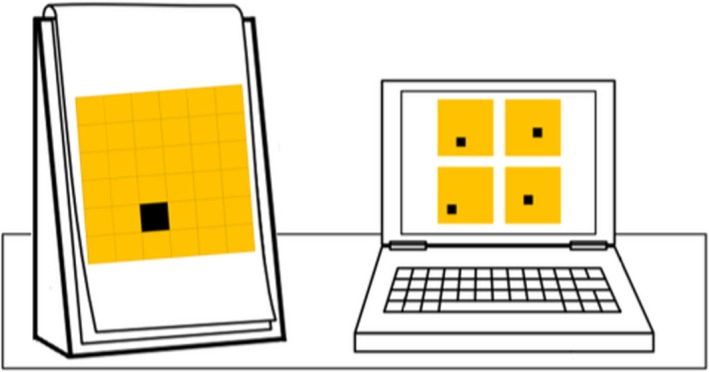
Children aged 7-11 years (N = 123) completed a battery of five spatial tasks, based on a model of spatial ability in which skills fall along two dimensions: intrinsic-extrinsic; static-dynamic. Participants also completed a curriculum-based science assessment.
Controlling for verbal ability and age, mental folding (intrinsic-dynamic spatial ability), and spatial scaling (extrinsic-static spatial ability) each emerged as unique predictors of overall science scores, with mental folding a stronger predictor than spatial scaling. These spatial skills combined accounted for 8% of the variance in science scores. When considered by scientific discipline, mental folding uniquely predicted both physics and biology scores, and spatial scaling accounted for additional variance in biology and variance in chemistry scores. The children's embedded figures task (intrinsic-static spatial ability) only accounted for variance in chemistry scores. The patterns of association were consistent across the age range.
Spatial skills, particularly mental folding, spatial scaling, and disembedding, are predictive of 7- to 11-year-olds' science achievement. These skills make a similar contribution to performance for each age group.
先前针对成年人和青少年的纵向和相关性研究表明,空间能力是科学学习和成就的预测指标。然而,目前针对小学年龄段儿童的研究很少涉及到这种关系。了解这种关联有可能为课程设计提供信息,并支持早期干预措施的发展。
本研究考察了小学生空间技能与科学成绩之间的关系。
年龄在 7-11 岁的儿童(N=123)完成了一系列基于空间能力模型的五项空间任务,该模型中技能分为两个维度:内在-外在;静态-动态。参与者还完成了基于课程的科学评估。
在控制了语言能力和年龄后,心理折叠(内在-动态空间能力)和空间缩放(外在-静态空间能力)都成为了整体科学成绩的独特预测指标,其中心理折叠的预测力更强。这些空间技能总共解释了科学成绩 8%的方差。当按科学学科考虑时,心理折叠可以独特地预测物理和生物学成绩,而空间缩放则可以解释生物学和化学成绩的额外方差。儿童的嵌入式图形任务(内在-静态空间能力)仅可以解释化学成绩的方差。这种关联模式在整个年龄范围内都是一致的。
空间技能,特别是心理折叠、空间缩放和分离,是 7-11 岁儿童科学成绩的预测指标。这些技能对每个年龄组的表现都有相似的贡献。