Department of Life Sciences, University of Siena, Via A. Moro 2, 53100 Siena, Italy.
Int J Mol Sci. 2018 Jan 23;19(2):330. doi: 10.3390/ijms19020330.
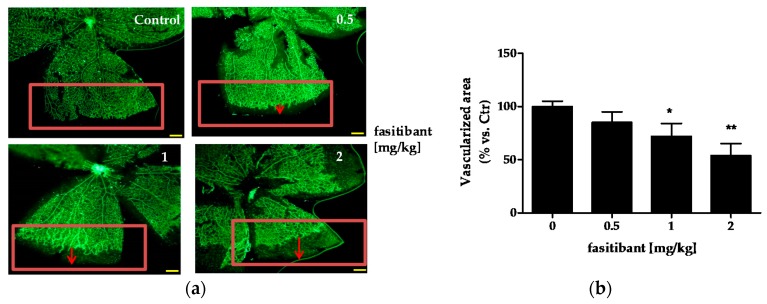
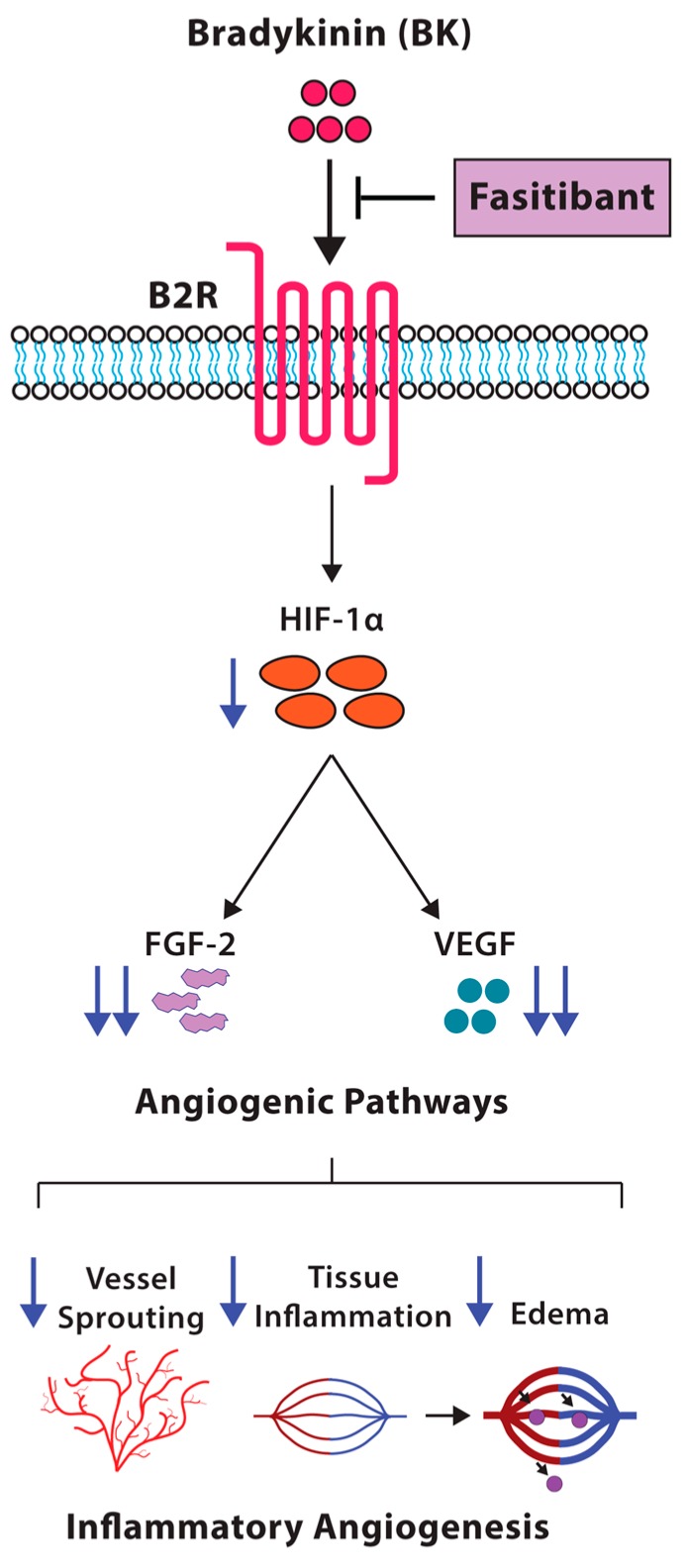
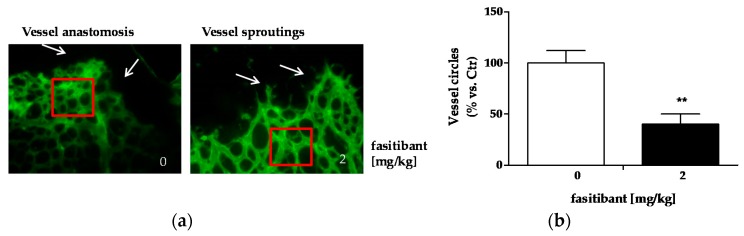
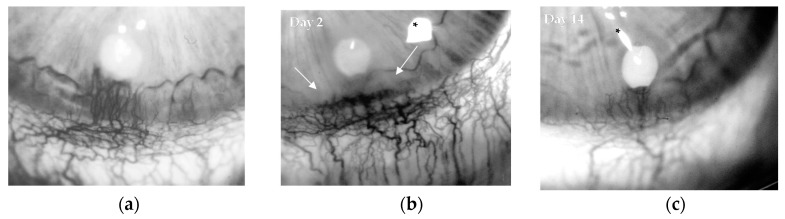
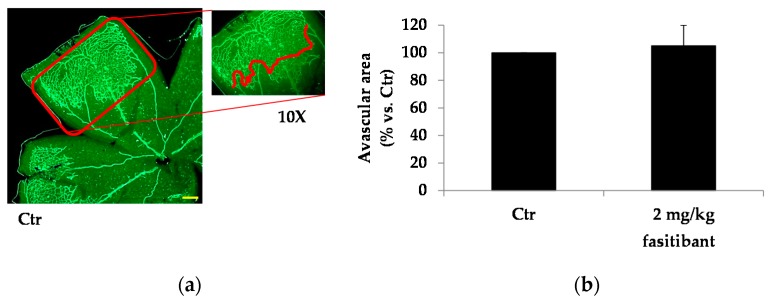
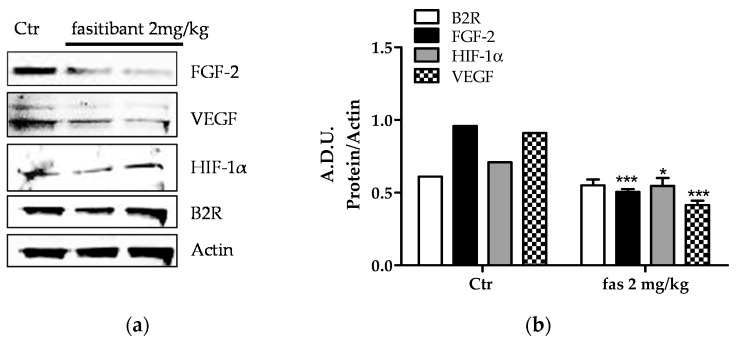
The identification of components of the kallikrein-kinin system in the vitreous from patients with microvascular retinal diseases suggests that bradykinin (BK) signaling may contribute to pathogenesis of retinal vascular complications. BK receptor 2 (B2R) signaling has been implicated in both pro-inflammatory and pro-angiogenic effects promoted by BK. Here, we investigated the role of BK/B2R signaling in the retinal neovascularization in the oxygen-induced retinopathy (OIR) model. Blockade of B2R signaling by the antagonist fasitibant delayed retinal vascularization in mouse pups, indicating that the retinal endothelium is a target of the BK/B2R system. In the rabbit cornea assay, a model of pathological neoangiogenesis, the B2 agonist kallidin induced vessel sprouting and promoted cornea opacity, a sign of edema and tissue inflammation. In agreement with these results, in the OIR model, a blockade of B2R signaling significantly reduced retinal neovascularization, as determined by the area of retinal tufts, and, in the retinal vessel, it also reduced vascular endothelial growth factor and fibroblast growth factor-2 expression. All together, these findings show that B2R blockade reduces retinal neovascularization and inhibits the expression of proangiogenic and pro-inflammatory cytokines, suggesting that targeting B2R signaling may be an effective strategy for treating ischemic retinopathy.
在患有微血管视网膜疾病的患者的玻璃体中鉴定出激肽释放酶-激肽系统的成分表明缓激肽(BK)信号可能有助于视网膜血管并发症的发病机制。BK 受体 2(B2R)信号已被牵连到 BK 促进的促炎和促血管生成作用中。在这里,我们研究了 BK/B2R 信号在氧诱导的视网膜病变(OIR)模型中的视网膜新生血管形成中的作用。通过拮抗剂 fasitibant 阻断 B2R 信号可延迟小鼠幼仔的视网膜血管化,表明视网膜内皮细胞是 BK/B2R 系统的靶标。在兔角膜模型中,即病理性新生血管形成的模型中,B2 激动剂 Kallidin 诱导血管发芽并促进角膜混浊,这是水肿和组织炎症的标志。与这些结果一致,在 OIR 模型中,B2R 信号的阻断显着减少了视网膜新生血管形成,如视网膜簇的面积所确定的,并且在视网膜血管中,它还减少了血管内皮生长因子和成纤维细胞生长因子-2 的表达。所有这些发现表明,B2R 阻断可减少视网膜新生血管形成并抑制促血管生成和促炎细胞因子的表达,表明靶向 B2R 信号可能是治疗缺血性视网膜病变的有效策略。