Chalkias Spyros, Gorham Joshua M, Mazaika Erica, Parfenov Michael, Dang Xin, DePalma Steve, McKean David, Seidman Christine E, Seidman Jonathan G, Koralnik Igor J
Division of NeuroImmunology, Center for Virology and Vaccine Research, Department of Medicine, Beth Israel Deaconess Medical Center, Harvard Medical School, Boston, Massachusetts, United States of America.
Department of Genetics, Harvard Medical School, Boston, Massachusetts, United States of America.
PLoS One. 2018 Jan 23;13(1):e0186945. doi: 10.1371/journal.pone.0186945. eCollection 2018.
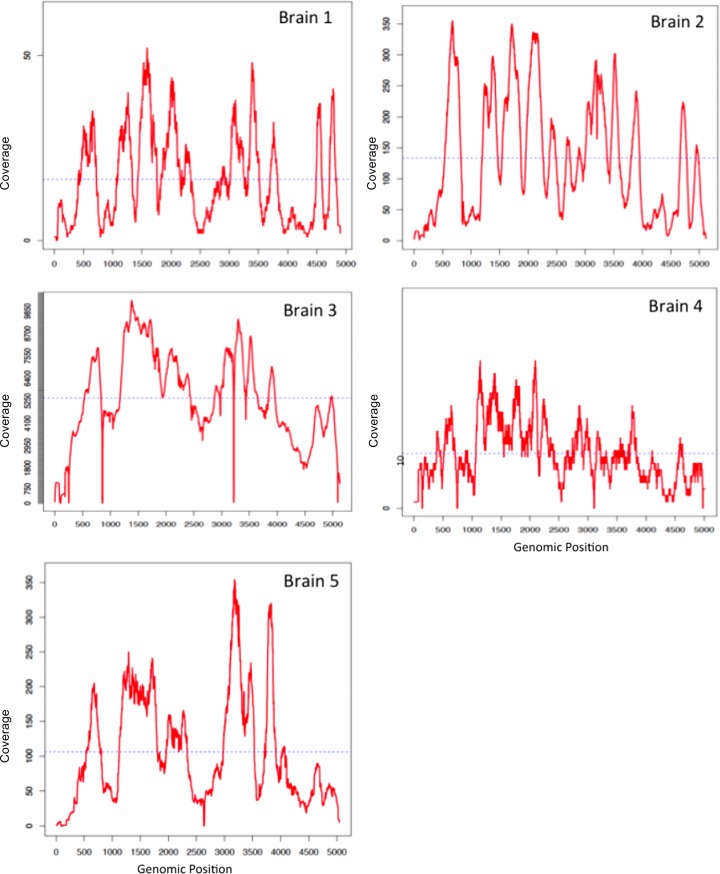
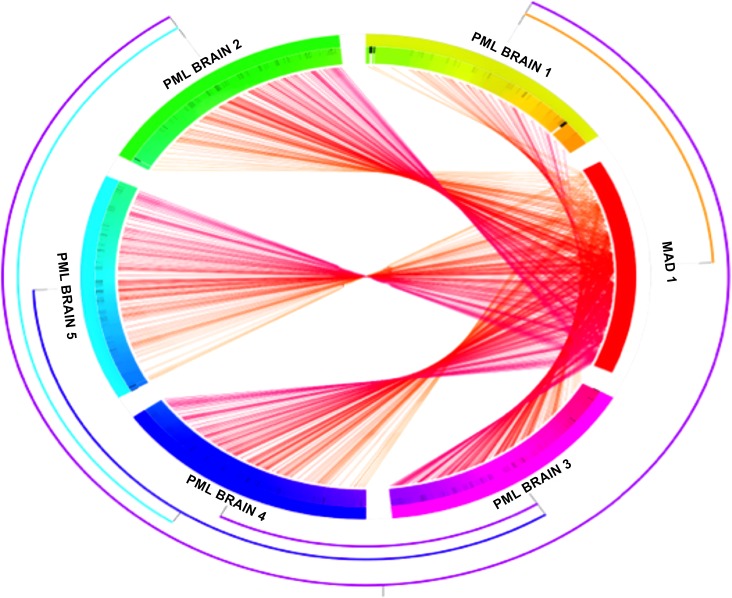
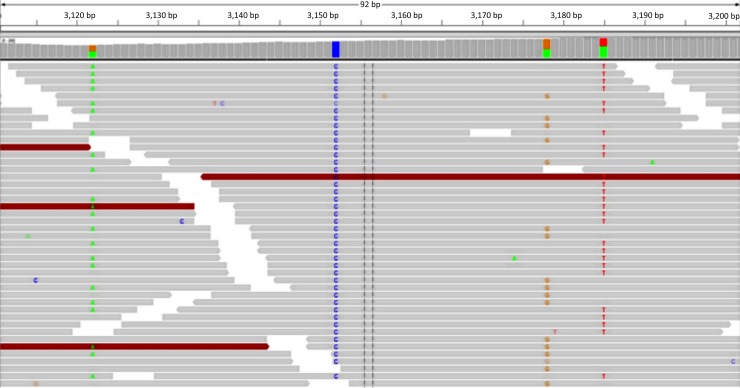
Deep nucleotide sequencing enables the unbiased, broad-spectrum detection of viruses in clinical samples without requiring an a priori hypothesis for the source of infection. However, its use in clinical research applications is limited by low cost-effectiveness given that most of the sequencing information from clinical samples is related to the human genome, which renders the analysis of viral genomes challenging. To overcome this limitation we developed ViroFind, an in-solution target-enrichment platform for virus detection and discovery in clinical samples. ViroFind comprises 165,433 viral probes that cover the genomes of 535 selected DNA and RNA viruses that infect humans or could cause zoonosis. The ViroFind probes are used in a hybridization reaction to enrich viral sequences and therefore enhance the detection of viral genomes via deep sequencing. We used ViroFind to detect and analyze all viral populations in the brain of 5 patients with progressive multifocal leukoencephalopathy (PML) and of 18 control subjects with no known neurological disease. Compared to direct deep sequencing, by using ViroFind we enriched viral sequences present in the clinical samples up to 127-fold. We discovered highly complex polyoma virus JC populations in the PML brain samples with a remarkable degree of genetic divergence among the JC virus variants of each PML brain sample. Specifically for the viral capsid protein VP1 gene, we identified 24 single nucleotide substitutions, 12 of which were associated with amino acid changes. The most frequent (4 of 5 samples, 80%) amino acid change was D66H, which is associated with enhanced tissue tropism, and hence likely a viral fitness advantage, compared to other variants. Lastly, we also detected sparse JC virus sequences in 10 of 18 (55.5%) of control samples and sparse human herpes virus 6B (HHV6B) sequences in the brain of 11 of 18 (61.1%) control subjects. In sum, ViroFind enabled the in-depth analysis of all viral genomes in PML and control brain samples and allowed us to demonstrate a high degree of JC virus genetic divergence in vivo that has been previously underappreciated. ViroFind can be used to investigate the structure of the virome with unprecedented depth in health and disease state.
深度核苷酸测序能够在无需对感染源进行先验假设的情况下,对临床样本中的病毒进行无偏倚、广谱检测。然而,鉴于临床样本中的大部分测序信息与人类基因组相关,这使得病毒基因组分析具有挑战性,其在临床研究应用中的使用受到成本效益低下的限制。为克服这一限制,我们开发了ViroFind,这是一种用于临床样本中病毒检测与发现的溶液内靶标富集平台。ViroFind包含165,433个病毒探针,覆盖535种选定的感染人类或可能导致人畜共患病的DNA和RNA病毒的基因组。ViroFind探针用于杂交反应以富集病毒序列,从而通过深度测序增强病毒基因组的检测。我们使用ViroFind检测和分析了5例进行性多灶性白质脑病(PML)患者以及18名无已知神经疾病的对照受试者大脑中的所有病毒群体。与直接深度测序相比,使用ViroFind可将临床样本中存在的病毒序列富集高达127倍。我们在PML脑样本中发现了高度复杂的多瘤病毒JC群体,每个PML脑样本的JC病毒变体之间存在显著程度的遗传差异。具体针对病毒衣壳蛋白VP1基因,我们鉴定出24个单核苷酸替换,其中12个与氨基酸变化相关。最常见的氨基酸变化(5个样本中的4个,80%)是D66H,与其他变体相比,它与增强的组织嗜性相关,因此可能具有病毒适应性优势。最后,我们还在18个对照样本中的10个(55.5%)中检测到稀疏的JC病毒序列,在18名对照受试者中的11名(61.1%)大脑中检测到稀疏的人类疱疹病毒6B(HHV6B)序列。总之,ViroFind能够对PML和对照脑样本中的所有病毒基因组进行深入分析,并使我们能够证明体内JC病毒存在高度的遗传差异,而这一点此前未得到充分认识。ViroFind可用于以前所未有的深度研究健康和疾病状态下病毒群落的结构。