College of Life Science, Shandong Normal University, Jinan, China.
Institute of Vegetables and Flowers, Shandong Academy of Agricultural Sciences/ Shandong Key Laboratory of Greenhouse Vegetable Biology / Shandong Branch of National Vegetable Improvement Center, Jinan, China.
PLoS One. 2018 Jan 23;13(1):e0191406. doi: 10.1371/journal.pone.0191406. eCollection 2018.
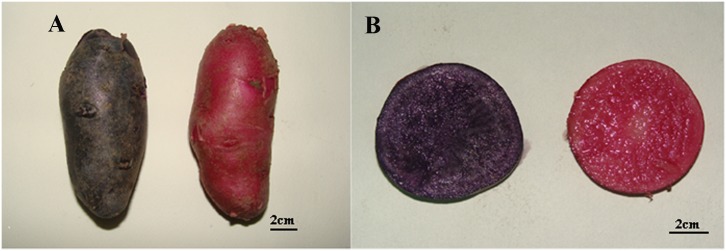
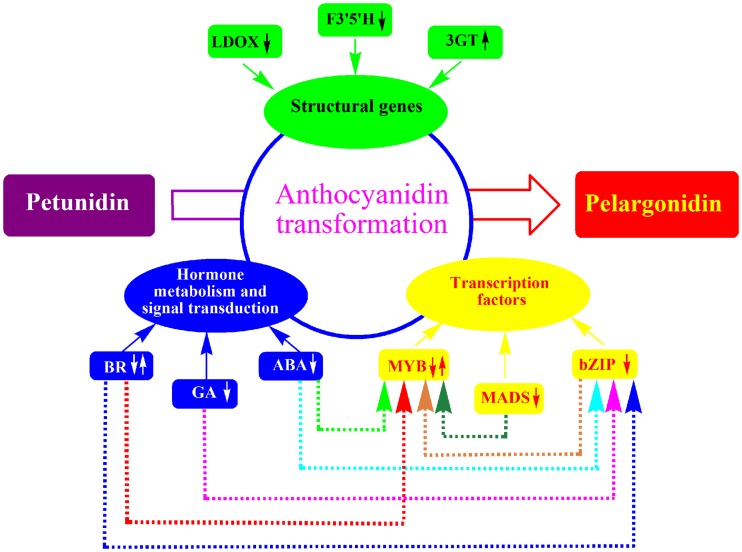
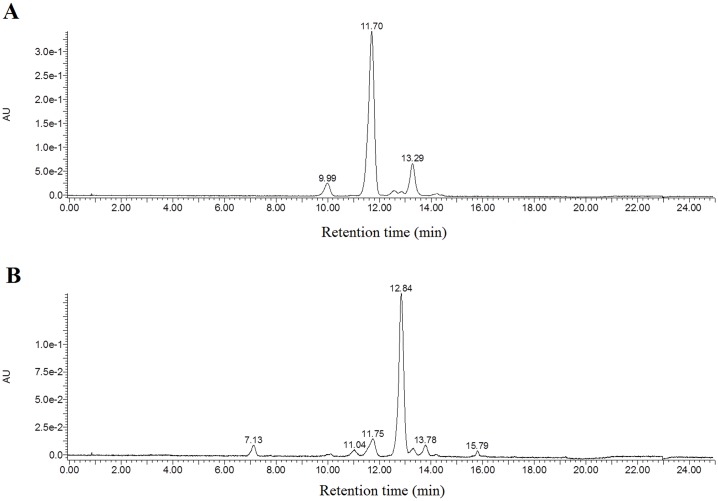
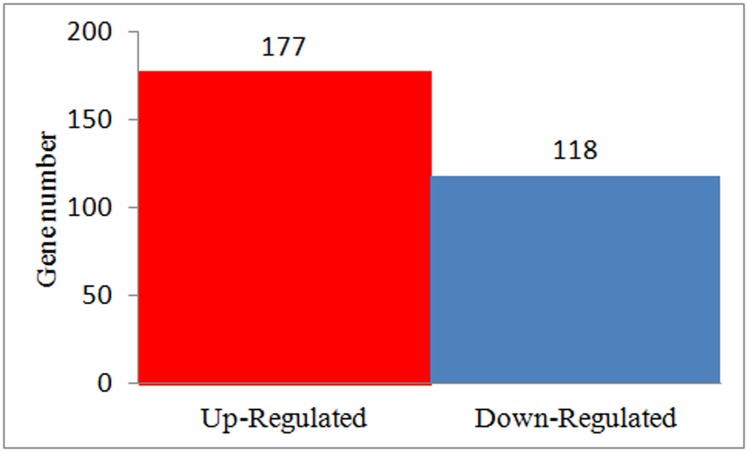
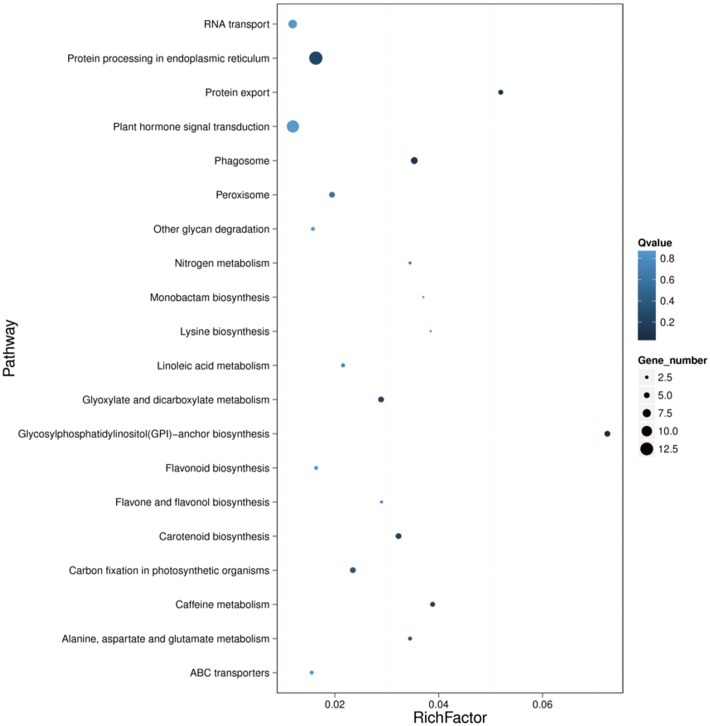
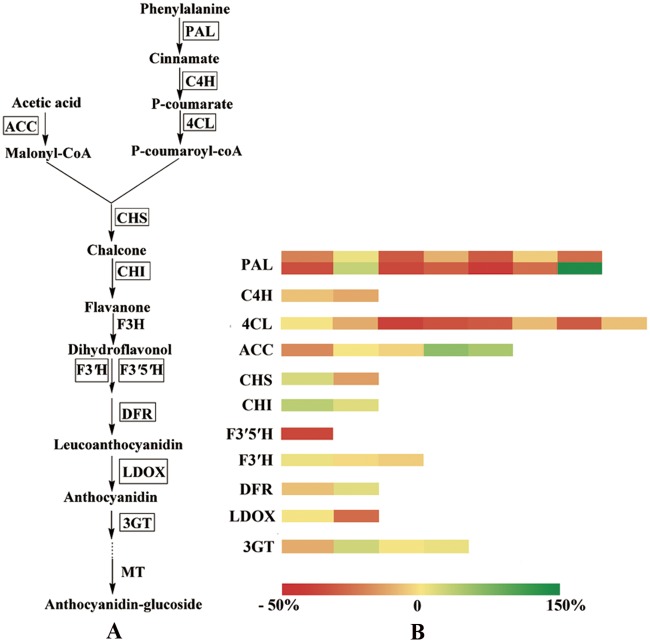
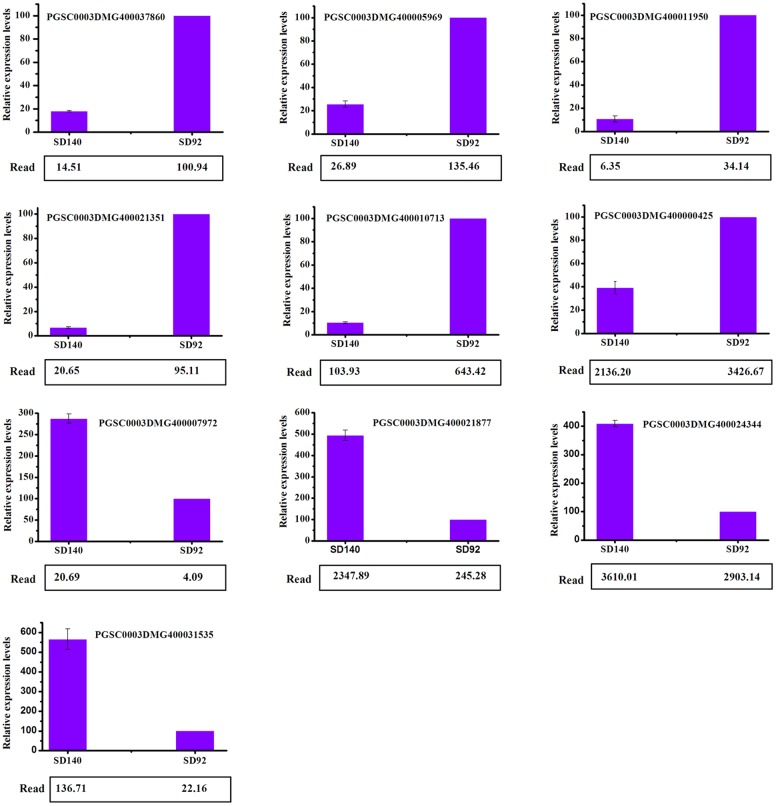
In this study, a red mutant was obtained through in vitro regeneration of a wild purple potato. High-performance liquid chromatography and Mass spectrometry analysis revealed that pelargonidin-3-O-glucoside and petunidin-3-O-glucoside were main anthocyanins in the mutant and wild type tubers, respectively. In order to thoroughly understand the mechanism of anthocyanin transformation in two materials, a comparative transcriptome analysis of the mutant and wild type was carried out through high-throughput RNA sequencing, and 295 differentially expressed genes (DEGs) were obtained. Real-time qRT-PCR validation of DEGs was consistent with the transcriptome date. The DEGs mainly influenced biological and metabolic pathways, including phenylpropanoid biosynthesis and translation, and biosynthesis of flavone and flavonol. In anthocyanin biosynthetic pathway, the analysis of structural genes expressions showed that three genes, one encoding phenylalanine ammonia-lyase, one encoding 4-coumarate-CoA ligase and one encoding flavonoid 3',5'-hydroxylasem were significantly down-regulated in the mutant; one gene encoding phenylalanine ammonia-lyase was significantly up-regulated. Moreover, the transcription factors, such as bZIP family, MYB family, LOB family, MADS family, zf-HD family and C2H2 family, were significantly regulated in anthocyanin transformation. Response proteins of hormone, such as gibberellin, abscisic acid and brassinosteroid, were also significantly regulated in anthocyanin transformation. The information contributes to discovering the candidate genes in anthocyanin transformation, which can serve as a comprehensive resource for molecular mechanism research of anthocyanin transformation in potatoes.
在这项研究中,通过野生紫色马铃薯的体外再生获得了一个红色突变体。高效液相色谱和质谱分析表明,pelargonidin-3-O-glucoside 和 petunidin-3-O-glucoside 分别是突变体和野生型块茎中的主要花色苷。为了彻底了解两种材料中花色苷转化的机制,通过高通量 RNA 测序对突变体和野生型进行了比较转录组分析,获得了 295 个差异表达基因(DEGs)。DEGs 的实时 qRT-PCR 验证与转录组数据一致。DEGs 主要影响生物和代谢途径,包括苯丙烷生物合成和翻译以及黄酮和黄酮醇的生物合成。在花色苷生物合成途径中,结构基因表达分析表明,突变体中三个基因,一个编码苯丙氨酸解氨酶,一个编码 4-香豆酸-CoA 连接酶,一个编码黄酮 3',5'-羟化酶,表达显著下调;一个编码苯丙氨酸解氨酶的基因表达显著上调。此外,花色苷转化中 bZIP 家族、MYB 家族、LOB 家族、MADS 家族、zf-HD 家族和 C2H2 家族等转录因子也得到了显著调控。激素应答蛋白,如赤霉素、脱落酸和油菜素内酯,在花色苷转化中也得到了显著调控。这些信息有助于发现花色苷转化中的候选基因,为马铃薯花色苷转化的分子机制研究提供了综合资源。