IfL-Phonetics, University of Cologne, Cologne, Germany.
University Hospital Cologne, Department of Neurology, Cologne, Germany.
PLoS One. 2018 Jan 23;13(1):e0191359. doi: 10.1371/journal.pone.0191359. eCollection 2018.
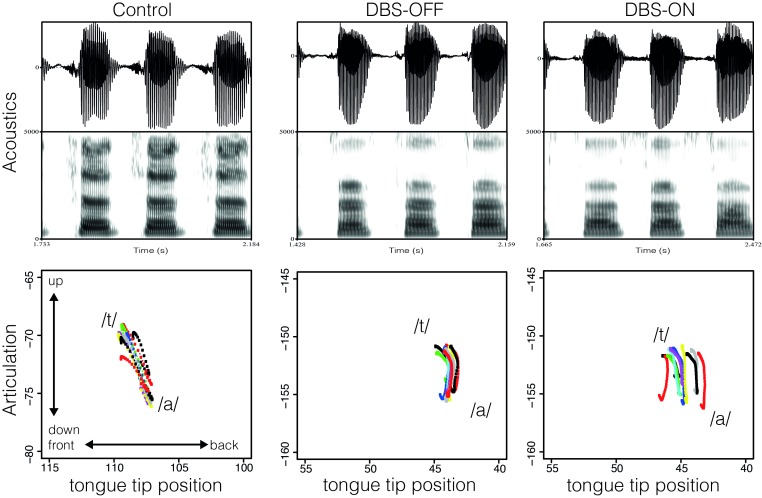
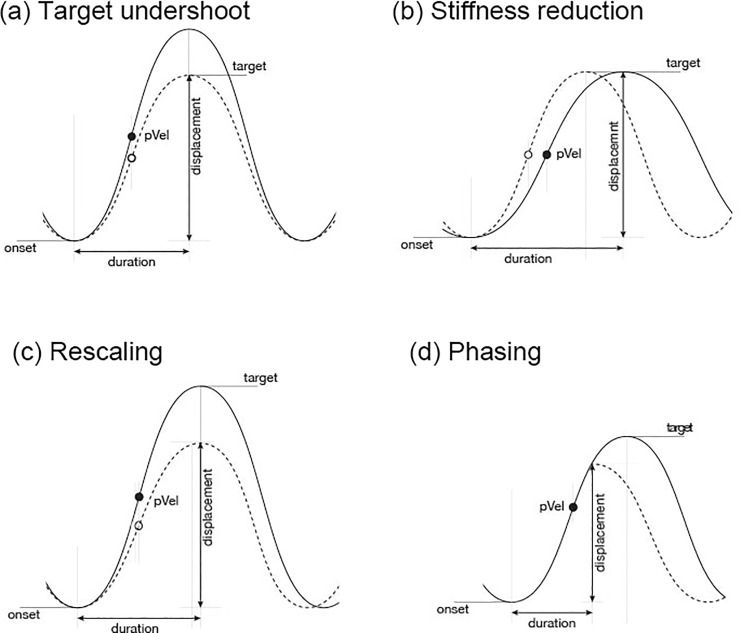
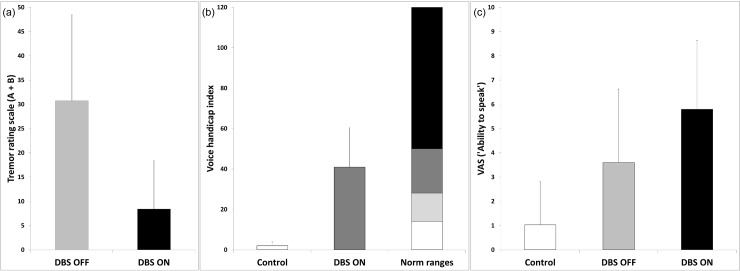
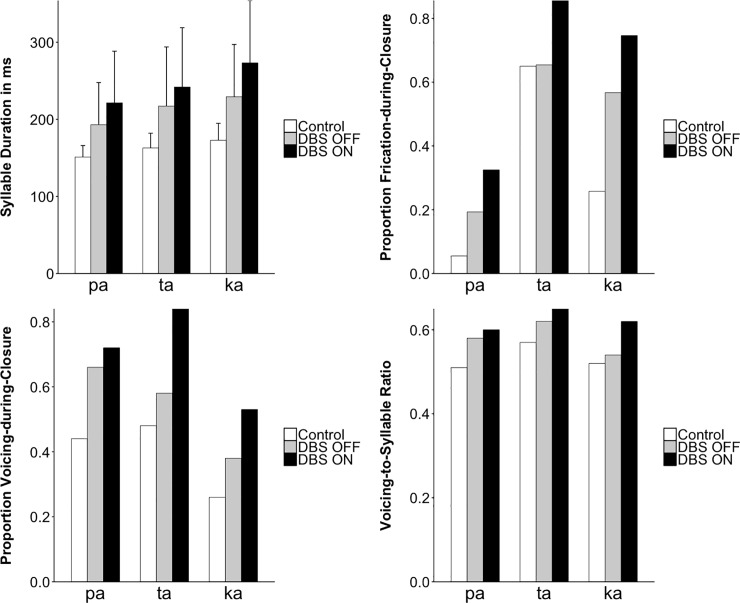
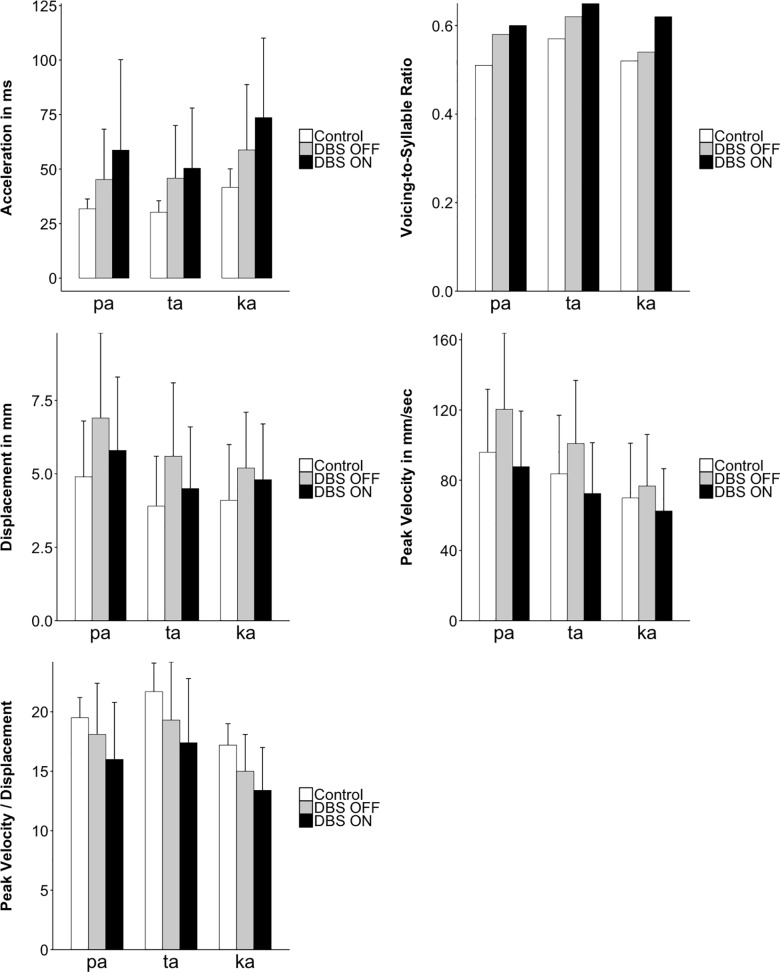
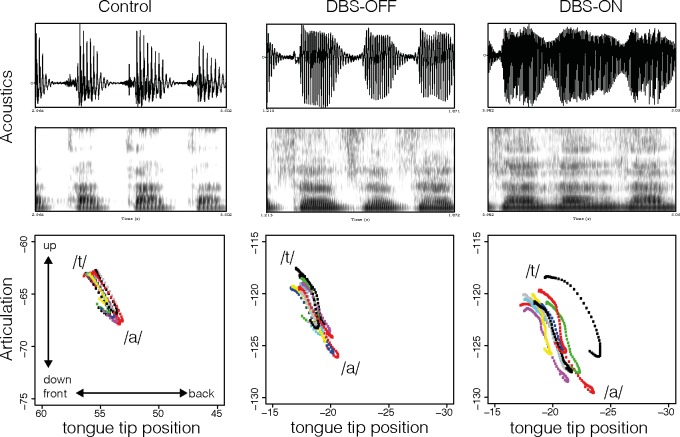
Acoustic studies have revealed that patients with Essential Tremor treated with thalamic Deep Brain Stimulation (DBS) may suffer from speech deterioration in terms of imprecise oral articulation and reduced voicing control. Based on the acoustic signal one cannot infer, however, whether this deterioration is due to a general slowing down of the speech motor system (e.g., a target undershoot of a desired articulatory goal resulting from being too slow) or disturbed coordination (e.g., a target undershoot caused by problems with the relative phasing of articulatory movements). To elucidate this issue further, we here investigated both acoustics and articulatory patterns of the labial and lingual system using Electromagnetic Articulography (EMA) in twelve Essential Tremor patients treated with thalamic DBS and twelve age- and sex-matched controls. By comparing patients with activated (DBS-ON) and inactivated stimulation (DBS-OFF) with control speakers, we show that critical changes in speech dynamics occur on two levels: With inactivated stimulation (DBS-OFF), patients showed coordination problems of the labial and lingual system in terms of articulatory imprecision and slowness. These effects of articulatory discoordination worsened under activated stimulation, accompanied by an additional overall slowing down of the speech motor system. This leads to a poor performance of syllables on the acoustic surface, reflecting an aggravation either of pre-existing cerebellar deficits and/or the affection of the upper motor fibers of the internal capsule.
声学研究表明,接受丘脑深部脑刺激 (DBS) 治疗的原发性震颤患者可能会出现言语恶化,表现为口腔发音不准确和发声控制减弱。然而,基于声学信号,人们无法推断这种恶化是由于言语运动系统整体减慢(例如,由于太慢而导致目标低于预期的发音目标)还是协调紊乱(例如,由于发音运动的相对相位问题而导致目标低于预期)。为了进一步阐明这个问题,我们在这里使用电磁发音仪 (EMA) 研究了 12 名接受丘脑 DBS 治疗的原发性震颤患者和 12 名年龄和性别匹配的对照组的唇部和舌部系统的声学和发音模式。通过比较激活刺激(DBS-ON)和失活刺激(DBS-OFF)与对照组说话者的患者,我们表明,言语动力学的关键变化发生在两个层面上:在失活刺激(DBS-OFF)下,患者表现出唇部和舌部系统的协调问题,表现为发音不准确和缓慢。在激活刺激下,这种发音不协调的影响会恶化,同时言语运动系统的整体速度也会进一步减慢。这导致音节在声学表面上的表现不佳,反映了小脑先前存在的缺陷的恶化和/或内囊上运动纤维的受累。