Faculty of Agriculture, Kyushu University, Fukuoka, 812-8581, Japan.
Graduate School of Biostudies, Kyoto University, Kyoto, 606-8502, Japan.
Sci Rep. 2018 Jan 24;8(1):1472. doi: 10.1038/s41598-018-19896-9.
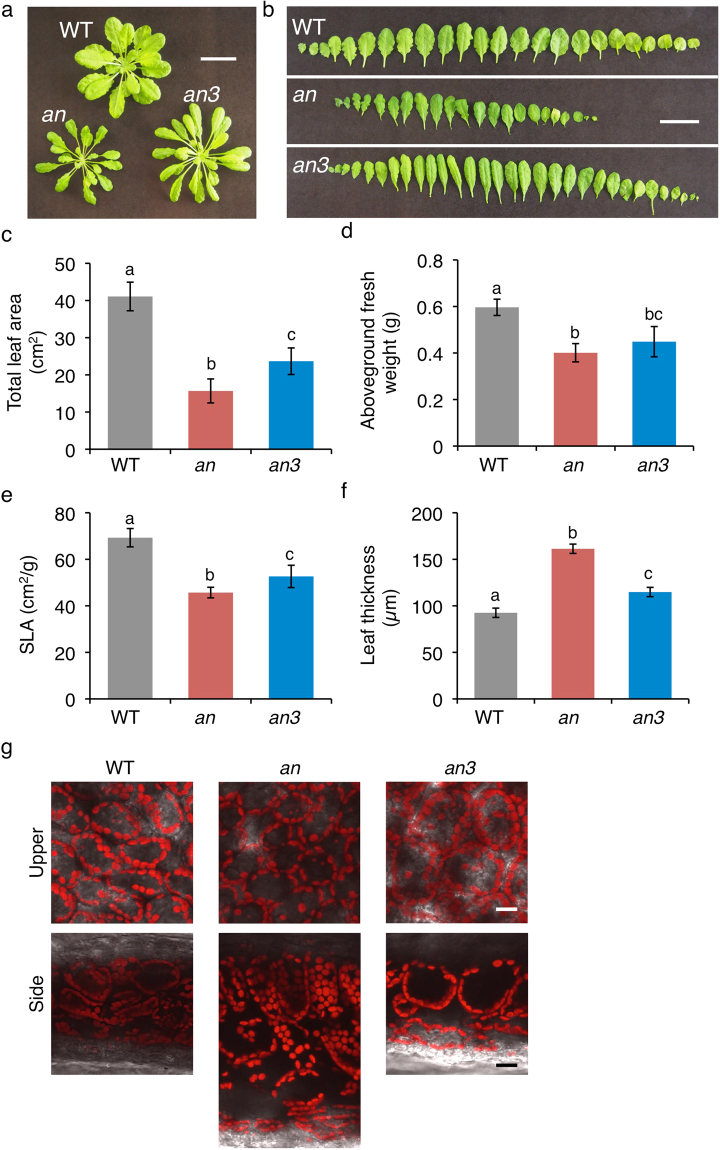
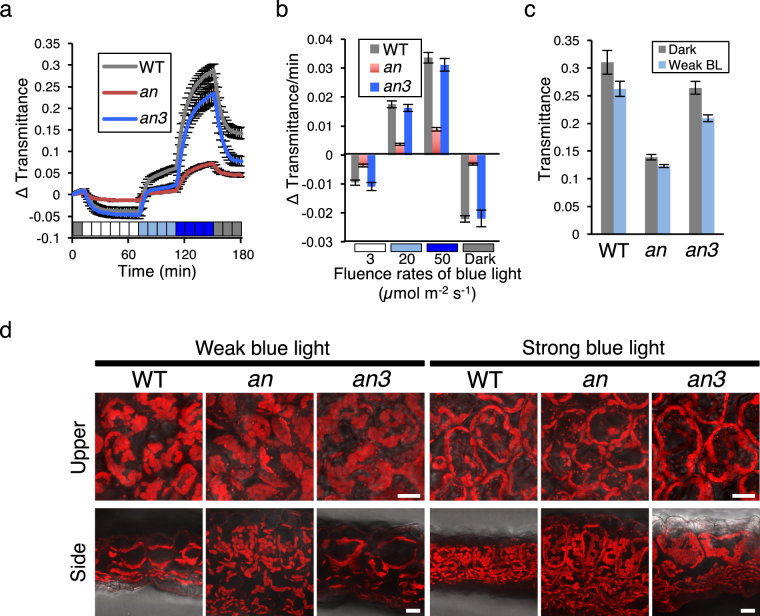
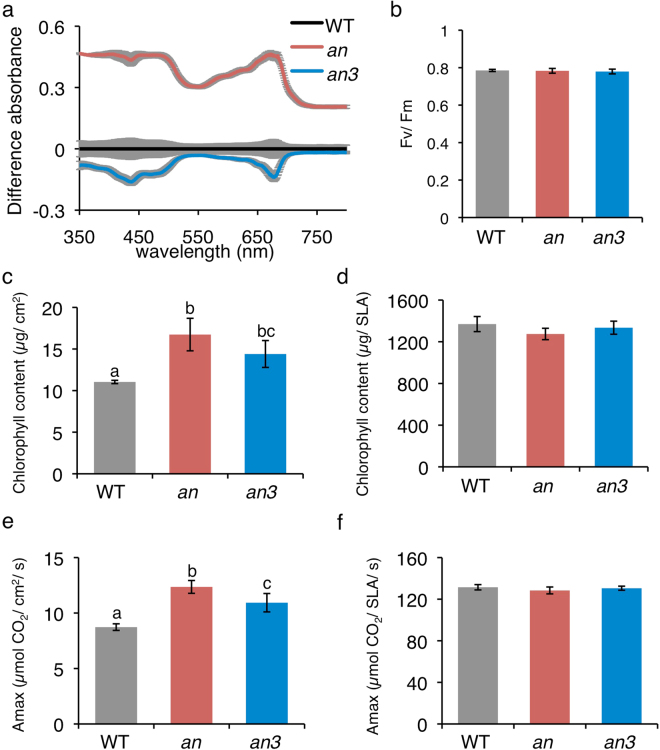
Leaf photosynthesis is regulated by multiple factors that help the plant to adapt to fluctuating light conditions. Leaves of sun-light-grown plants are thicker and contain more columnar palisade cells than those of shade-grown plants. Light-induced chloroplast movements are also essential for efficient leaf photosynthesis and facilitate efficient light utilization in leaf cells. Previous studies have demonstrated that leaves of most of the sun-grown plants exhibited no or very weak chloroplast movements and could accomplish efficient photosynthesis under strong light. To examine the relationship between palisade cell shape, chloroplast movement and distribution, and leaf photosynthesis, we used an Arabidopsis thaliana mutant, angustifolia (an), which has thick leaves that contain columnar palisade cells similar to those in the sun-grown plants. In the highly columnar cells of an mutant leaves, chloroplast movements were restricted. Nevertheless, under white light condition (at 120 µmol m s), the an mutant plants showed higher chlorophyll content per unit leaf area and, thus, higher light absorption by the leaves than the wild type, which resulted in enhanced photosynthesis per unit leaf area. Our findings indicate that coordinated regulation of leaf cell shape and chloroplast movement according to the light conditions is pivotal for efficient leaf photosynthesis.
叶片光合作用受到多种因素的调节,这些因素有助于植物适应不断变化的光照条件。与阴生植物相比,光下生长的植物叶片较厚,含有更多的柱状栅栏细胞。光诱导的叶绿体运动对于高效的叶片光合作用也是必不可少的,它可以促进叶片细胞中有效利用光。先前的研究表明,大多数阳生植物的叶片没有或仅有很弱的叶绿体运动,但在强光下仍能完成高效光合作用。为了研究栅栏细胞形状、叶绿体运动和分布与叶片光合作用之间的关系,我们使用了拟南芥突变体 angustifolia(an),该突变体叶片较厚,含有与阳生植物相似的柱状栅栏细胞。在 an 突变体叶片的高度柱状细胞中,叶绿体运动受到限制。然而,在白光条件下(120 μmol m s),an 突变体植物单位叶面积的叶绿素含量较高,因此叶片吸收的光更多,导致单位叶面积的光合作用增强。我们的研究结果表明,根据光照条件协调调节叶片细胞形状和叶绿体运动对于高效的叶片光合作用至关重要。