Sidibe Adama, Ropraz Patricia, Jemelin Stéphane, Emre Yalin, Poittevin Marine, Pocard Marc, Bradfield Paul F, Imhof Beat A
Department of Pathology and Immunology, Centre Médical Universitaire (CMU), Medical faculty, University of Geneva, Rue Michel-Servet 1, CH-1211, Geneva, Switzerland.
Department of Physiology and Metabolism, Centre Médical Universitaire (CMU), Medical faculty, University of Geneva, Rue Michel-Servet 1, CH-1211, Geneva, Switzerland.
Nat Commun. 2018 Jan 24;9(1):355. doi: 10.1038/s41467-017-02610-0.
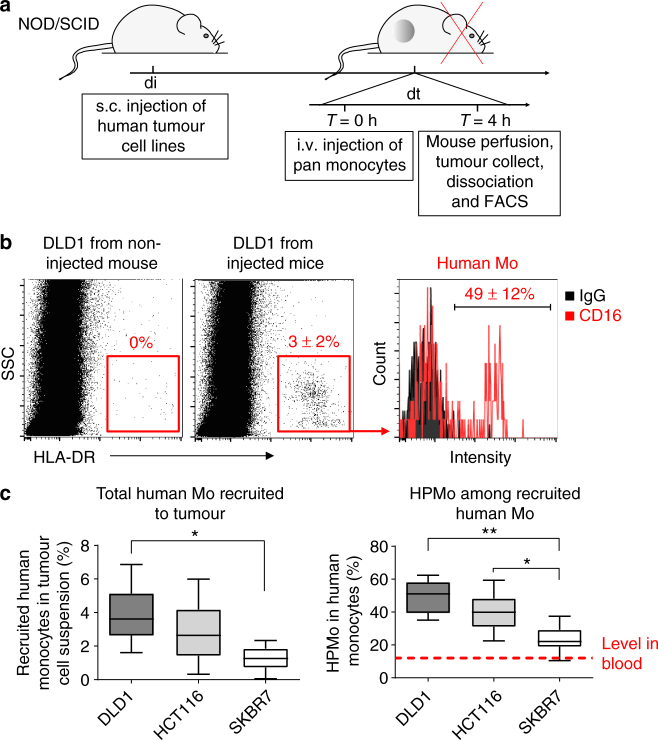
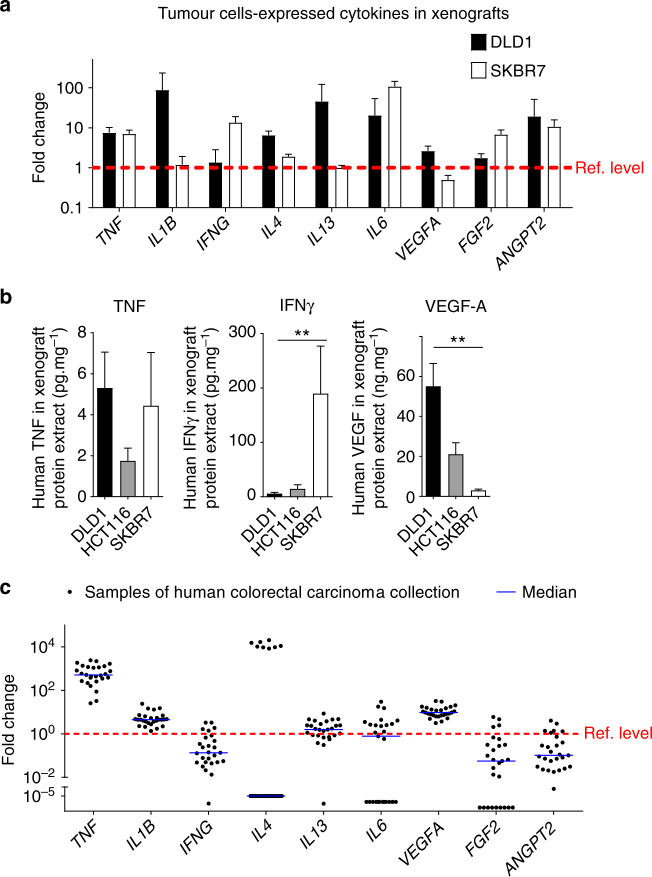
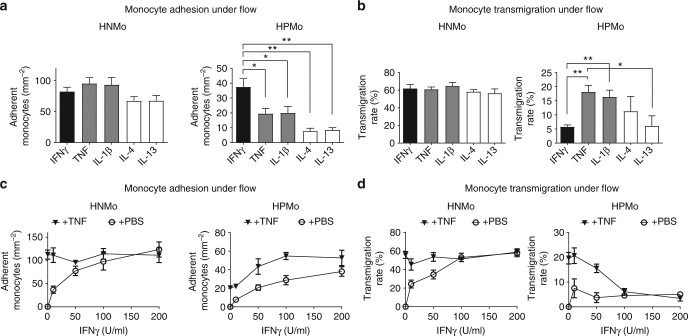
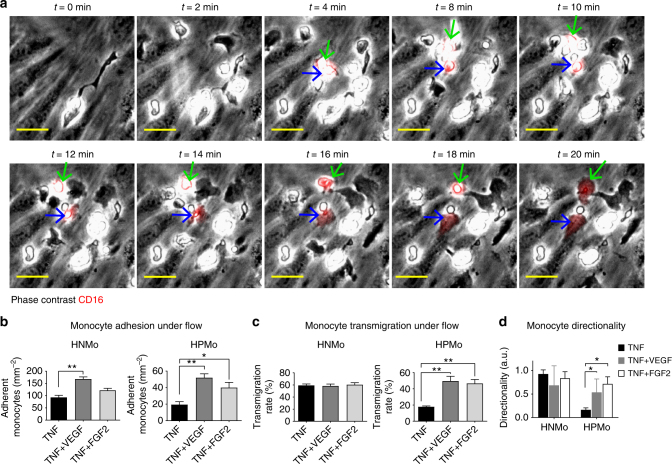
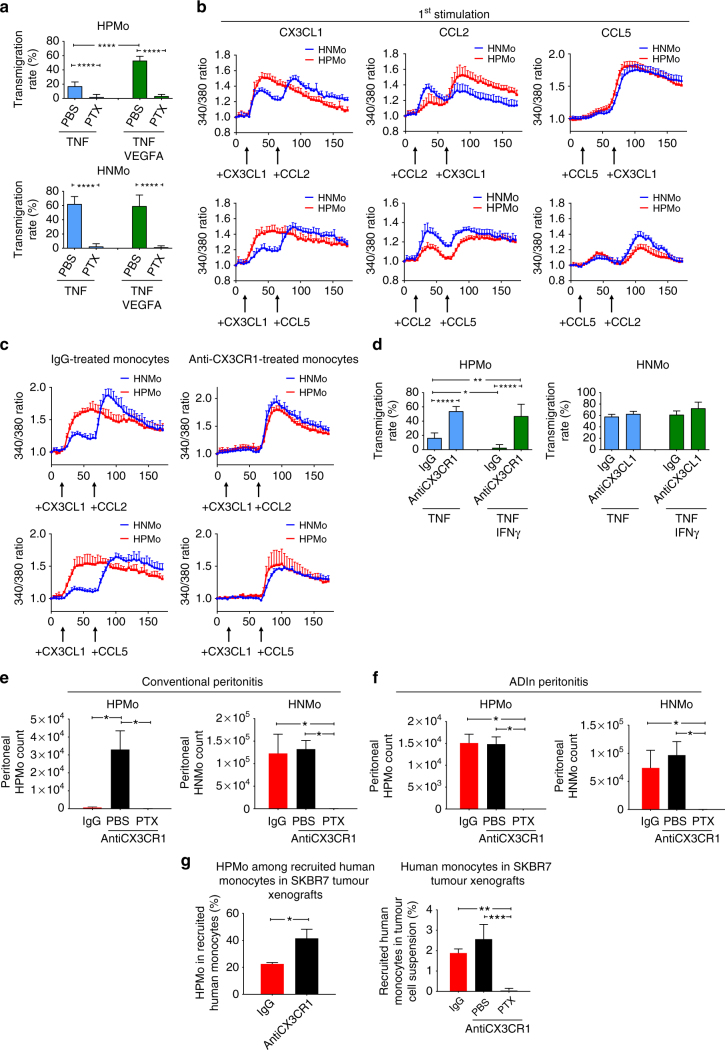
Recruitment of circulating monocytes is critical for tumour angiogenesis. However, how human monocyte subpopulations extravasate to tumours is unclear. Here we show mechanisms of extravasation of human CD14CD16 patrolling and CD14CD16 intermediate proangiogenic monocytes (HPMo), using human tumour xenograft models and live imaging of transmigration. IFNγ promotes an increase of the chemokine CX3CL1 on vessel lumen, imposing continuous crawling to HPMo and making these monocytes insensitive to chemokines required for their extravasation. Expression of the angiogenic factor VEGF and the inflammatory cytokine TNF by tumour cells enables HPMo extravasation by inducing GATA3-mediated repression of CX3CL1 expression. Recruited HPMo boosts angiogenesis by secreting MMP9 leading to release of matrix-bound VEGF-A, which amplifies the entry of more HPMo into tumours. Uncovering the extravasation cascade of HPMo sets the stage for future tumour therapies.
循环单核细胞的募集对肿瘤血管生成至关重要。然而,人类单核细胞亚群如何外渗至肿瘤尚不清楚。在此,我们利用人类肿瘤异种移植模型和迁移的实时成像,展示了人类CD14⁺CD16⁻巡逻单核细胞和CD14⁺CD16⁺中间促血管生成单核细胞(HPMo)外渗的机制。IFNγ促进血管腔内趋化因子CX3CL1增加,使HPMo持续爬行,并使这些单核细胞对其外渗所需的趋化因子不敏感。肿瘤细胞表达血管生成因子VEGF和炎性细胞因子TNF,通过诱导GATA3介导的CX3CL1表达抑制,使HPMo外渗。募集的HPMo通过分泌MMP9促进血管生成,导致与基质结合的VEGF-A释放,从而放大更多HPMo进入肿瘤的过程。揭示HPMo的外渗级联为未来的肿瘤治疗奠定了基础。