Department of Analytical, Environmental and Forensic Sciences, MRC-PHE Centre for Environment and Health, King's College London, Franklin-Wilkins Building, 150 Stamford Street, London, SE1 9NH, UK.
Department of Biochemistry, Faculty of Science, Charles University, Albertov 2030, 128 40, Prague 2, Czech Republic.
Arch Toxicol. 2018 Apr;92(4):1625-1638. doi: 10.1007/s00204-018-2162-7. Epub 2018 Jan 24.
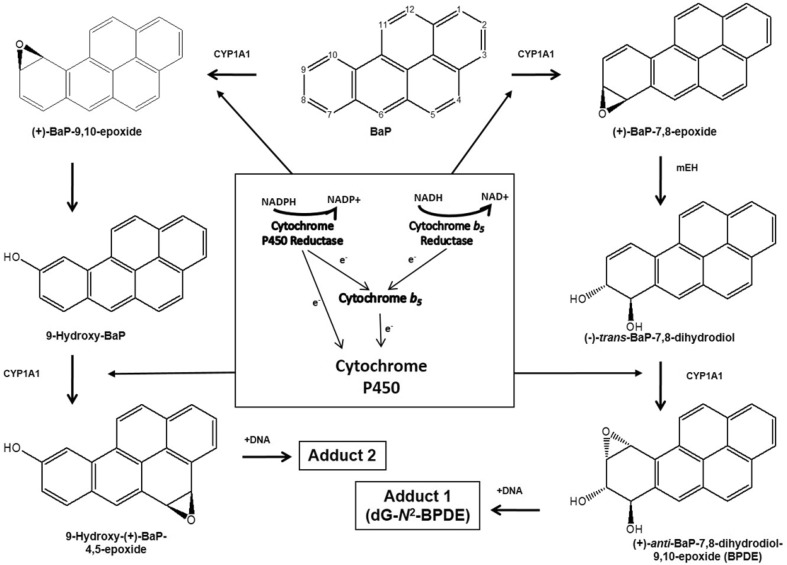
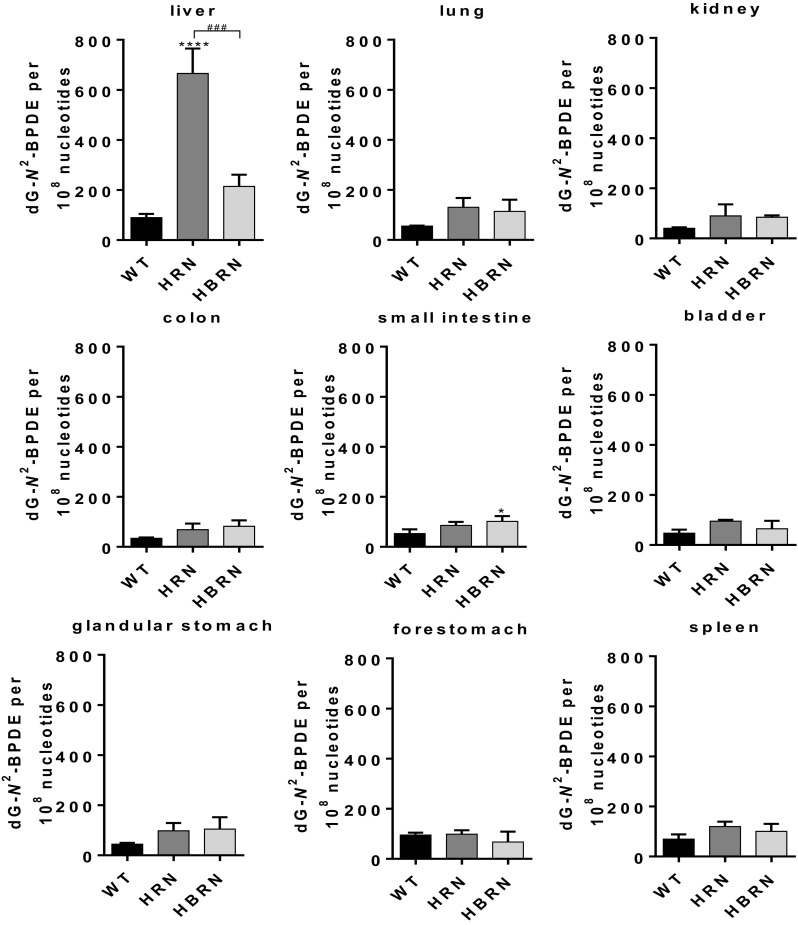
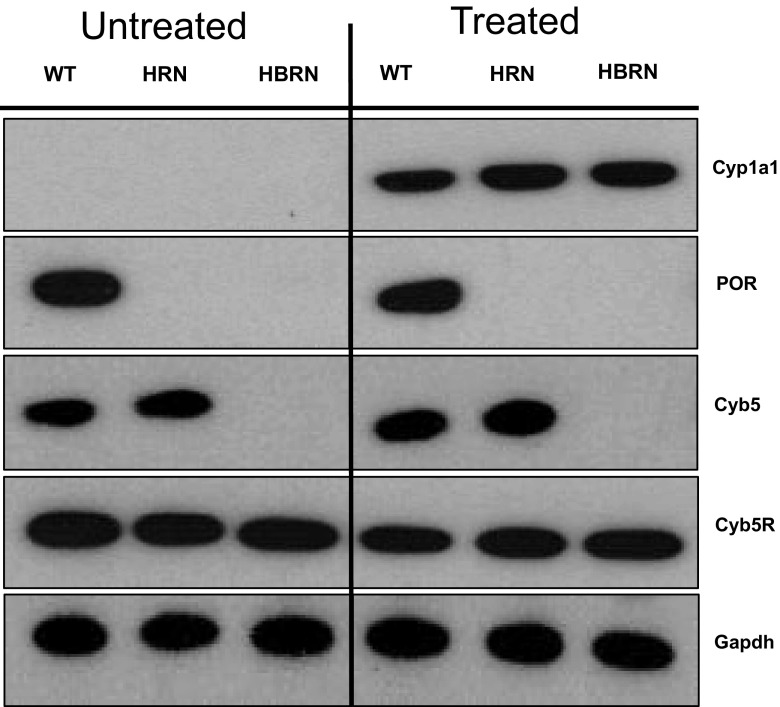
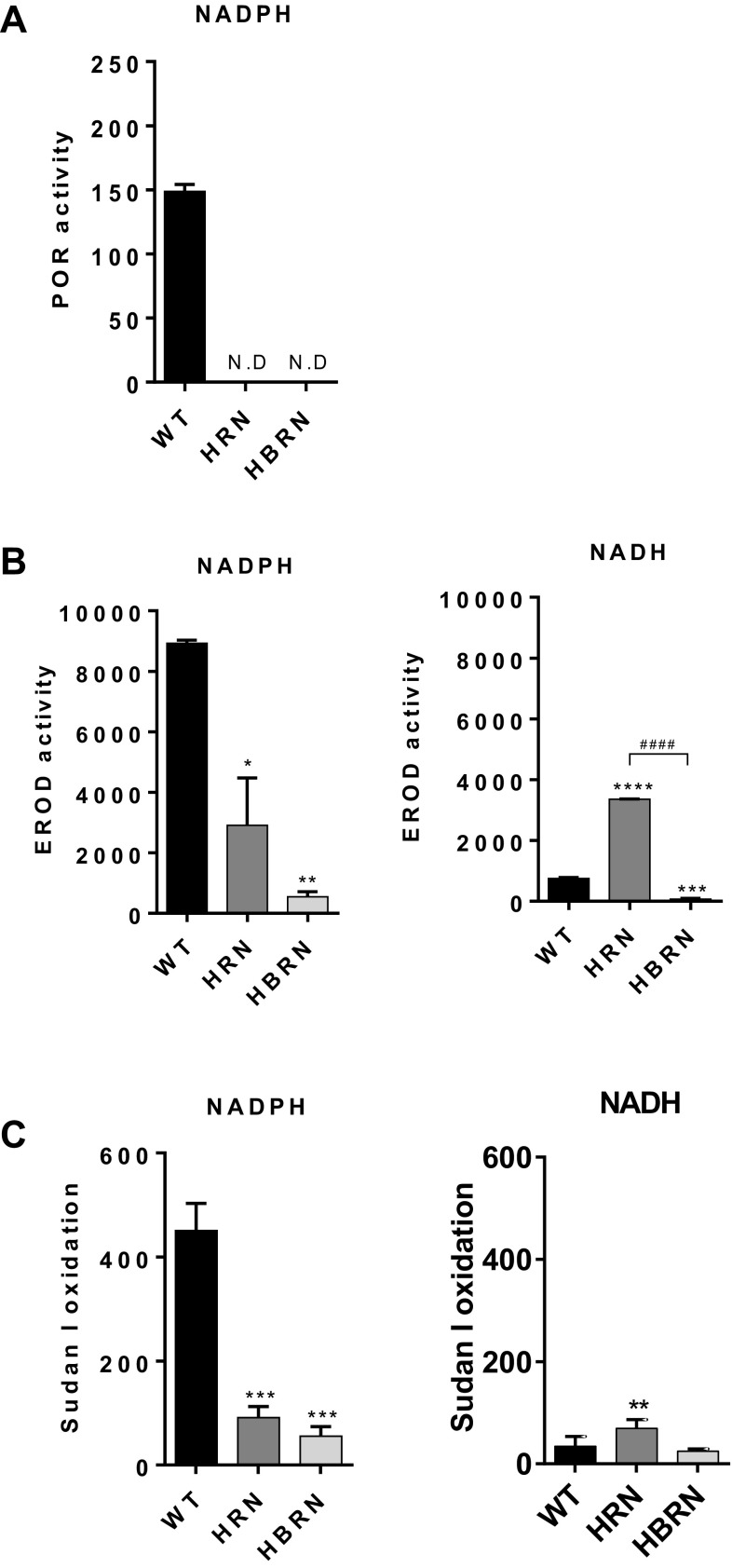
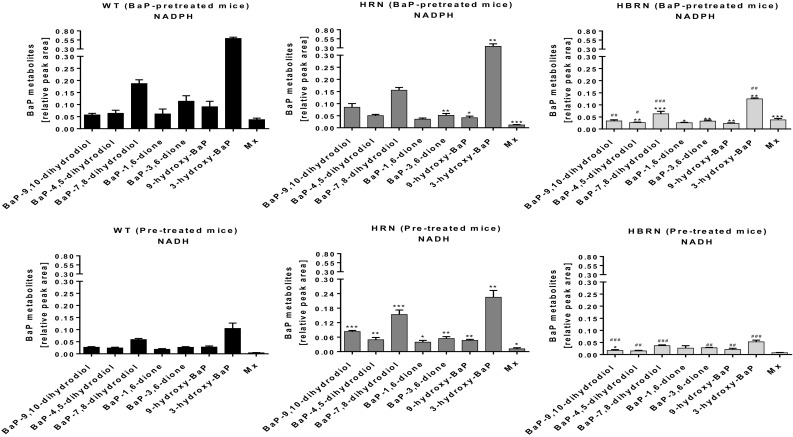
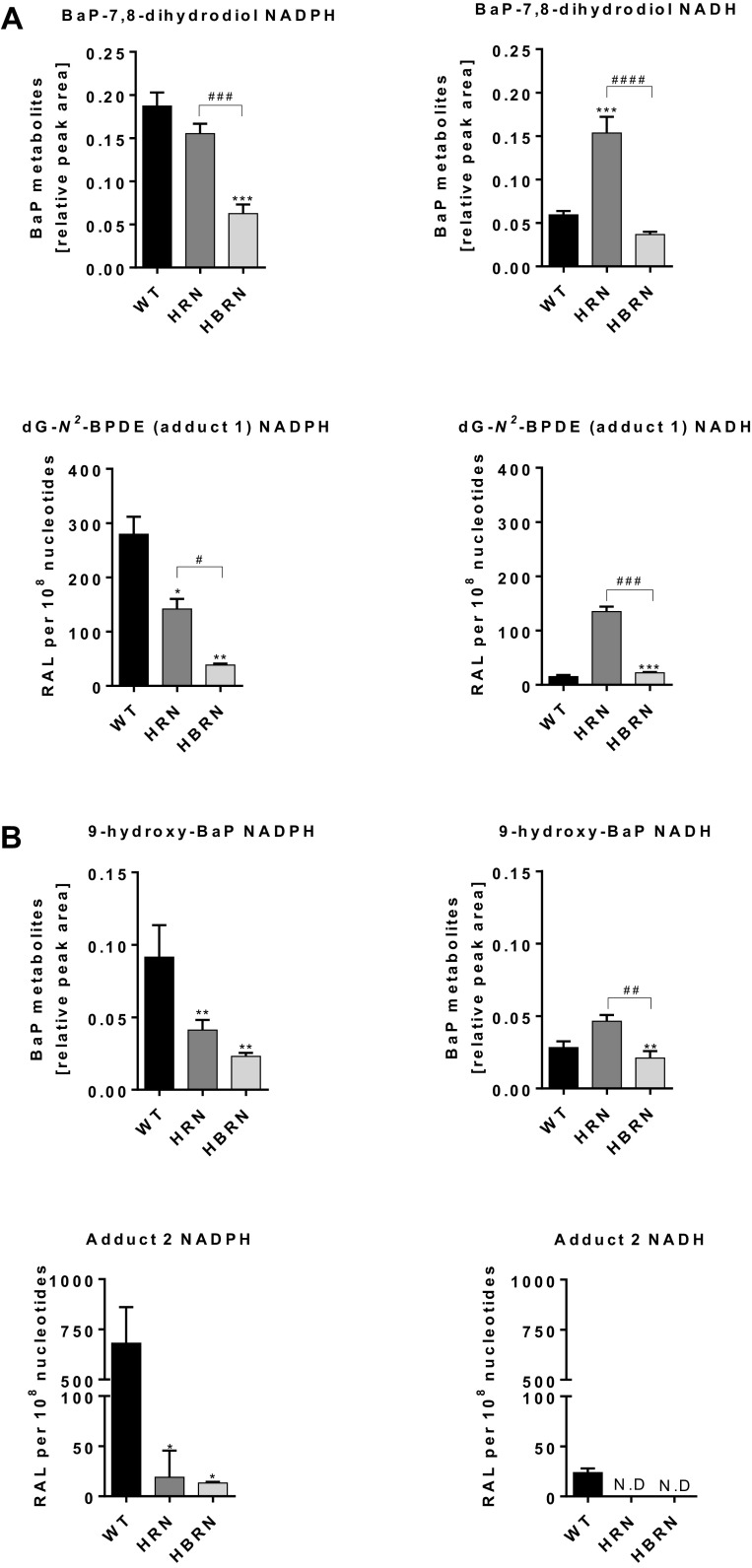
Benzo[a]pyrene (BaP) is an environmental pollutant that, based on evidence largely from in vitro studies, exerts its genotoxic effects after metabolic activation by cytochrome P450s. In the present study, Hepatic Reductase Null (HRN) and Hepatic Cytochrome b /P450 Reductase Null (HBRN) mice have been used to study the role of P450s in the metabolic activation of BaP in vivo. In HRN mice, cytochrome P450 oxidoreductase (POR), the electron donor to P450, is deleted specifically in hepatocytes. In HBRN mice the microsomal haemoprotein cytochrome b , which can also act as an electron donor from cytochrome b reductase to P450s, is also deleted in the liver. Wild-type (WT), HRN and HBRN mice were treated by i.p. injection with 125 mg/kg body weight BaP for 24 h. Hepatic microsomal fractions were isolated from BaP-treated and untreated mice. In vitro incubations carried out with BaP-pretreated microsomal fractions, BaP and DNA resulted in significantly higher BaP-DNA adduct formation with WT microsomal fractions compared to those from HRN or HBRN mice. Adduct formation (i.e. 10-(deoxyguanosin-N-yl)-7,8,9-trihydroxy-7,8,9,10-tetrahydro-BaP [dG-N-BPDE]) correlated with observed CYP1A activity and metabolite formation (i.e. BaP-7,8-dihydrodiol) when NADPH or NADH was used as enzymatic cofactors. BaP-DNA adduct levels (i.e. dG-N-BPDE) in vivo were significantly higher (~ sevenfold) in liver of HRN mice than WT mice while no significant difference in adduct formation was observed in liver between HBRN and WT mice. Our results demonstrate that POR and cytochrome b both modulate P450-mediated activation of BaP in vitro. However, hepatic P450 enzymes in vivo appear to be more important for BaP detoxification than its activation.
苯并[a]芘(BaP)是一种环境污染物,根据大量体外研究的证据,它在细胞色素 P450 代谢激活后发挥其遗传毒性作用。在本研究中,使用肝还原酶缺失(HRN)和肝细胞色素 b/P450 还原酶缺失(HBRN)小鼠来研究 P450 在体内代谢激活 BaP 中的作用。在 HRN 小鼠中,细胞色素 P450 氧化还原酶(POR),即 P450 的电子供体,特异性地在肝细胞中缺失。在 HBRN 小鼠中,微粒体血红素蛋白细胞色素 b ,它也可以作为细胞色素 b 还原酶向 P450 传递电子的供体,在肝脏中也缺失。野生型(WT)、HRN 和 HBRN 小鼠通过腹腔注射 125mg/kg 体重 BaP 处理 24h。从 BaP 处理和未处理的小鼠中分离肝微粒体部分。用 BaP 预处理的微粒体部分、BaP 和 DNA 进行体外孵育,结果显示 WT 微粒体部分与 HRN 或 HBRN 小鼠相比,BaP-DNA 加合物的形成显著增加。加合物形成(即 10-(脱氧鸟苷-N-基)-7,8,9-三羟基-7,8,9,10-四氢-BaP[dG-N-BaPDE])与观察到的 CYP1A 活性和代谢物形成(即 BaP-7,8-二氢二醇)相关,当使用 NADPH 或 NADH 作为酶辅因子时。与 WT 小鼠相比,HRN 小鼠肝脏中的 BaP-DNA 加合物水平(即 dG-N-BaPDE)显著升高(~7 倍),而 HBRN 与 WT 小鼠之间肝脏中的加合物形成没有明显差异。我们的结果表明,POR 和细胞色素 b 都调节了 BaP 在体外的 P450 介导的激活。然而,体内的 P450 酶对于 BaP 的解毒作用似乎比对其激活作用更为重要。