Karimi Shokoufeh, Jonsson Hans, Lundh Torbjörn, Roos Stefan
Department of Molecular Sciences, Uppsala BioCenter, Swedish University of Agricultural Sciences, Uppsala, Sweden.
Department of Animal Nutrition and Management, Swedish University of Agricultural Sciences, Uppsala, Sweden.
Physiol Rep. 2018 Jan;6(2). doi: 10.14814/phy2.13514.
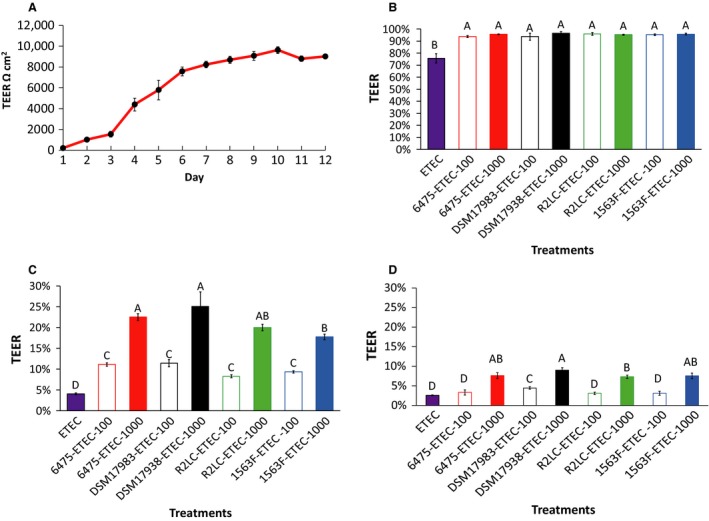
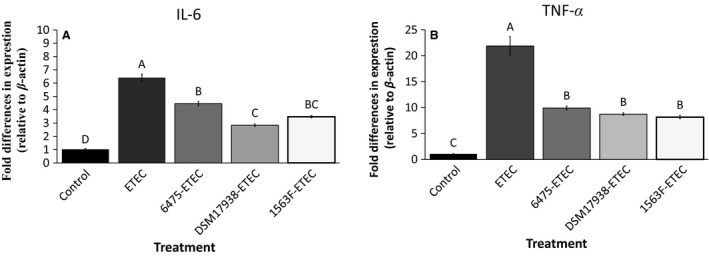
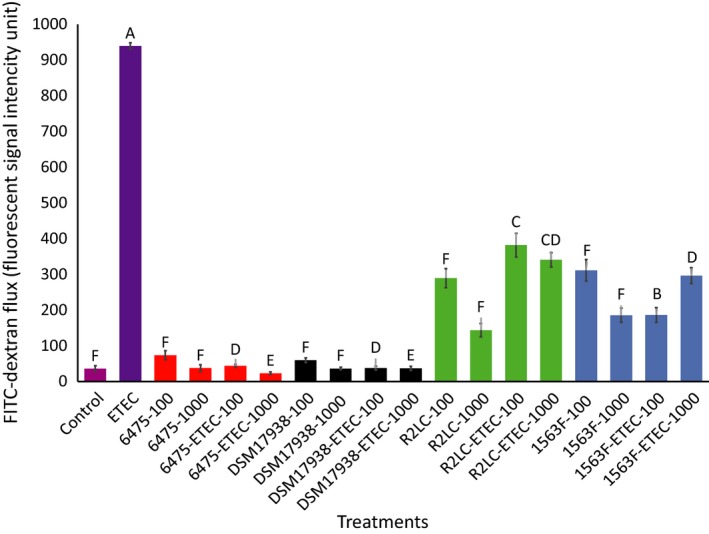
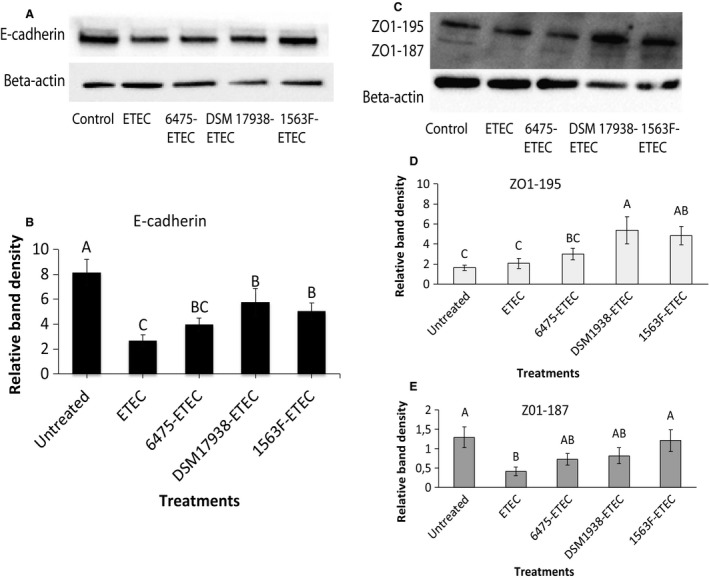
Lactobacillus reuteri is an inhabitant of the gastrointestinal (GI) tract of mammals and birds and several strains of this species are known to be effective probiotics. The mechanisms by which L. reuteri confers its health-promoting effects are far from being fully understood, but protection of the mucosal barrier is thought to be important. Leaky gut is a state of abnormal intestinal permeability with implications for the pathophysiology of various gastrointestinal disorders. Enterotoxigenic Escherichia coli (ETEC) can invade the intestinal mucosa and induce changes in barrier function by producing enterotoxin or by direct invasion of the intestinal epithelium. Our hypothesis was that L. reuteri can protect the mucosal barrier, and the goal of the study was to challenge this hypothesis by monitoring the protective effect of L. reuteri strains on epithelial dysfunction caused by ETEC. Using an infection model based on the porcine intestinal cell line IPEC-J2, it was demonstrated that pretreatment of the cells with human-derived L. reuteri strains (ATCC PTA 6475, DSM 17938 and 1563F) and a rat strain (R2LC) reduced the detrimental effect of ETEC in a dose-dependent manner, as monitored by permeability of FITC-dextran and transepithelial electrical resistance (TEER). Moreover, the results revealed that ETEC upregulated proinflammatory cytokines IL-6 and TNFα and decreased expression of the shorter isoform of ZO-1 (187 kDa) and E-cadherin. In contrast, pretreatment with L. reuteri DSM 17938 and 1563F downregulated expression of IL-6 and TNFα, and led to an increase in production of the longer isoform of ZO-1 (195 kDa) and maintained E-cadherin expression. Interestingly, expression of ZO-1 (187 kDa) was preserved only when the infected cells were pretreated with strain 1563F. These findings demonstrate that L. reuteri strains exert a protective effect against ETEC-induced mucosal integrity disruption.
罗伊氏乳杆菌是哺乳动物和鸟类胃肠道的常住菌,该物种的几个菌株已知是有效的益生菌。罗伊氏乳杆菌发挥其促进健康作用的机制远未完全明了,但黏膜屏障的保护被认为很重要。肠漏是一种肠道通透性异常的状态,与各种胃肠道疾病的病理生理学有关。产肠毒素大肠杆菌(ETEC)可侵入肠黏膜,并通过产生肠毒素或直接侵入肠上皮细胞来诱导屏障功能发生变化。我们的假设是罗伊氏乳杆菌可以保护黏膜屏障,该研究的目的是通过监测罗伊氏乳杆菌菌株对ETEC引起的上皮功能障碍的保护作用来验证这一假设。使用基于猪肠细胞系IPEC-J2的感染模型,结果表明,用人源罗伊氏乳杆菌菌株(ATCC PTA 6475、DSM 17938和1563F)和一株大鼠来源的菌株(R2LC)对细胞进行预处理,可呈剂量依赖性降低ETEC的有害作用,这通过异硫氰酸荧光素葡聚糖的通透性和跨上皮电阻(TEER)来监测。此外,结果显示ETEC上调促炎细胞因子IL-6和TNFα,并降低紧密连接蛋白1(187 kDa)较短异构体和E-钙黏蛋白的表达。相比之下,用罗伊氏乳杆菌DSM 17938和1563F预处理可下调IL-6和TNFα的表达,并导致紧密连接蛋白1(195 kDa)较长异构体的产生增加,并维持E-钙黏蛋白的表达。有趣的是,只有当感染细胞用1563F菌株预处理时,紧密连接蛋白1(187 kDa)的表达才得以保留。这些发现表明,罗伊氏乳杆菌菌株对ETEC诱导的黏膜完整性破坏具有保护作用。