Digestive Department, Guangzhou Women and Children's Medical Center, Guangzhou Medical University, No.9 Jinsui Road, Guangzhou, Guangdong, 510623, China.
Guangzhou Institute of Pediatrics, Guangzhou Women and Children's Medical Center, Guangzhou Medical University, Guangzhou, Guangdong, 510623, China.
Mol Cancer. 2018 Jan 24;17(1):13. doi: 10.1186/s12943-017-0747-z.
Protein kinase N2 (PKN2) is a PKC-related serine/threonine-protein kinase. PKN2 is required for tumor cell migration, invasion and apoptosis. However, the functional role of PKN2 in regulating tumor associated macrophages (TAMs) polarization in colon cancer has never been reported.
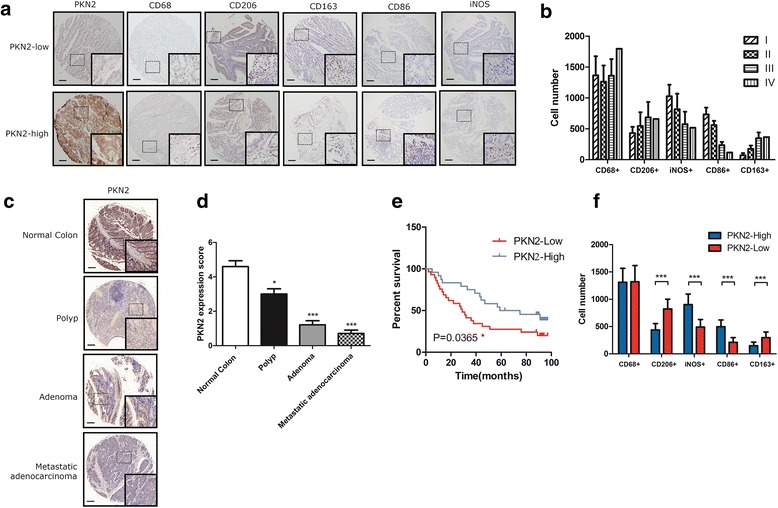
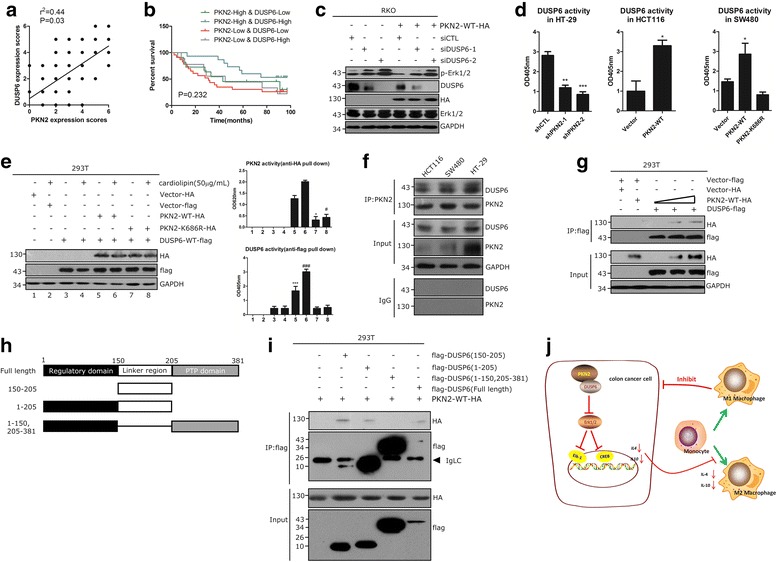
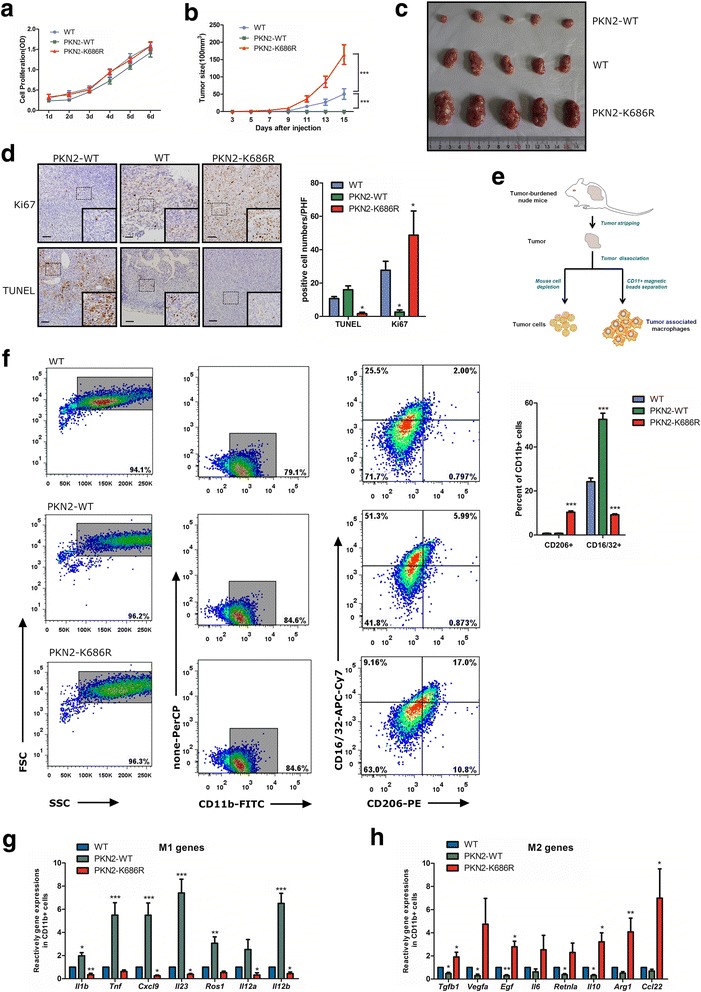
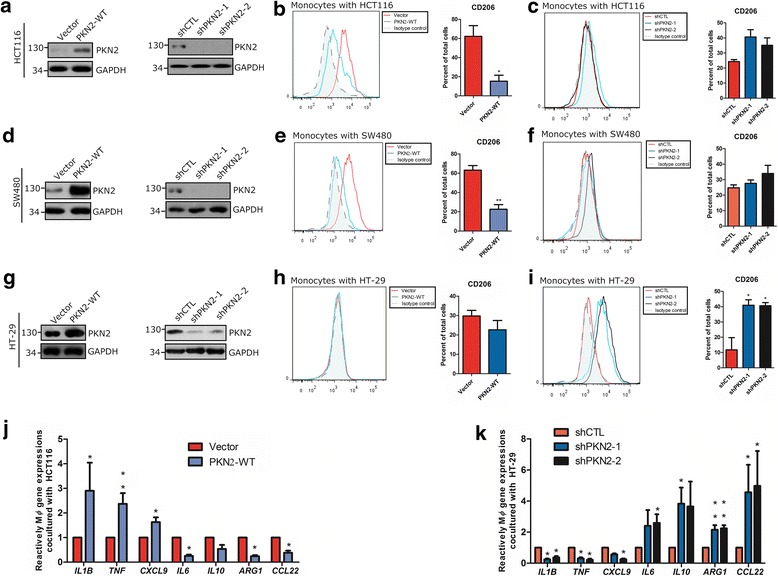
PKN2 expression in human colon cancer tissues was examined with immunohistochemistry (IHC). M1/M2 macrophage signatures were evaluated by RT-PCR, IHC and flow cytometry. The effects of PKN2 on tumor growth and TAM polarization were investigated both in vitro and in vivo. PKN2 targeted cytokines/pathway were analyzed by gene expression analysis and further confirmed by PCR, luciferase assay or western blot. Correlations between PKN2 and transcriptional factors for IL4 and IL10 were confirmed by ChIP-qPCR. The catalytic activities of PKN2 and DUSP6 were determined by kinase activity assay. Interactions between PKN2 and DUSP6 were confirmed by Co-IP.
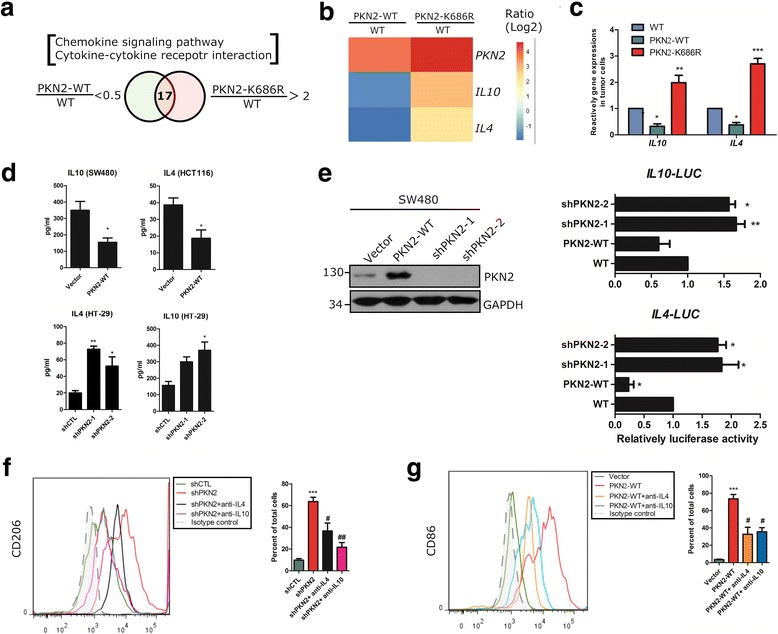
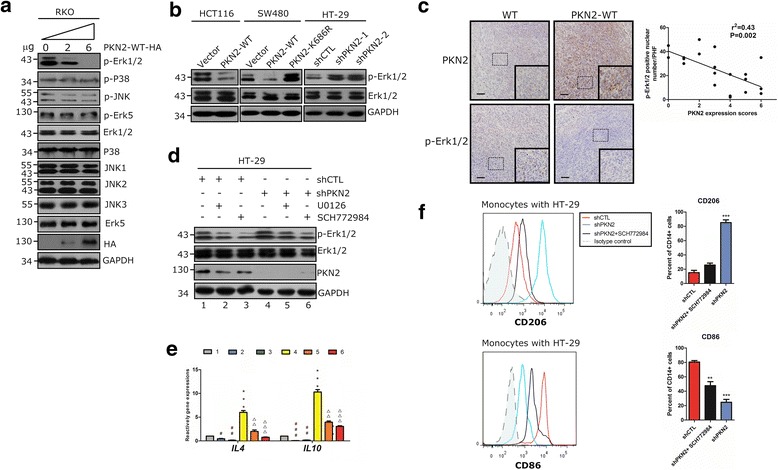
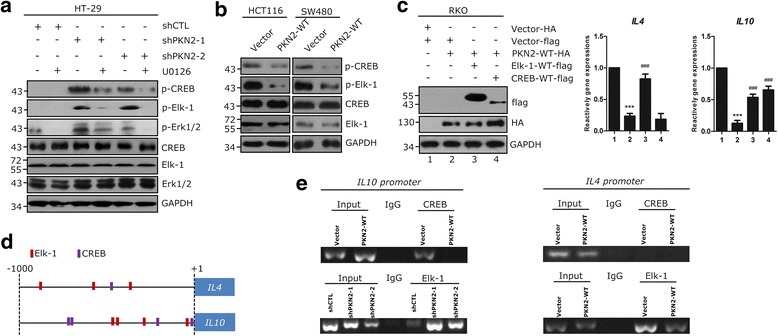
The expression of PKN2 in colon cancer cells predicted a favorable prognosis and was associated with low M2 macrophage content in human colon cancer tissues. PKN2 inhibited tumor growth in mice xenograft model and inhibited M2 phenotype polarization both in vitro and in vivo. Mechanistically, PKN2 suppresses the expression of IL4 and IL10 from colon cancer cells by inhibiting Erk1/2 phosphorylation, which is required for phosphorylation and binding of CREB and Elk-1 to the promoters of IL4 and IL10. DUSP6, which is phosphorylated and activated through direct association with PKN2, suppresses Erk1/2 activation.
The expression of PKN2 in colon cancer cells suppresses tumor associated M2 macrophage polarization and tumor growth. Targeting PKN2 signaling pathway may provide a potential therapeutic strategy for colon cancer.
蛋白激酶 N2(PKN2)是一种与蛋白激酶 C 相关的丝氨酸/苏氨酸蛋白激酶。PKN2 是肿瘤细胞迁移、侵袭和凋亡所必需的。然而,PKN2 在调节结肠癌相关巨噬细胞(TAMs)极化中的功能作用尚未有报道。
通过免疫组织化学(IHC)检测人结肠癌组织中 PKN2 的表达。通过 RT-PCR、IHC 和流式细胞术评估 M1/M2 巨噬细胞特征。在体外和体内研究 PKN2 对肿瘤生长和 TAM 极化的影响。通过基因表达分析分析 PKN2 靶向的细胞因子/通路,并通过 PCR、荧光素酶测定或 Western blot 进一步确认。通过 ChIP-qPCR 证实 PKN2 与 IL4 和 IL10 的转录因子之间的相关性。通过激酶活性测定法确定 PKN2 和 DUSP6 的催化活性。通过 Co-IP 确认 PKN2 和 DUSP6 之间的相互作用。
PKN2 在结肠癌细胞中的表达预测了良好的预后,并与人类结肠癌组织中低 M2 巨噬细胞含量相关。PKN2 在小鼠异种移植模型中抑制肿瘤生长,并在体外和体内抑制 M2 表型极化。在机制上,PKN2 通过抑制 Erk1/2 磷酸化来抑制 IL4 和 IL10 的表达,这对于 CREB 和 Elk-1 对 IL4 和 IL10 启动子的磷酸化和结合是必需的。通过与 PKN2 直接结合而被磷酸化和激活的 DUSP6 抑制 Erk1/2 激活。
结肠癌细胞中 PKN2 的表达抑制肿瘤相关的 M2 巨噬细胞极化和肿瘤生长。靶向 PKN2 信号通路可能为结肠癌提供一种潜在的治疗策略。