Hernández Carlos, Barrachina María Dolores, Cosín-Roger Jesús, Ortiz-Masiá Dolores, Álvarez Ángeles, Terrádez Liria, Nicolau María Jesús, Alós Rafael, Esplugues Juan Vicente, Calatayud Sara
FISABIO, Hospital Dr. Peset, Valencia, Spain; Unidad Mixta de Investigación en Biomedicina y Farmacología FISABIO - Hospital Dr.Peset - UVEG, Valencia, Spain.
Departamento de Farmacología and CIBER, Facultad de Medicina, Universidad de Valencia, Valencia, Spain; Unidad Mixta de Investigación en Biomedicina y Farmacología FISABIO - Hospital Dr.Peset - UVEG, Valencia, Spain.
PLoS One. 2014 Jun 5;9(6):e98458. doi: 10.1371/journal.pone.0098458. eCollection 2014.
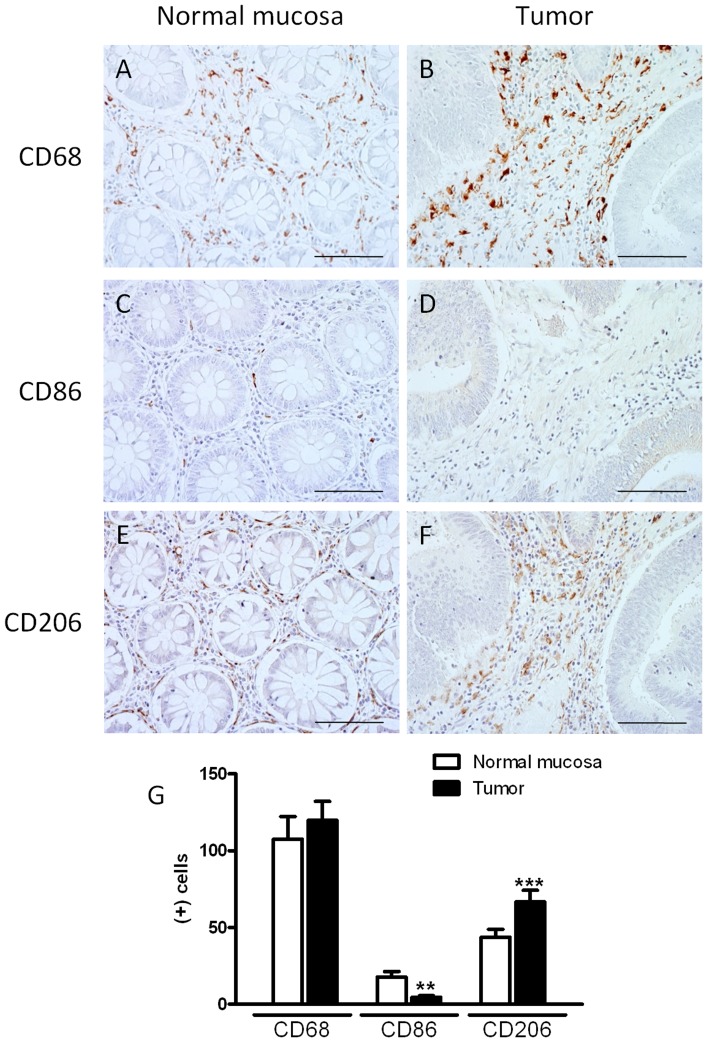
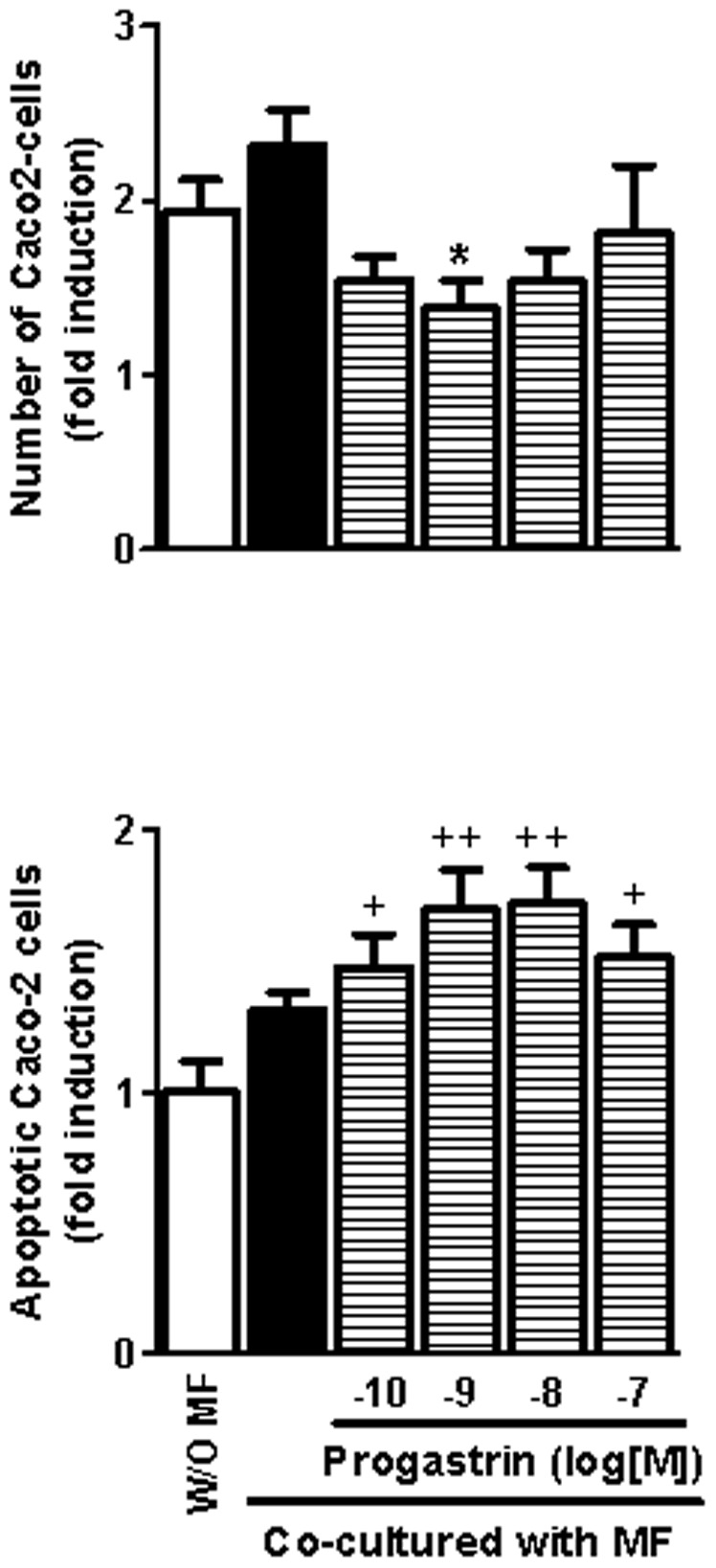
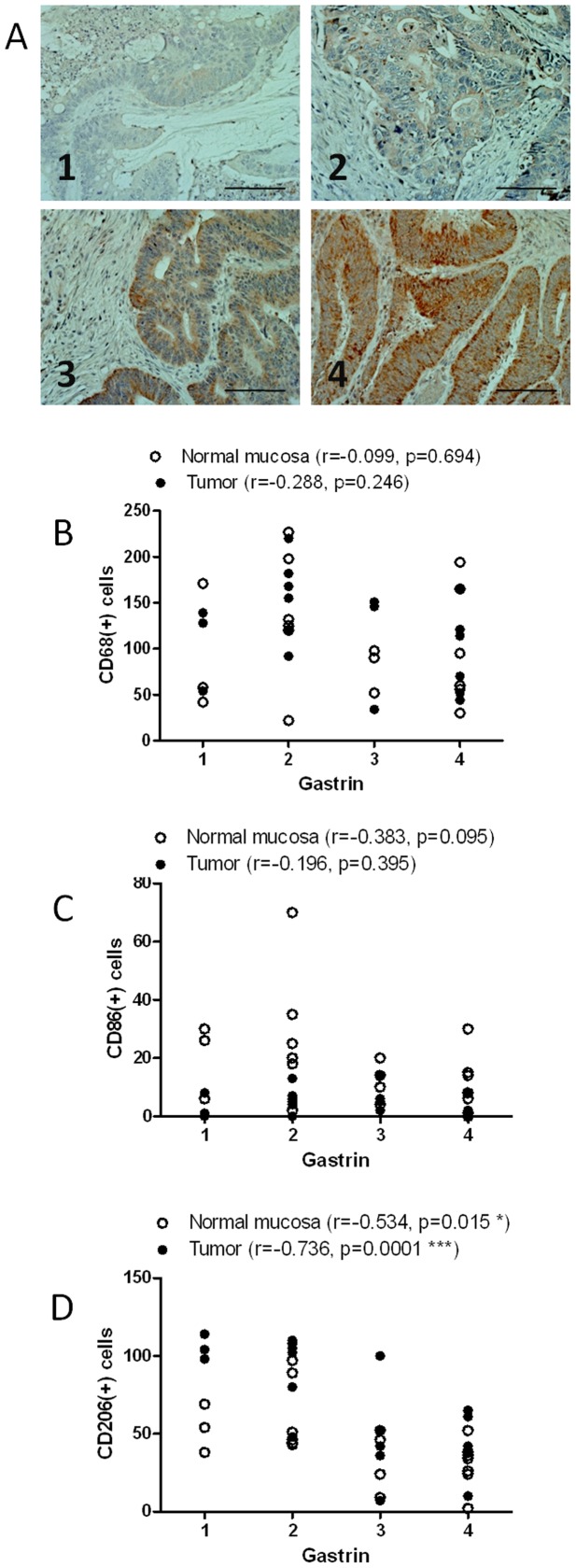
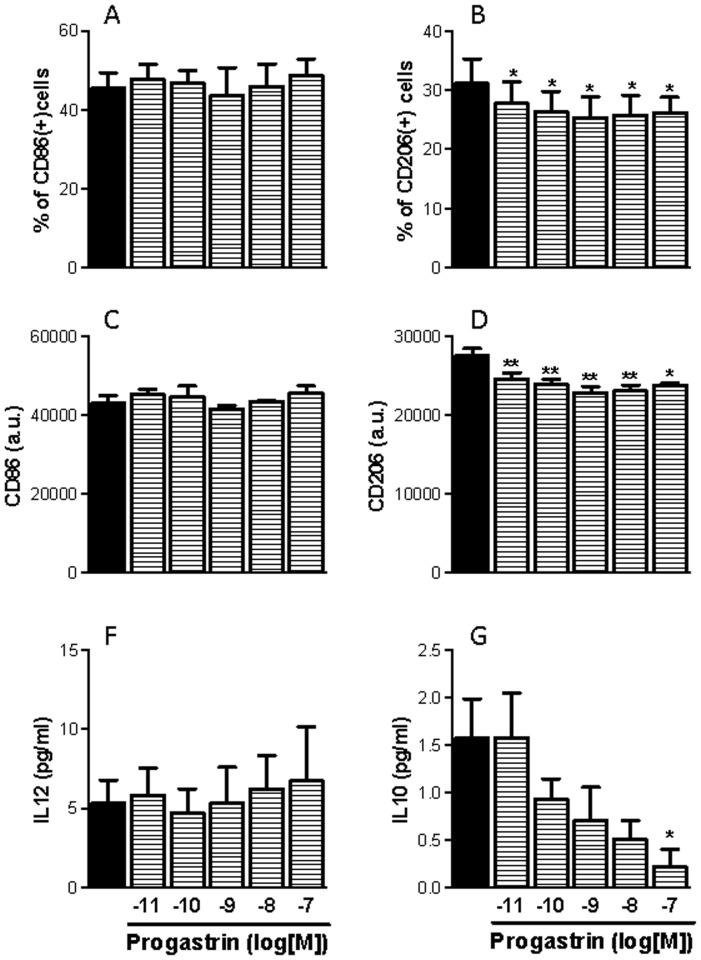
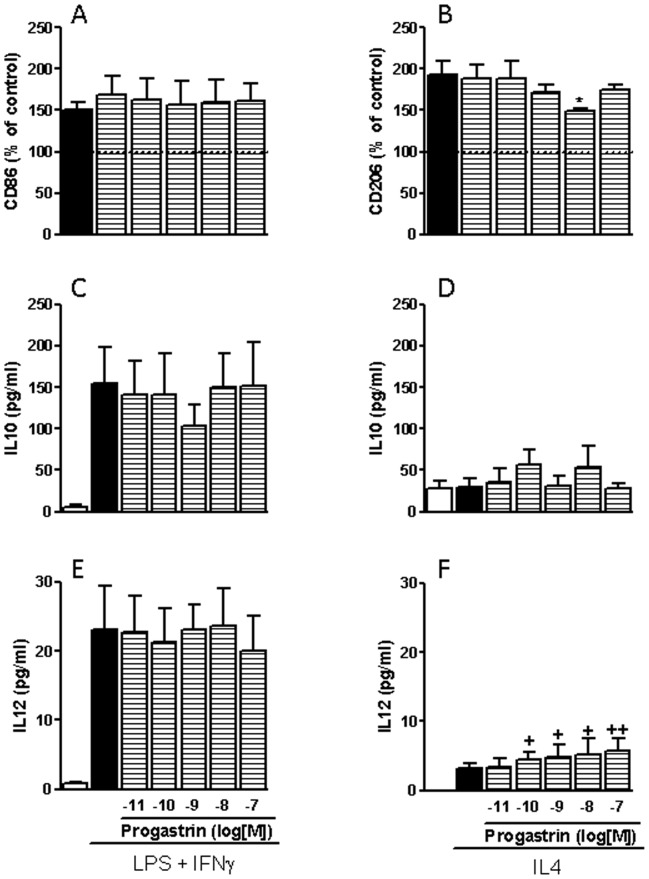
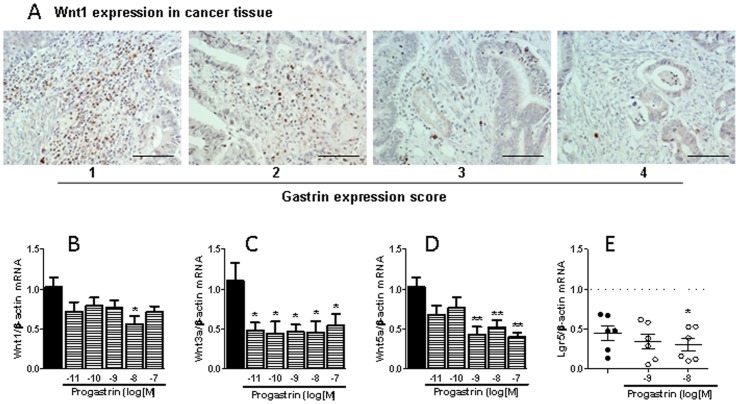
Macrophage infiltration is a negative prognostic factor for most cancers but gastrointestinal tumors seem to be an exception. The effect of macrophages on cancer progression depends on their phenotype, which may vary between M1 (pro-inflammatory, defensive) to M2 (tolerogenic, pro-tumoral). Gastrointestinal cancers often become an ectopic source of gastrins and macrophages present receptors for these peptides. The aim of the present study is to analyze whether gastrins can affect the pattern of macrophage infiltration in colorectal tumors. We have evaluated the relationship between gastrin expression and the pattern of macrophage infiltration in samples from colorectal cancer and the influence of these peptides on the phenotype of macrophages differentiated from human peripheral monocytes in vitro. The total number of macrophages (CD68+ cells) was similar in tumoral and normal surrounding tissue, but the number of M2 macrophages (CD206+ cells) was significantly higher in the tumor. However, the number of these tumor-associated M2 macrophages correlated negatively with the immunoreactivity for gastrin peptides in tumor epithelial cells. Macrophages differentiated from human peripheral monocytes in the presence of progastrin showed lower levels of M2-markers (CD206, IL10) with normal amounts of M1-markers (CD86, IL12). Progastrin induced similar effects in mature macrophages treated with IL4 to obtain a M2-phenotype or with LPS plus IFNγ to generate M1-macrophages. Macrophages differentiated in the presence of progastrin presented a reduced expression of Wnt ligands and decreased the number and increased cell death of co-cultured colorectal cancer epithelial cells. Our results suggest that progastrin inhibits the acquisition of a M2-phenotype in human macrophages. This effect exerted on tumor associated macrophages may modulate cancer progression and should be taken into account when analyzing the therapeutic value of gastrin immunoneutralization.
巨噬细胞浸润是大多数癌症的不良预后因素,但胃肠道肿瘤似乎是个例外。巨噬细胞对癌症进展的影响取决于其表型,表型可能在M1(促炎、防御性)到M2(耐受性、促肿瘤性)之间变化。胃肠道癌症常成为胃泌素的异位来源,且巨噬细胞存在这些肽的受体。本研究的目的是分析胃泌素是否能影响结直肠肿瘤中巨噬细胞浸润的模式。我们评估了结直肠癌样本中胃泌素表达与巨噬细胞浸润模式之间的关系,以及这些肽对体外从人外周单核细胞分化而来的巨噬细胞表型的影响。肿瘤组织和周围正常组织中的巨噬细胞总数(CD68+细胞)相似,但肿瘤中M2巨噬细胞(CD206+细胞)的数量显著更高。然而,这些肿瘤相关的M2巨噬细胞数量与肿瘤上皮细胞中胃泌素肽的免疫反应性呈负相关。在胃泌素原存在的情况下从人外周单核细胞分化而来的巨噬细胞,其M2标记物(CD206、IL10)水平较低,而M1标记物(CD86、IL12)水平正常。胃泌素原在用IL4处理以获得M2表型或用LPS加IFNγ处理以产生M1巨噬细胞的成熟巨噬细胞中诱导了类似的效应。在胃泌素原存在的情况下分化的巨噬细胞,其Wnt配体表达降低,共培养的结直肠癌上皮细胞数量减少且细胞死亡增加。我们的结果表明,胃泌素原抑制人巨噬细胞获得M2表型。这种对肿瘤相关巨噬细胞的作用可能调节癌症进展,在分析胃泌素免疫中和的治疗价值时应予以考虑。