Graduate Institute of Medical Sciences and Department of Pharmacology, College of Medicine, Taipei Medical University, Taipei, Taiwan.
Department of Medical Research, Taipei Medical University Hospital, Taipei, Taiwan.
J Cell Mol Med. 2018 Apr;22(4):2142-2152. doi: 10.1111/jcmm.13488. Epub 2018 Jan 25.
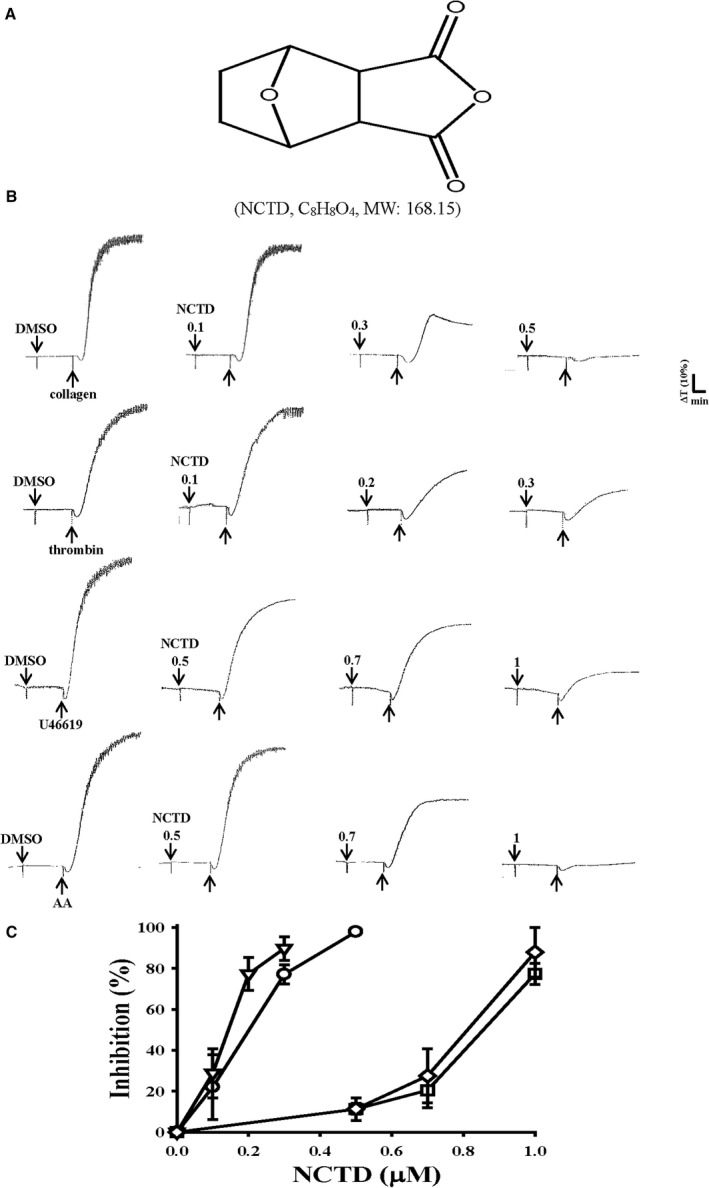
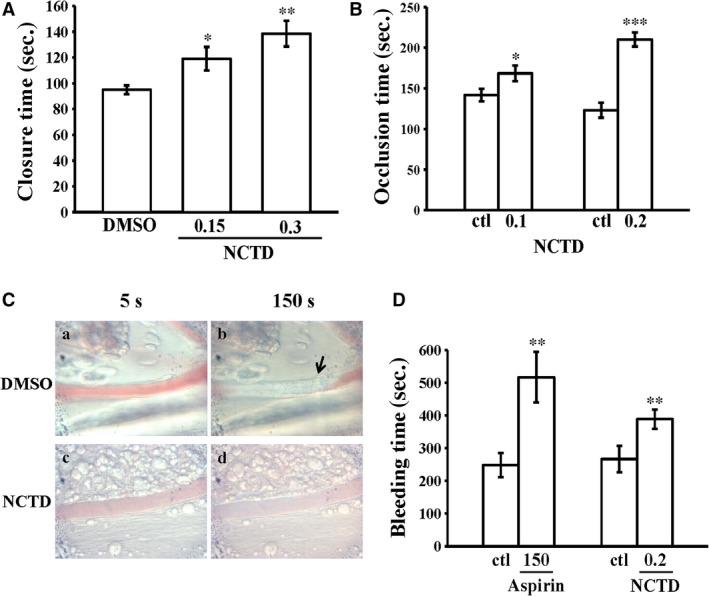
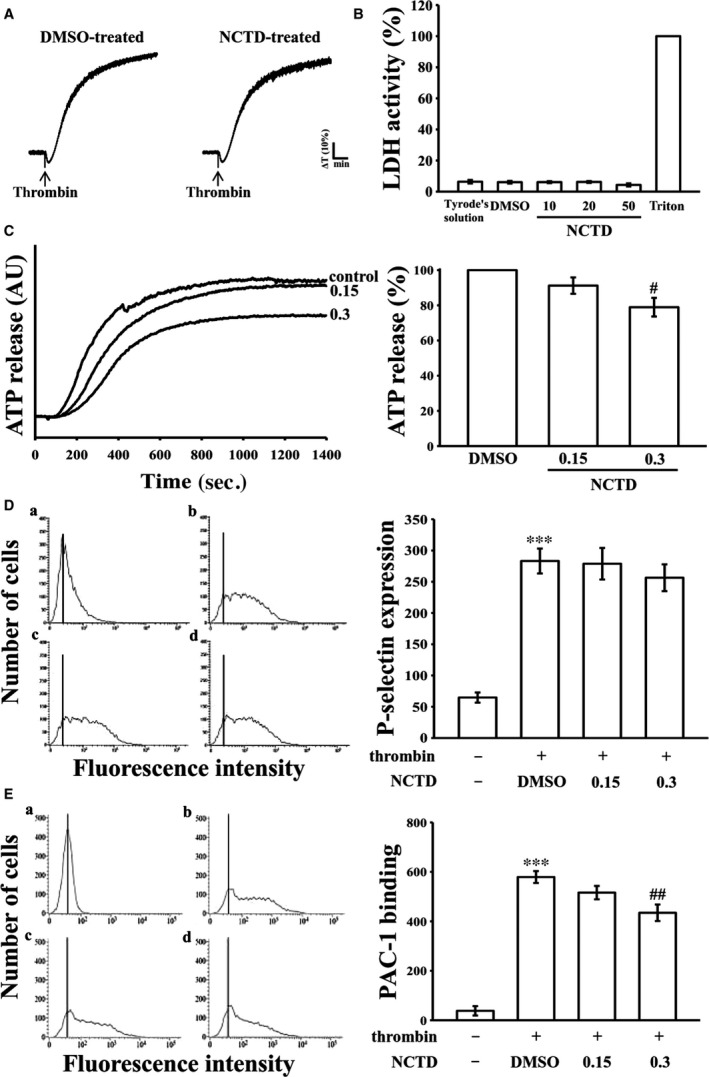
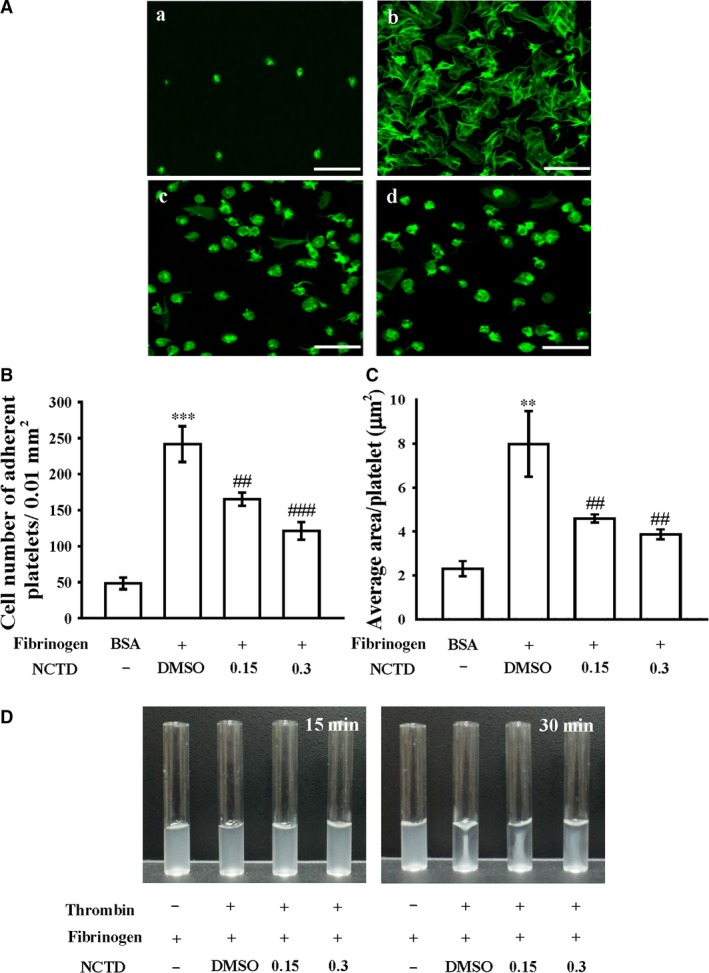
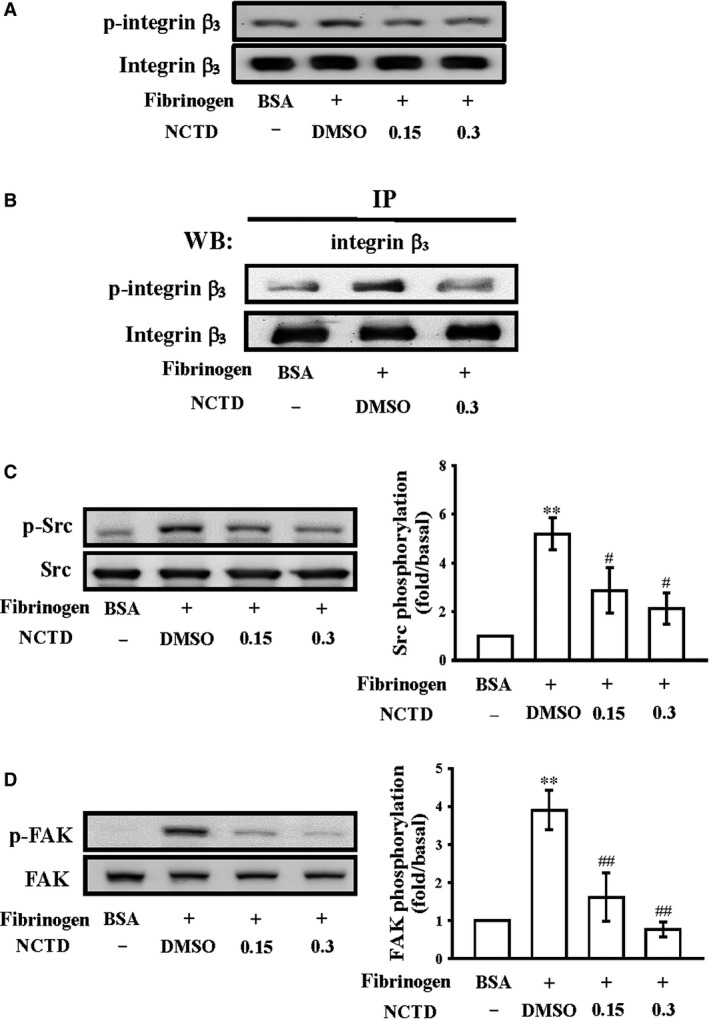
During platelet activation, fibrinogen binds to its specific platelet receptor, integrin α β , thus completing the final common pathway for platelet aggregation. Norcantharidin (NCTD) is a promising anticancer agent in China from medicinal insect blister beetle. In this study, we provided the evidence to demonstrate NCTD (0.1-1.0 μM) possesses very powerful antiplatelet activity in human platelets; nevertheless, it had no effects on surface P-selectin expression and only slight inhibition on ATP-release reaction in activated platelets. Moreover, NCTD markedly hindered integrin α β activation by interfering with the binding of FITC-labelled PAC-1. It also markedly reduced the number of adherent platelets and the single platelet spreading area on immobilized fibrinogen as well as clot retraction. Additionally, NCTD attenuated phosphorylation of proteins such as integrin β , Src and FAK in platelets spreading on immobilized fibrinogen. These results indicate that NCTD restricts integrin α β -mediated outside-in signalling in human platelets. Besides, NCTD substantially prolonged the closure time in human whole blood and increased the occlusion time of thrombotic platelet plug formation and prolonged the bleeding time in mice. In conclusion, NCTD has dual activities, it can be a chemotherapeutic agent for cancer treatment, and the other side it possesses powerful antiplatelet activity for treating thromboembolic disorders.
在血小板激活过程中,纤维蛋白原与血小板特异性受体整合素αβ结合,从而完成血小板聚集的最终共同途径。去甲斑蝥素(NCTD)是中国药用昆虫斑蝥中的一种有前途的抗癌药物。在这项研究中,我们提供了证据表明 NCTD(0.1-1.0 μM)在人血小板中具有很强的抗血小板活性;然而,它对表面 P-选择素表达没有影响,仅对激活血小板中的 ATP 释放反应有轻微抑制作用。此外,NCTD 通过干扰 FITC 标记的 PAC-1 的结合,显著抑制整合素αβ的激活。它还显著减少了固定化纤维蛋白原上黏附的血小板数量和单个血小板的扩展面积以及血栓收缩。此外,NCTD 减弱了在固定化纤维蛋白原上扩散的血小板中整合素β、Src 和 FAK 等蛋白的磷酸化。这些结果表明,NCTD 限制了人血小板中整合素αβ介导的外向信号转导。此外,NCTD 显著延长了人全血的闭合时间,增加了血栓性血小板栓子形成的闭塞时间,并延长了小鼠的出血时间。总之,NCTD 具有双重活性,它可以作为癌症治疗的化疗药物,另一方面它具有很强的抗血小板活性,可用于治疗血栓栓塞性疾病。