Department of Pharmacology, Shenyang Pharmaceutical University, 110016, Shenyang, China.
Department of Pathology, Wuhan General Hospital, People's Liberation Army of China, Wuhan, China.
Cell Death Dis. 2018 Jan 26;9(2):129. doi: 10.1038/s41419-017-0120-6.
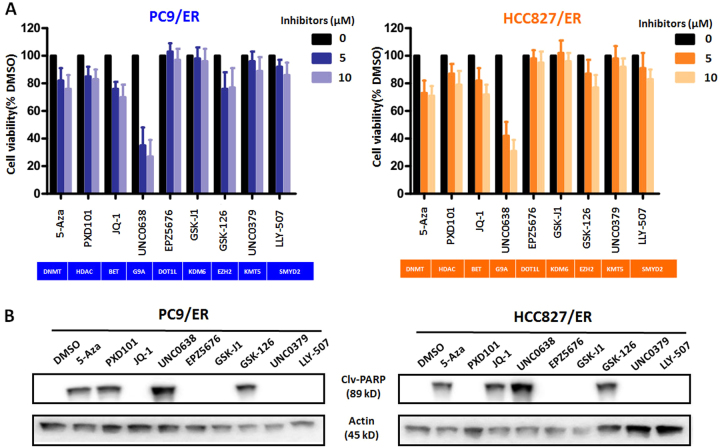
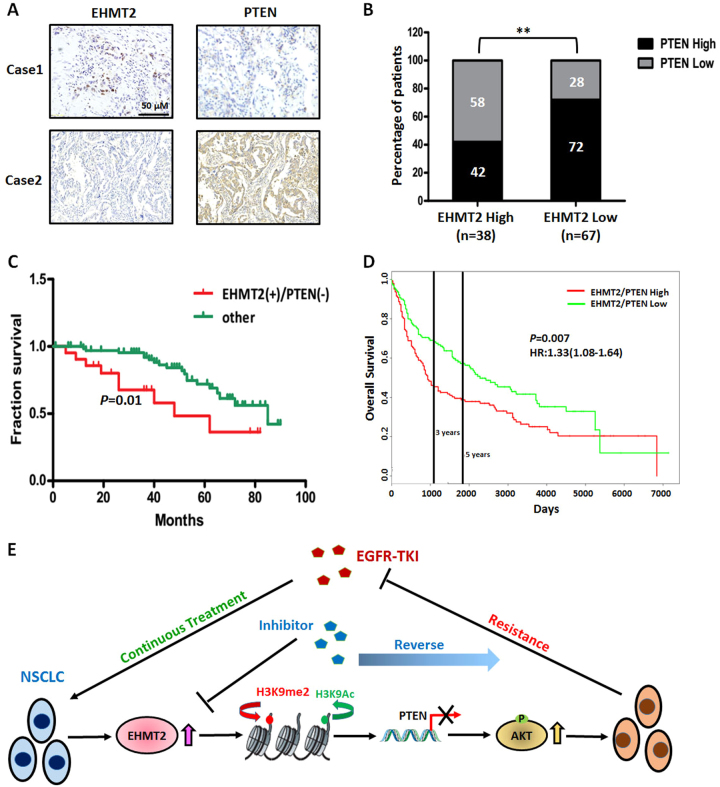
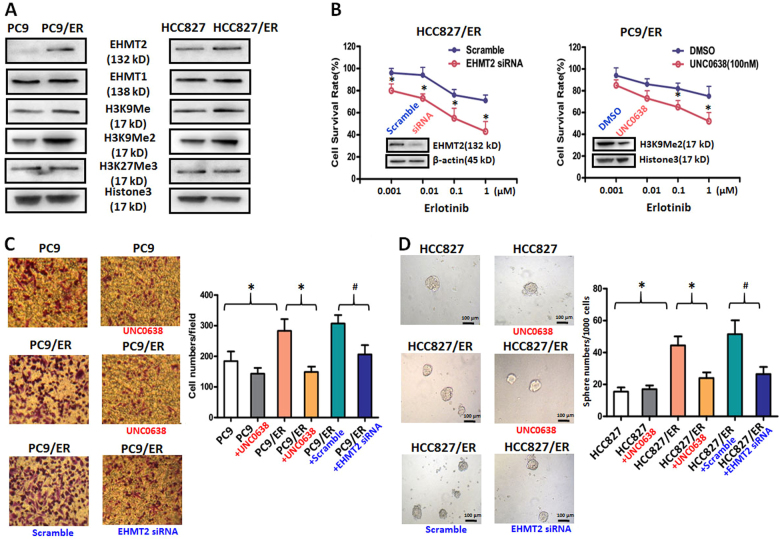
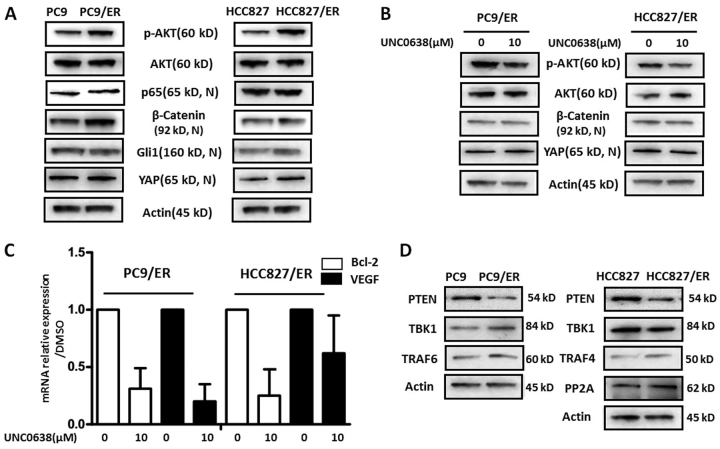
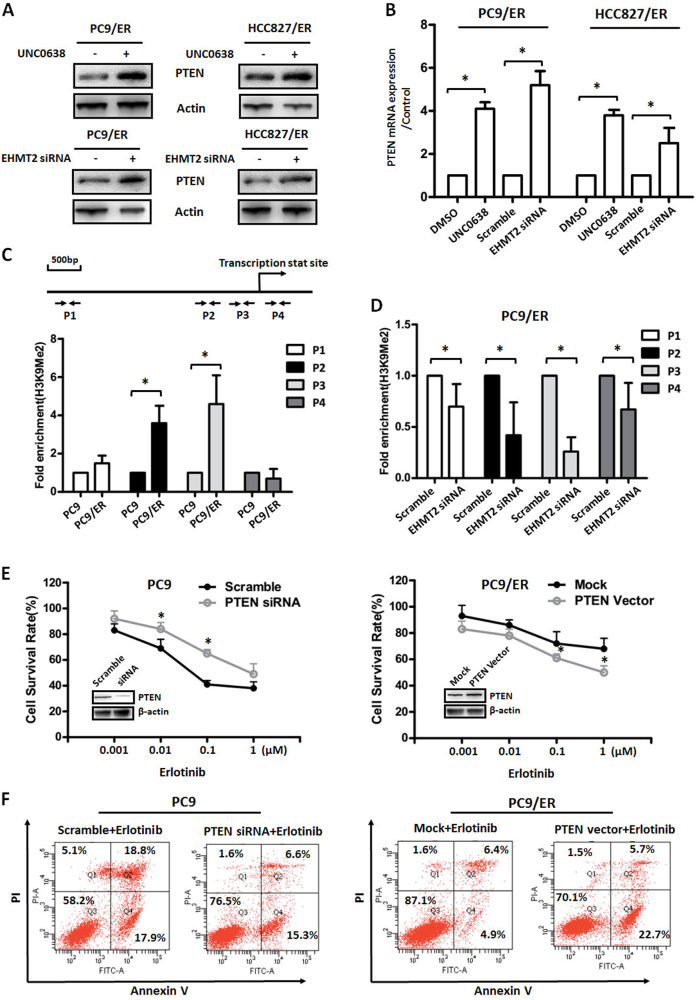
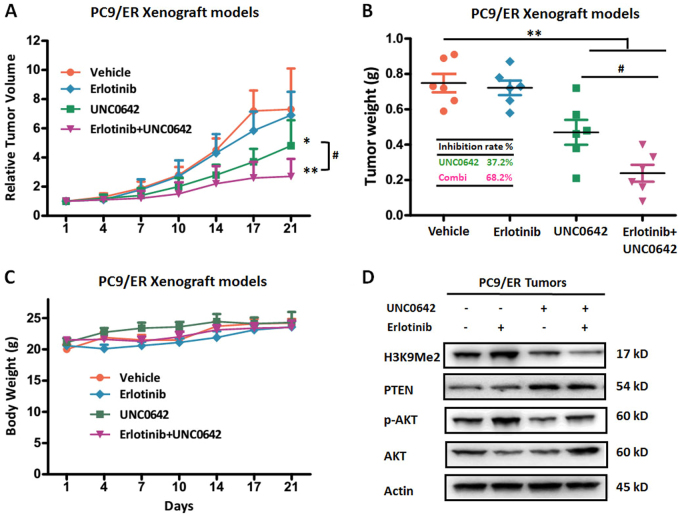
Epidermal growth factor receptor tyrosine kinase inhibitor (EGFR-TKI) resistance is a major obstacle in the treatment of non-small cell lung cancer (NSCLC). Epigenetic alterations have been shown to be involved in NSCLC oncogenesis; however, their function in EGFR-TKI resistance remains uncharacterized. Here, we found that an EHMT2 inhibitor, UNC0638, can significantly inhibit cell growth and induce apoptosis in EGFR-TKI-resistant NSCLC cells. Additionally, we also found that EHMT2 expression and enzymatic activity levels were elevated in EGFR-TKI-resistant NSCLC cells. Moreover, we determined that genetic or pharmacological inhibition of EHMT2 expression enhanced TKI sensitivity and suppressed migration and tumor sphere formation in EGFR-TKI-resistant NSCLC cells. Further investigation revealed that EHMT2 contributed to PTEN transcriptional repression and thus facilitated AKT pathway activation. The negative relationship between EHMT2 and PTEN was confirmed by our clinical study. Furthermore, we determined that combination treatment with the EHMT2 inhibitor and Erlotinib resulted in enhanced antitumor effects in a preclinical EGFR-TKI-resistance model. We also found that high EHMT2 expression along with low PTEN expression can predict poor overall survival in patients with NSCLC. In summary, our findings showed that EHMT2 facilitated EGFR-TKI resistance by regulating the PTEN/AKT pathway in NSCLC cells, suggesting that EHMT2 may be a target in the clinical treatment of EGFR-TKI-resistant NSCLC.
表皮生长因子受体酪氨酸激酶抑制剂(EGFR-TKI)耐药是治疗非小细胞肺癌(NSCLC)的主要障碍。表观遗传改变已被证明与 NSCLC 的发生有关;然而,它们在 EGFR-TKI 耐药中的作用仍未被描述。在这里,我们发现一种 EHMT2 抑制剂 UNC0638 可以显著抑制 EGFR-TKI 耐药的 NSCLC 细胞的生长并诱导其凋亡。此外,我们还发现 EGFR-TKI 耐药的 NSCLC 细胞中 EHMT2 的表达和酶活性水平升高。此外,我们确定 EHMT2 的遗传或药理学抑制增强了 TKI 敏感性,并抑制了 EGFR-TKI 耐药的 NSCLC 细胞的迁移和肿瘤球形成。进一步的研究表明,EHMT2 促进了 PTEN 的转录抑制,从而促进了 AKT 通路的激活。我们的临床研究证实了 EHMT2 和 PTEN 之间的负相关关系。此外,我们确定 EHMT2 抑制剂与厄洛替尼联合治疗在 EGFR-TKI 耐药的临床前模型中增强了抗肿瘤作用。我们还发现,EHMT2 高表达伴随着 PTEN 低表达可以预测 NSCLC 患者的总体生存率较差。总之,我们的研究结果表明,EHMT2 通过调节 NSCLC 细胞中的 PTEN/AKT 通路促进 EGFR-TKI 耐药,提示 EHMT2 可能是 EGFR-TKI 耐药 NSCLC 临床治疗的一个靶点。