Zhou Yang, Wang Shaohua, Li Yixin, Yu Shanshan, Zhao Yong
Department of Pathology, Chongqing Medical University, Chongqing, China.
Institute of Neuroscience, Chongqing Medical University, Chongqing, China.
Front Mol Neurosci. 2018 Jan 9;10:443. doi: 10.3389/fnmol.2017.00443. eCollection 2017.
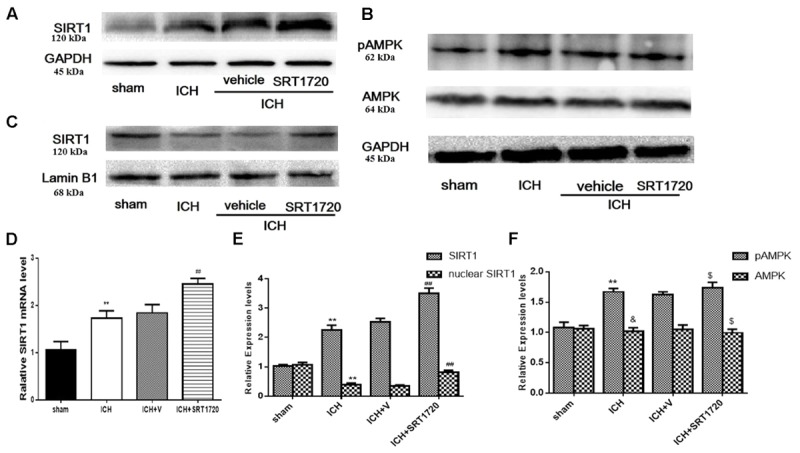
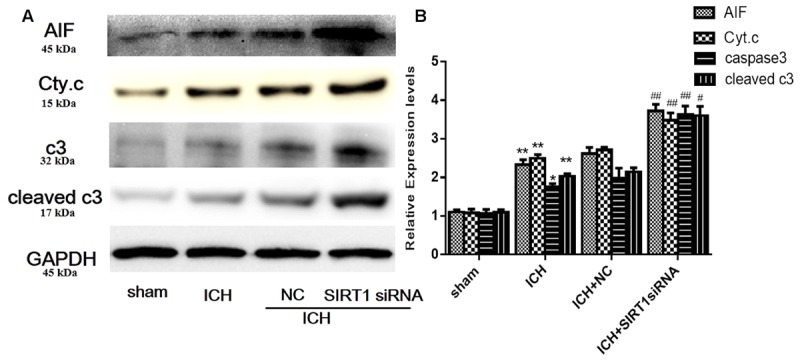
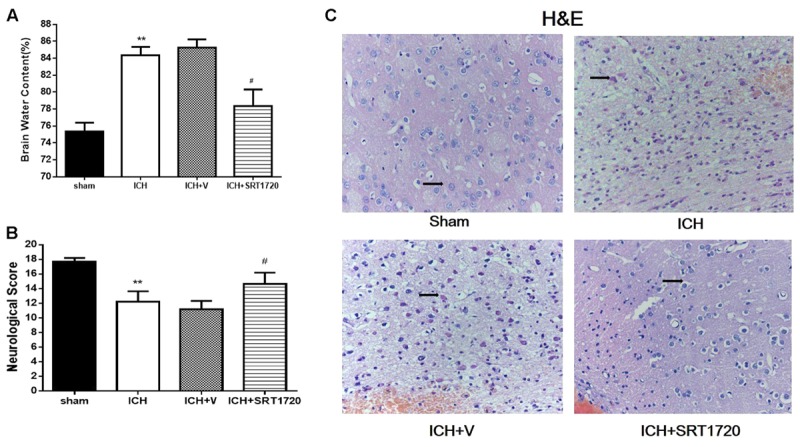
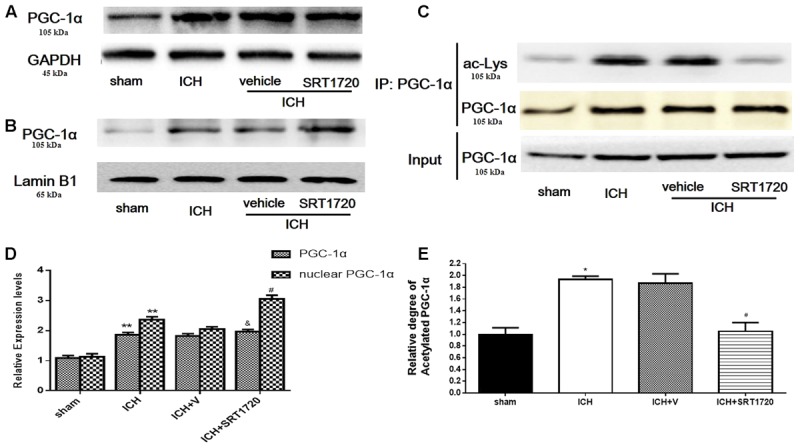
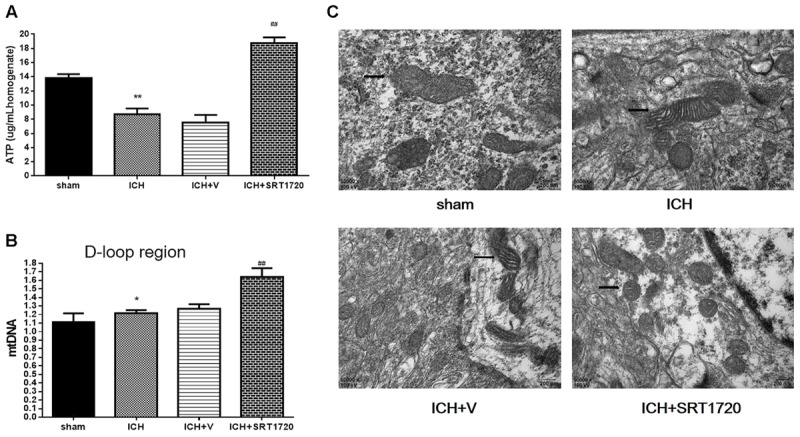
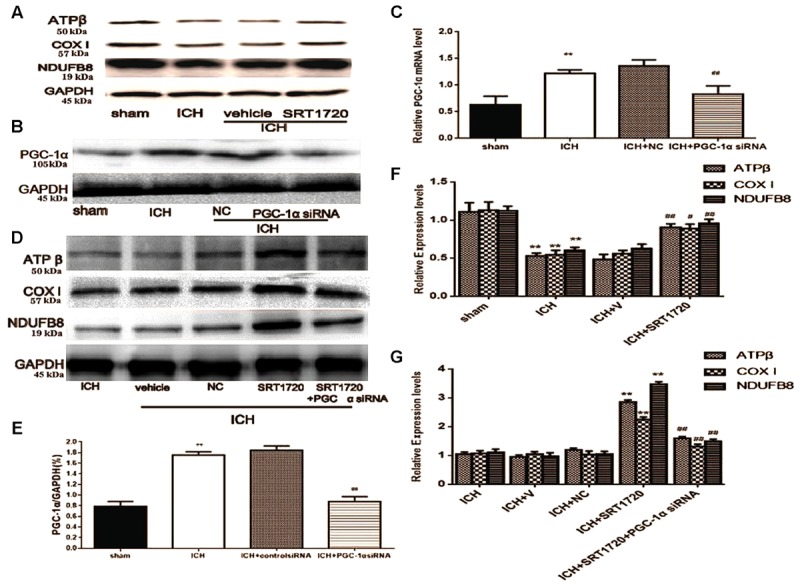
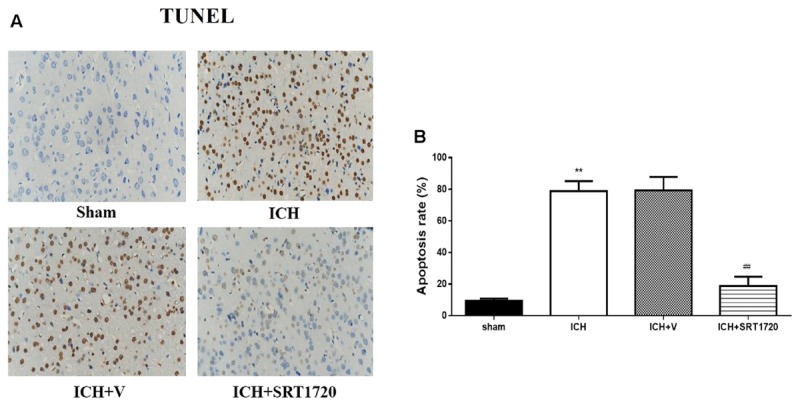
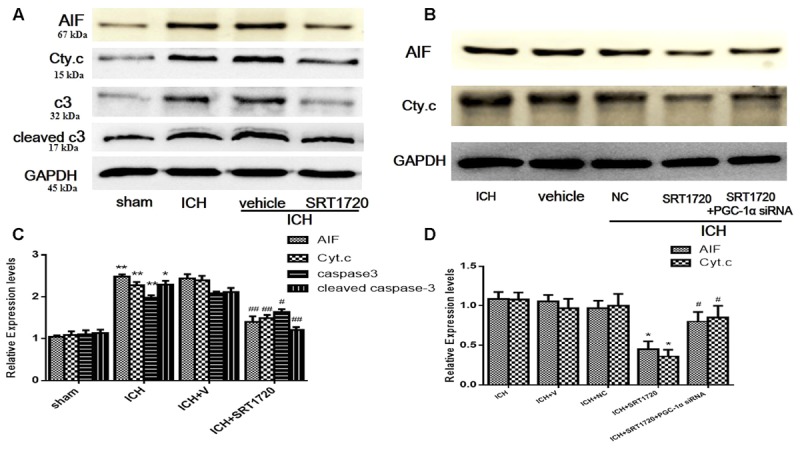
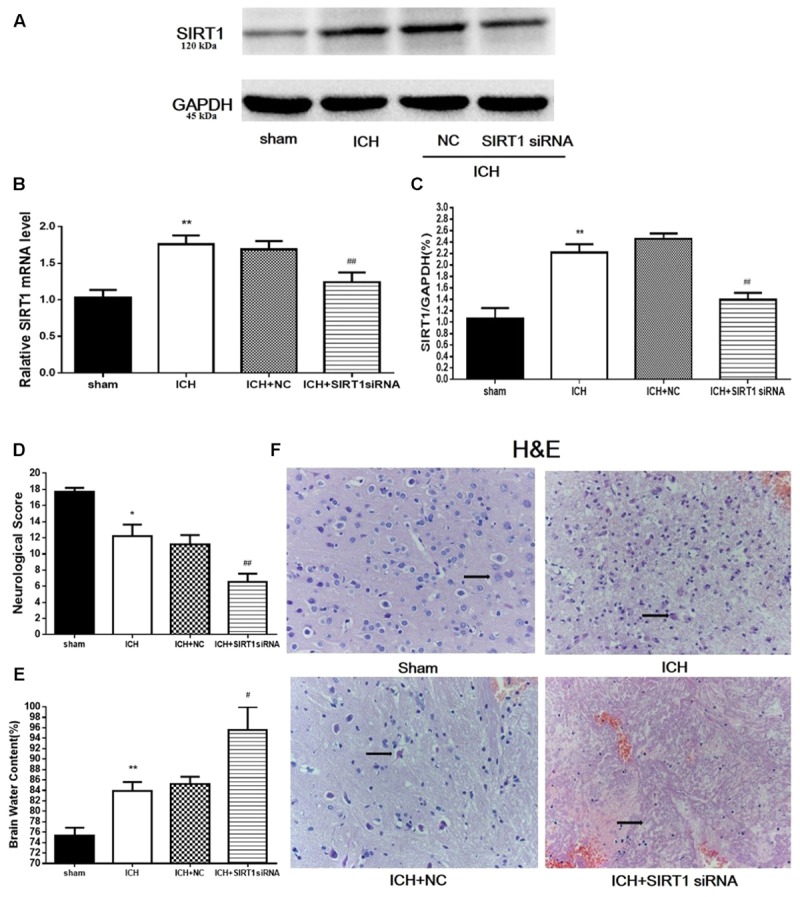
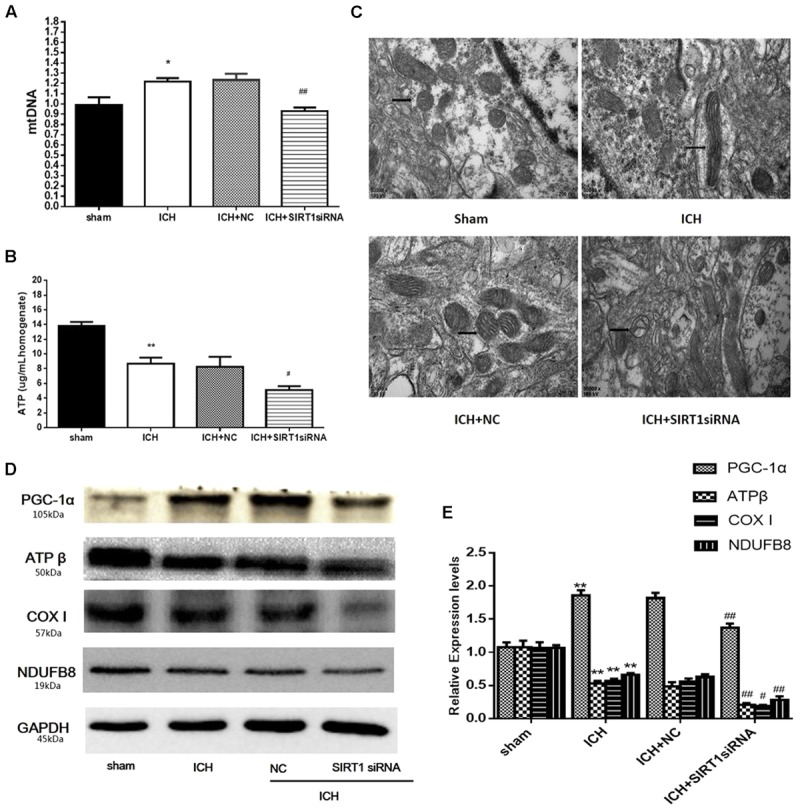
Silent information regulator 1 (SIRT1) exerts neuroprotection in many neurodegenerative diseases. However, it is not clear if SIRT1 has protective effects after intracerebral hemorrhage (ICH)-induced brain injury in rats. Thus, our goal was to examine the influence of SIRT1 on ICH injuries and any underlying mechanisms of this influence. Brain injury was induced by autologous arterial blood (60 μL) injection into rat brains, and data show that activation of SIRT1 with SRT1720 (5 mg/kg) restored nuclear SIRT1, deacetylation of PGC-1α, and mitochondrial biogenesis and decreased mortality, behavioral deficits, and brain water content without significant changes in phosphorylated AMP-activated protein kinase (pAMPK) induced by ICH. Activation of SIRT1 with SRT1720 also restored mitochondrial electron transport chain proteins and decreased apoptotic proteins in ICH; however, these changes were reversed after ICH. In contrast, treatment with PGC-1α siRNA yielded opposite effects. To explore the protective effects of SIRT1 after ICH, siRNAs were used to knockdown SIRT1. Treatment with SIRT1 siRNA increased mortality, behavioral deficits, brain water content, mitochondrial dysfunction, and neurocyte apoptosis after ICH. Thus, activation of SIRT1 promotes recovery of mitochondrial protein and function by increasing mitochondrial biogenesis and reduces apoptosis after ICH via the PGC-1α mitochondrial pathway. These data may suggest a new therapeutic approach for ICH injuries.
沉默信息调节因子1(SIRT1)在许多神经退行性疾病中发挥神经保护作用。然而,SIRT1在大鼠脑出血(ICH)诱导的脑损伤后是否具有保护作用尚不清楚。因此,我们的目标是研究SIRT1对ICH损伤的影响以及这种影响的潜在机制。通过向大鼠脑内注射自体动脉血(60μL)诱导脑损伤,数据显示用SRT1720(5mg/kg)激活SIRT1可恢复核SIRT1、PGC-1α的去乙酰化以及线粒体生物合成,并降低死亡率、行为缺陷和脑含水量,而ICH诱导的磷酸化AMP激活蛋白激酶(pAMPK)无显著变化。用SRT1720激活SIRT1还可恢复ICH中的线粒体电子传递链蛋白并减少凋亡蛋白;然而,这些变化在ICH后被逆转。相反,用PGC-1α siRNA处理产生相反的效果。为了探索ICH后SIRT1的保护作用,使用siRNA敲低SIRT1。用SIRT1 siRNA处理可增加ICH后的死亡率、行为缺陷、脑含水量、线粒体功能障碍和神经细胞凋亡。因此,激活SIRT1可通过增加线粒体生物合成促进线粒体蛋白和功能的恢复,并通过PGC-1α线粒体途径减少ICH后的细胞凋亡。这些数据可能提示一种针对ICH损伤的新治疗方法。