García-Lecea Marta, Gasanov Evgeny, Jedrychowska Justyna, Kondrychyn Igor, Teh Cathleen, You May-Su, Korzh Vladimir
Institute of Molecular and Cell Biology, Agency for Science, Technology and Research, Singapore, Singapore.
Department of Basic Biomedical Sciences, Universidad Europea de Madrid, Madrid, Spain.
Front Neuroanat. 2017 Dec 7;11:114. doi: 10.3389/fnana.2017.00114. eCollection 2017.
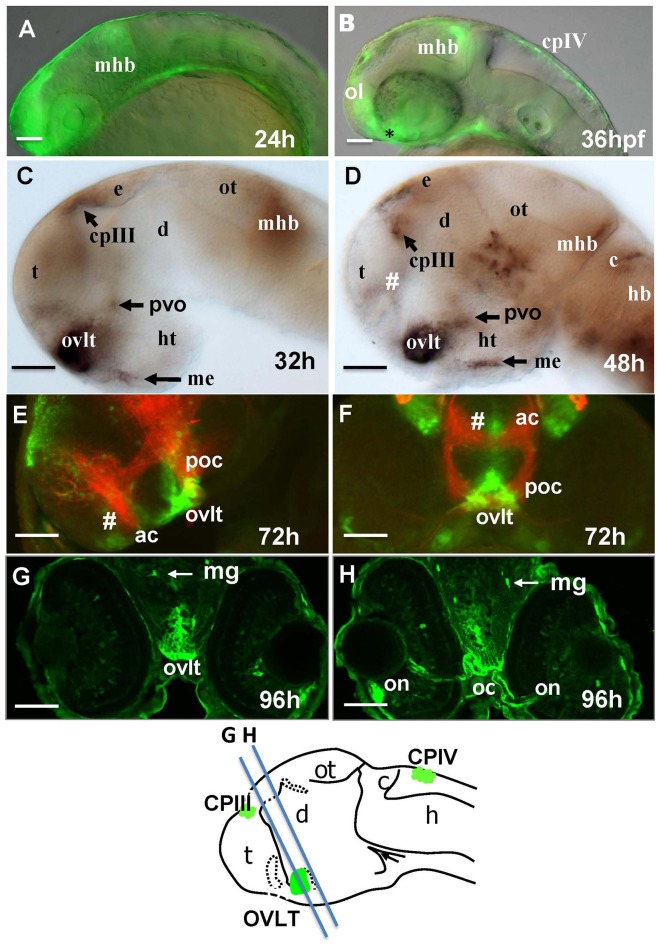
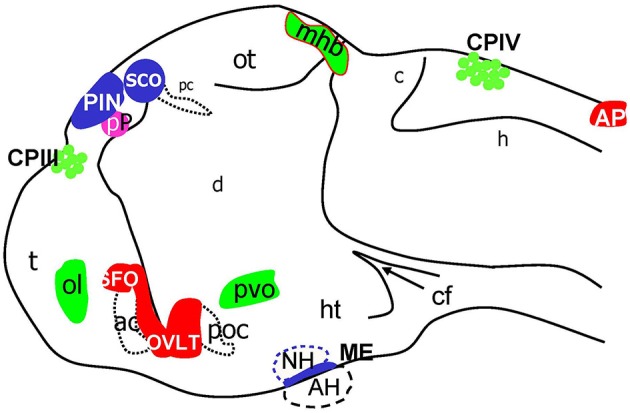
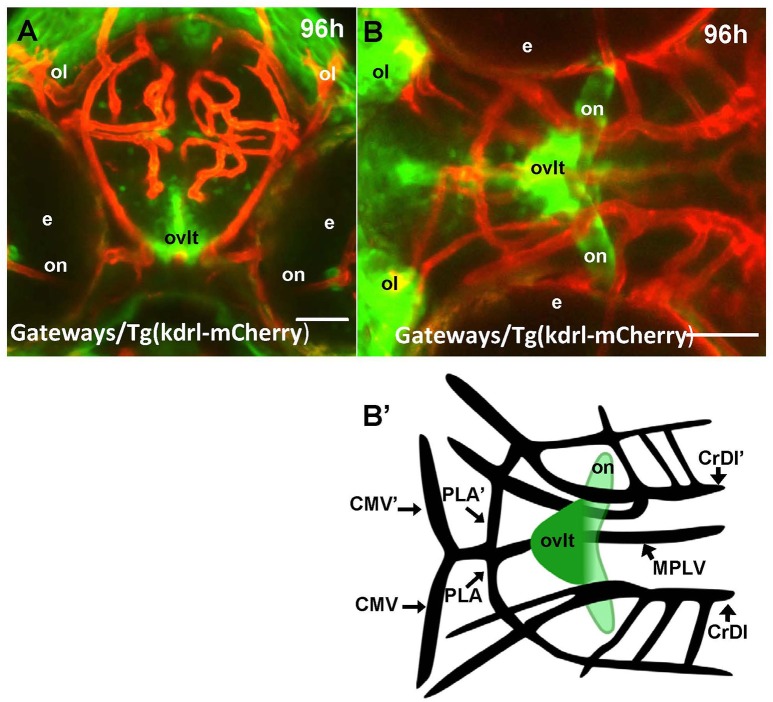
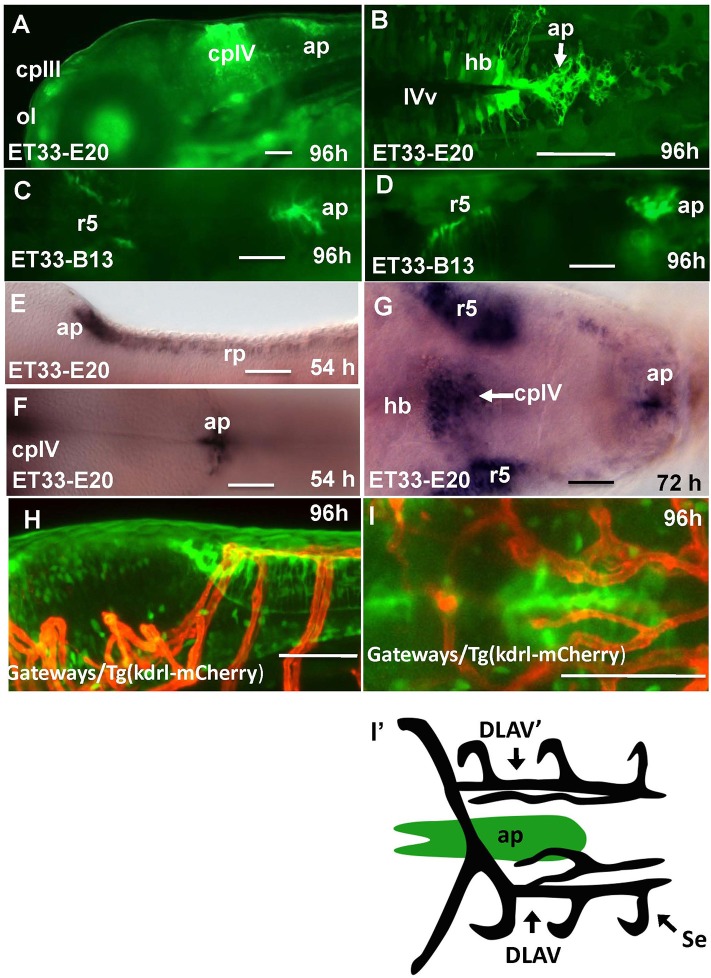
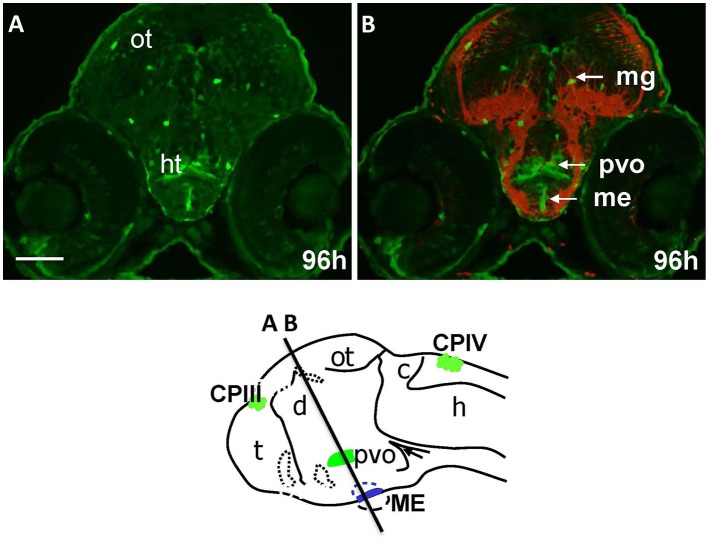
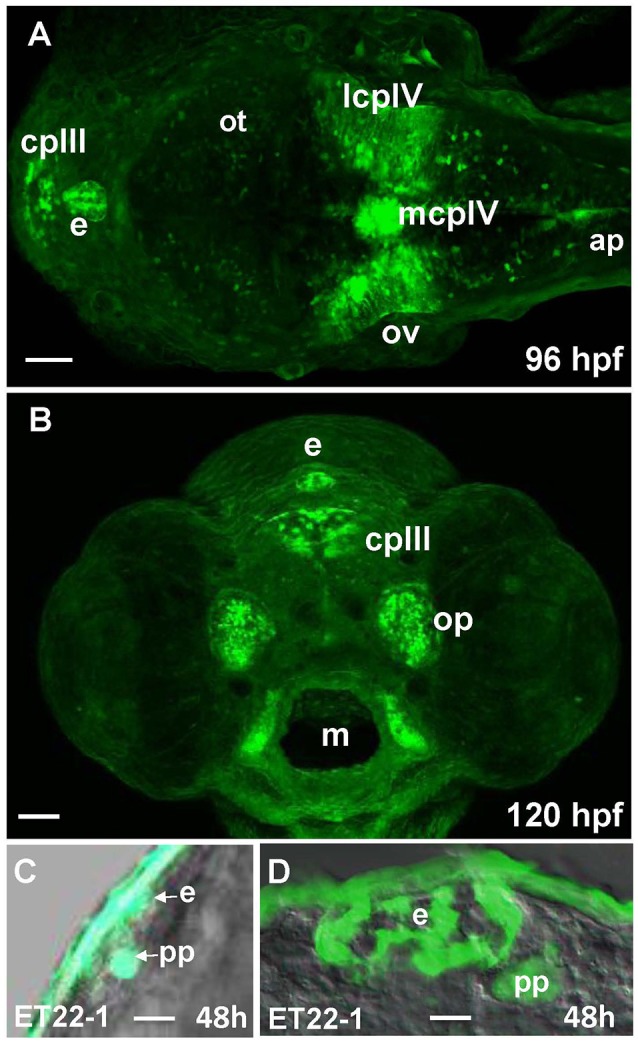
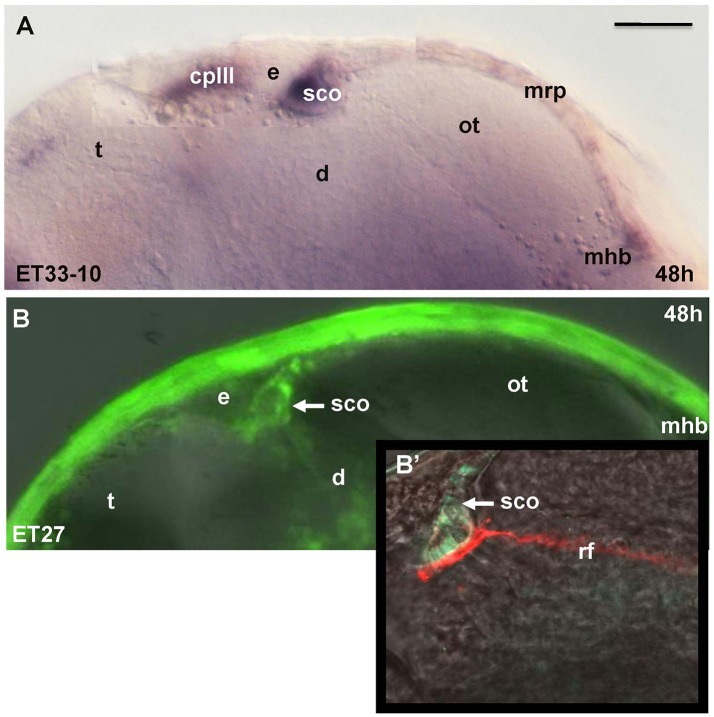
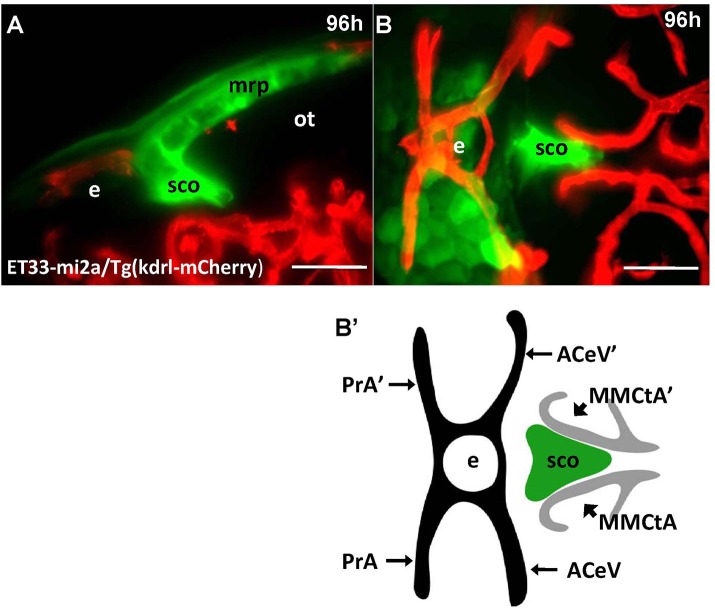
The circumventricular organs (CVOs) are small structures lining the cavities of brain ventricular system. They are associated with the semitransparent regions of the blood-brain barrier (BBB). Hence it is thought that CVOs mediate biochemical signaling and cell exchange between the brain and systemic blood. Their classification is still controversial and development not fully understood largely due to an absence of tissue-specific molecular markers. In a search for molecular determinants of CVOs we studied the green fluorescent protein (GFP) expression pattern in several zebrafish enhancer trap transgenics including Gateways (ET33-E20) that has been instrumental in defining the development of choroid plexus. In Gateways the GFP is expressed in regions of the developing brain outside the choroid plexus, which remain to be characterized. The neuroanatomical and histological analysis suggested that some previously unassigned domains of GFP expression may correspond to at least six other CVOs-the organum vasculosum laminae terminalis (OVLT), subfornical organ (SFO), paraventricular organ (PVO), pineal (epiphysis), area postrema (AP) and median eminence (ME). Two other CVOs, parapineal and subcommissural organ (SCO) were detected in other enhancer-trap transgenics. Hence enhancer-trap transgenic lines could be instrumental for developmental studies of CVOs in zebrafish and understanding of the molecular mechanism of disease such a hydrocephalus in human. Their future analysis may shed light on general and specific molecular mechanisms that regulate development of CVOs.
室周器官(CVOs)是排列在脑室系统腔壁的小结构。它们与血脑屏障(BBB)的半透明区域相关。因此,人们认为室周器官介导大脑与全身血液之间的生化信号传导和细胞交换。由于缺乏组织特异性分子标记,它们的分类仍存在争议,其发育也尚未完全被理解。在寻找室周器官的分子决定因素时,我们研究了几种斑马鱼增强子捕获转基因中的绿色荧光蛋白(GFP)表达模式,包括在脉络丛发育定义中发挥重要作用的Gateway(ET33-E20)。在Gateway中,GFP在脉络丛外的发育中脑区域表达,这些区域仍有待表征。神经解剖学和组织学分析表明,一些先前未确定的GFP表达区域可能对应于至少其他六个室周器官——终板血管器(OVLT)、穹窿下器官(SFO)、室旁器官(PVO)、松果体(松果体)、最后区(AP)和正中隆起(ME)。在其他增强子捕获转基因中检测到另外两个室周器官,副松果体和联合下器官(SCO)。因此,增强子捕获转基因系可能有助于斑马鱼室周器官的发育研究,并有助于理解人类疾病如脑积水的分子机制。它们未来的分析可能会揭示调节室周器官发育的一般和特定分子机制。