Fumagalli Marta, Lecca Davide, Abbracchio Maria P, Ceruti Stefania
Laboratory of Molecular and Cellular Pharmacology of Purinergic Transmission, Department of Pharmacological and Biomolecular Sciences, Università degli Studi di Milano, Milan, Italy.
Front Pharmacol. 2017 Dec 19;8:941. doi: 10.3389/fphar.2017.00941. eCollection 2017.
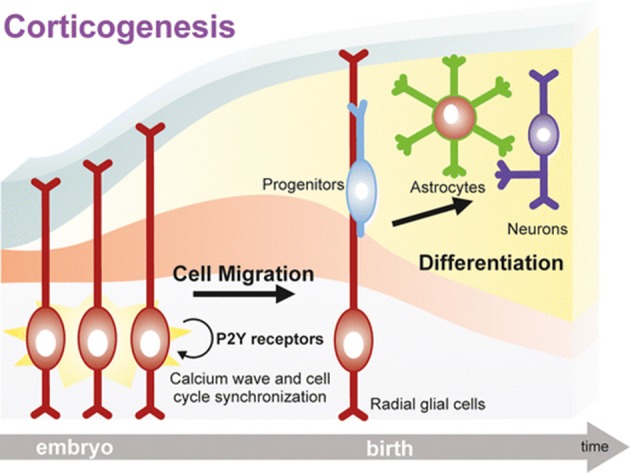
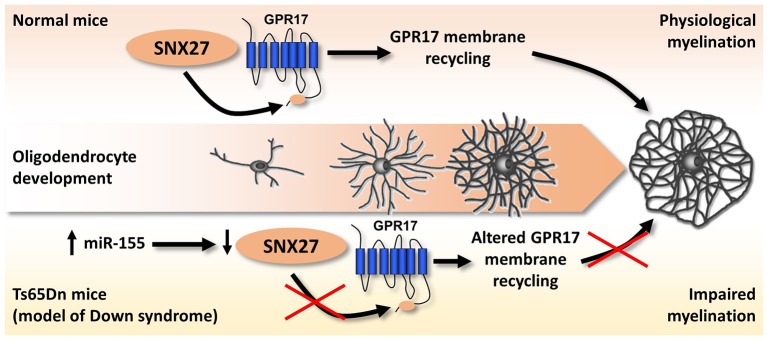
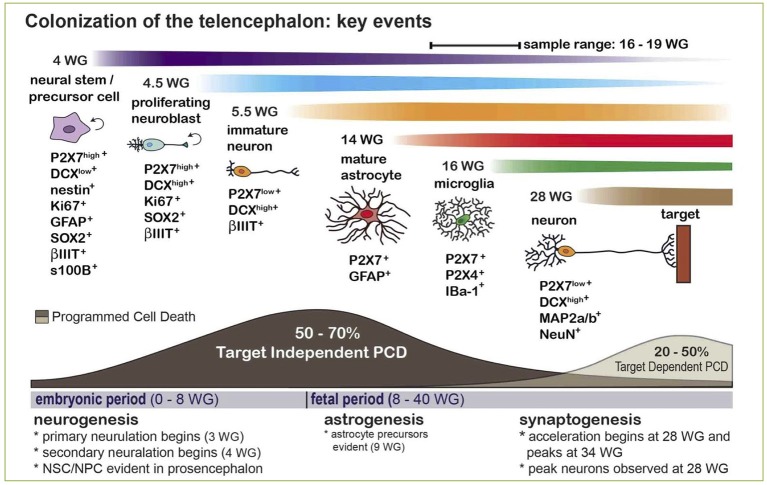
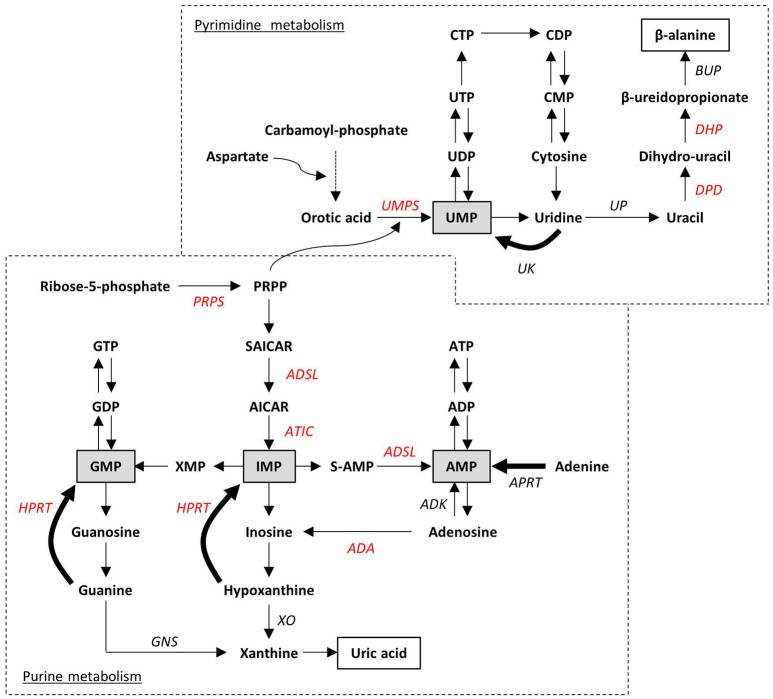
In recent years, a substantial body of evidence has emerged demonstrating that purine and pyrimidine synthesis and metabolism play major roles in controlling embryonic and fetal development and organogenesis. Dynamic and time-dependent changes in the expression of purine metabolizing enzymes (such as ectonucleotidases and adenosine deaminase) represent a key checkpoint for the correct sequential generation of the different signaling molecules, that in turn activate their specific membrane receptors. In neurodevelopment, Ca release from radial glia mediated by P2Y purinergic receptors is fundamental to allow neuroblast migration along radial glia processes, and their correct positioning in the different layers of the developing neocortex. Moreover, ATP is involved in the development of synaptic transmission and contributes to the establishment of functional neuronal networks in the developing brain. Additionally, several purinergic receptors (spanning from adenosine to P2X and P2Y receptor subtypes) are differentially expressed by neural stem cells, depending on their maturation stage, and their activation tightly regulates cell proliferation and differentiation to either neurons or glial cells, as well as their correct colonization of the developing telencephalon. The purinergic control of neurodevelopment is not limited to prenatal life, but is maintained in postnatal life, when it plays fundamental roles in controlling oligodendrocyte maturation from precursors and their terminal differentiation to fully myelinating cells. Based on the above-mentioned and other literature evidence, it is now increasingly clear that any defect altering the tight regulation of purinergic transmission and of purine and pyrimidine metabolism during pre- and post-natal brain development may translate into functional deficits, which could be at the basis of severe pathologies characterized by mental retardation or other disturbances. This can occur either at the level of the recruitment and/or signaling of specific nucleotide or nucleoside receptors or through genetic alterations in key steps of the purine salvage pathway. In this review, we have provided a critical analysis of what is currently known on the pathophysiological role of purines and pyrimidines during brain development with the aim of unveiling new future strategies for pharmacological intervention in different neurodevelopmental disorders.
近年来,大量证据表明嘌呤和嘧啶的合成与代谢在控制胚胎和胎儿发育以及器官形成中发挥着重要作用。嘌呤代谢酶(如外核苷酸酶和腺苷脱氨酶)表达的动态和时间依赖性变化是不同信号分子正确顺序生成的关键检查点,这些信号分子进而激活其特定的膜受体。在神经发育过程中,由P2Y嘌呤能受体介导的放射状胶质细胞释放钙离子对于神经母细胞沿放射状胶质细胞突起迁移以及它们在发育中的新皮层不同层中的正确定位至关重要。此外,ATP参与突触传递的发育,并有助于在发育中的大脑中建立功能性神经网络。此外,几种嘌呤能受体(从腺苷到P2X和P2Y受体亚型)根据神经干细胞的成熟阶段而有不同表达,它们的激活严格调节细胞增殖以及向神经元或胶质细胞的分化,以及它们在发育中的端脑的正确定植。嘌呤能对神经发育的控制不仅限于产前生活,在产后生活中也持续存在,此时它在控制少突胶质细胞从前体细胞成熟及其向完全髓鞘化细胞的终末分化中发挥着重要作用。基于上述及其他文献证据,现在越来越清楚的是,在产前和产后大脑发育过程中,任何改变嘌呤能传递以及嘌呤和嘧啶代谢严格调控的缺陷都可能转化为功能缺陷,这可能是导致以智力迟钝或其他障碍为特征的严重病理状况的基础。这种情况可能发生在特定核苷酸或核苷受体的募集和/或信号传导水平,或者通过嘌呤补救途径关键步骤中的基因改变。在本综述中,我们对目前已知的嘌呤和嘧啶在大脑发育过程中的病理生理作用进行了批判性分析,目的是揭示针对不同神经发育障碍进行药物干预的新的未来策略。