Yang Junfa, Liu Qingxue, Cao Shiyang, Xu Tao, Li Xiaofeng, Zhou Dandan, Pan Linxin, Li Changyao, Huang Cheng, Meng Xiaoming, Zhang Lei, Wang Xiao
School of Pharmacy, Anhui Medical University, Hefei, China.
Anhui Province Key Laboratory of Major Autoimmune Diseases, Anhui Institute of Innovative Drugs, Hefei, China.
Front Pharmacol. 2018 Jan 12;8:980. doi: 10.3389/fphar.2017.00980. eCollection 2017.
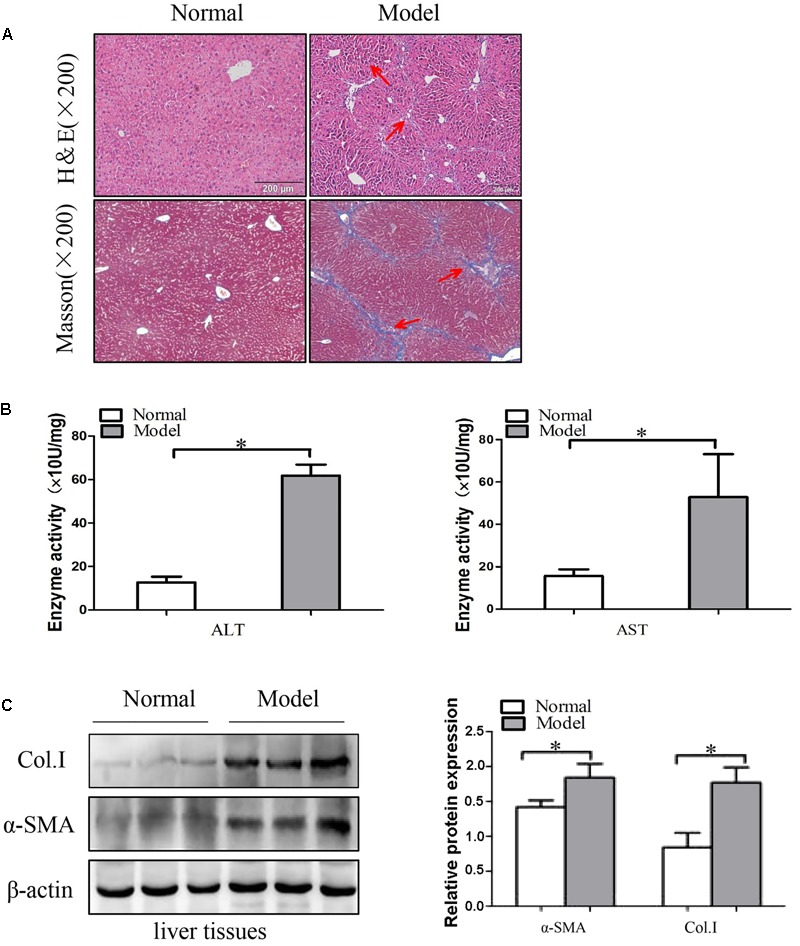
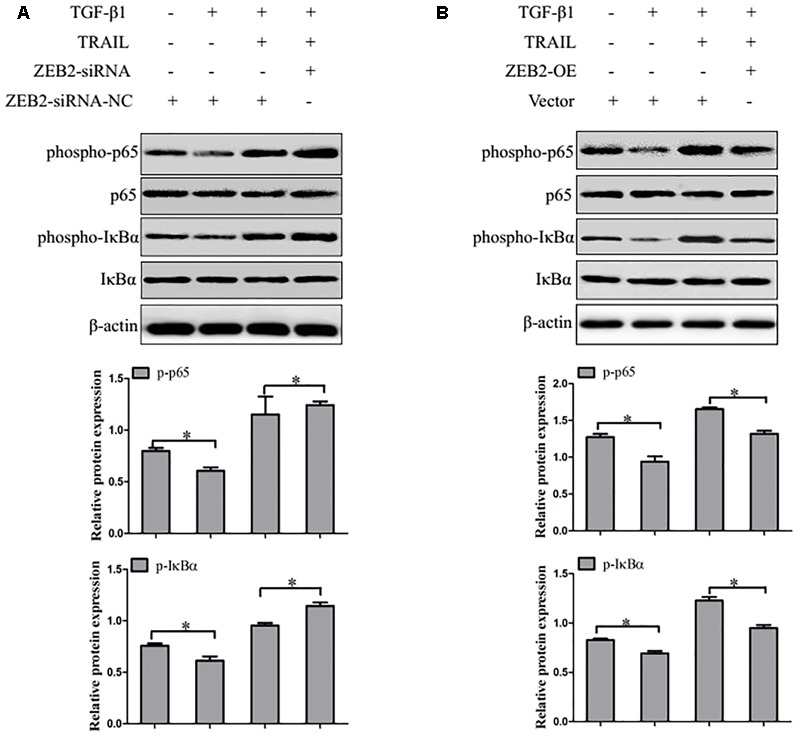
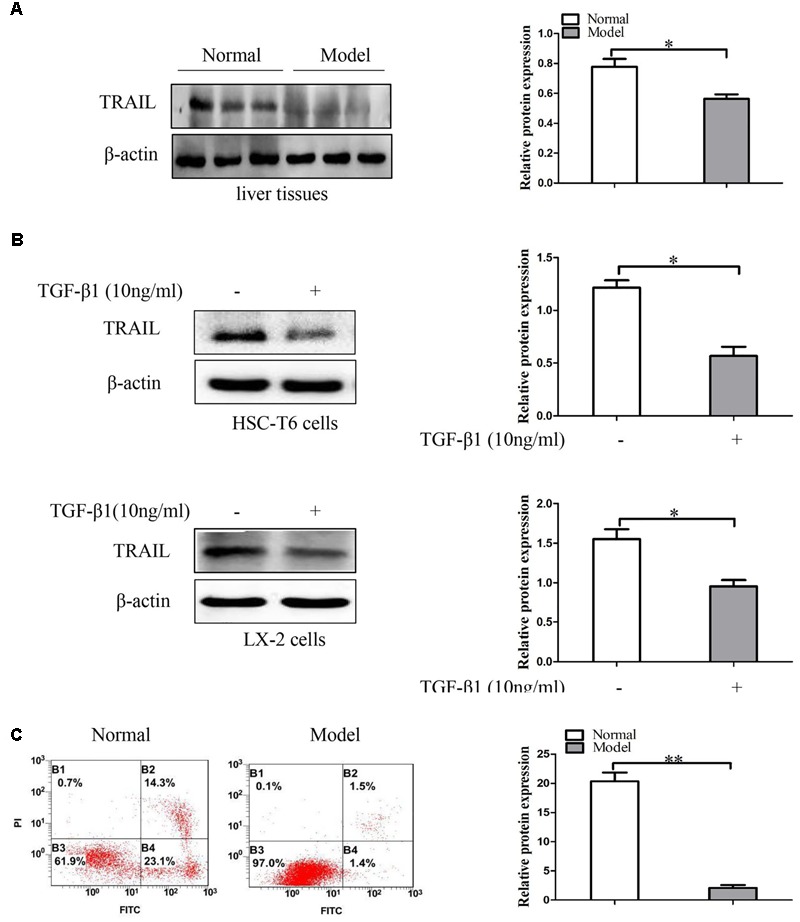
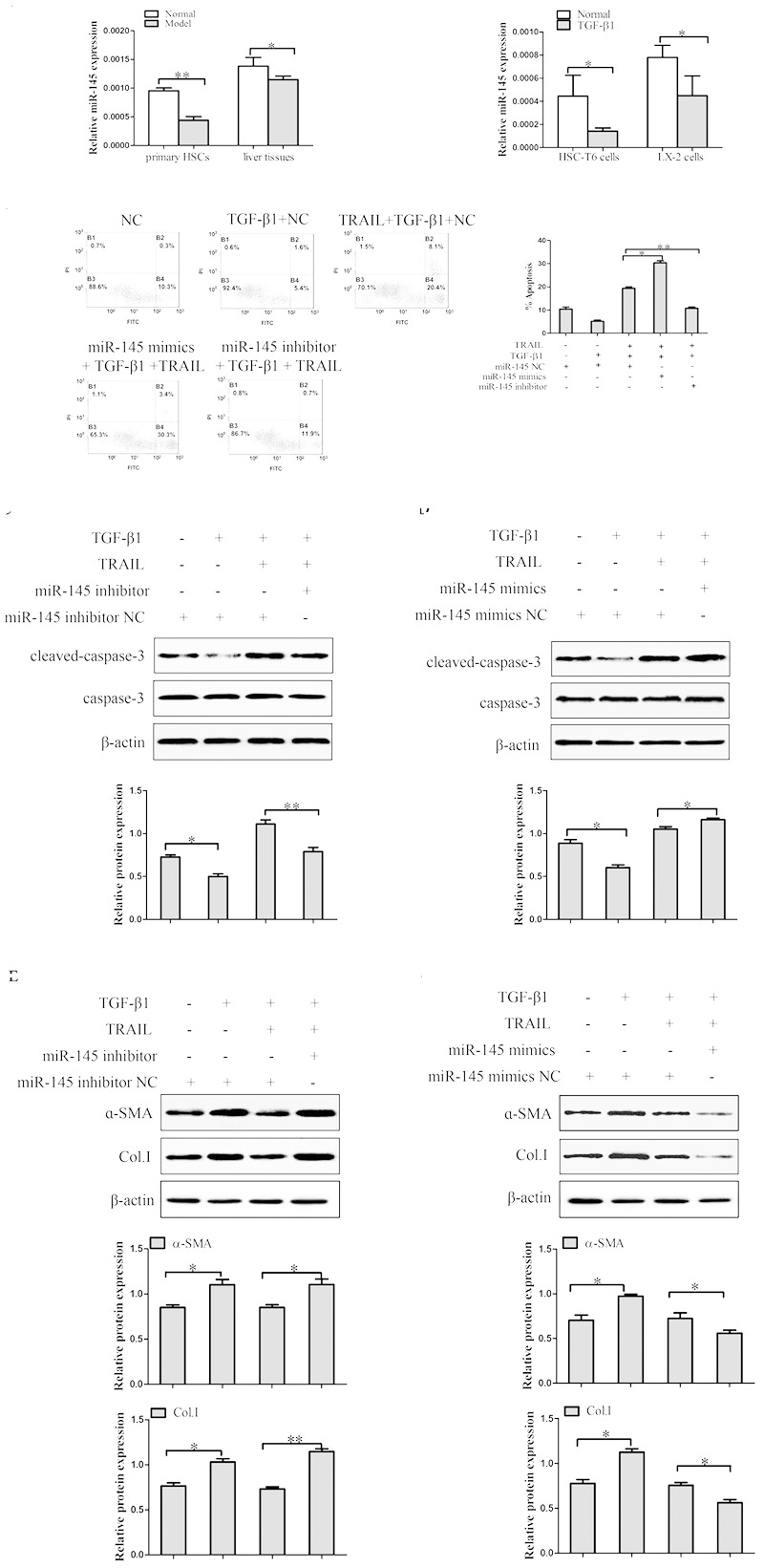
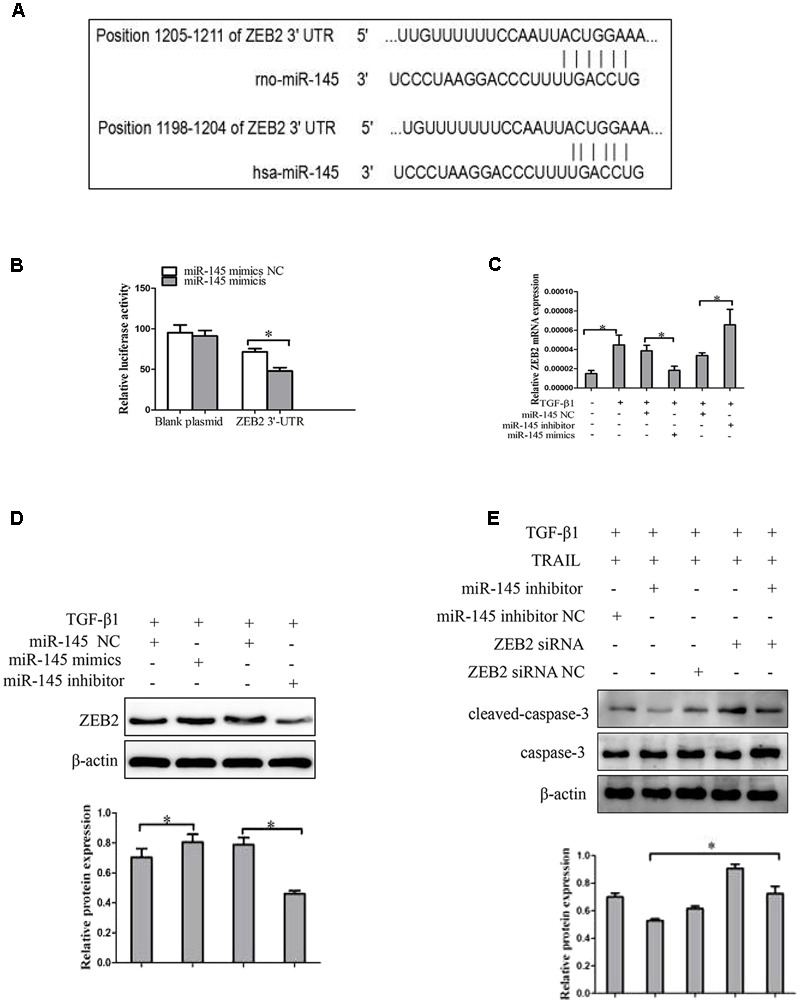
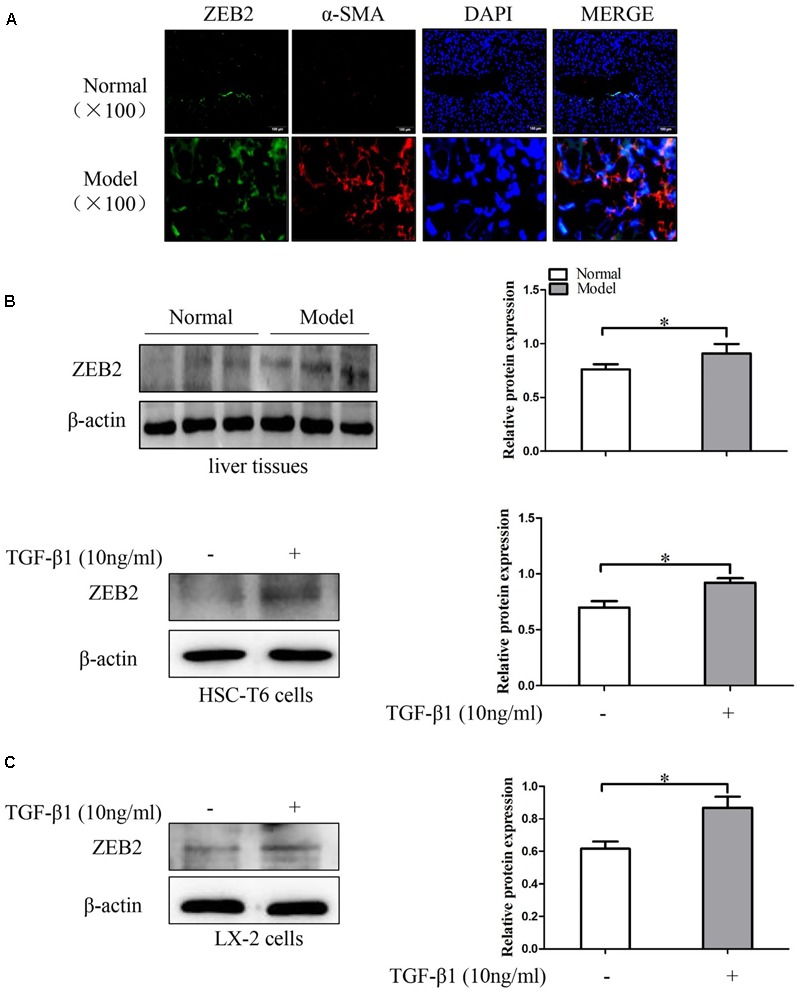
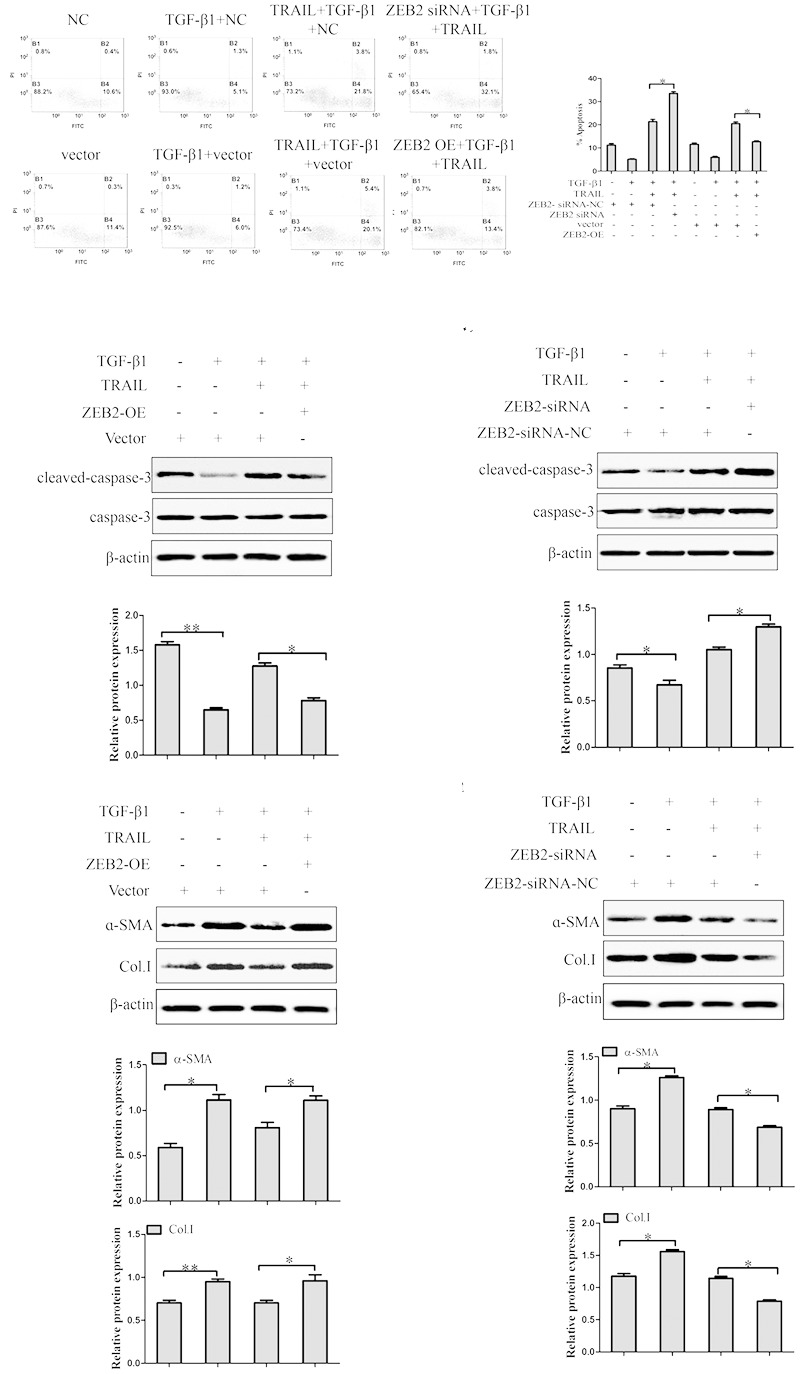
During the liver fibrosis recovery stage tumor necrosis factor-related apoptosis-inducing ligand (TRAIL) can effectively induce apoptosis of activated hepatic stellate cells (HSCs). Normal hepatic stellate cells are resistant to TRAIL cytotoxicity. Therefore, enhancing the sensitivity of TRAIL-induced apoptosis of HSCs may be useful to treat hepatic fibrogenesis. Here, we demonstrated that miR-145 and TRAIL were down-regulated in both liver fibrosis tissue samples and transforming growth factor-β1 induced HSCs, concomitant with increased the expression of ZEB2. In addition, we found that mimics-mediated over-expression of miR-145 led to resistance to the ZEB2 expression and up-regulation of the TRAIL-induced apoptosis after treatment of LX-2 cells with TRAIL. Furthermore, ZEB2-siRNA transfected LX-2 cells showed the increased sensitivity to TRAIL-induced apoptosis. Whereas, opposite results were obtained in miR-145-inhibitor group or ZEB2 plasmid group. Moreover, miR-145 regulated ZEB2 gene expression by specifically interacting with the 3'-UTR of ZEB2 mRNA to inhibit the expression of ZEB2. Further studies showed that the over-expression of ZEB2 could inhibit TRAIL-induced apoptosis via inhibiting nuclear factor-κB (NF-κB) signaling pathway in LX-2 cells. Collectively, our data suggest that up-regulation of miR-145 can down-regulate ZEB2 expression, consequently promoting TRAIL-induced apoptosis in LX-2 cells through NF-κB signaling pathway, which facilitates the resolution of liver fibrosis.
在肝纤维化恢复期,肿瘤坏死因子相关凋亡诱导配体(TRAIL)可有效诱导活化肝星状细胞(HSC)凋亡。正常肝星状细胞对TRAIL细胞毒性具有抗性。因此,提高TRAIL诱导HSC凋亡的敏感性可能有助于治疗肝纤维化。在此,我们证明在肝纤维化组织样本和转化生长因子-β1诱导的HSC中,miR-145和TRAIL均下调,同时ZEB2表达增加。此外,我们发现用TRAIL处理LX-2细胞后,模拟物介导的miR-145过表达导致对ZEB2表达的抗性以及TRAIL诱导凋亡的上调。此外,转染ZEB2-siRNA的LX-2细胞对TRAIL诱导的凋亡表现出更高的敏感性。然而,在miR-145抑制剂组或ZEB2质粒组中获得了相反的结果。此外,miR-145通过与ZEB2 mRNA的3'-UTR特异性相互作用来调节ZEB2基因表达,从而抑制ZEB2的表达。进一步研究表明,ZEB2的过表达可通过抑制LX-2细胞中的核因子-κB(NF-κB)信号通路来抑制TRAIL诱导的凋亡。总体而言,我们的数据表明miR-145的上调可下调ZEB2表达,从而通过NF-κB信号通路促进TRAIL诱导的LX-2细胞凋亡,这有助于肝纤维化的消退。