Department of Cardiovascular Sciences, Center for Molecular and Vascular Biology, KU Leuven, Campus Gasthuisberg, Onderwijs & Navorsing 1, Herestraat 49, Box 911, 3000 Leuven, Belgium.
Department of Internal Medicine (Nephrology), Einthoven Laboratory for Experimental Vascular Medicine, Leiden University Medical Center, Leiden, The Netherlands.
Cardiovasc Res. 2022 Mar 25;118(5):1262-1275. doi: 10.1093/cvr/cvab148.
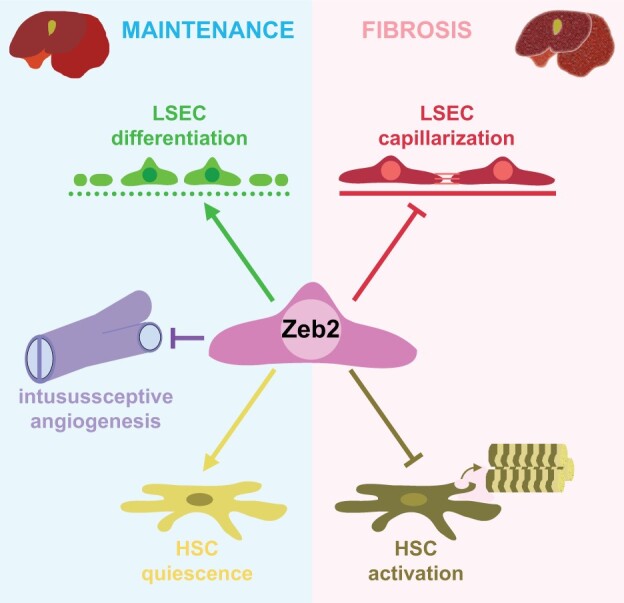
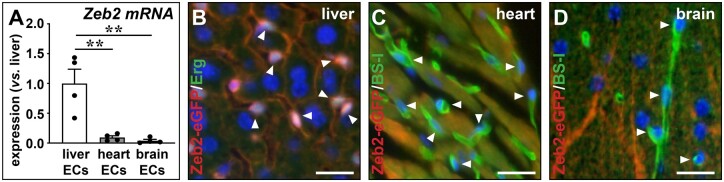
Hepatic capillaries are lined with specialized liver sinusoidal endothelial cells (LSECs) which support macromolecule passage to hepatocytes and prevent fibrosis by keeping hepatic stellate cells (HSCs) quiescent. LSEC specialization is co-determined by transcription factors. The zinc-finger E-box-binding homeobox (Zeb)2 transcription factor is enriched in LSECs. Here, we aimed to elucidate the endothelium-specific role of Zeb2 during maintenance of the liver and in liver fibrosis.
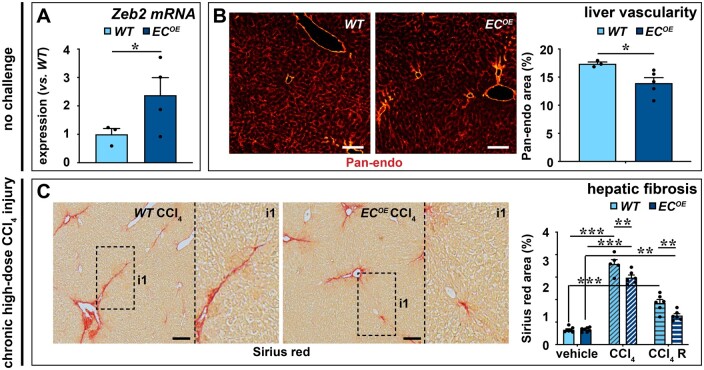
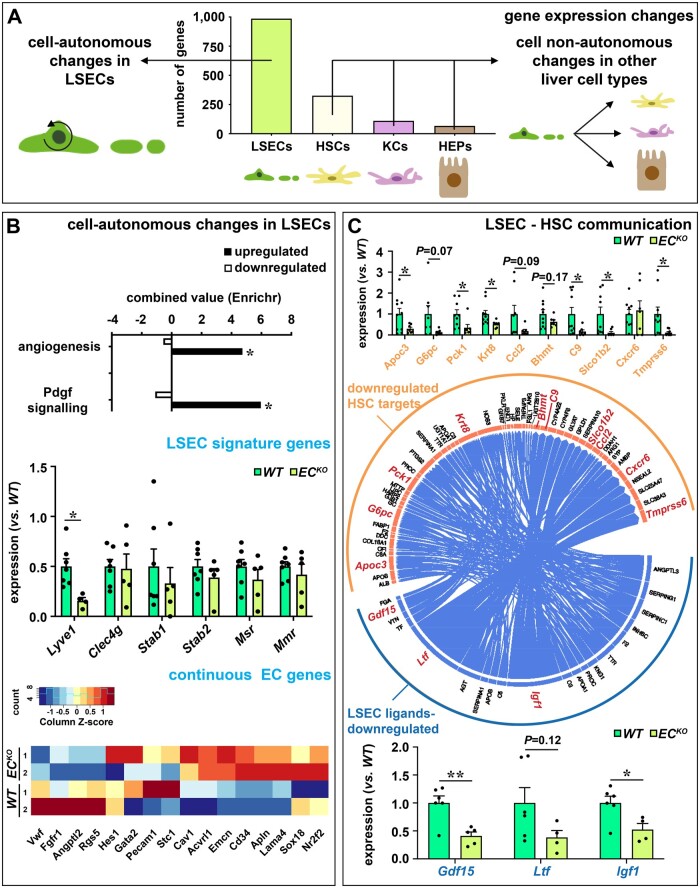
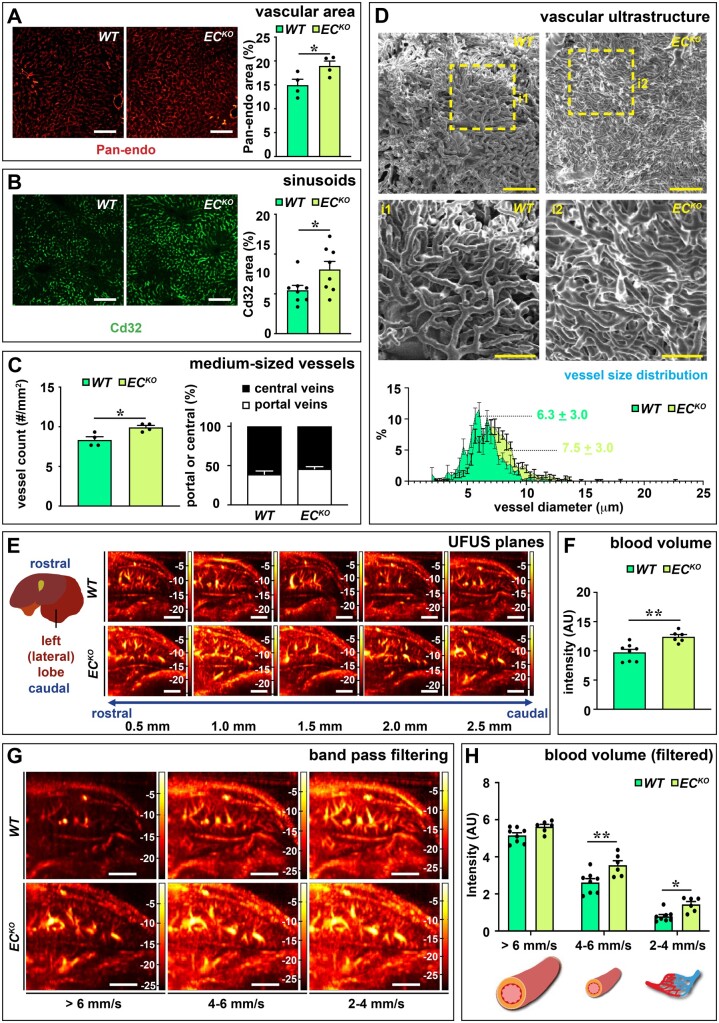
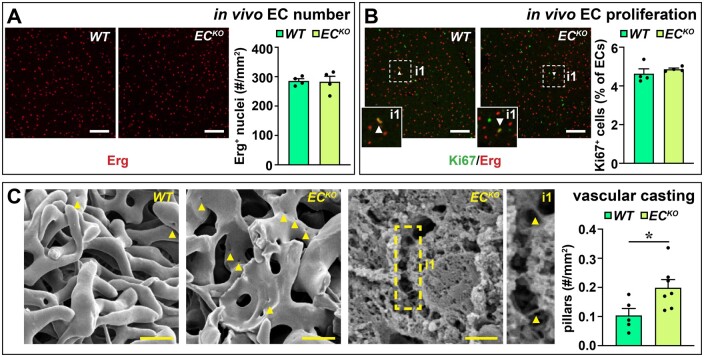
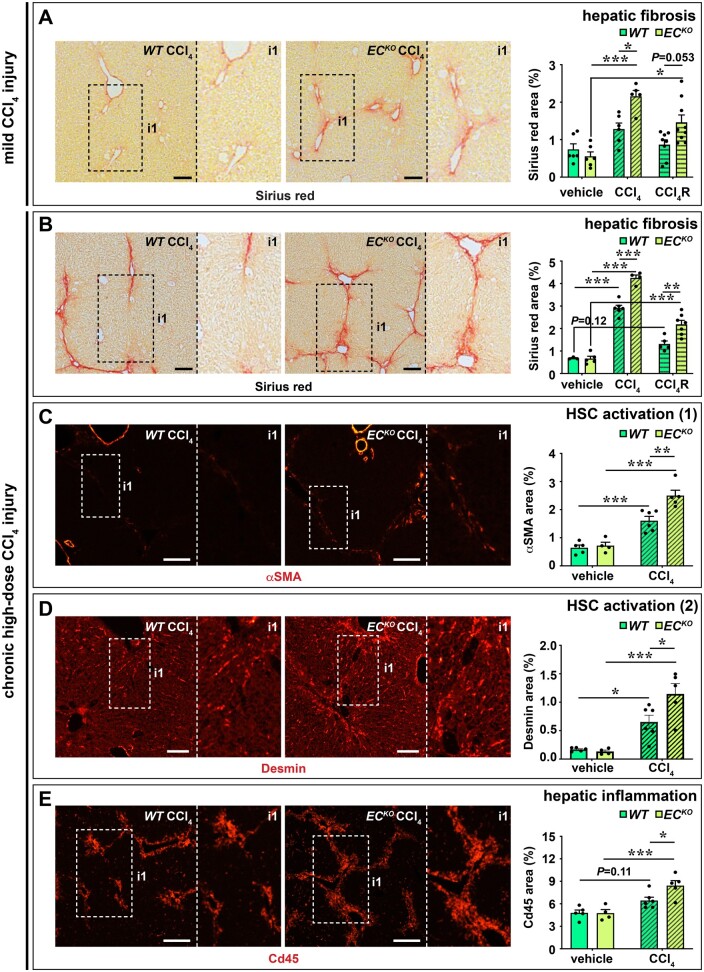
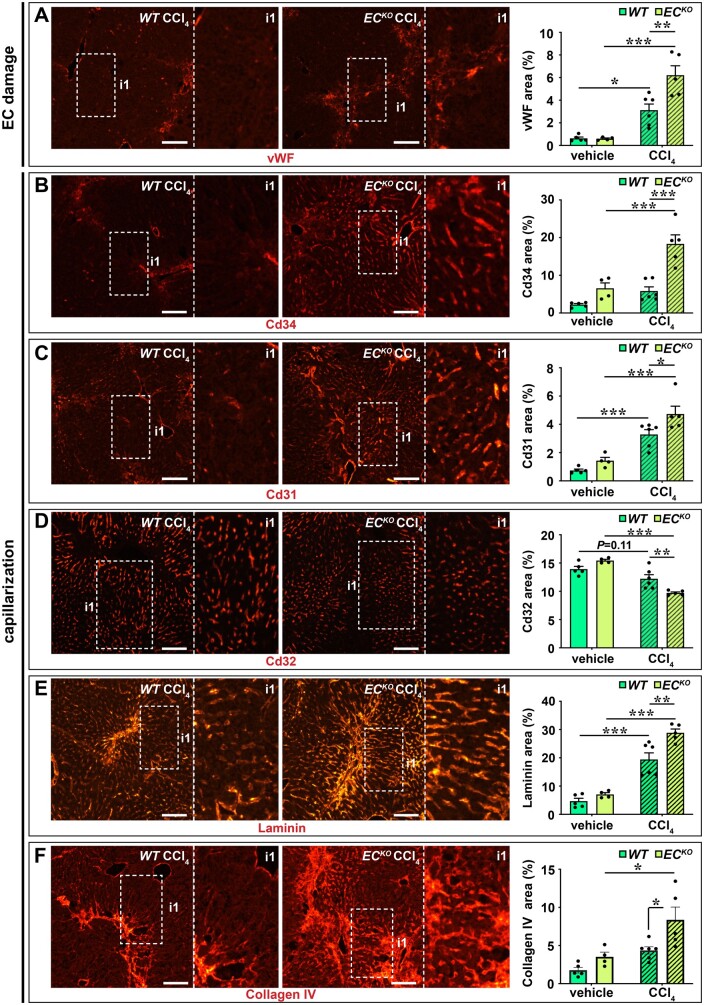
To study the role of Zeb2 in liver endothelium we generated EC-specific Zeb2 knock-out (ECKO) mice. Sequencing of liver EC RNA revealed that deficiency of Zeb2 results in prominent expression changes in angiogenesis-related genes. Accordingly, the vascular area was expanded and the presence of pillars inside ECKO liver vessels indicated that this was likely due to increased intussusceptive angiogenesis. LSEC marker expression was not profoundly affected and fenestrations were preserved upon Zeb2 deficiency. However, an increase in continuous EC markers suggested that Zeb2-deficient LSECs are more prone to dedifferentiation, a process called 'capillarization'. Changes in the endothelial expression of ligands that may be involved in HSC quiescence together with significant changes in the expression profile of HSCs showed that Zeb2 regulates LSEC-HSC communication and HSC activation. Accordingly, upon exposure to the hepatotoxin carbon tetrachloride (CCl4), livers of ECKO mice showed increased capillarization, HSC activation, and fibrosis compared to livers from wild-type littermates. The vascular maintenance and anti-fibrotic role of endothelial Zeb2 was confirmed in mice with EC-specific overexpression of Zeb2, as the latter resulted in reduced vascularity and attenuated CCl4-induced liver fibrosis.
Endothelial Zeb2 preserves liver angioarchitecture and protects against liver fibrosis. Zeb2 and Zeb2-dependent genes in liver ECs may be exploited to design novel therapeutic strategies to attenuate hepatic fibrosis.
肝毛细血管由具有特殊功能的肝窦内皮细胞(LSEC)组成,这些细胞支持大分子向肝细胞的转运,并通过使肝星状细胞(HSC)处于静止状态来防止纤维化。LSEC 的特化是由转录因子共同决定的。锌指 E 盒结合同源盒(Zeb)2 转录因子在 LSEC 中丰富。在这里,我们旨在阐明 Zeb2 在维持肝脏和肝纤维化过程中对内皮细胞的特异性作用。
为了研究 Zeb2 在肝内皮细胞中的作用,我们生成了 EC 特异性 Zeb2 敲除(ECKO)小鼠。对肝 EC RNA 的测序表明,Zeb2 的缺失导致与血管生成相关的基因表达发生显著变化。因此,血管面积扩大,ECKO 肝血管内存在支柱表明这可能是由于内陷性血管生成增加所致。LSEC 标志物的表达没有受到明显影响,Zeb2 缺失时窗孔得以保留。然而,连续 EC 标志物的增加表明 Zeb2 缺陷的 LSEC 更容易去分化,这一过程称为“毛细血管化”。内皮细胞表达的可能参与 HSC 静止的配体的变化以及 HSC 表达谱的显著变化表明,Zeb2 调节 LSEC-HSC 通讯和 HSC 激活。因此,与野生型同窝仔鼠相比,在暴露于肝毒素四氯化碳(CCl4)后,ECKO 小鼠的肝脏表现出更多的毛细血管化、HSC 激活和纤维化。在具有 EC 特异性 Zeb2 过表达的小鼠中,证实了内皮细胞 Zeb2 在维持血管和防止纤维化方面的作用,因为后者导致血管生成减少,并减弱了 CCl4 诱导的肝纤维化。
内皮细胞 Zeb2 维持肝脏血管结构并防止纤维化。肝脏内皮细胞中的 Zeb2 和 Zeb2 依赖性基因可能被利用来设计新的治疗策略以减轻肝纤维化。