Henry Kevin A, Kim Dae Young, Kandalaft Hiba, Lowden Michael J, Yang Qingling, Schrag Joseph D, Hussack Greg, MacKenzie C Roger, Tanha Jamshid
Human Health Therapeutics Research Centre, National Research Council Canada, Ottawa, ON, Canada.
Human Health Therapeutics Research Centre, National Research Council Canada, Montréal, QC, Canada.
Front Immunol. 2017 Dec 12;8:1759. doi: 10.3389/fimmu.2017.01759. eCollection 2017.
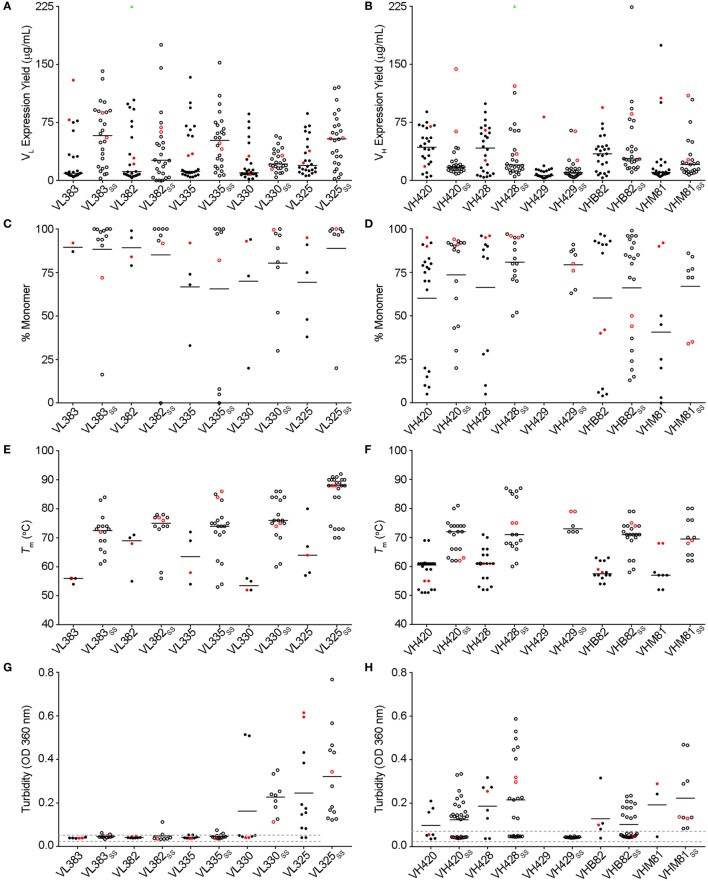
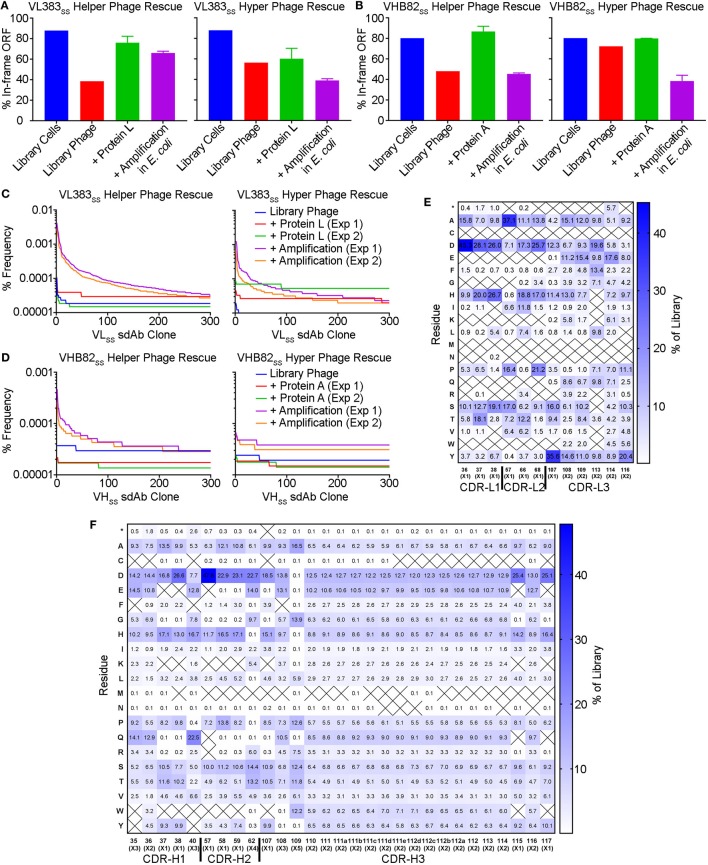
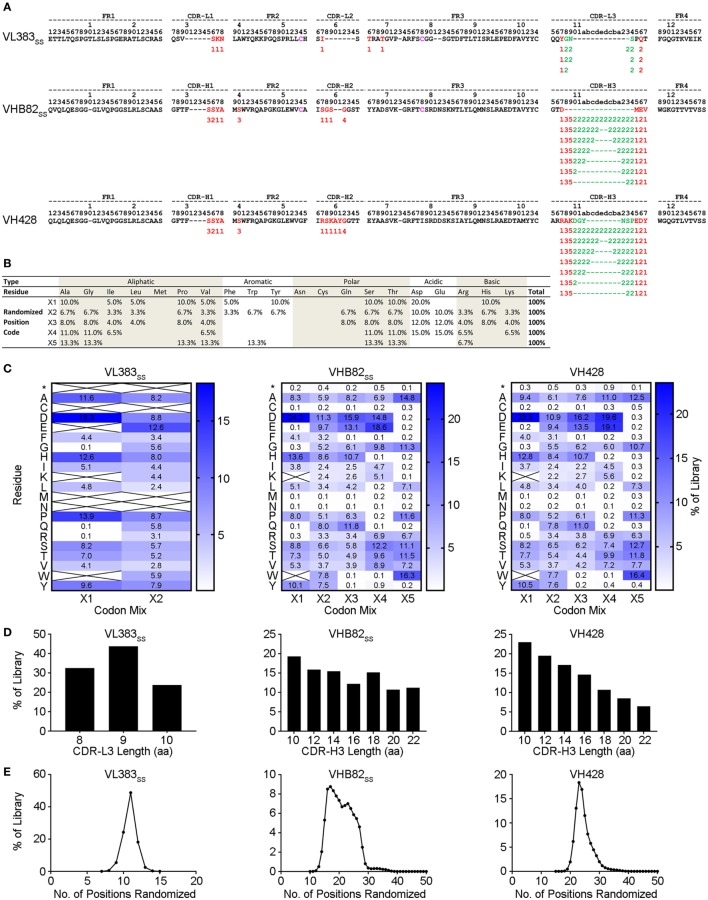
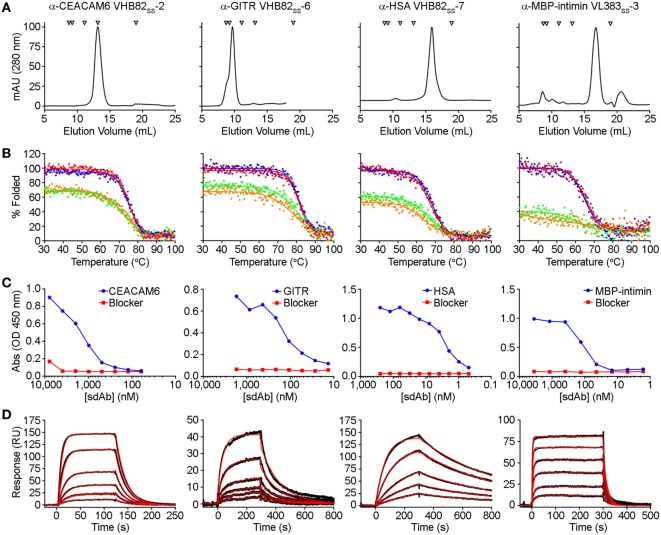
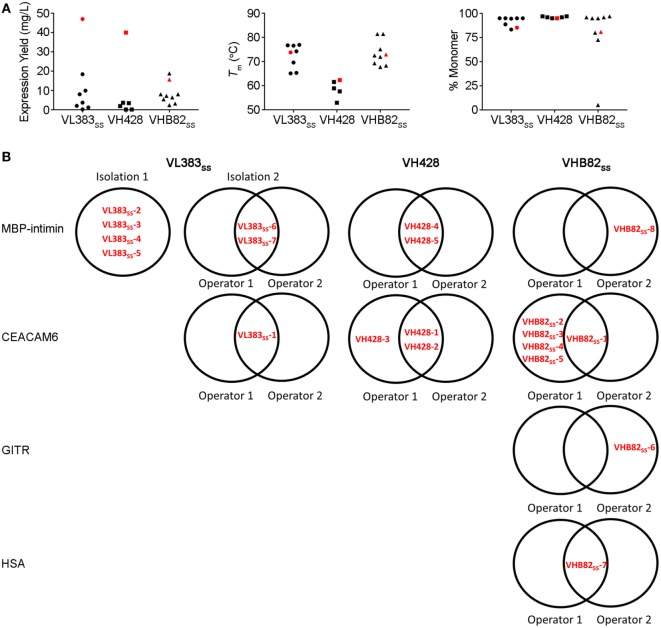
Human autonomous V/V single-domain antibodies (sdAbs) are attractive therapeutic molecules, but often suffer from suboptimal stability, solubility and affinity for cognate antigens. Most commonly, human sdAbs have been isolated from display libraries constructed synthetic randomization of rearranged V/V domains. Here, we describe the design and characterization of three novel human V/V sdAb libraries through a process of: (i) exhaustive biophysical characterization of 20 potential V/V sdAb library scaffolds, including assessment of expression yield, aggregation resistance, thermostability and tolerance to complementarity-determining region (CDR) substitutions; (ii) randomization of the CDRs of three V/V sdAb scaffolds, with tailored amino acid representation designed to promote solubility and expressibility; and (iii) systematic benchmarking of the three V/V libraries by panning against five model antigens. We isolated ≥1 antigen-specific human sdAb against four of five targets (13 Vs and 7 Vs in total); these were predominantly monomeric, had antigen-binding affinities ranging from 5 nM to 12 µM (average: 2-3 µM), but had highly variable expression yields (range: 0.1-19 mg/L). Despite our efforts to identify the most stable V/V scaffolds, selection of antigen-specific binders from these libraries was unpredictable (overall success rate for all library-target screens: ~53%) with a high attrition rate of sdAbs exhibiting false positive binding by ELISA. By analyzing V/V sdAb library sequence composition following selection for monomeric antibody expression (binding to protein A/L followed by amplification in bacterial cells), we found that some V/V sdAbs had marked growth advantages over others, and that the amino acid composition of the CDRs of this set of sdAbs was dramatically restricted (bias toward Asp and His and away from aromatic and hydrophobic residues). Thus, CDR sequence clearly dramatically impacts the stability of human autonomous V/V immunoglobulin domain folds, and sequence-stability tradeoffs must be taken into account during the design of such libraries.
人源自主V/V单域抗体(sdAbs)是具有吸引力的治疗性分子,但通常在稳定性、溶解性以及对同源抗原的亲和力方面表现欠佳。最常见的情况是,人源sdAbs是从通过重排V/V结构域的合成随机化构建的展示文库中分离得到的。在此,我们通过以下过程描述了三个新型人源V/V sdAb文库的设计与表征:(i)对20种潜在的V/V sdAb文库支架进行详尽的生物物理表征,包括表达产量、抗聚集性、热稳定性以及对互补决定区(CDR)替换的耐受性评估;(ii)对三种V/V sdAb支架的CDR进行随机化,采用经过定制的氨基酸表示法以促进溶解性和可表达性;(iii)通过针对五种模型抗原进行淘选,对这三个V/V文库进行系统的基准测试。我们针对五个靶标中的四个分离出了≥1种抗原特异性人源sdAb(总共13种V和7种V);这些sdAb主要为单体形式,抗原结合亲和力范围为5 nM至12 μM(平均:2 - 3 μM),但表达产量差异很大(范围:0.1 - 19 mg/L)。尽管我们努力鉴定最稳定的V/V支架,但从这些文库中选择抗原特异性结合物是不可预测的(所有文库 - 靶标筛选的总体成功率:约53%),通过ELISA表现出假阳性结合的sdAbs损耗率很高。通过分析在选择单体抗体表达(与蛋白A/L结合,随后在细菌细胞中扩增)后V/V sdAb文库的序列组成,我们发现一些V/V sdAbs比其他的具有明显的生长优势,并且这组sdAbs的CDR氨基酸组成受到显著限制(偏向天冬氨酸和组氨酸,远离芳香族和疏水残基)。因此,CDR序列显然对人源自主V/V免疫球蛋白结构域折叠的稳定性有显著影响,在设计此类文库时必须考虑序列 - 稳定性的权衡。