Wang Yinghao, Wu Shuisheng, Liu Chen, Lu Xuehua, Chen Zhihuang
Department of Chinese Materia Medica, College of Pharmacy, Fujian University of Traditional Chinese Medicine, Fuzhou, Fujian 350122, P.R. China.
Exp Ther Med. 2018 Jan;15(1):226-234. doi: 10.3892/etm.2017.5351. Epub 2017 Oct 23.
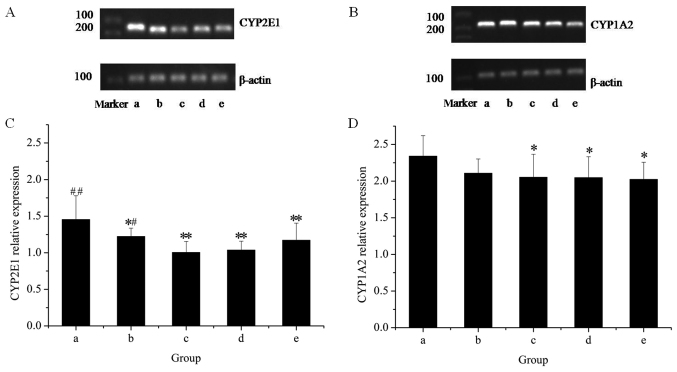
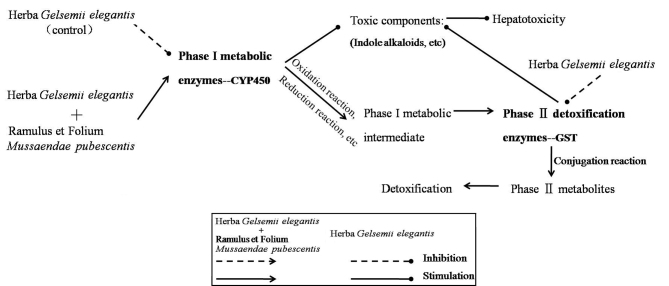
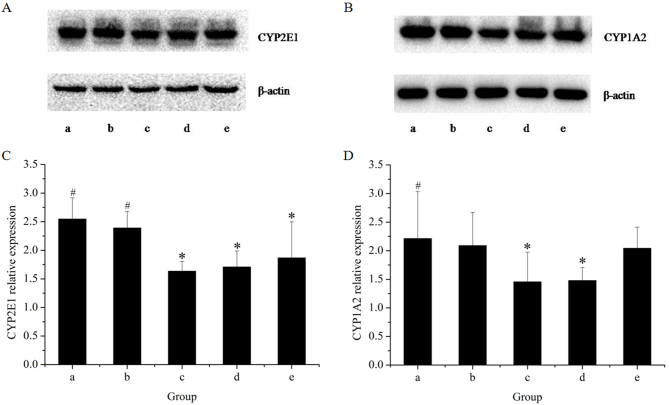
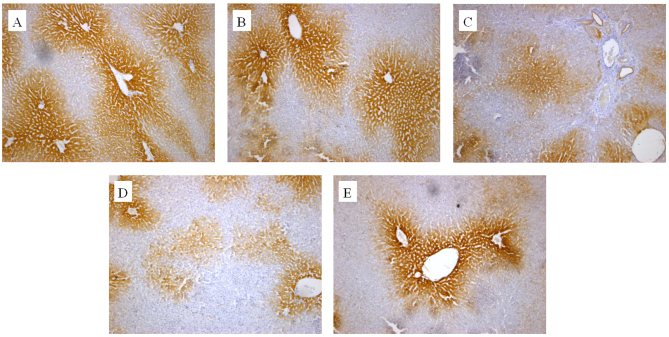
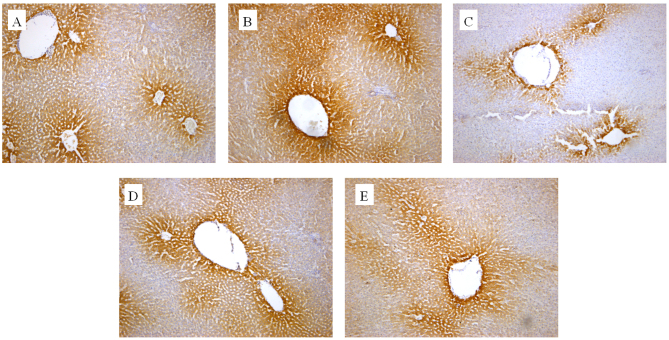
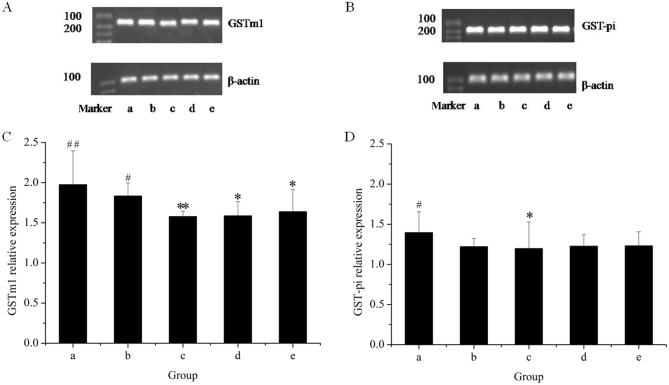
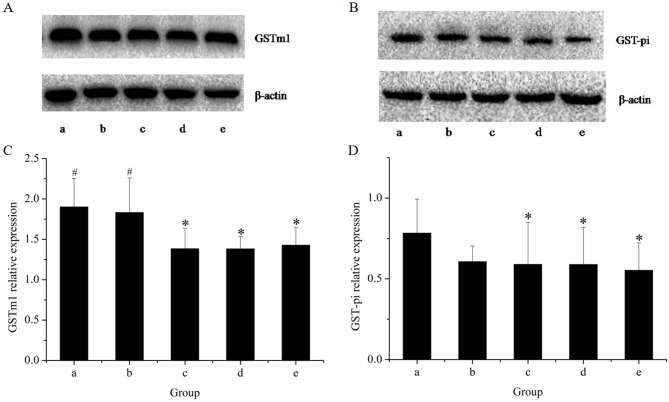
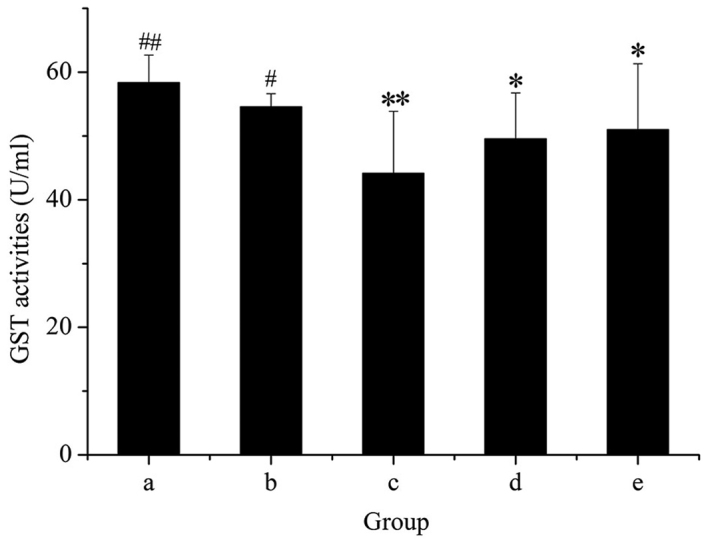
Herba (GE) has been frequently used as a Chinese folk medicine but has high acute toxicity. In Traditional Chinese Medicine, it may be detoxified by Ramulus et Folium (MP), but the detoxification mechanism has remained elusive. The present study aimed to evaluate the detoxification mechanisms by which MP modulates the effect of GE in rats, including the inhibition of hepatic cytochrome P (CYP)450 and glutathione S-transferase (GST) enzymes. Male Sprague Dawley rats were orally administered GE at three doses (0.36, 0.43 or 0.54 g/kg) alone and, at the highest dose, in combination with MP (21.6 g/kg) every day for 7 consecutive days. The control group of animals received the same volume of saline. The mRNA and protein expression of hepatic CYPs representative of two subfamilies (CYP2E1 and CYP1A2) were separately assessed by reverse-transcription quantitative polymerase chain reaction (RT-qPCR), western blot and immunohistochemistry assays. The mRNA and protein expression as well as enzyme activity of hepatic GST were assessed by RT-qPCR, western blot and colorimetric assays, respectively. The results indicated that GE significantly inhibited CYP2E1 mRNA and protein expression in a dose-dependent manner. Co-administration of MP increased CYP2E1 mRNA and protein expression as compared with the high GE dose alone. Cells expressing CYP2E1, located around the hepatic vascular plexus under a clear background, were identified by immunohistochemical staining. The results for CYP1A2 were similar to those for CYP2E1. At all concentrations used, GE significantly inhibited GST mu 1 (GSTm1) mRNA and protein expression in a dose-dependent manner, as compared with the control. Combination of GE and MP increased the mRNA and protein expression of GSTm1 as compared with the high dose of GE. However, the differences in GST-pi mRNA and protein expression between the GE and GE + MP groups were not significant. Of note, rats co-treated with MP were significantly protected from the decrease in GST activity produced by GE. The present study indicated that co-administration of GE and MP upregulated the activities of CYP450 and GST enzymes when compared with GE alone. This modulation may explain for the effect of MP in reducing the acute toxicity of GE.
葛属植物(GE)常被用作中国民间药物,但具有高急性毒性。在传统中医中,它可能通过桑寄生(MP)解毒,但其解毒机制仍不清楚。本研究旨在评估MP调节GE对大鼠作用的解毒机制,包括对肝细胞色素P(CYP)450和谷胱甘肽S-转移酶(GST)酶的抑制作用。雄性Sprague Dawley大鼠连续7天每天单独口服三种剂量(0.36、0.43或0.54 g/kg)的GE,并在最高剂量下与MP(21.6 g/kg)联合给药。动物对照组接受相同体积的生理盐水。通过逆转录定量聚合酶链反应(RT-qPCR)、蛋白质印迹和免疫组织化学分析分别评估代表两个亚家族(CYP2E1和CYP1A2)的肝CYP的mRNA和蛋白质表达。通过RT-qPCR、蛋白质印迹和比色法分别评估肝GST的mRNA和蛋白质表达以及酶活性。结果表明,GE以剂量依赖性方式显著抑制CYP2E1 mRNA和蛋白质表达。与单独使用高剂量GE相比,联合使用MP可增加CYP2E1 mRNA和蛋白质表达。通过免疫组织化学染色鉴定出在清晰背景下位于肝血管丛周围的表达CYP2E1的细胞。CYP1A2的结果与CYP2E1相似。与对照组相比,在所有使用的浓度下,GE均以剂量依赖性方式显著抑制谷胱甘肽S-转移酶μ1(GSTm1)mRNA和蛋白质表达。与高剂量GE相比,GE与MP联合使用可增加GSTm1的mRNA和蛋白质表达。然而,GE组和GE + MP组之间GST-π mRNA和蛋白质表达的差异不显著。值得注意的是,与MP共同处理的大鼠可显著免受GE引起的GST活性降低的影响。本研究表明,与单独使用GE相比,联合使用GE和MP可上调CYP450和GST酶的活性。这种调节可能解释了MP降低GE急性毒性的作用。