Toman Jan, Flegr Jaroslav
Faculty of Science Laboratory of Evolutionary Biology Department of Philosophy and History of Sciences Charles University Prague Czech Republic.
Ecol Evol. 2017 Dec 12;8(2):973-991. doi: 10.1002/ece3.3716. eCollection 2018 Jan.
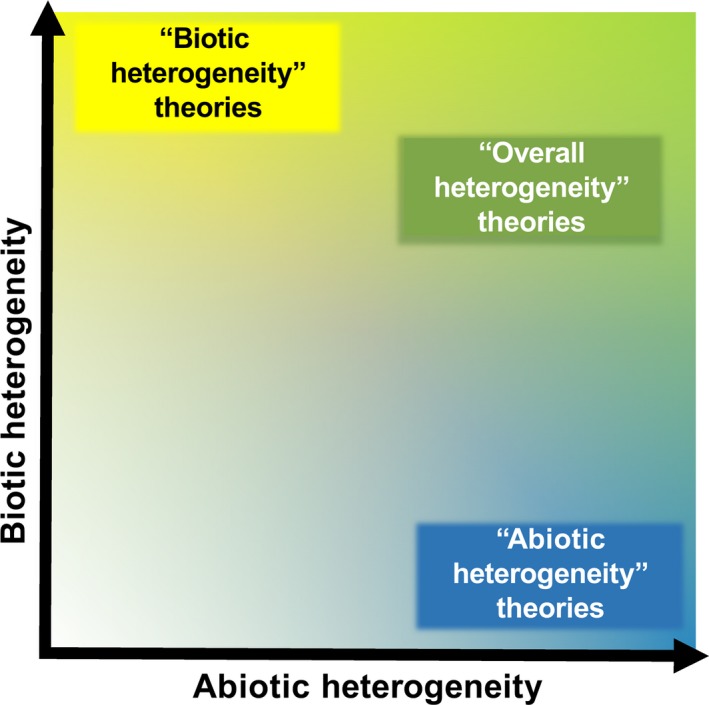
Ecological theories of sexual reproduction assume that sexuality is advantageous in certain conditions, for example, in biotically or abiotically more heterogeneous environments. Such theories thus could be tested by comparative studies. However, the published results of these studies are rather unconvincing. Here, we present the results of a new comparative study based exclusively on the ancient asexual clades. The association with biotically or abiotically homogeneous environments in these asexual clades was compared with the same association in their sister, or closely related, sexual clades. Using the conservative definition of ancient asexuals (i.e., age >1 million years), we found eight pairs of taxa of sexual and asexual species, six differing in the heterogeneity of their inhabited environment on the basis of available data. The difference between the environmental type associated with the sexual and asexual species was then compared in an exact binomial test. The results showed that the majority of ancient asexual clades tend to be associated with biotically, abiotically, or both biotically and abiotically more homogeneous environments than their sexual controls. In the exploratory part of the study, we found that the ancient asexuals often have durable resting stages, enabling life in subjectively homogeneous environments, live in the absence of intense biotic interactions, and are very often sedentary, inhabiting benthos, and soil. The consequences of these findings for the ecological theories of sexual reproduction are discussed.
有性生殖的生态学理论认为,有性生殖在某些条件下具有优势,例如在生物或非生物环境更为多样的环境中。因此,这类理论可以通过比较研究来验证。然而,这些研究已发表的结果相当缺乏说服力。在此,我们展示一项全新比较研究的结果,该研究仅基于古老的无性谱系。将这些无性谱系中与生物或非生物均质环境的关联,与其姊妹有性谱系或近缘有性谱系中的相同关联进行比较。采用古老无性生物的保守定义(即年龄超过100万年),我们发现了八对有性和无性物种的分类群,根据现有数据,其中六对在其栖息环境的异质性方面存在差异。然后,在精确二项式检验中比较与有性和无性物种相关的环境类型之间的差异。结果表明,与作为对照的有性谱系相比,大多数古老的无性谱系往往与生物、非生物或生物和非生物环境更为均质的环境相关联。在研究的探索部分,我们发现古老的无性生物通常具有持久的休眠阶段,使其能够在主观上均质的环境中生存,生活在缺乏强烈生物相互作用的环境中,并且常常是定居性的,栖息于底栖生物和土壤中。我们讨论了这些发现对有性生殖生态学理论的影响。