Department of Biochemistry, Sciences II, Faculty of Sciences, University of Geneva, Geneva, Switzerland.
Front Cell Infect Microbiol. 2018 Jan 9;7:529. doi: 10.3389/fcimb.2017.00529. eCollection 2017.
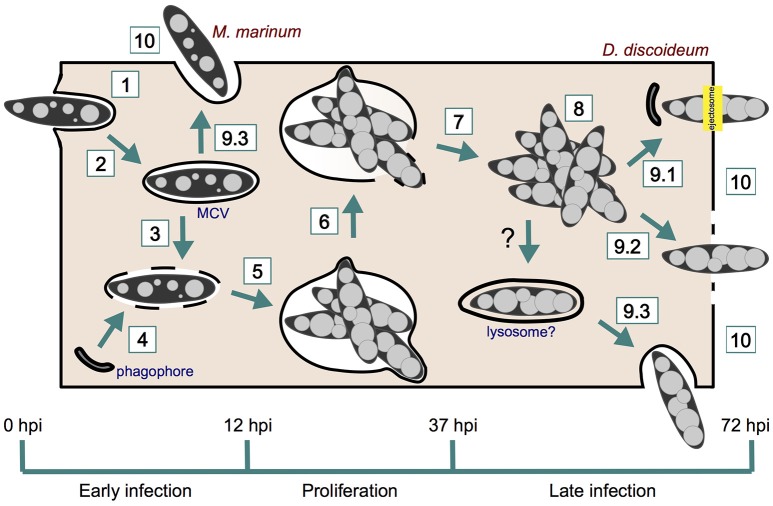
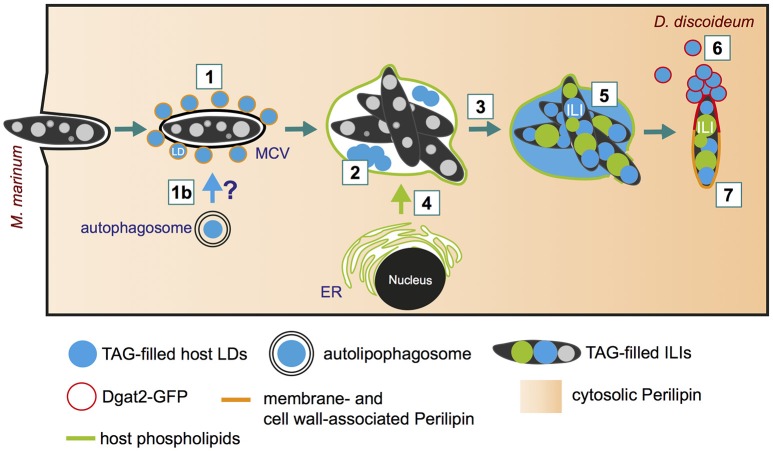
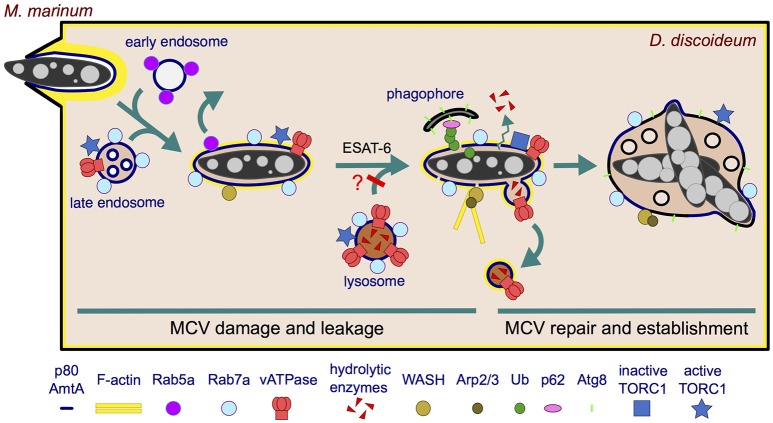
In recent years, has become an important model organism to study the cell biology of professional phagocytes. This amoeba not only shares many molecular features with mammalian macrophages, but most of its fundamental signal transduction pathways are conserved in humans. The broad range of existing genetic and biochemical tools, together with its suitability for cell culture and live microscopy, make an ideal and versatile laboratory organism. In this review, we focus on the use of as a phagocyte model for the study of mycobacterial infections, in particular . We look in detail at the intracellular cycle of , from its uptake by to its active or passive egress into the extracellular medium. In addition, we describe the molecular mechanisms that both the mycobacterial invader and the amoeboid host have developed to fight against each other, and compare and contrast with those developed by mammalian phagocytes. Finally, we introduce the methods and specific tools that have been used so far to monitor the - interaction.
近年来, 已成为研究专业吞噬细胞细胞生物学的重要模式生物。这种变形虫不仅与哺乳动物巨噬细胞共享许多分子特征,而且其大多数基本信号转导途径在人类中也是保守的。广泛存在的遗传和生化工具,以及其对细胞培养和活细胞显微镜检查的适用性,使 成为一种理想的多功能实验室生物。在这篇综述中,我们重点介绍了 将 作为吞噬细胞模型用于研究分枝杆菌感染,特别是 。我们详细研究了 的细胞内周期,从它被 吞噬到它主动或被动地进入细胞外介质。此外,我们描述了分枝杆菌入侵物和变形虫宿主为相互对抗而开发的分子机制,并与哺乳动物吞噬细胞的机制进行了比较和对比。最后,我们介绍了迄今为止用于监测 - 相互作用的方法和特定工具。