Department of Spine Surgery, Renji Hospital, School of Medicine, Shanghai Jiao Tong University, China.
Department of Dermatology, University of Colorado, Aurora, CO, USA.
Mol Oncol. 2018 Apr;12(4):476-494. doi: 10.1002/1878-0261.12176. Epub 2018 Feb 20.
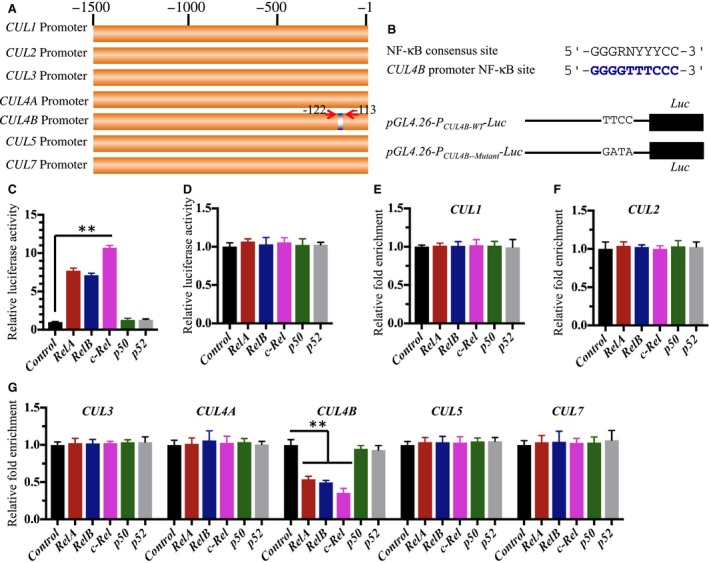
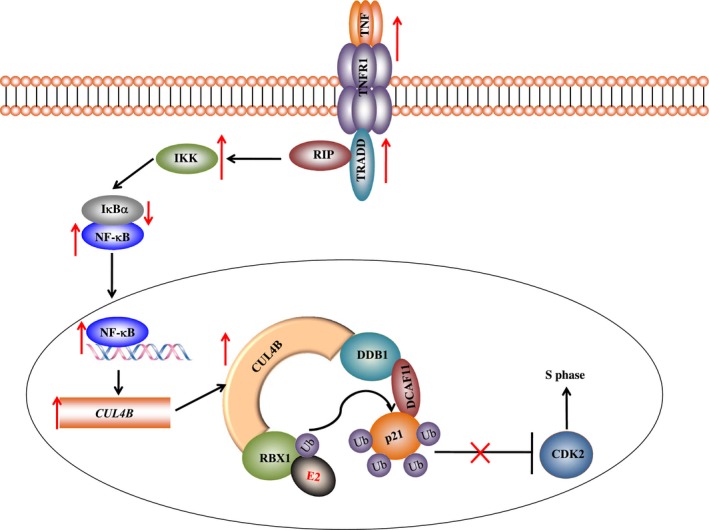
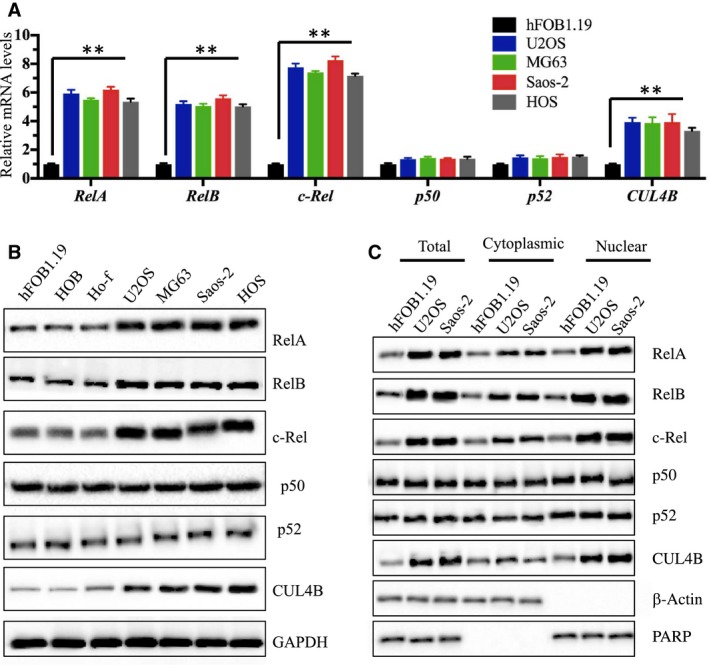
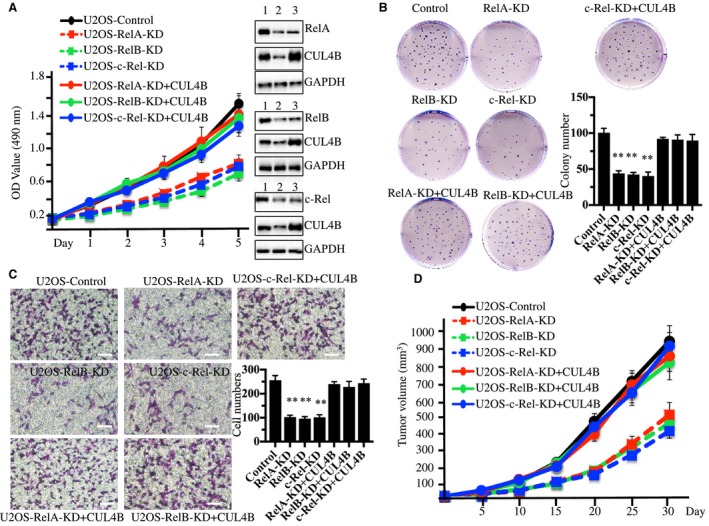
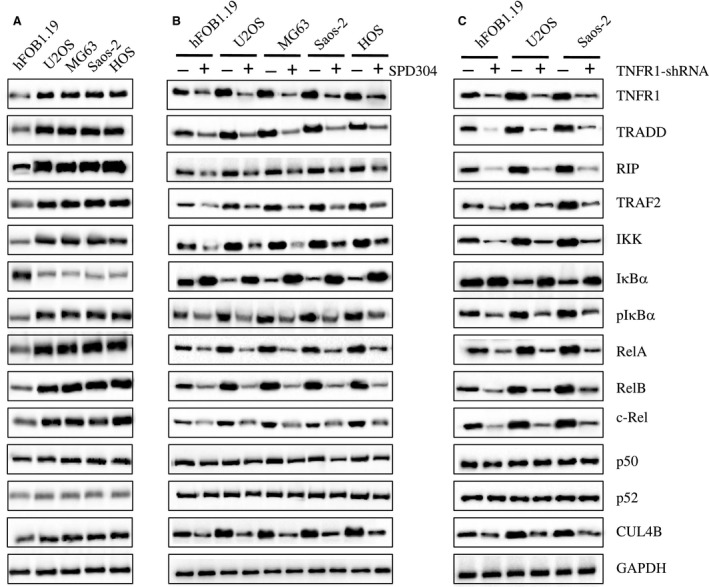
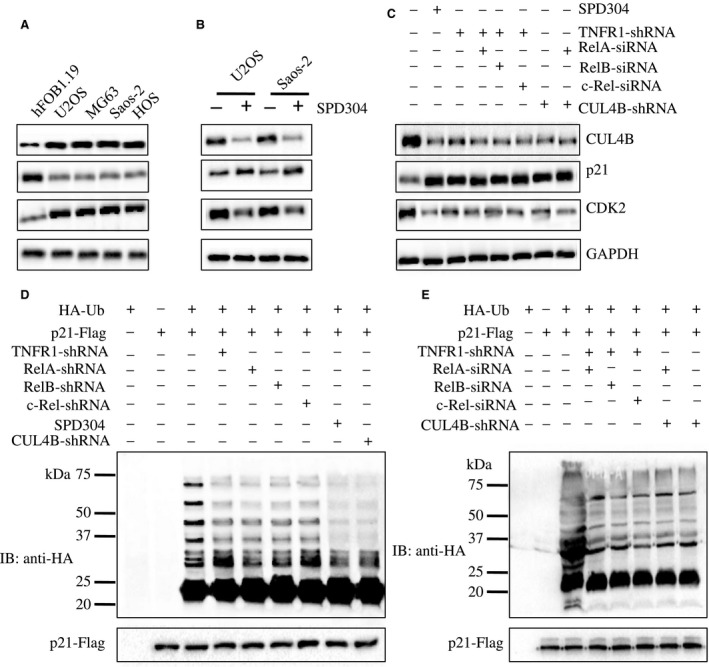
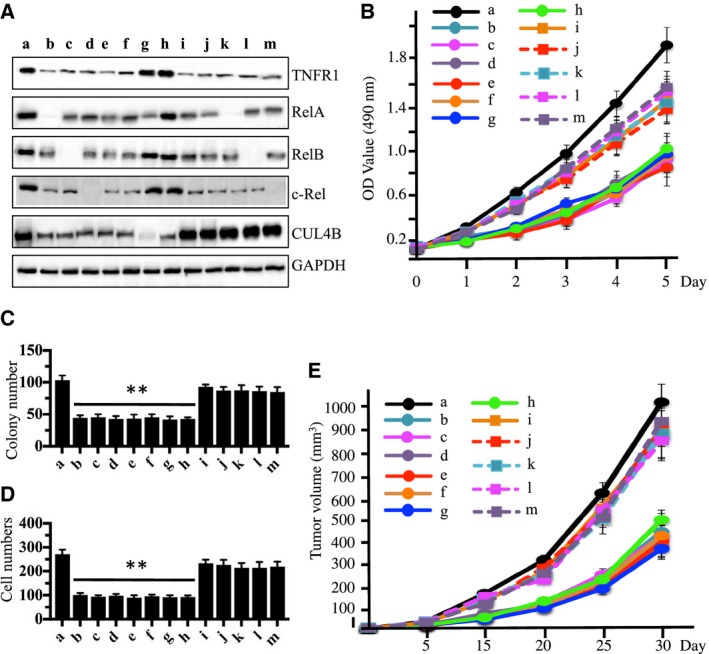
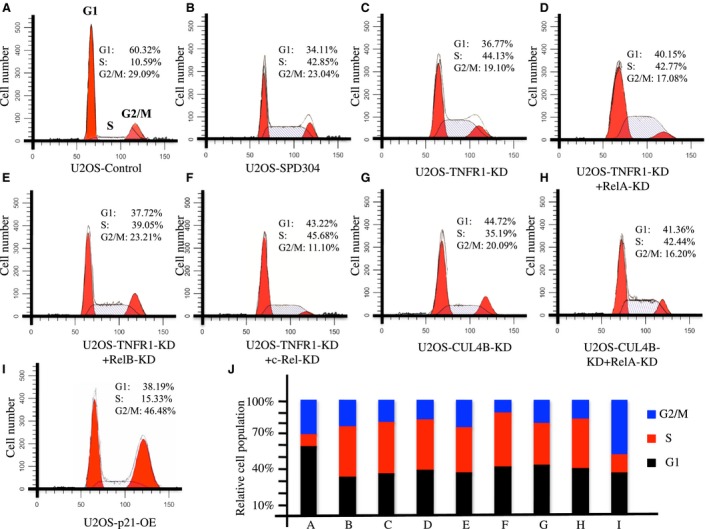
Cullin 4B, a member of the Cullins, which serve as scaffolds to facilitate the assembly of E3 ligase complexes, is aberrantly expressed in many cancers, including osteosarcoma. Recently, we observed that CUL4B forms the CRL4B E3 ligase, which specifically ubiquitinates and degrades the cyclin-dependent kinase (CDK) inhibitor p21 in human osteosarcoma cells. However, the underlying mechanisms regarding the aberrant expression of CUL4B and the upstream members of this signaling pathway are mostly unknown. In this study, we demonstrate that nuclear factor kappaB (NF-κB) is a direct modulator of CUL4B expression. The CUL4B promoter is responsive to several NF-κB subunits, including RelA, RelB, and c-Rel, but not to p50 or p52. Additional studies reveal that the tumor necrosis factor alpha (TNF-α)/NF-κB axis pathway is activated in human osteosarcoma cells. This activation causes both CUL4B and NF-κB subunits to become abundant in the nucleus of human osteosarcoma cells. The down-regulation of individual genes, including TNFR1, RelA, RelB, c-Rel, and CUL4B, or pairs of them, including TNFR1 + RelA, TNFR1 + RelB, TNFR1 + c-Rel, and RelA+CUL4B, has similar effects on cell growth inhibition, colony formation, cell invasion, and in vivo tumor formation, whereas the overexpression of CUL4B in these knockdown cells significantly reverses their phenotypes. The inhibition of the TNF-α/NF-κB pathway greatly attenuates CRL4B E3 ligase activity and causes the accumulation of p21 , thereby leading to cell cycle arrest at the S phase. Taken together, our results support a model in which the activation of the TNF-α/NF-κB axis contributes to an increase in CRL4B activity and a decrease in p21 protein levels, thereby controlling cell cycle progression in human osteosarcoma cells.
Cullin 4B 是 Cullin 家族的一员,作为支架促进 E3 连接酶复合物的组装,在许多癌症中异常表达,包括骨肉瘤。最近,我们观察到 CUL4B 形成 CRL4B E3 连接酶,该酶特异性泛素化和降解人骨肉瘤细胞中的细胞周期蛋白依赖性激酶(CDK)抑制剂 p21。然而,关于 CUL4B 的异常表达及其信号通路上游成员的潜在机制在很大程度上仍是未知的。在这项研究中,我们证明了核因子 kappaB(NF-κB)是 CUL4B 表达的直接调节剂。CUL4B 启动子对包括 RelA、RelB 和 c-Rel 在内的几个 NF-κB 亚基有反应,但对 p50 或 p52 没有反应。进一步的研究揭示了肿瘤坏死因子α(TNF-α)/NF-κB 轴途径在人骨肉瘤细胞中被激活。这种激活导致 CUL4B 和 NF-κB 亚基在人骨肉瘤细胞核中大量积累。下调单个基因,包括 TNFR1、RelA、RelB、c-Rel 和 CUL4B,或它们中的两对,包括 TNFR1+RelA、TNFR1+RelB、TNFR1+c-Rel 和 RelA+CUL4B,对细胞生长抑制、集落形成、细胞侵袭和体内肿瘤形成具有相似的作用,而在这些敲低细胞中过表达 CUL4B 则显著逆转了它们的表型。TNF-α/NF-κB 通路的抑制极大地减弱了 CRL4B E3 连接酶的活性并导致 p21 的积累,从而导致细胞周期停滞在 S 期。总之,我们的结果支持这样一种模型,即 TNF-α/NF-κB 轴的激活导致 CRL4B 活性增加和 p21 蛋白水平降低,从而控制人骨肉瘤细胞的细胞周期进程。