Perdomo Sandra, Anantharaman Devasena, Foll Matthieu, Abedi-Ardekani Behnoush, Durand Geoffroy, Reis Rosa Luciana Albina, Holmila Reetta, Le Calvez-Kelm Florence, Tajara Eloiza H, Wünsch-Filho Victor, Levi José Eduardo, Vilensky Marta, Polesel Jerry, Holcatova Ivana, Simonato Lorenzo, Canova Cristina, Lagiou Pagona, McKay James D, Brennan Paul
International Agency for Research on Cancer (IARC), Lyon, France.
Institute of Nutrition, Genetics and Metabolism Research, Faculty of Medicine, Universidad El Bosque, Bogotá, Colombia.
PLoS One. 2018 Jan 29;13(1):e0191701. doi: 10.1371/journal.pone.0191701. eCollection 2018.
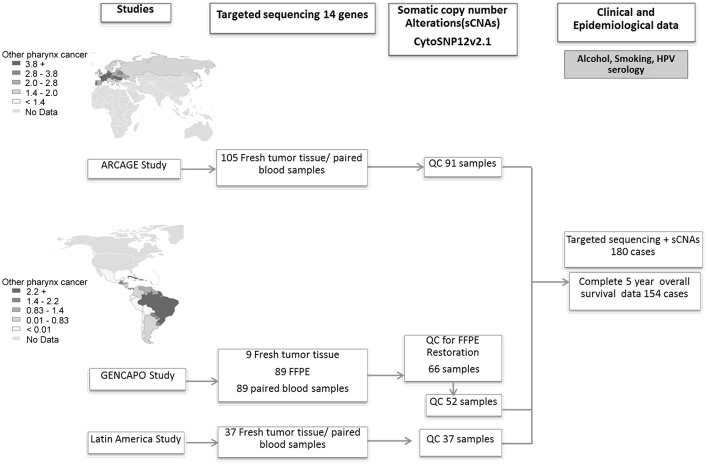
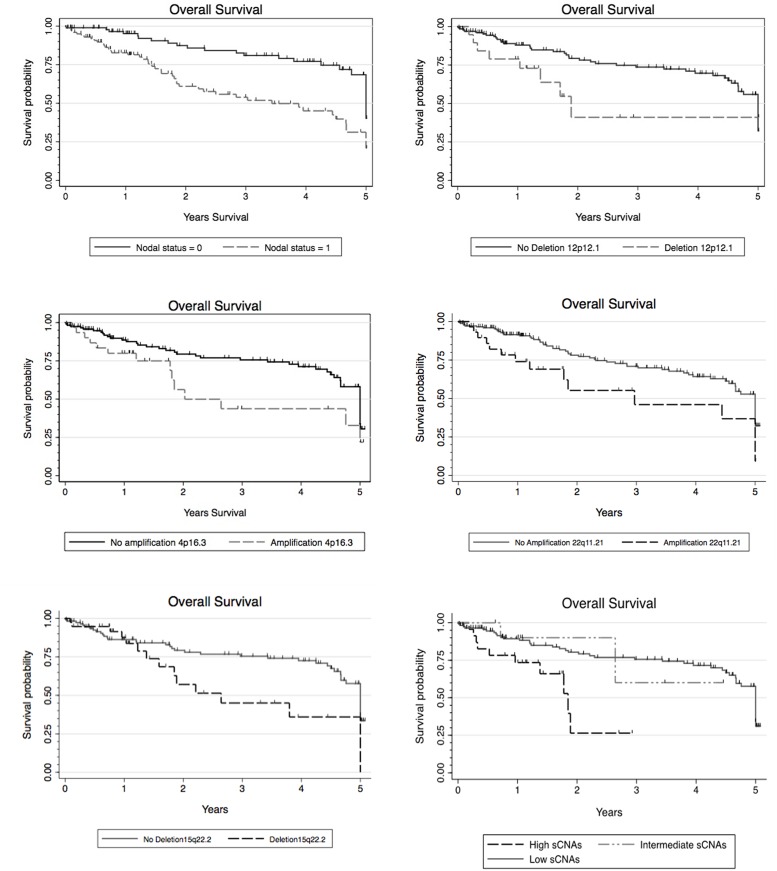
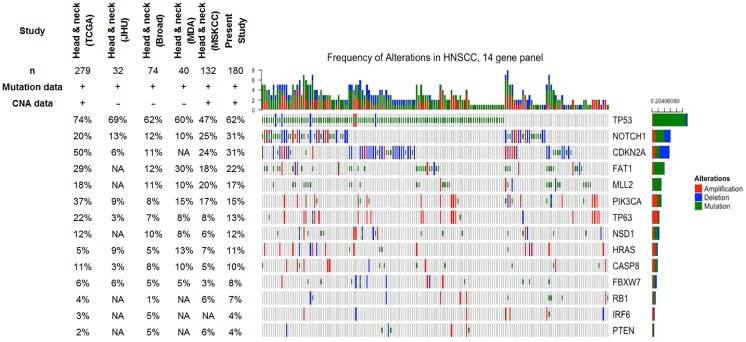
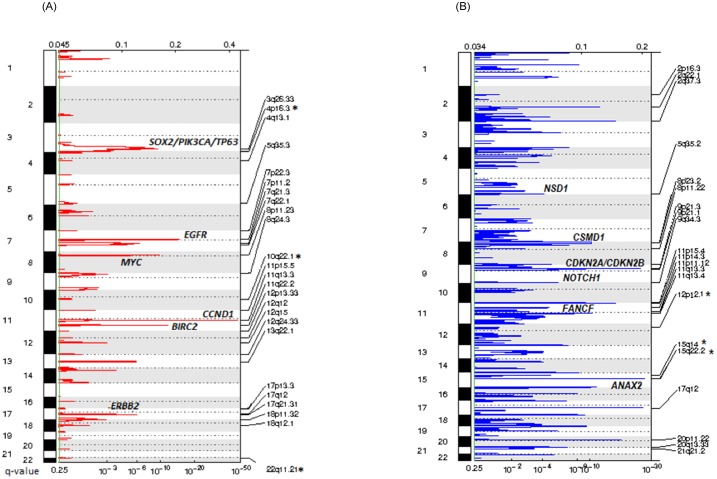
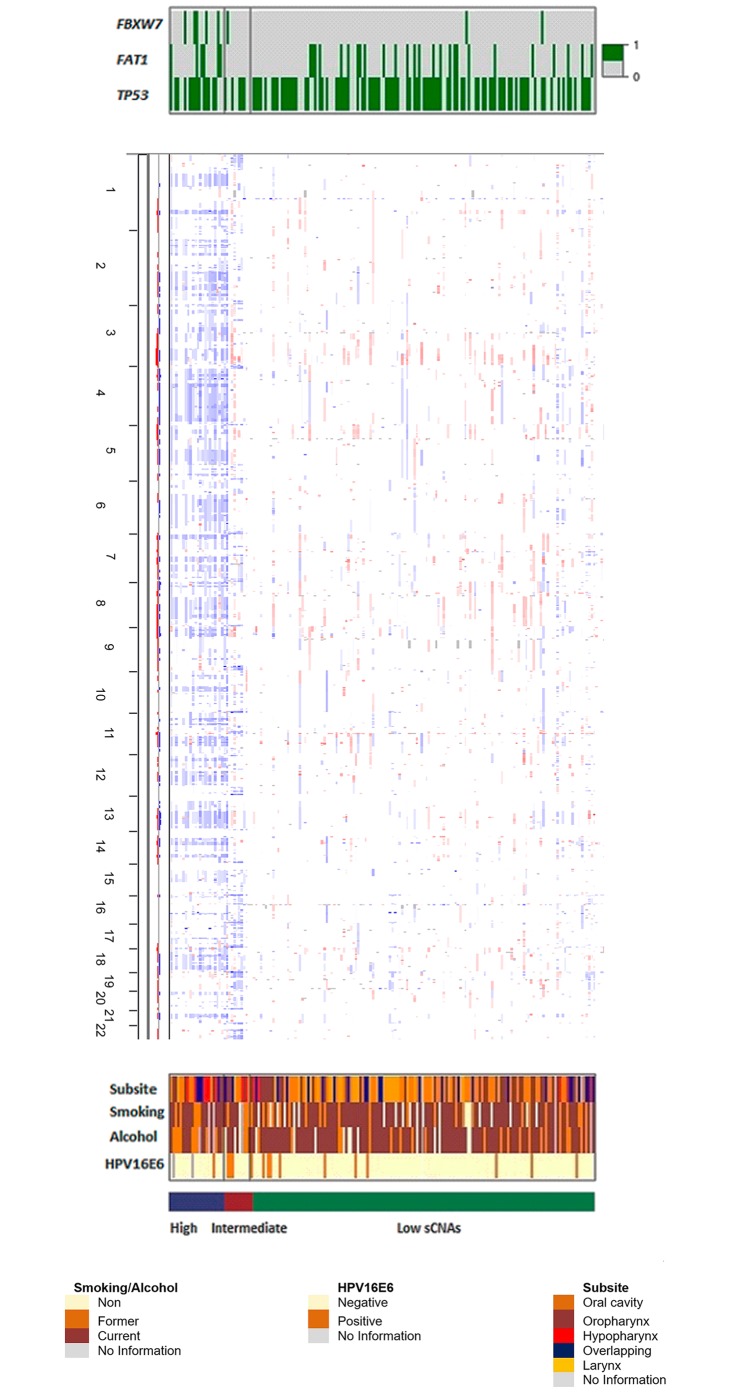
We investigated how somatic changes in HNSCC interact with environmental and host risk factors and whether they influence the risk of HNSCC occurrence and outcome. 180-paired samples diagnosed as HNSCC in two high incidence regions of Europe and South America underwent targeted sequencing (14 genes) and evaluation of copy number alterations (SCNAs). TP53, PIK3CA, NOTCH1, TP63 and CDKN2A were the most frequently mutated genes. Cases were characterized by a low copy number burden with recurrent focal amplification in 11q13.3 and deletion in 15q22. Cases with low SCNAs showed an improved overall survival. We found significant correlations with decreased overall survival between focal amplified regions 4p16, 10q22 and 22q11, and losses in 12p12, 15q14 and 15q22. The mutational landscape in our cases showed an association to both environmental exposures and clinical characteristics. We confirmed that somatic copy number alterations are an important predictor of HNSCC overall survival.
我们研究了头颈部鳞状细胞癌(HNSCC)的体细胞变化如何与环境和宿主风险因素相互作用,以及它们是否影响HNSCC发生和预后的风险。在欧洲和南美洲的两个高发病地区,对180对被诊断为HNSCC的样本进行了靶向测序(14个基因)和拷贝数改变(SCNAs)评估。TP53、PIK3CA、NOTCH1、TP63和CDKN2A是最常发生突变的基因。病例的特征是拷贝数负担低,11q13.3出现反复局灶性扩增,15q22出现缺失。SCNAs低的病例总生存期有所改善。我们发现4p16、10q22和22q11局灶性扩增区域与12p12、15q14和15q22缺失之间的总生存期降低存在显著相关性。我们病例中的突变图谱显示与环境暴露和临床特征均有关联。我们证实体细胞拷贝数改变是HNSCC总生存期的重要预测指标。