Department of Botany, Kohat University of Science and Technology, Kohat, 26000, Pakistan.
Department of Botany, Shaheed Benazir Bhuto University Sheringal, District Dir (Upper), 18000, Pakistan.
J Ethnobiol Ethnomed. 2018 Jan 29;14(1):11. doi: 10.1186/s13002-018-0212-0.
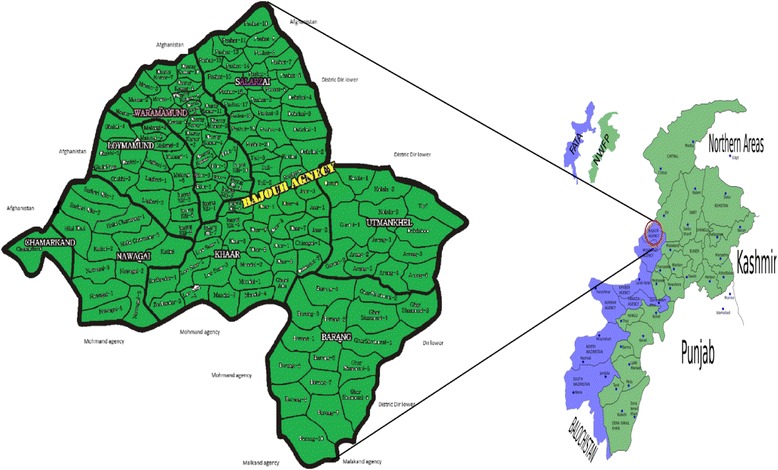
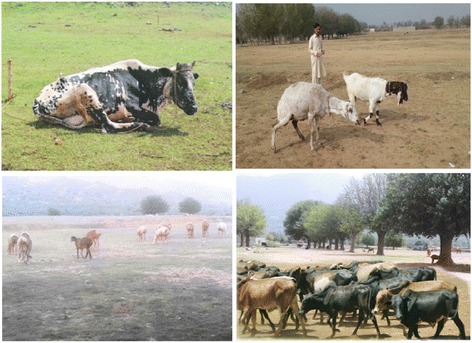
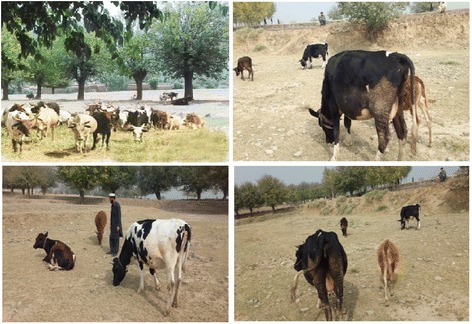
The pastoral lifestyle of Indigenous communities of Bajaur Agency is bringing them close to natural remedies for treating their domestic animals. Several studies have been conducted across the globe describing the importance of traditional knowledge in veterinary care. Therefore, this study was planned with the aim to record knowledge on ethnoveterinary practices from the remote areas and share sit with other communities through published literature.
Data was gathered from community members through semi-structured interviews and analyzed through informant consensus factor (Fic) to evaluate the consent of current ethnoveterinary practices among the local people.
In total, 73 medicinal plants were recorded under the ethnoveterinary practices. Most widely used medicinal plants with maximum use reports (URs) were Visnaga daucoides Gaertn., Foeniculum vulgare Mill., Solanum virginianum L., Withania somnifera (L.) Dunal, Glycyrrhiza glabra L., and Curcuma longa L. New medicinal values were found with confidential level of citations for species including Heracleum candicans and Glycerhiza glabra. Family Apiaceae was the utmost family with high number (7 species) of medicinal plants. Maximum number of medicinal plants (32) was used for gastric problems. High Fic was recorded for dermatological (0.97) followed by reproductive (0.93) and gastrointestinal disorders (0.92). The main route of remedies administration was oral.
Current study revealed that the study area has sufficient knowledge on ethnoveterinary medicinal plants. This knowledge is in the custody of nomadic grazers, herders, and aged community members. Plants with new medicinal uses need to be validated phytochemically and pharmacologically for the development of new alternative drugs for veterinary purposes.
巴焦尔行政区的土著社区的田园生活方式使他们能够接近治疗家畜的天然药物。全球范围内已经进行了多项研究,描述了传统知识在兽医护理中的重要性。因此,这项研究旨在记录偏远地区的民族兽医实践知识,并通过已发表的文献与其他社区分享。
通过半结构式访谈从社区成员那里收集数据,并通过信息共识因子(Fic)进行分析,以评估当地人对当前民族兽医实践的共识。
总共记录了 73 种药用植物在民族兽医实践中使用。使用最广泛的药用植物,使用报告(UR)最多的是 Visnaga daucoides Gaertn.、Foeniculum vulgare Mill.、Solanum virginianum L.、Withania somnifera (L.) Dunal、Glycyrrhiza glabra L. 和 Curcuma longa L. 对于包括 Heracleum candicans 和 Glycerhiza glabra 在内的物种,发现了新的药用价值,引用的机密级别较高。属伞形科的药用植物数量最多(7 种)。用于治疗胃部问题的药用植物数量最多(32 种)。皮肤科(0.97)的 Fic 最高,其次是生殖系统(0.93)和胃肠道疾病(0.92)。治疗方法主要是口服。
目前的研究表明,研究区域对民族兽医药用植物有足够的了解。这些知识掌握在游牧牧民、牧民和老年社区成员手中。对于具有新药用用途的植物,需要进行植物化学和药理学验证,以便为兽医目的开发新的替代药物。