Department of Otorhinolaryngology, Head and Neck Surgery, Grosshadern Medical Center, Ludwig Maximilians University, Munich, Marchioninistr. 15, 81377, Munich, Germany.
Department of Orthopedics, Spine Surgery, Baoji Central Hospital, JiangTan Road. 8, 721008, Baoji, China.
Sci Rep. 2018 Jan 29;8(1):1801. doi: 10.1038/s41598-018-20131-8.
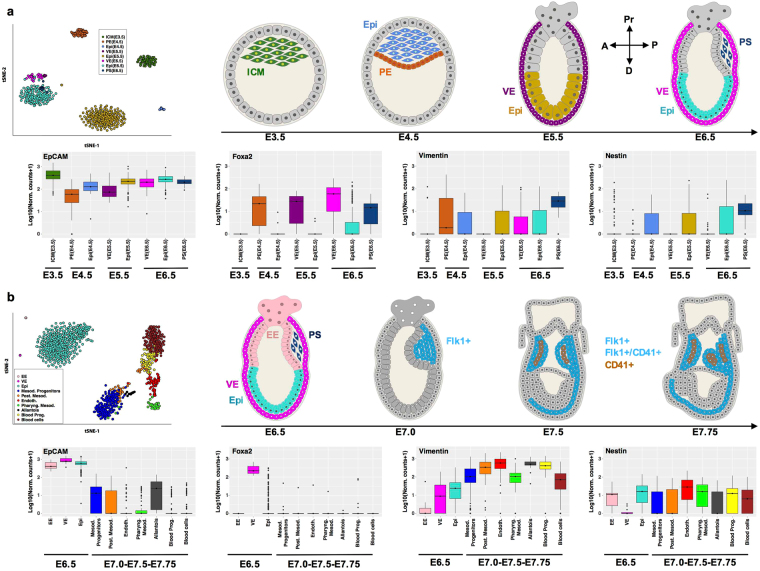
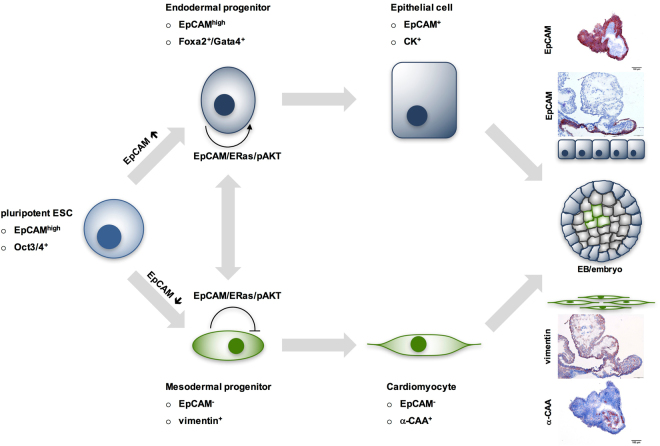
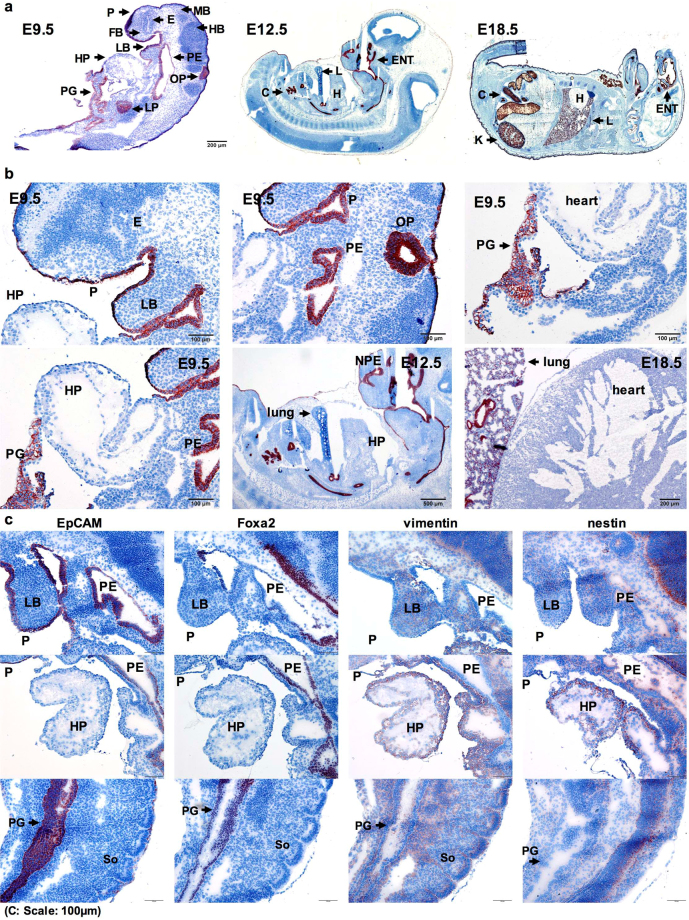
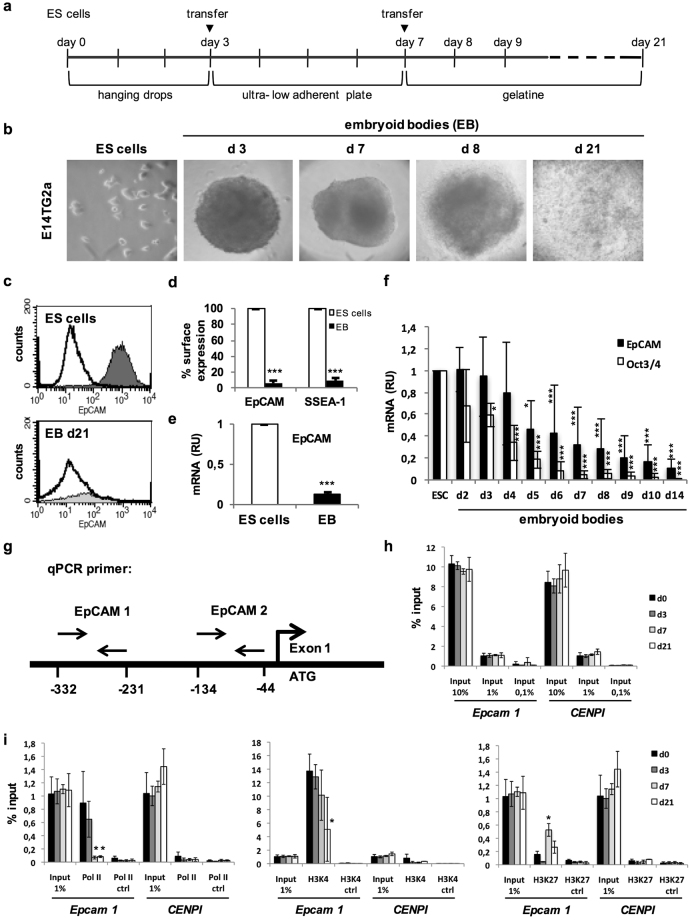
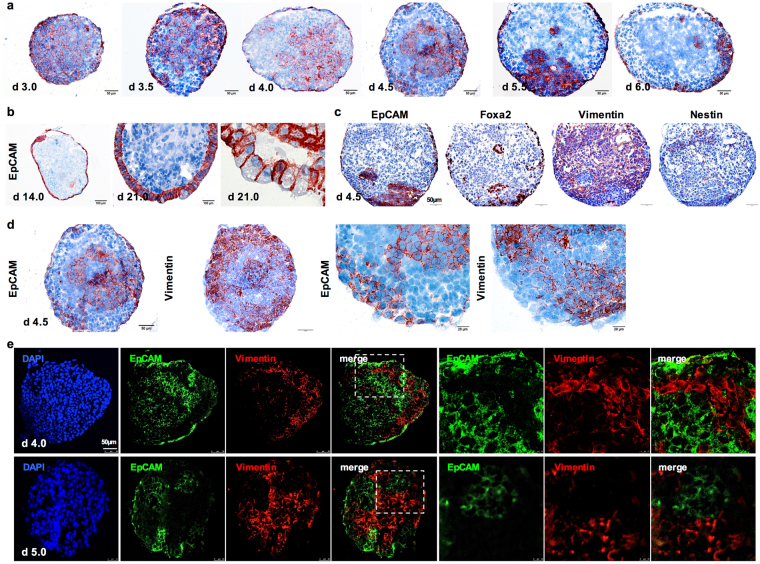
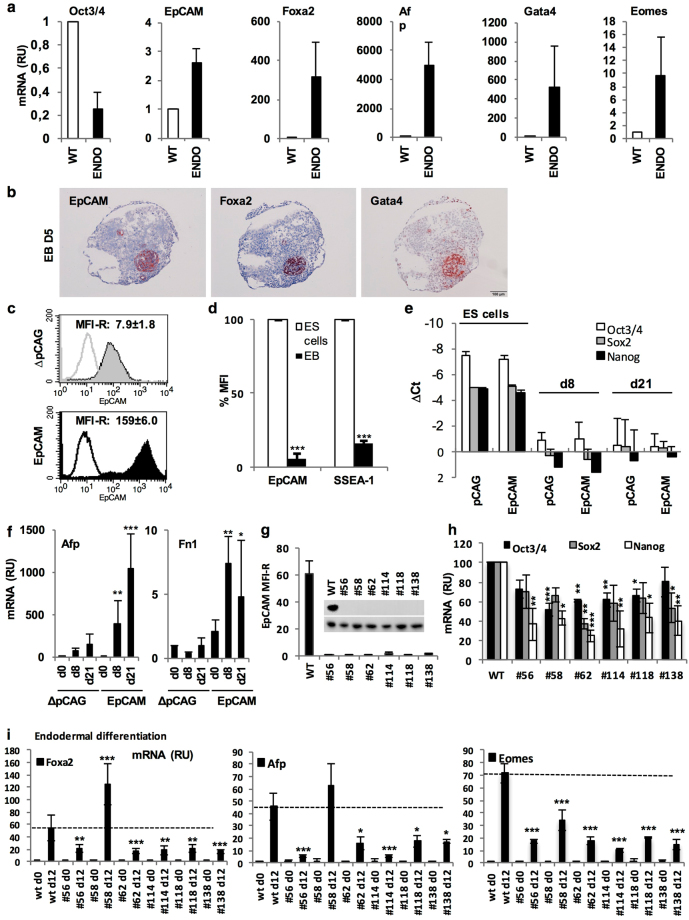
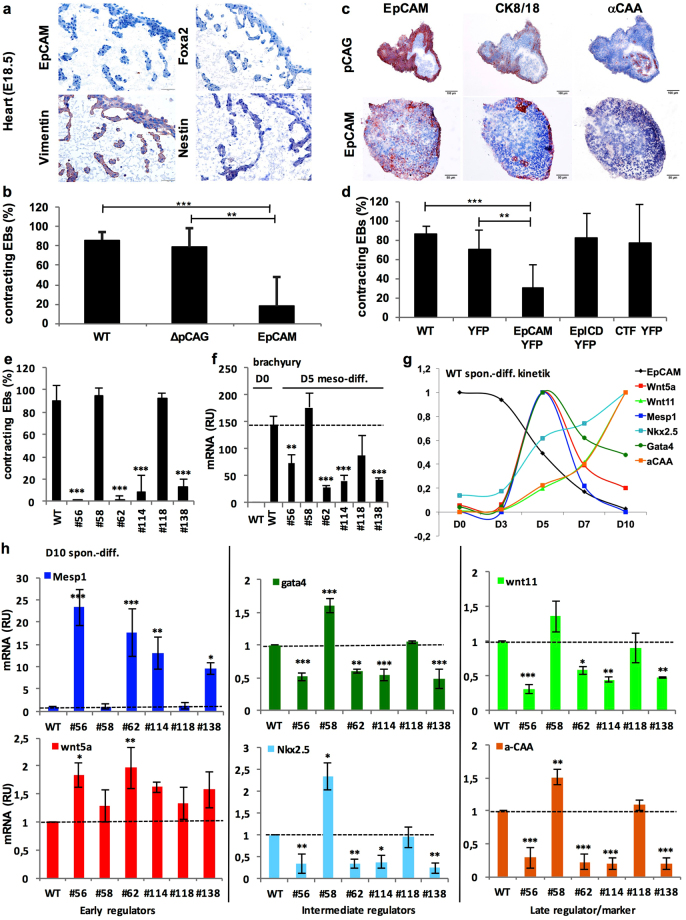
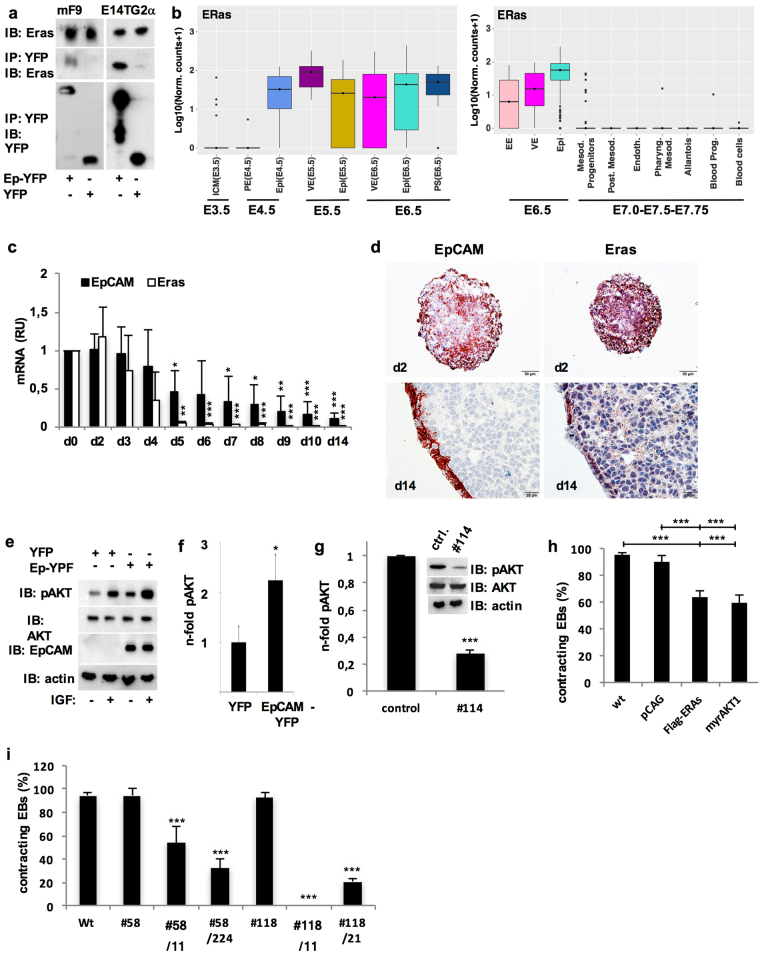
Epithelial cell adhesion molecule EpCAM is expressed in pluripotent embryonic stem cells (ESC) in vitro, but is repressed in differentiated cells, except epithelia and carcinomas. Molecular functions of EpCAM, possibly imposing such repression, were primarily studied in malignant cells and might not apply to non-pathologic differentiation. Here, we comprehensively describe timing and rationale for EpCAM regulation in early murine gastrulation and ESC differentiation using single cell RNA-sequencing datasets, in vivo and in vitro models including CRISPR-Cas9-engineered ESC-mutants. We demonstrate expression of EpCAM in inner cell mass, epiblast, primitive/visceral endoderm, and strict repression in the most primitive, nascent Flk1 mesoderm progenitors at E7.0. Selective expression of EpCAM was confirmed at mid-gestation and perinatal stages. The rationale for strict patterning was studied in ESC differentiation. Gain/loss-of-function demonstrated supportive functions of EpCAM in achieving full pluripotency and guided endodermal differentiation, but repressive functions in mesodermal differentiation as exemplified with cardiomyocyte formation. We further identified embryonic Ras (ERas) as novel EpCAM interactor of EpCAM and an EpCAM/ERas/AKT axis that is instrumental in differentiation regulation. Hence, spatiotemporal patterning of EpCAM at the onset of gastrulation, resulting in early segregation of interdependent EpCAM endodermal and EpCAM/vimentin mesodermal clusters represents a novel regulatory feature during ESC differentiation.
上皮细胞黏附分子 EpCAM 在体外的多能胚胎干细胞 (ESC) 中表达,但在分化细胞中被抑制,除了上皮细胞和成癌细胞。EpCAM 的分子功能可能施加这种抑制作用,主要在恶性细胞中进行研究,可能不适用于非病理性分化。在这里,我们使用单细胞 RNA 测序数据集、体内和体外模型(包括 CRISPR-Cas9 工程 ESC 突变体)全面描述了早期小鼠原肠胚形成和 ESC 分化中 EpCAM 调节的时间和原理。我们证明 EpCAM 在内细胞团、上胚层、原始/内脏内胚层中表达,并在 E7.0 的最原始、新生的 Flk1 中胚层祖细胞中严格抑制。EpCAM 的选择性表达在中期妊娠和围产期得到证实。在 ESC 分化中研究了严格模式形成的原理。功能增益/缺失实验证明 EpCAM 在实现完全多能性和指导内胚层分化方面具有支持作用,但在中胚层分化中具有抑制作用,例如心肌细胞形成。我们进一步鉴定了胚胎 Ras (ERas) 作为 EpCAM 的新型 EpCAM 相互作用蛋白,以及 EpCAM/ERas/AKT 轴在分化调节中是必不可少的。因此,原肠胚形成开始时 EpCAM 的时空模式导致相互依赖的 EpCAM 内胚层和 EpCAM/波形蛋白中胚层簇的早期分离,代表了 ESC 分化过程中的一个新的调节特征。