• 文献检索
  • 文档翻译
  • 深度研究
  • 学术资讯
  • Suppr Zotero 插件Zotero 插件
  • 邀请有礼
  • 套餐&价格
  • 历史记录
应用&插件
Suppr Zotero 插件Zotero 插件浏览器插件Mac 客户端Windows 客户端微信小程序
定价
高级版会员购买积分包购买API积分包
服务
文献检索文档翻译深度研究API 文档MCP 服务
关于我们
关于 Suppr公司介绍联系我们用户协议隐私条款
关注我们

Suppr 超能文献

核心技术专利:CN118964589B侵权必究
粤ICP备2023148730 号-1Suppr @ 2026

文献检索

告别复杂PubMed语法,用中文像聊天一样搜索,搜遍4000万医学文献。AI智能推荐,让科研检索更轻松。

立即免费搜索

文件翻译

保留排版,准确专业,支持PDF/Word/PPT等文件格式,支持 12+语言互译。

免费翻译文档

深度研究

AI帮你快速写综述,25分钟生成高质量综述,智能提取关键信息,辅助科研写作。

立即免费体验

Wnt 信号驱动的唾液腺干细胞体外长期扩增。

Long-Term In Vitro Expansion of Salivary Gland Stem Cells Driven by Wnt Signals.

机构信息

Department of Cell Biology, University Medical Center Groningen, University of Groningen, Antonius Deusinglaan 1, 9713 AV Groningen, the Netherlands; Department of Radiation Oncology, University Medical Center Groningen, University of Groningen, PO Box 30001, 9700 RB Groningen, the Netherlands.

Department of Cell Biology, University Medical Center Groningen, University of Groningen, Antonius Deusinglaan 1, 9713 AV Groningen, the Netherlands.

出版信息

Stem Cell Reports. 2016 Jan 12;6(1):150-62. doi: 10.1016/j.stemcr.2015.11.009. Epub 2015 Dec 24.

DOI:10.1016/j.stemcr.2015.11.009
PMID:26724906
原文链接:https://pmc.ncbi.nlm.nih.gov/articles/PMC4720006/
Abstract

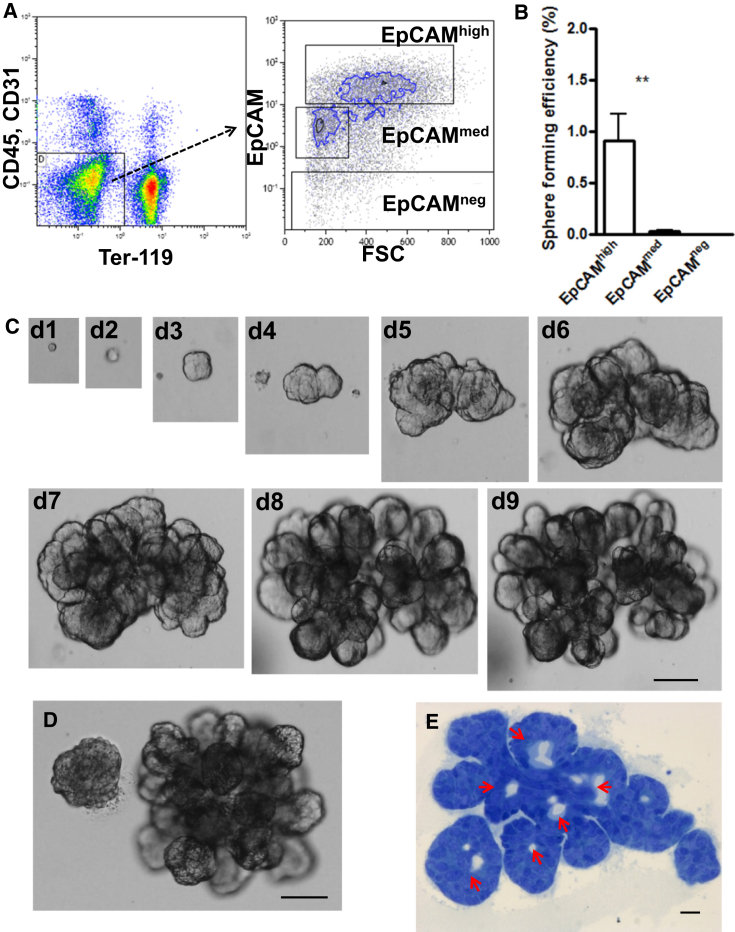
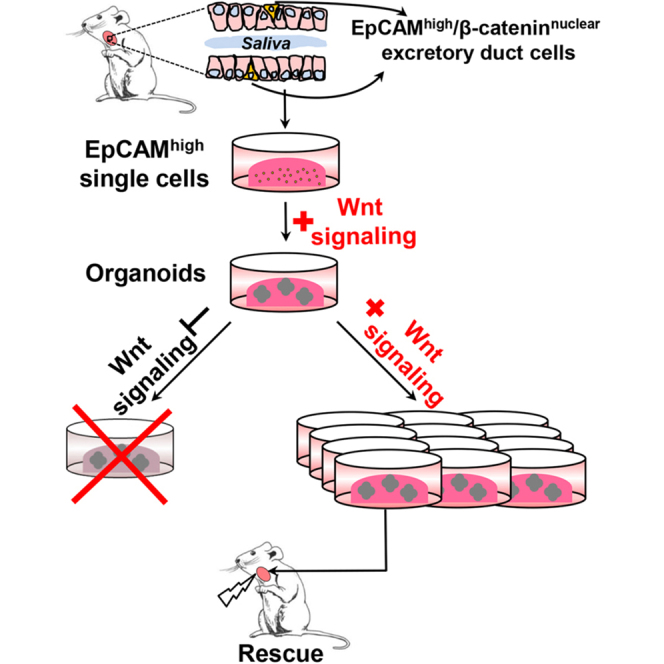
Adult stem cells are the ultimate source for replenishment of salivary gland (SG) tissue. Self-renewal ability of stem cells is dependent on extrinsic niche signals that have not been unraveled for the SG. The ductal compartment in SG has been identified as the location harboring stem cells. Here, we report that rare SG ductal EpCAM(+) cells express nuclear β-catenin, indicating active Wnt signaling. In cell culture experiments, EpCAM(high) cells respond potently to Wnt signals stimulating self-renewal and long-term expansion of SG organoids, containing all differentiated SG cell types. Conversely, Wnt inhibition ablated long-term organoid cultures. Finally, transplantation of cells pre-treated with Wnt agonists into submandibular glands of irradiated mice successfully and robustly restored saliva secretion and increased the number of functional acini in vivo. Collectively, these results identify Wnt signaling as a key driver of adult SG stem cells, allowing extensive in vitro expansion and enabling restoration of SG function upon transplantation.

摘要

成体干细胞是唾液腺 (SG) 组织再生的最终来源。干细胞的自我更新能力依赖于尚未阐明的外源性生态位信号。SG 的导管隔室已被确定为含有干细胞的位置。在这里,我们报告说,罕见的 SG 导管 EpCAM(+)细胞表达核 β-连环蛋白,表明存在活跃的 Wnt 信号。在细胞培养实验中,EpCAM(高)细胞对 Wnt 信号有强烈反应,刺激 SG 类器官的自我更新和长期扩增,其中包含所有分化的 SG 细胞类型。相反,Wnt 抑制消除了长期类器官培养。最后,用 Wnt 激动剂预处理的细胞移植到辐射小鼠的颌下腺中,成功且强烈地恢复了唾液分泌,并增加了体内功能性腺泡的数量。总的来说,这些结果表明 Wnt 信号是成体 SG 干细胞的关键驱动因素,允许其在体外进行广泛扩增,并在移植后恢复 SG 功能。
https://cdn.ncbi.nlm.nih.gov/pmc/blobs/4ccb/4720006/1ba495f786d3/gr6.jpg
https://cdn.ncbi.nlm.nih.gov/pmc/blobs/4ccb/4720006/f483f4010e14/fx1.jpg
https://cdn.ncbi.nlm.nih.gov/pmc/blobs/4ccb/4720006/739c26d5afef/gr1.jpg
https://cdn.ncbi.nlm.nih.gov/pmc/blobs/4ccb/4720006/61de242c0e23/gr2.jpg
https://cdn.ncbi.nlm.nih.gov/pmc/blobs/4ccb/4720006/d579e73da981/gr3.jpg
https://cdn.ncbi.nlm.nih.gov/pmc/blobs/4ccb/4720006/aaa86f2f5749/gr4.jpg
https://cdn.ncbi.nlm.nih.gov/pmc/blobs/4ccb/4720006/2cc370f7e973/gr5.jpg
https://cdn.ncbi.nlm.nih.gov/pmc/blobs/4ccb/4720006/1ba495f786d3/gr6.jpg
https://cdn.ncbi.nlm.nih.gov/pmc/blobs/4ccb/4720006/f483f4010e14/fx1.jpg
https://cdn.ncbi.nlm.nih.gov/pmc/blobs/4ccb/4720006/739c26d5afef/gr1.jpg
https://cdn.ncbi.nlm.nih.gov/pmc/blobs/4ccb/4720006/61de242c0e23/gr2.jpg
https://cdn.ncbi.nlm.nih.gov/pmc/blobs/4ccb/4720006/d579e73da981/gr3.jpg
https://cdn.ncbi.nlm.nih.gov/pmc/blobs/4ccb/4720006/aaa86f2f5749/gr4.jpg
https://cdn.ncbi.nlm.nih.gov/pmc/blobs/4ccb/4720006/2cc370f7e973/gr5.jpg
https://cdn.ncbi.nlm.nih.gov/pmc/blobs/4ccb/4720006/1ba495f786d3/gr6.jpg

相似文献

1
Long-Term In Vitro Expansion of Salivary Gland Stem Cells Driven by Wnt Signals.Wnt 信号驱动的唾液腺干细胞体外长期扩增。
Stem Cell Reports. 2016 Jan 12;6(1):150-62. doi: 10.1016/j.stemcr.2015.11.009. Epub 2015 Dec 24.
2
Wnt/β-catenin signaling regulates postnatal development and regeneration of the salivary gland.Wnt/β-catenin 信号通路调控唾液腺的出生后发育和再生。
Stem Cells Dev. 2010 Nov;19(11):1793-801. doi: 10.1089/scd.2009.0499. Epub 2010 Sep 10.
3
Stem cell properties of human clonal salivary gland stem cells are enhanced by three-dimensional priming culture in nanofibrous microwells.三维原代培养于纳米纤维微腔中增强了人克隆唾液腺干细胞的干细胞特性。
Stem Cell Res Ther. 2018 Mar 22;9(1):74. doi: 10.1186/s13287-018-0829-x.
4
Protective efficacy of intravenous transplantation of adipose-derived stem cells for the prevention of radiation-induced salivary gland damage.静脉注射脂肪来源干细胞预防放射性唾液腺损伤的保护效果
Arch Oral Biol. 2015 Oct;60(10):1488-96. doi: 10.1016/j.archoralbio.2015.07.016. Epub 2015 Jul 29.
5
Purification and ex vivo expansion of fully functional salivary gland stem cells.唾液腺干细胞的纯化和体外扩增。
Stem Cell Reports. 2014 Dec 9;3(6):957-64. doi: 10.1016/j.stemcr.2014.09.015. Epub 2014 Oct 23.
6
Maintenance of the spheroid organization and properties of glandular progenitor cells by fabricated chitosan based biomaterials.通过制备的壳聚糖基生物材料维持球体组织和腺祖细胞的特性。
Biomater Sci. 2018 May 29;6(6):1445-1456. doi: 10.1039/c7bm00559h.
7
Human Salivary Gland Stem Cells Functionally Restore Radiation Damaged Salivary Glands.人唾液腺干细胞可功能性修复受辐射损伤的唾液腺。
Stem Cells. 2016 Mar;34(3):640-52. doi: 10.1002/stem.2278.
8
Concurrent transient activation of Wnt/β-catenin pathway prevents radiation damage to salivary glands.同时瞬时激活 Wnt/β-连环蛋白通路可防止唾液腺辐射损伤。
Int J Radiat Oncol Biol Phys. 2012 May 1;83(1):e109-16. doi: 10.1016/j.ijrobp.2011.11.062. Epub 2012 Feb 16.
9
Neurotrophic factor GDNF promotes survival of salivary stem cells.神经营养因子胶质细胞源性神经营养因子(GDNF)可促进唾液腺干细胞的存活。
J Clin Invest. 2014 Aug;124(8):3364-77. doi: 10.1172/JCI74096. Epub 2014 Jul 18.
10
Wnt3a protein reduces growth factor-driven expansion of human hematopoietic stem and progenitor cells in serum-free cultures.Wnt3a蛋白可减少无血清培养中生长因子驱动的人造血干细胞和祖细胞的扩增。
PLoS One. 2015 Mar 25;10(3):e0119086. doi: 10.1371/journal.pone.0119086. eCollection 2015.

引用本文的文献

1
Organoid in dentistry: Models for oral biology and disease.牙科中的类器官:口腔生物学与疾病模型
J Dent Sci. 2025 Jul;20(3):1816-1823. doi: 10.1016/j.jds.2025.05.002. Epub 2025 May 15.
2
Extracellular vesicles derived from salivary gland stem cells cultured on microwell scaffolds loaded with WNT3A promote the recovery of salivary gland function damaged by radiation via the YWHAZ-PI3K-AKT pathway.在负载有WNT3A的微孔支架上培养的唾液腺干细胞衍生的细胞外囊泡通过YWHAZ-PI3K-AKT途径促进辐射损伤的唾液腺功能的恢复。
Bioact Mater. 2025 Jun 17;52:492-510. doi: 10.1016/j.bioactmat.2025.06.024. eCollection 2025 Oct.
3

本文引用的文献

1
Cpf1 is a single RNA-guided endonuclease of a class 2 CRISPR-Cas system.Cpf1是2类CRISPR-Cas系统中的一种单RNA引导的内切核酸酶。
Cell. 2015 Oct 22;163(3):759-71. doi: 10.1016/j.cell.2015.09.038. Epub 2015 Sep 25.
2
Salivary gland homeostasis is maintained through acinar cell self-duplication.唾液腺的稳态通过腺泡细胞自我复制得以维持。
Dev Cell. 2015 Apr 20;33(2):231-7. doi: 10.1016/j.devcel.2015.02.013. Epub 2015 Apr 2.
3
Large-Scale Electron Microscopy Maps of Patient Skin and Mucosa Provide Insight into Pathogenesis of Blistering Diseases.
WNT Mimetic-Induced Lacrimal Gland Regeneration Reverses Aqueous Tear Deficiency.
WNT模拟物诱导的泪腺再生可逆转水样泪液缺乏。
Transl Vis Sci Technol. 2025 Jun 2;14(6):19. doi: 10.1167/tvst.14.6.19.
4
Organoids technology in cancer research: from basic applications to advanced models.癌症研究中的类器官技术:从基础应用到先进模型
Front Cell Dev Biol. 2025 May 22;13:1569337. doi: 10.3389/fcell.2025.1569337. eCollection 2025.
5
Establishment of salivary tissue-organoid biorepository: characterizing salivary gland stem/progenitor cells and novel differentiation marker PSMA/FOLH1.唾液组织类器官生物样本库的建立:唾液腺干/祖细胞及新型分化标志物PSMA/FOLH1的表征
NPJ Regen Med. 2025 May 21;10(1):23. doi: 10.1038/s41536-025-00410-5.
6
3D Spheroid Cultures for Salivary Gland Tissue Engineering: Effects of Fibroblast on Epithelial Cell Function.用于唾液腺组织工程的3D球体培养:成纤维细胞对上皮细胞功能的影响。
Life (Basel). 2025 Apr 5;15(4):607. doi: 10.3390/life15040607.
7
Clinical applications of human organoids.人类类器官的临床应用。
Nat Med. 2025 Feb;31(2):409-421. doi: 10.1038/s41591-024-03489-3. Epub 2025 Feb 3.
8
Advances in the Development and Application of Human Organoids: Techniques, Applications, and Future Perspectives.人类类器官的开发与应用进展:技术、应用及未来展望
Cell Transplant. 2025 Jan-Dec;34:9636897241303271. doi: 10.1177/09636897241303271.
9
Establishment of nasal and olfactory epithelium organoids for unveiling mechanism of tissue regeneration and pathogenesis of nasal diseases.建立鼻腔和嗅觉上皮类器官以揭示组织再生机制和鼻腔疾病的发病机制。
Cell Mol Life Sci. 2025 Jan 3;82(1):33. doi: 10.1007/s00018-024-05557-w.
10
TGFβ2-Driven Ferritin Degradation and Subsequent Ferroptosis Underlie Salivary Gland Dysfunction in Postmenopausal Conditions.TGFβ2驱动的铁蛋白降解及随后的铁死亡是绝经后唾液腺功能障碍的基础。
Adv Sci (Weinh). 2024 Dec;11(47):e2400660. doi: 10.1002/advs.202400660. Epub 2024 Nov 1.
大规模电子显微镜图谱揭示患者皮肤和黏膜的病理机制,为水疱性疾病的发病机制提供了新的见解。
J Invest Dermatol. 2015 Jul;135(7):1763-1770. doi: 10.1038/jid.2015.109. Epub 2015 Mar 19.
4
Long-term culture of genome-stable bipotent stem cells from adult human liver.成人肝脏基因组稳定的双能干细胞的长期培养
Cell. 2015 Jan 15;160(1-2):299-312. doi: 10.1016/j.cell.2014.11.050. Epub 2014 Dec 18.
5
Purification and ex vivo expansion of fully functional salivary gland stem cells.唾液腺干细胞的纯化和体外扩增。
Stem Cell Reports. 2014 Dec 9;3(6):957-64. doi: 10.1016/j.stemcr.2014.09.015. Epub 2014 Oct 23.
6
Stem cell signaling. An integral program for tissue renewal and regeneration: Wnt signaling and stem cell control.干细胞信号转导。组织更新和再生的整体计划:Wnt 信号转导与干细胞调控。
Science. 2014 Oct 3;346(6205):1248012. doi: 10.1126/science.1248012. Epub 2014 Oct 2.
7
Neurotrophic factor GDNF promotes survival of salivary stem cells.神经营养因子胶质细胞源性神经营养因子(GDNF)可促进唾液腺干细胞的存活。
J Clin Invest. 2014 Aug;124(8):3364-77. doi: 10.1172/JCI74096. Epub 2014 Jul 18.
8
Interfollicular epidermal stem cells self-renew via autocrine Wnt signaling.滤泡间表皮干细胞通过自分泌 Wnt 信号自我更新。
Science. 2013 Dec 6;342(6163):1226-30. doi: 10.1126/science.1239730.
9
Functional salivary gland regeneration by transplantation of a bioengineered organ germ.通过移植生物工程化器官原基实现功能性唾液腺再生。
Nat Commun. 2013;4:2498. doi: 10.1038/ncomms3498.
10
Unlimited in vitro expansion of adult bi-potent pancreas progenitors through the Lgr5/R-spondin axis.通过 Lgr5/R-spondin 轴实现成年双潜能胰腺祖细胞的无限体外扩增。
EMBO J. 2013 Oct 16;32(20):2708-21. doi: 10.1038/emboj.2013.204. Epub 2013 Sep 17.