Wang Qian-Wen, Su Yun, Sheng Jiang-Tao, Gu Li-Ming, Zhao Ying, Chen Xiao-Xuan, Chen Cheng, Li Wei-Zhong, Li Kang-Sheng, Dai Jian-Ping
Department of Microbiology and Immunology, Shantou University Medical College, Shantou, Guangdong, China.
Department of Veterinary Medicine, University of Maryland, College Park, Maryland, United States of America.
PLoS One. 2018 Jan 31;13(1):e0191793. doi: 10.1371/journal.pone.0191793. eCollection 2018.
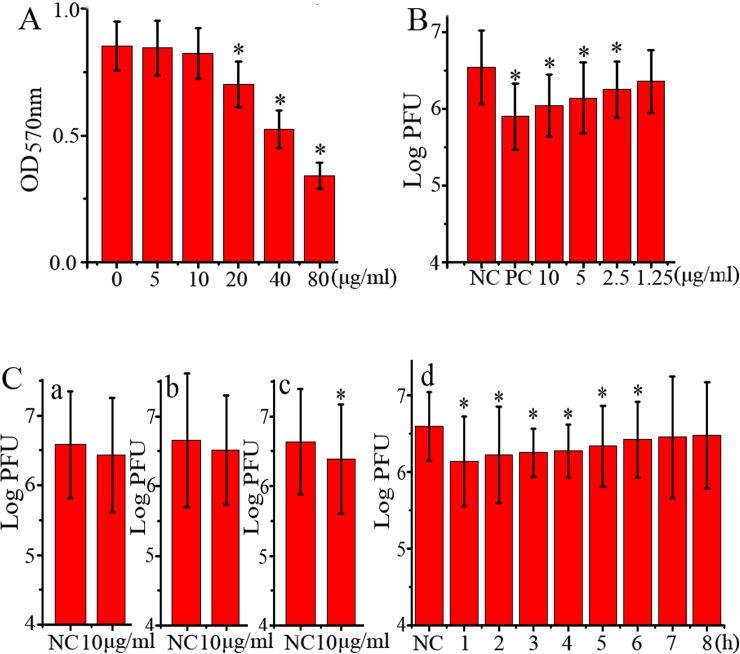
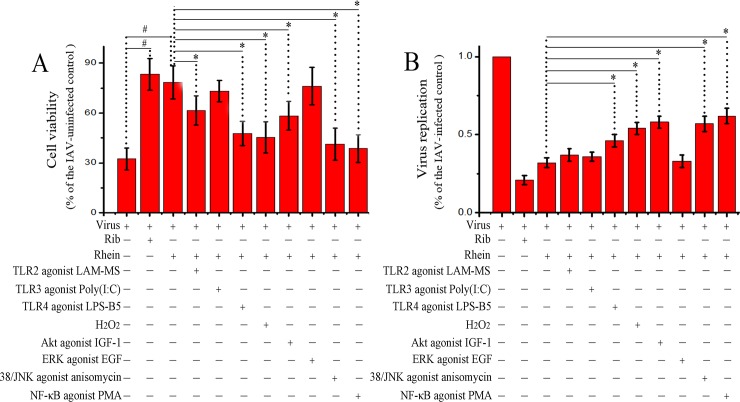
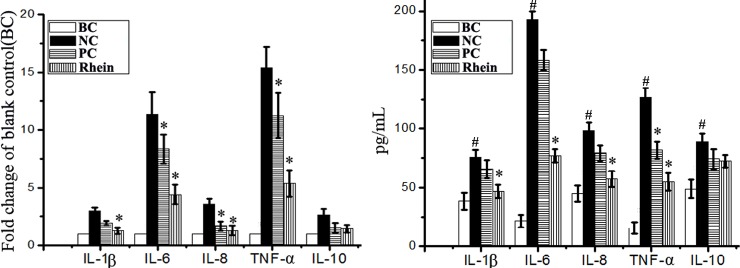
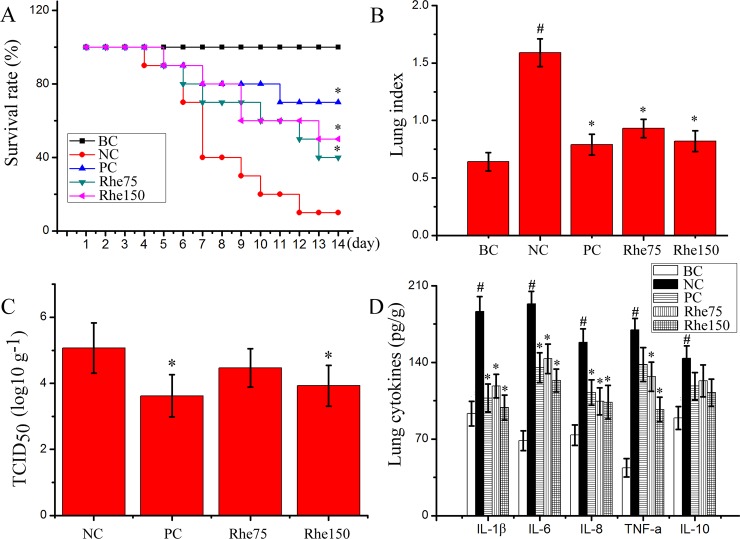
Rhein, an anthraquinone compound existing in many traditional herbal medicines, has anti-inflammatory, antioxidant, antitumor, antiviral, hepatoprotective, and nephroprotective activities, but its anti-influenza A virus (IAV) activity is ambiguous. In the present study, through plaque inhibition assay, time-of-addition assay, antioxidant assay, qRT-PCR, ELISA, and western blotting assays, we investigated the anti-IAV effect and mechanism of action of rhein in vitro and in vivo. The results showed that rhein could significantly inhibit IAV adsorption and replication, decrease IAV-induced oxidative stress, activations of TLR4, Akt, p38, JNK MAPK, and NF-κB pathways, and production of inflammatory cytokines and matrix metalloproteinases in vitro. Oxidant H2O2 and agonists of TLR4, Akt, p38/JNK and IKK/NF-κB could significantly antagonize the inhibitory effects of rhein on IAV-induced cytopathic effect (CPE) and IAV replication. Through an in vivo test in mice, we also found that rhein could significantly improve the survival rate, lung index, pulmonary cytokines, and pulmonary histopathological changes. Rhein also significantly decreased pulmonary viral load at a high dose. In conclusion, rhein can inhibit IAV adsorption and replication, and the mechanism of action to inhibit IAV replication may be due to its ability to suppress IAV-induced oxidative stress and activations of TLR4, Akt, p38, JNK MAPK, and NF-κB signal pathways.
大黄素是一种存在于多种传统草药中的蒽醌类化合物,具有抗炎、抗氧化、抗肿瘤、抗病毒、保肝和肾保护活性,但其抗甲型流感病毒(IAV)活性尚不明确。在本研究中,我们通过蚀斑抑制试验、添加时间试验、抗氧化试验、qRT-PCR、ELISA和蛋白质印迹试验,对大黄素在体外和体内的抗IAV作用及作用机制进行了研究。结果表明,大黄素在体外可显著抑制IAV吸附和复制,降低IAV诱导的氧化应激、Toll样受体4(TLR4)、蛋白激酶B(Akt)、p38丝裂原活化蛋白激酶(MAPK)、应激活化蛋白激酶(JNK)MAPK和核因子κB(NF-κB)信号通路的激活,以及炎性细胞因子和基质金属蛋白酶的产生。氧化剂过氧化氢以及TLR4、Akt、p38/JNK和IKK/NF-κB的激动剂可显著拮抗大黄素对IAV诱导的细胞病变效应(CPE)和IAV复制的抑制作用。通过对小鼠进行体内试验,我们还发现大黄素可显著提高存活率、肺指数、肺细胞因子水平以及改善肺组织病理学变化。大黄素高剂量时还可显著降低肺病毒载量。综上所述,大黄素可抑制IAV吸附和复制,其抑制IAV复制的作用机制可能是由于其能够抑制IAV诱导的氧化应激以及TLR4、Akt、p38、JNK MAPK和NF-κB信号通路的激活。