Dinić Miroslav, Pecikoza Uroš, Djokić Jelena, Stepanović-Petrović Radica, Milenković Marina, Stevanović Magdalena, Filipović Nenad, Begović Jelena, Golić Nataša, Lukić Jovanka
Laboratory for Molecular Microbiology, Institute of Molecular Genetics and Genetic Engineering, University of Belgrade, Belgrade, Serbia.
Department of Pharmacology, Faculty of Pharmacy, University of Belgrade, Belgrade, Serbia.
Front Pharmacol. 2018 Jan 17;9:1. doi: 10.3389/fphar.2018.00001. eCollection 2018.
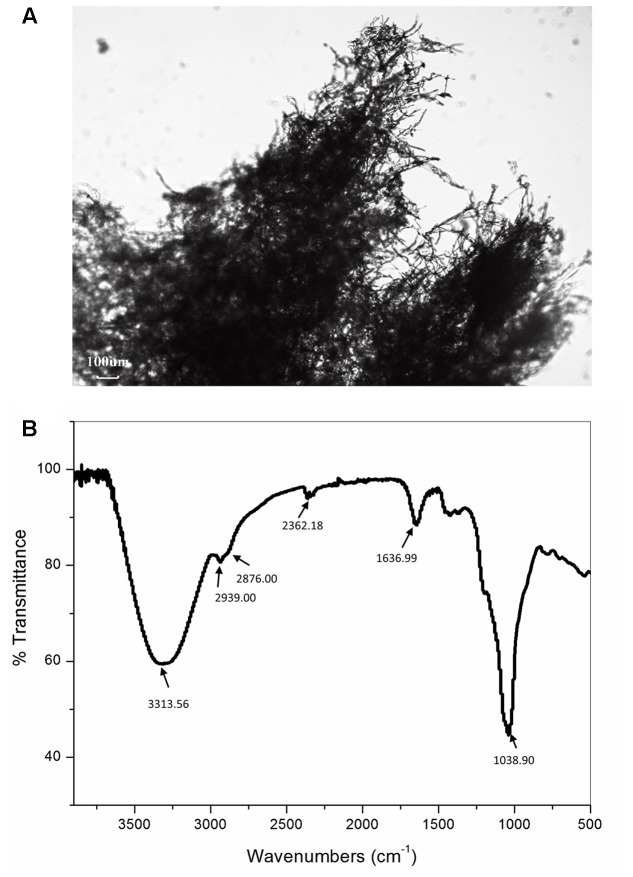
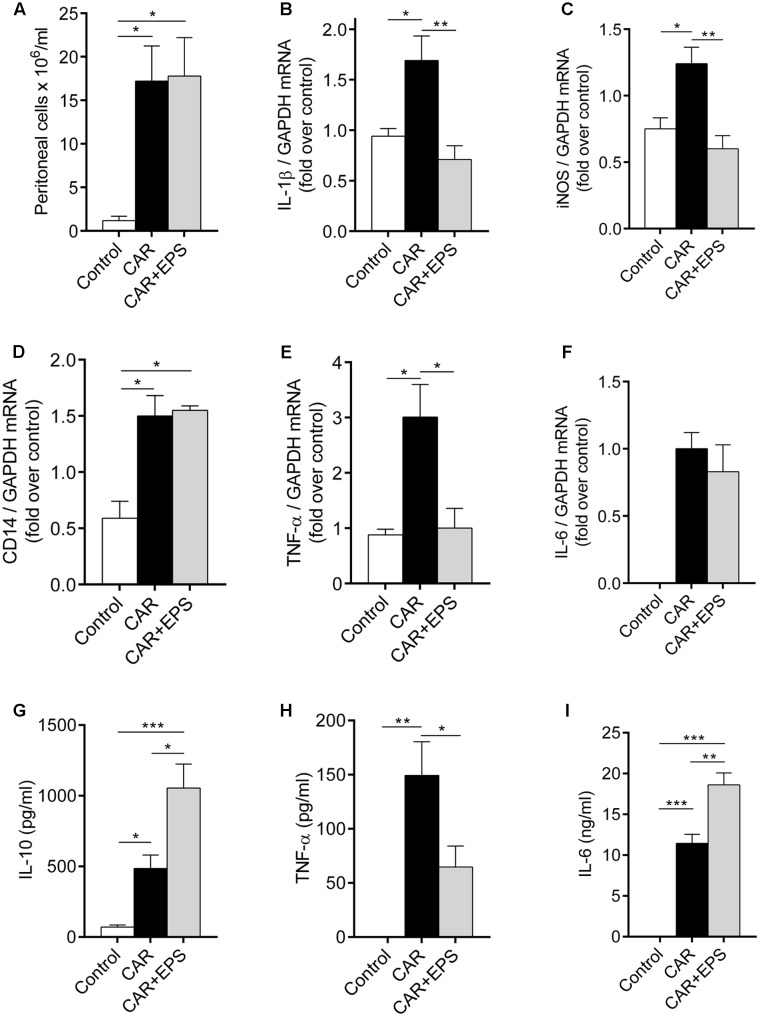
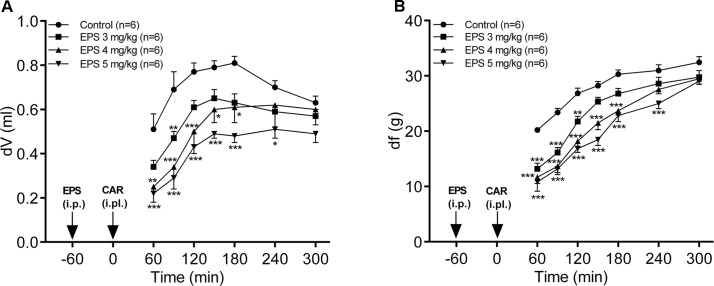
The aim of this study was to test the potential of high molecular weight exopolysaccharide (EPS) produced by the putative probiotic strain BGCG11 (EPS CG11) to alleviate inflammatory pain in Wistar rats. The EPS CG11 was isolated from bacterial surface and was subjected to Fourier-transform infrared spectroscopy (FTIR) and thermal analysis. FTIR spectra confirmed the polysaccharide structure of isolated sample, while the thermal methods revealed good thermal properties of the polymer. The antihyperalgesic and antiedematous effects of the EPS CG11 were examined in the rat model of inflammation induced by carrageenan injection in hind paw. The results showed that the intraperitoneal administration of EPS CG11 produced a significant decrease in pain sensations (mechanical hyperalgesia) and a paw swelling in a dose-dependent manner as it was measured using Von Frey anesthesiometer and plethysmometer, respectively. These effects were followed by a decreased expression of β and mRNAs in rat's paw tissue suggesting that the antihyperalgesic and antiedematous effects of the EPS CG11 are related to the suppression of inflammatory response. Additionally, we demonstrated that EPS CG11 exhibits immunosuppressive properties in the peritonitis model induced by carrageenan. Expression levels of pro-inflammatory mediators IL-1β, TNF-α and iNOS were decreased, together with the enhanced secretion of anti-inflammatory IL-10 and IL-6 cytokines, while neutrophil infiltration was not changed. To the best of our knowledge, this is the first study which reports an antihyperalgesic effect as the novel property of bacterial EPSs. Given the high demands of pharmaceutical industry for the replacement of commonly used analgesics due to numerous side effects, this study describes a promising natural compound for the future pharmacological testing in the area.
本研究的目的是测试假定的益生菌菌株BGCG11产生的高分子量胞外多糖(EPS)(EPS CG11)减轻Wistar大鼠炎性疼痛的潜力。EPS CG11从细菌表面分离出来,并进行了傅里叶变换红外光谱(FTIR)和热分析。FTIR光谱证实了分离样品的多糖结构,而热分析方法揭示了该聚合物具有良好的热性能。在角叉菜胶注射后爪诱导的大鼠炎症模型中检测了EPS CG11的抗痛觉过敏和抗水肿作用。结果表明,腹腔注射EPS CG11分别使用von Frey麻醉计和体积描记器测量时,能以剂量依赖的方式显著降低痛觉(机械性痛觉过敏)和爪肿胀。这些作用伴随着大鼠爪组织中β和mRNA表达的降低,表明EPS CG11的抗痛觉过敏和抗水肿作用与炎症反应的抑制有关。此外,我们证明了EPS CG11在角叉菜胶诱导的腹膜炎模型中表现出免疫抑制特性。促炎介质IL-1β、TNF-α和iNOS的表达水平降低,同时抗炎性IL-10和IL-6细胞因子的分泌增加,而中性粒细胞浸润没有变化。据我们所知,这是第一项报道细菌EPS具有抗痛觉过敏这一新特性的研究。鉴于制药行业因常用镇痛药存在众多副作用而对其替代品有很高需求,本研究描述了一种有前景的天然化合物,以供未来在该领域进行药理测试。