He Meng-Han, Li Dong-Liang, Zhu Wen, Wu E-Jiao, Yang Li-Na, Wang Yan-Ping, Waheed Abdul, Zhan Jiasui
State Key Laboratory of Ecological Pest Control for Fujian and Taiwan CropsFujian Agriculture and Forestry University Fuzhou China.
Fujian Key Laboratory of Plant Virology, Institute of Plant VirologyFujian Agriculture and Forestry University Fuzhou China.
Evol Appl. 2017 Sep 14;11(2):182-192. doi: 10.1111/eva.12526. eCollection 2018 Feb.
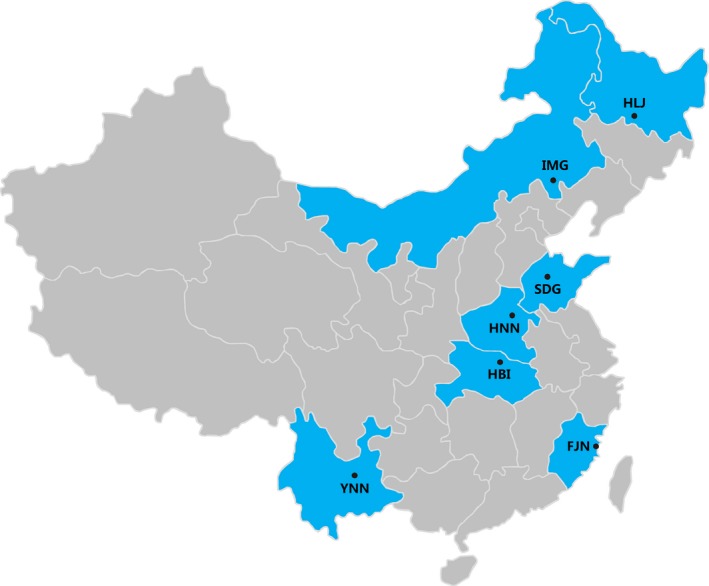
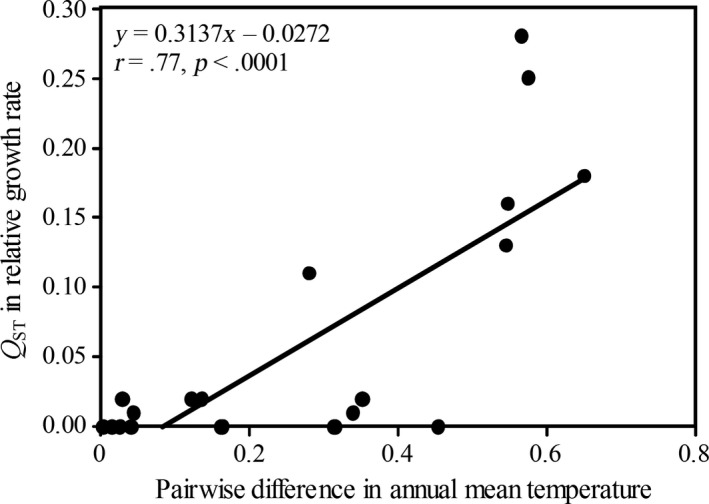
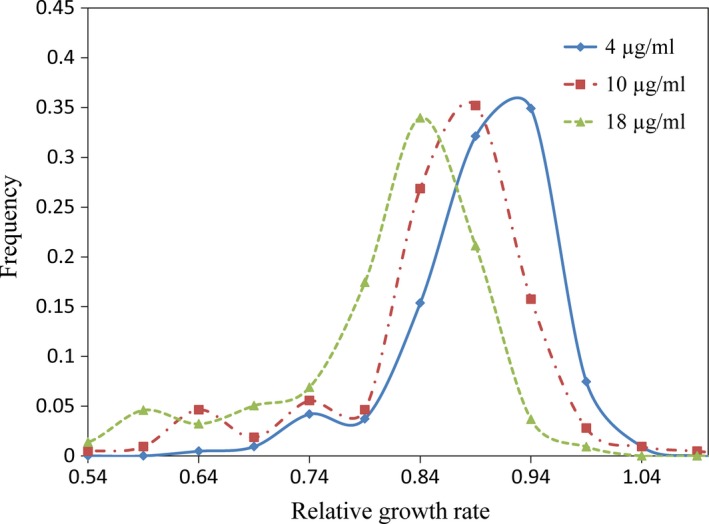
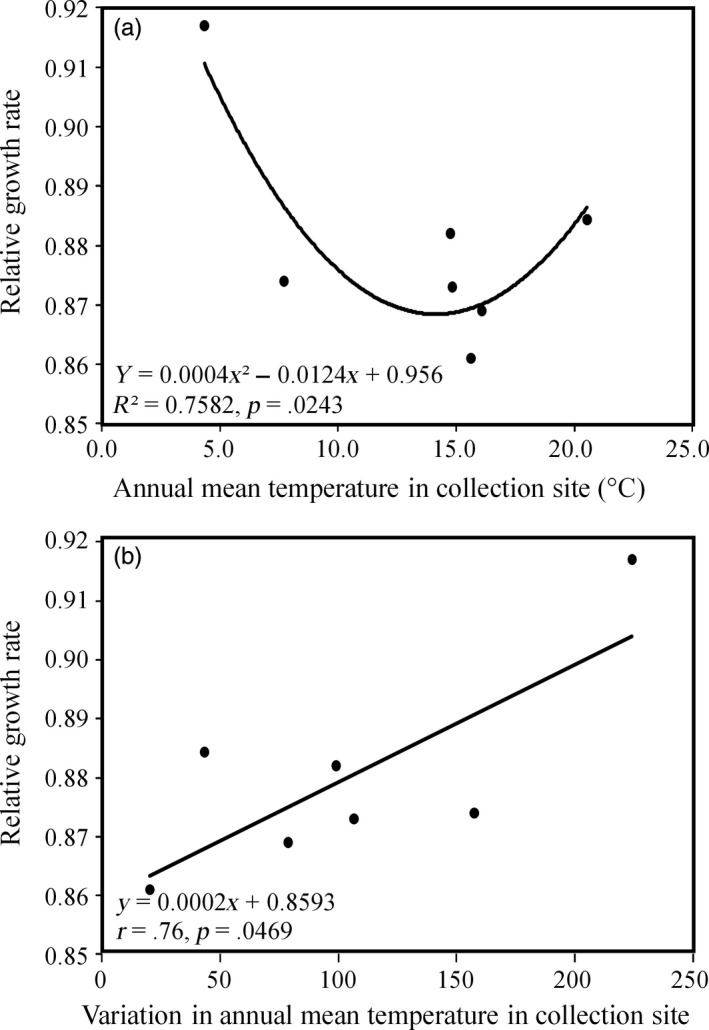
The spread of antimicrobial resistance and global change in air temperature represent two major phenomena that are exerting a disastrous impact on natural and social issues but investigation of the interaction between these phenomena in an evolutionary context is limited. In this study, a statistical genetic approach was used to investigate the evolution of antimicrobial resistance in agricultural ecosystem and its association with local air temperature, precipitation, and UV radiation. We found no resistance to mancozeb, a nonspecific fungicide widely used in agriculture for more than half a century, in 215 isolates sampled from geographic locations along a climatic gradient and cropping system representing diverse ecotypes in China, consistent with low resistance risk in many nonspecific fungicides. Genetic variance accounts for ~35% of phenotypic variation, while genotype-environment interaction is negligible, suggesting that heritability plays a more important role in the evolution of resistance to mancozeb in plant pathogens than phenotypic plasticity. We also found that tolerance to mancozeb in agricultural ecosystem is under constraining selection and significantly associated with local air temperature, possibly resulting from a pleiotropic effect of resistance with thermal and other ecological adaptations. The implication of these results for fungicide and other antimicrobial management in the context of global warming is discussed.
抗菌素耐药性的传播和全球气温变化是对自然和社会问题产生灾难性影响的两大主要现象,但在进化背景下对这些现象之间相互作用的研究却很有限。在本研究中,我们采用统计遗传学方法来研究农业生态系统中抗菌素耐药性的演变及其与当地气温、降水和紫外线辐射的关联。我们从中国沿气候梯度和代表不同生态型的种植系统的地理位置采集了215个分离株,结果发现,这些分离株对在农业中广泛使用了半个多世纪的非特异性杀菌剂代森锰锌没有抗性,这与许多非特异性杀菌剂的低抗性风险一致。遗传方差约占表型变异的35%,而基因型 - 环境相互作用可忽略不计,这表明在植物病原体对代森锰锌抗性的进化过程中,遗传力比表型可塑性发挥着更重要的作用。我们还发现,农业生态系统中对代森锰锌的耐受性处于限制性选择之下,并且与当地气温显著相关,这可能是由于抗性与热适应及其他生态适应的多效性效应所致。本文讨论了这些结果在全球变暖背景下对杀菌剂及其他抗菌剂管理的启示。