He Meng-Han, Wang Yan-Ping, Wu E-Jiao, Shen Lin-Lin, Yang Li-Na, Wang Tian, Shang Li-Ping, Zhu Wen, Zhan Jiasui
State Key Laboratory of Ecological Pest Control for Fujian and Taiwan Crops, Fujian Agriculture and Forestry University, Fuzhou, China.
Key Laboratory for Biopesticide and Chemical Biology, Ministry of Education, Fujian Agriculture and Forestry University, Fuzhou, China.
Front Microbiol. 2019 Jul 10;10:1609. doi: 10.3389/fmicb.2019.01609. eCollection 2019.
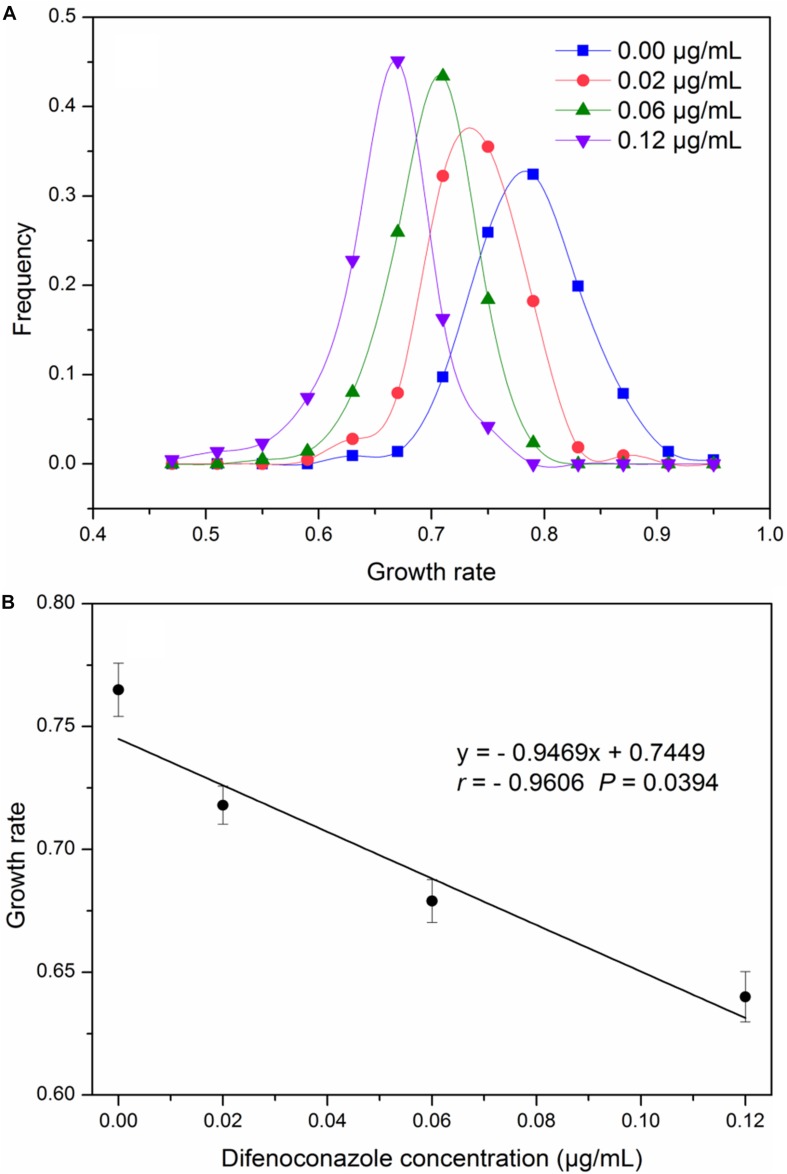
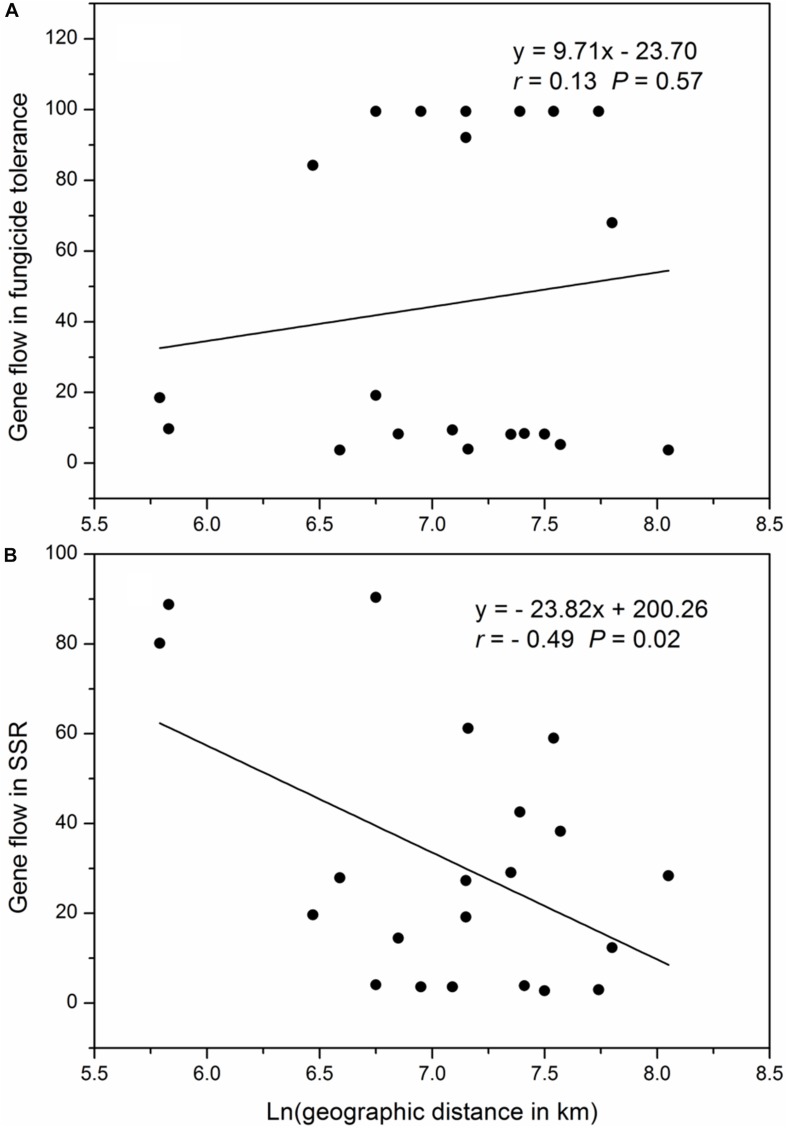
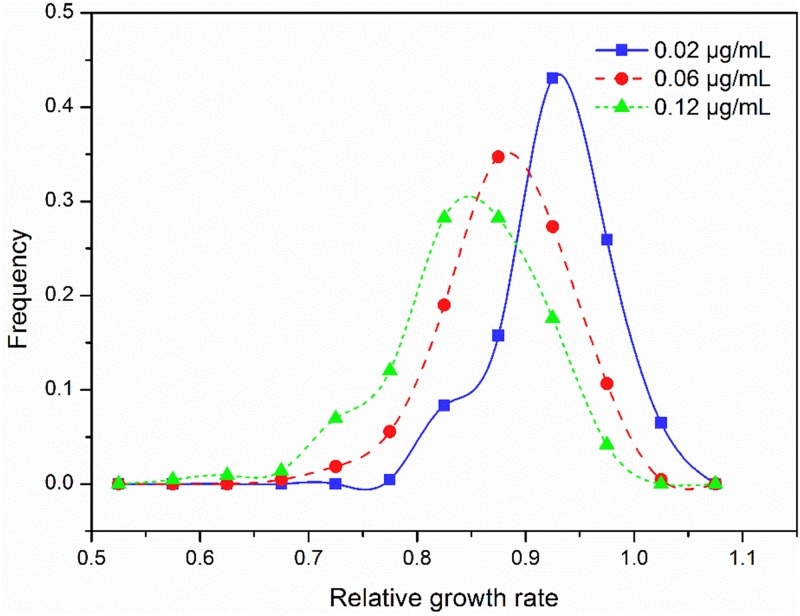
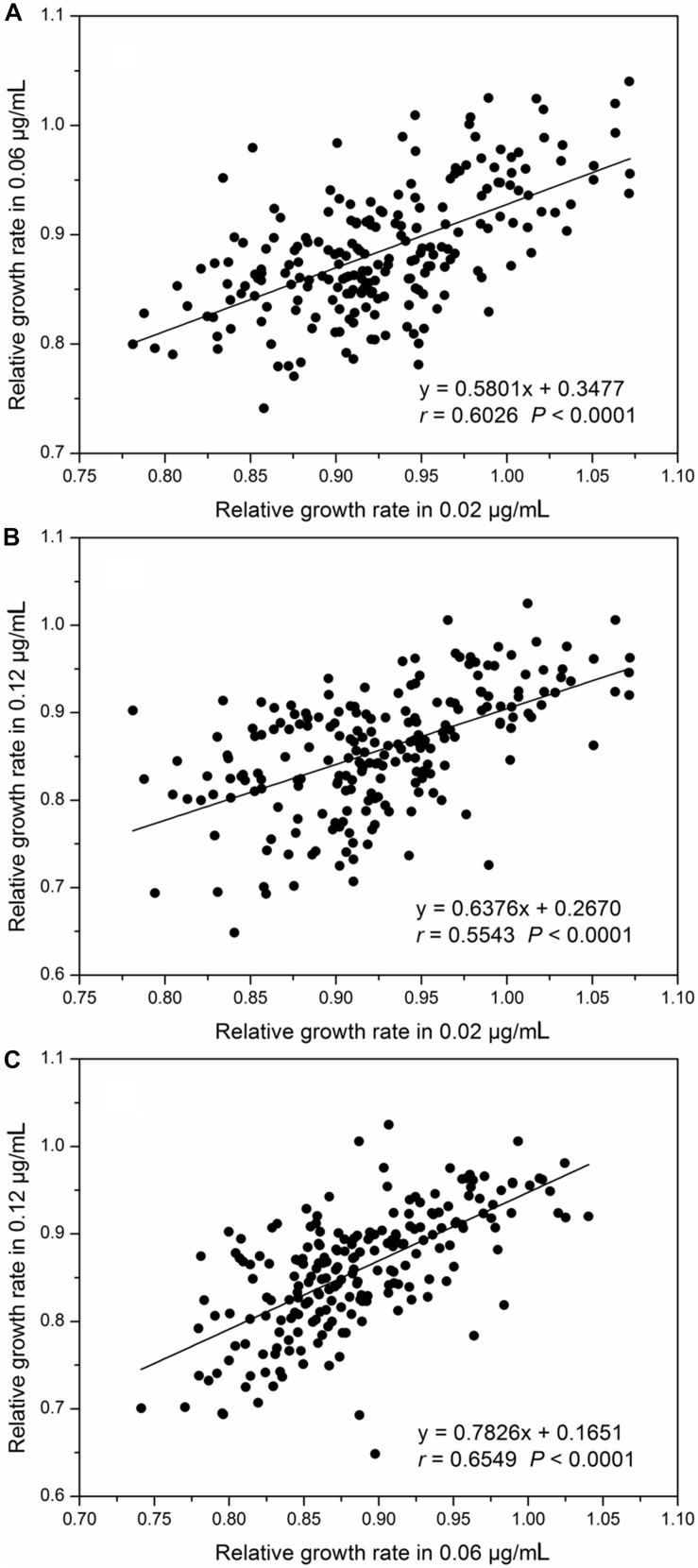
Evolution of fungicide resistance in plant pathogens is one of major concerns in sustainable plant disease management. In this study, the genetics and potential of developing resistance to a demethylation inhibitor (DMI) fungicide, difenoconazole, in the fungal pathogen was investigated using a comparative analysis of genetic variation in molecular (Single Sequence Repeats, SSR) and phenotypic (fungicide tolerance) markers. No difenoconazole resistance was found in the 215 isolates sampled from seven different ecological zones in China despite the widespread use of the fungicide for more than 20 years. This result suggests that the risk of developing resistance to difenoconazole in is low and we hypothesize that the low risk is likely caused by fitness penalties incurred by resistant mutants and the multiple mechanisms involving in developing resistance. Heritability and plasticity account for ∼24 and 3% of phenotypic variation, respectively, indicating that genetic adaptation by sequence variation plays a more important role in the evolution of difenoconazole resistance than physiological adaptation by altering gene expression. Constraining selection in the evolution of resistance to difenoconazole was documented by different patterns of population differentiation and isolate-by-distance between SSR markers and difenoconazole tolerance. Though the risk of developing resistance is low, the findings of significant differences in difenoconazole tolerance among isolates and populations, and a skewing distribution toward higher tolerance suggests that a stepwise accumulation of tolerance to the fungicide might be occurring in the pathogen populations. As a consequence, dynamic management programs guided by evolutionary principles such as spatiotemporal rotations of fungicides with different modes of action are critical to prevent the continued accumulation of tolerance or the evolution of resistance to difenoconazole and other DMI fungicides.
植物病原体中杀菌剂抗性的演变是可持续植物病害管理中的主要关注点之一。在本研究中,通过对分子(单序列重复,SSR)和表型(杀菌剂耐受性)标记的遗传变异进行比较分析,研究了真菌病原体对脱甲基抑制剂(DMI)杀菌剂苯醚甲环唑产生抗性的遗传学及可能性。尽管该杀菌剂已广泛使用20多年,但在中国七个不同生态区采集的215个分离株中未发现对苯醚甲环唑的抗性。这一结果表明,该真菌对苯醚甲环唑产生抗性的风险较低,我们推测低风险可能是由抗性突变体产生的适合度代价以及抗性发展涉及的多种机制所致。遗传力和可塑性分别占表型变异的约24%和3%,表明通过序列变异的遗传适应在苯醚甲环唑抗性进化中比通过改变基因表达的生理适应发挥更重要的作用。SSR标记与苯醚甲环唑耐受性之间不同的群体分化模式和隔离距离记录了该真菌对苯醚甲环唑抗性进化中的限制选择。尽管产生抗性的风险较低,但分离株和群体之间在苯醚甲环唑耐受性上存在显著差异以及向更高耐受性的偏态分布的研究结果表明,该病原体群体中可能正在发生对该杀菌剂耐受性的逐步积累。因此,以进化原则为指导的动态管理方案,如不同作用方式杀菌剂的时空轮换,对于防止耐受性的持续积累或对苯醚甲环唑及其他DMI杀菌剂抗性的进化至关重要。