Hajifaraji Majid, Matlabi Mohammad, Ahmadzadeh-Sani Farihe, Mehrabi Yadollah, Rezaee Mohammad Salem, Hajimehdipour Homa, Hasanzadeh Abbas, Roghani Katayoun
National Nutrition and Food Technology Research Institute, Faculty of Nutrition & Food Technology Shahid Beheshti University of Medical Sciences, Iran.
Department of Health Education and Promotion, Gonabad University of Medical Sciences, Gonabad, Iran.
Avicenna J Phytomed. 2018 Jan-Feb;8(1):24-32.
Dyslipidemia has been considered as a major risk factor for coronary heart disease. Alternative medicine has a significant role in treatment of dyslipidemia. There are controversial findings regarding the effects of sour tea on dyslipidemia. The aim of this study was to evaluate the impact of aqueous extract of dried calyx of sour tea on polygenic dyslipidemia.
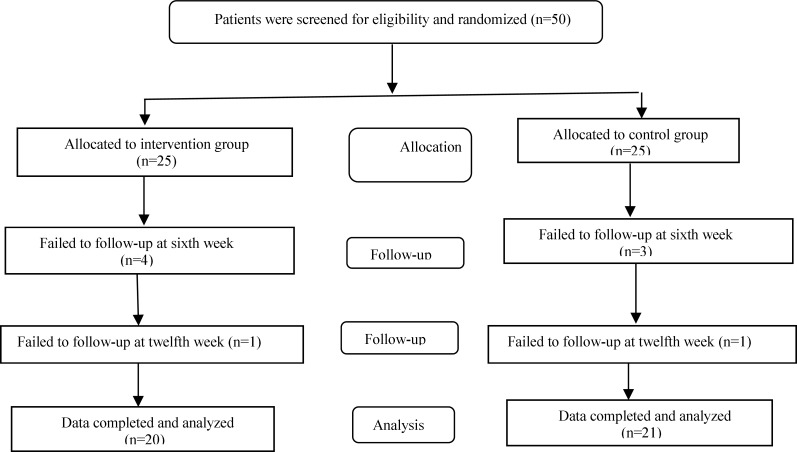
This clinical trial was done on 43 adults (30-60 years old) with polygenic dyslipidemia that were randomly assigned to the intervention and control groups. The control group was trained in lifestyle modifications at baseline. The intervention group was trained for lifestyle modifications at baseline and received two cups of sour tea daily, and both groups were followed up for 12 weeks. Lipid profile was evaluated at baseline, and six and 12 weeks following the intervention. In addition, dietary and physical activity assessed at baseline for twelve weeks.
Mean concentration of total cholesterol, HDL-C and LDL-C significantly decreased by up to 9.46%, 8.33%, and 9.80%, respectively, after 12 weeks in the intervention group in comparison to their baseline values. However, LDL-C/HDL-C ratio significantly increased by up to 3.15%, following 12 weeks in the control group in comparison to their baseline values. This study showed no difference in lipid profiles between the two groups, except for HDL-C concentrations.
sour tea may have significant positive effects on lipid profile of polygenic dyslipidemia subjects and these effect might be attributed to its anthocyanins and inflation factor content. Therefore, sour tea intake with recommended dietary patterns and physical activity can be useful in regulation of lipid profile in patients with polygenic dyslipidemia.
血脂异常被认为是冠心病的主要危险因素。替代医学在血脂异常的治疗中具有重要作用。关于酸茶对血脂异常的影响,存在有争议的研究结果。本研究的目的是评估酸茶干萼片水提取物对多基因血脂异常的影响。
本临床试验对43名患有多基因血脂异常的成年人(30 - 60岁)进行,他们被随机分为干预组和对照组。对照组在基线时接受生活方式改变的培训。干预组在基线时接受生活方式改变的培训,并每天饮用两杯酸茶,两组均随访12周。在基线时以及干预后6周和12周评估血脂谱。此外,在基线时评估饮食和身体活动情况,为期12周。
与基线值相比,干预组在12周后总胆固醇、高密度脂蛋白胆固醇(HDL-C)和低密度脂蛋白胆固醇(LDL-C)的平均浓度分别显著降低了9.46%、8.33%和9.80%。然而,与基线值相比,对照组在12周后低密度脂蛋白胆固醇/高密度脂蛋白胆固醇(LDL-C/HDL-C)比值显著升高了3.15%。除高密度脂蛋白胆固醇浓度外,本研究显示两组血脂谱无差异。
酸茶可能对多基因血脂异常受试者的血脂谱有显著的积极影响,这些影响可能归因于其花青素和黄酮类化合物含量。因此,结合推荐的饮食模式和身体活动饮用酸茶,可能有助于调节多基因血脂异常患者的血脂谱。