Department of Pediatrics, University of Arkansas for Medical Sciences and Arkansas Children's Research Institute, Little Rock, AR, USA.
Kilee Patchell-Evans Autism Research Group, Alberta Children's Hospital Research Institute, Calgary, AB, Canada.
Transl Psychiatry. 2018 Feb 2;8(1):42. doi: 10.1038/s41398-017-0089-z.
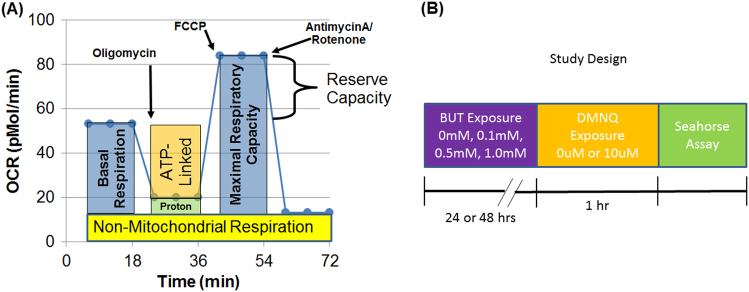
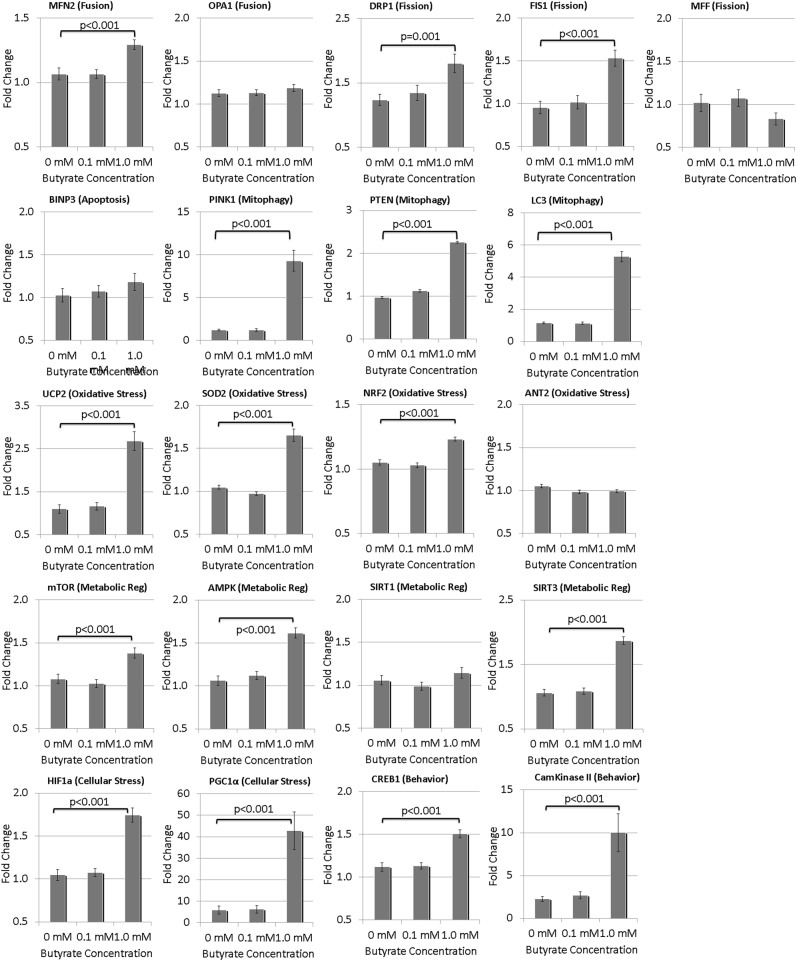
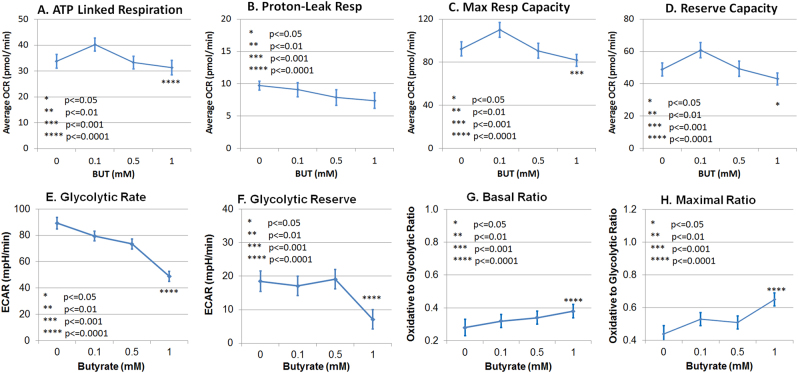
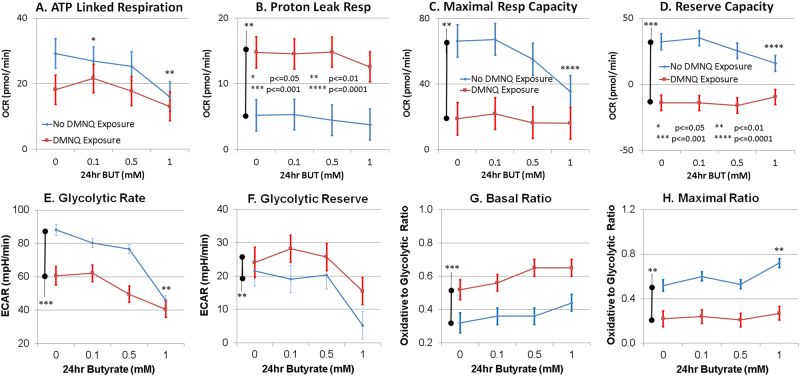
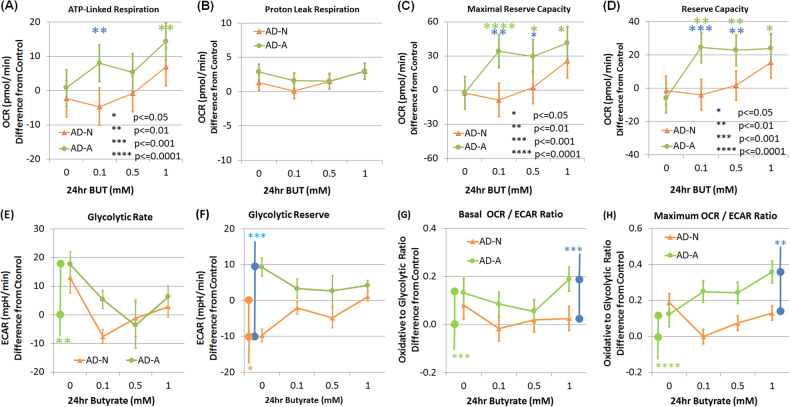
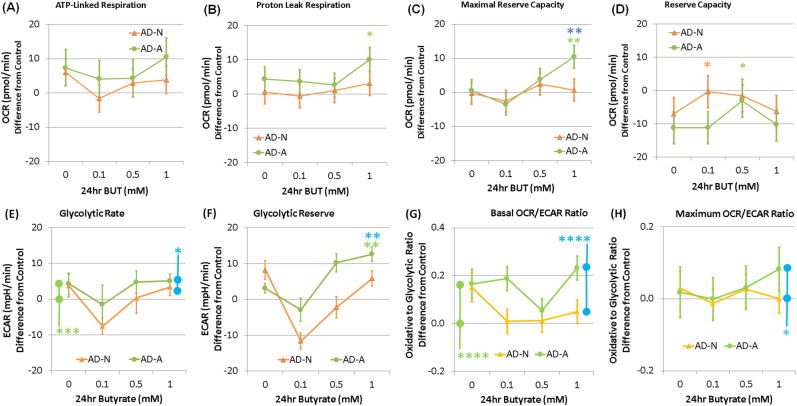
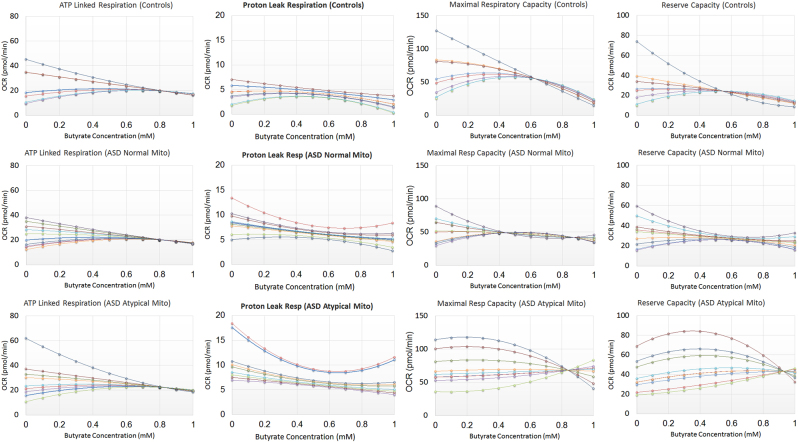
Butyrate (BT) is a ubiquitous short-chain fatty acid (SCFA) principally derived from the enteric microbiome. BT positively modulates mitochondrial function, including enhancing oxidative phosphorylation and beta-oxidation and has been proposed as a neuroprotectant. BT and other SCFAs have also been associated with autism spectrum disorders (ASD), a condition associated with mitochondrial dysfunction. We have developed a lymphoblastoid cell line (LCL) model of ASD, with a subset of LCLs demonstrating mitochondrial dysfunction (AD-A) and another subset of LCLs demonstrating normal mitochondrial function (AD-N). Given the positive modulation of BT on mitochondrial function, we hypothesized that BT would have a preferential positive effect on AD-A LCLs. To this end, we measured mitochondrial function in ASD and age-matched control (CNT) LCLs, all derived from boys, following 24 and 48 h exposure to BT (0, 0.1, 0.5, and 1 mM) both with and without an in vitro increase in reactive oxygen species (ROS). We also examined the expression of key genes involved in cellular and mitochondrial response to stress. In CNT LCLs, respiratory parameters linked to adenosine triphosphate (ATP) production were attenuated by 1 mM BT. In contrast, BT significantly increased respiratory parameters linked to ATP production in AD-A LCLs but not in AD-N LCLs. In the context of ROS exposure, BT increased respiratory parameters linked to ATP production for all groups. BT was found to modulate individual LCL mitochondrial respiration to a common set-point, with this set-point slightly higher for the AD-A LCLs as compared to the other groups. The highest concentration of BT (1 mM) increased the expression of genes involved in mitochondrial fission (PINK1, DRP1, FIS1) and physiological stress (UCP2, mTOR, HIF1α, PGC1α) as well as genes thought to be linked to cognition and behavior (CREB1, CamKinase II). These data show that the enteric microbiome-derived SCFA BT modulates mitochondrial activity, with this modulation dependent on concentration, microenvironment redox state, and the underlying mitochondrial function of the cell. In general, these data suggest that BT can enhance mitochondrial function in the context of physiological stress and/or mitochondrial dysfunction, and may be an important metabolite that can help rescue energy metabolism during disease states. Thus, insight into this metabolic modulator may have wide applications for both health and disease since BT has been implicated in a wide variety of conditions including ASD. However, future clinical studies in humans are needed to help define the practical implications of these physiological findings.
丁酸盐(BT)是一种普遍存在的短链脂肪酸(SCFA),主要来源于肠道微生物群。BT 可正向调节线粒体功能,包括增强氧化磷酸化和β氧化,并已被提议作为神经保护剂。BT 和其他 SCFAs 也与自闭症谱系障碍(ASD)有关,这种疾病与线粒体功能障碍有关。我们已经建立了 ASD 的淋巴母细胞系(LCL)模型,其中一部分 LCL 表现出线粒体功能障碍(AD-A),另一部分 LCL 表现出正常的线粒体功能(AD-N)。鉴于 BT 对线粒体功能的正向调节作用,我们假设 BT 将对 AD-A LCL 具有优先的正向影响。为此,我们测量了来自男孩的 ASD 和年龄匹配的对照(CNT)LCL 在暴露于 BT(0、0.1、0.5 和 1mM)24 和 48 小时后的线粒体功能,其中包括在体外增加活性氧(ROS)的情况下。我们还研究了参与细胞和线粒体对应激反应的关键基因的表达。在 CNT LCL 中,与三磷酸腺苷(ATP)产生相关的呼吸参数被 1mM BT 减弱。相比之下,BT 显著增加了 AD-A LCL 但不增加 AD-N LCL 与 ATP 产生相关的呼吸参数。在 ROS 暴露的情况下,BT 增加了所有组与 ATP 产生相关的呼吸参数。结果发现,BT 调节个体 LCL 的线粒体呼吸到一个共同的设定点,对于 AD-A LCL 而言,这个设定点略高于其他组。最高浓度的 BT(1mM)增加了与线粒体分裂(PINK1、DRP1、FIS1)和生理应激(UCP2、mTOR、HIF1α、PGC1α)相关的基因以及与认知和行为相关的基因(CREB1、CamKinase II)的表达。这些数据表明,肠道微生物群衍生的 SCFA BT 调节线粒体活性,这种调节取决于浓度、微环境氧化还原状态和细胞的基础线粒体功能。一般来说,这些数据表明,BT 可以在生理应激和/或线粒体功能障碍的情况下增强线粒体功能,并且可能是一种重要的代谢物,可以帮助在疾病状态下恢复能量代谢。因此,对这种代谢调节剂的深入了解可能对健康和疾病都有广泛的应用,因为 BT 已经涉及到各种情况,包括 ASD。然而,需要对人类进行进一步的临床研究,以帮助确定这些生理发现的实际意义。