Department of Neurosurgery, Wuhan No. 1 Hospital, Wuhan, Hubei 430022, P.R. China.
Mol Med Rep. 2018 Apr;17(4):4925-4932. doi: 10.3892/mmr.2018.8525. Epub 2018 Jan 31.
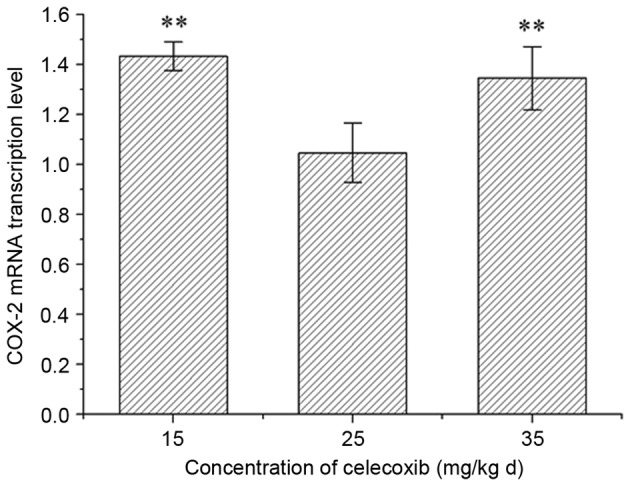
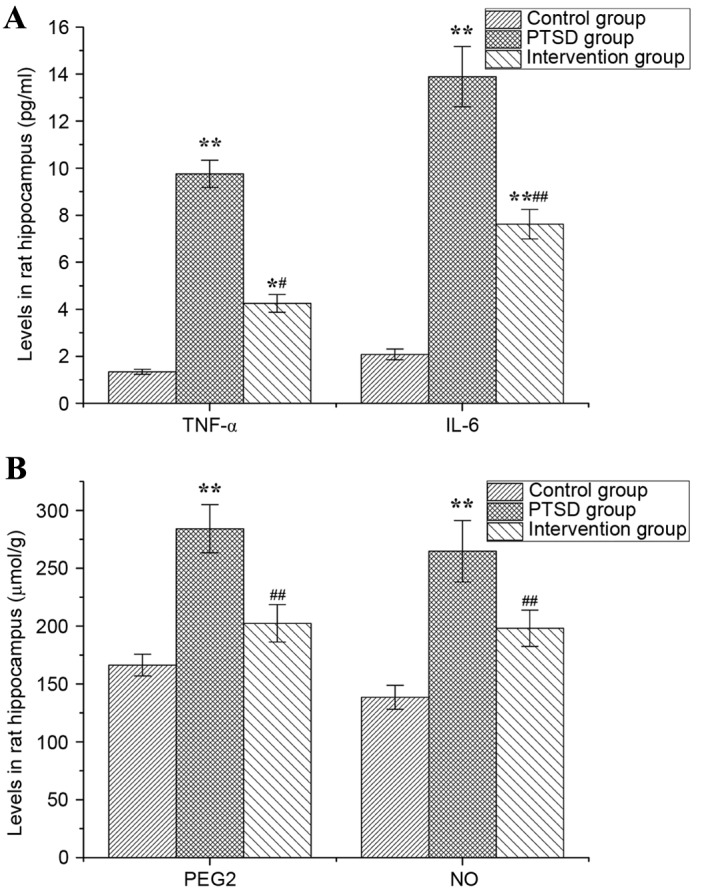
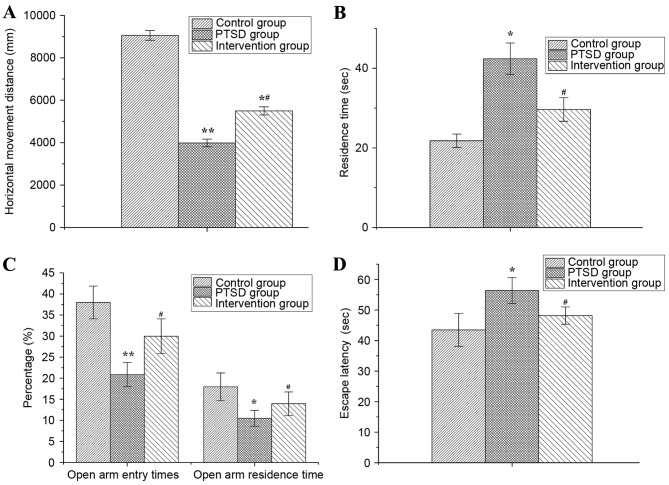
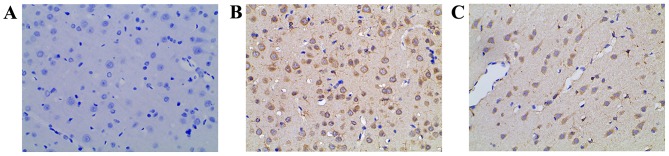
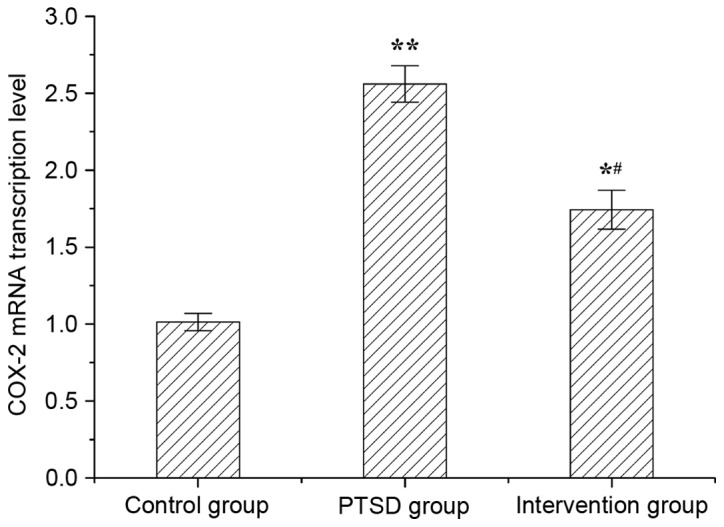
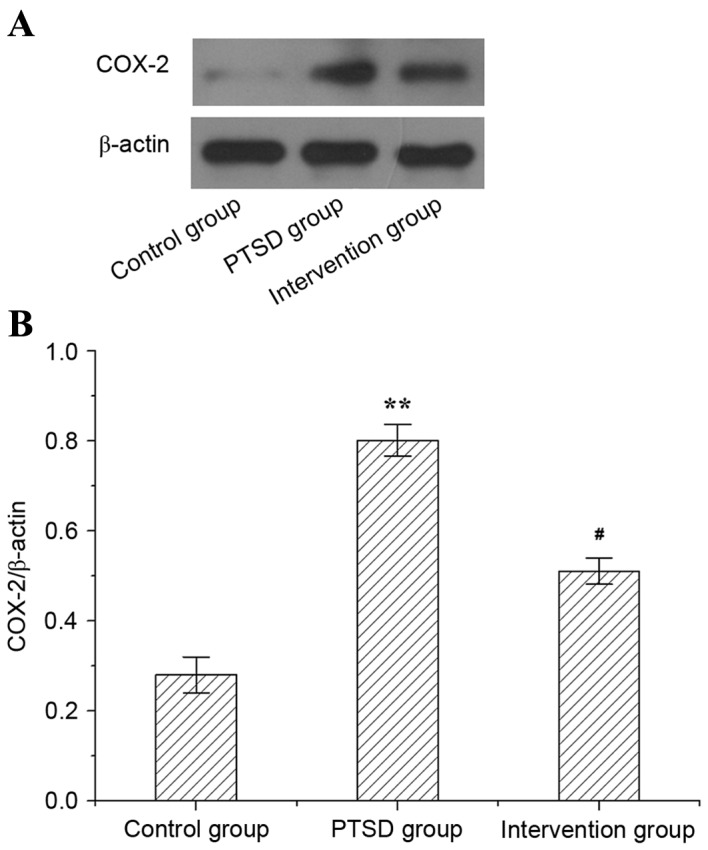
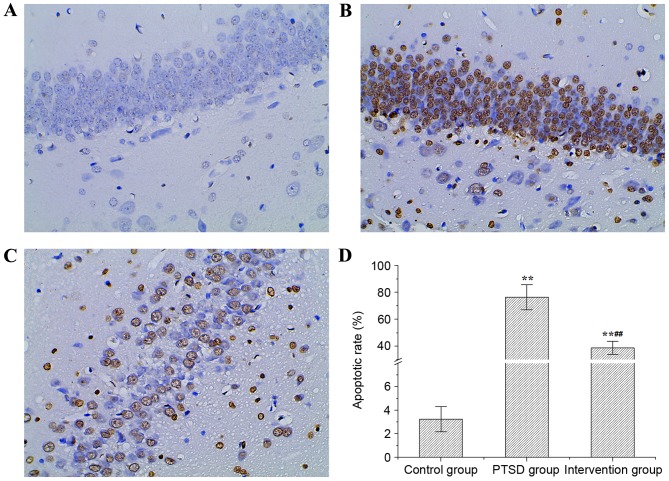
Post‑traumatic stress disorder (PTSD) is characterized by re‑experiencing of a traumatic event, avoidance of trauma‑associated stimulation, general changes in mood and cognition, and hyper arousal symptoms. Cyclooxygenase is involved in the production of prostaglandins and thromboxanes, and its inducible form cyclooxygenase‑2(COX‑2), an important mediator of cell injury in inflammation, is primarily expressed in leukocytes and brain cells. The present study investigated the expression of COX‑2 in the hippocampi of rats with PTSD and evaluated the effect of COX‑2 inhibition on PTSD. Adult male Wistar rats were randomly divided into three groups: Control (n=20), PTSD (n=20) and intervention group (PTSD+COX‑2 inhibitor treatment, n=20). The expression of COX‑2 was detected by immunohistochemistry, reverse transcription‑quantitative polymerase chain reaction and western blotting. Terminal deoxynucleotidyl transferase mediated dUTP nick end labeling staining was used to observe the apoptosis of rat hippocampal neurons. Tumor necrosis factor α (TNF‑α), interleukin (IL)‑6 and prostaglandin E2 (PGE2) levels were analyzed by ELISA. Nitric oxide (NO) was detected using the Griess test. The behavioral and cognitive function of rats in the PTSD group was significantly decreased compared with the control group, while the behavioral and cognitive function of rats in the intervention group were improved. The COX‑2 mRNA and protein expression levels in hippocampi of rats in the PTSD group were higher than in the control and intervention group. The apoptosis of hippocampus in rats with PTSD was significantly increased compared with the control group and following treatment with COX‑2 inhibitor, apoptosis was decreased. In addition, compared with the control group and intervention group, the levels of TNF‑α, IL‑6, PGE2 and NO in hippocampi of rats were increased in the PTSD group. The present study indicated that COX‑2 may be involved in the pathogenesis of PTSD, and inhibition of its expression serves a neuroprotective role in hippocampi of PTSD rats.
创伤后应激障碍(PTSD)的特征是创伤事件的再体验、对创伤相关刺激的回避、情绪和认知的普遍变化以及过度唤醒症状。环氧化酶参与前列腺素和血栓素的产生,其诱导型形式环氧化酶-2(COX-2)是炎症中细胞损伤的重要介质,主要在白细胞和脑细胞中表达。本研究探讨了 PTSD 大鼠海马 COX-2 的表达,并评估了 COX-2 抑制对 PTSD 的影响。成年雄性 Wistar 大鼠随机分为三组:对照组(n=20)、PTSD 组(n=20)和干预组(PTSD+COX-2 抑制剂治疗,n=20)。通过免疫组织化学、逆转录-定量聚合酶链反应和 Western blot 检测 COX-2 的表达。末端脱氧核苷酸转移酶介导的 dUTP 缺口末端标记染色观察大鼠海马神经元凋亡。酶联免疫吸附试验分析肿瘤坏死因子-α(TNF-α)、白细胞介素(IL)-6 和前列腺素 E2(PGE2)水平。Griess 试验检测一氧化氮(NO)。与对照组相比,PTSD 组大鼠的行为和认知功能明显下降,而干预组大鼠的行为和认知功能得到改善。PTSD 组大鼠海马 COX-2 mRNA 和蛋白表达水平高于对照组和干预组。与对照组相比,PTSD 组大鼠海马细胞凋亡明显增加,经 COX-2 抑制剂治疗后凋亡减少。此外,与对照组和干预组相比,PTSD 组大鼠海马 TNF-α、IL-6、PGE2 和 NO 水平升高。本研究表明,COX-2 可能参与 PTSD 的发病机制,抑制其表达对 PTSD 大鼠海马具有神经保护作用。