Molecular Biology and Biochemistry, Gottfried Schatz Research Center, Medical University of Graz, Neue Stiftingtalstraße 6/6, 8010 Graz, Austria.
Molecular Biology and Biochemistry, Gottfried Schatz Research Center, Medical University of Graz, Neue Stiftingtalstraße 6/6, 8010 Graz, Austria; BioTechMed Graz, Mozartgasse 12/II, 8010 Graz, Austria.
Free Radic Biol Med. 2018 Nov 20;128:50-58. doi: 10.1016/j.freeradbiomed.2018.01.027. Epub 2018 Feb 2.
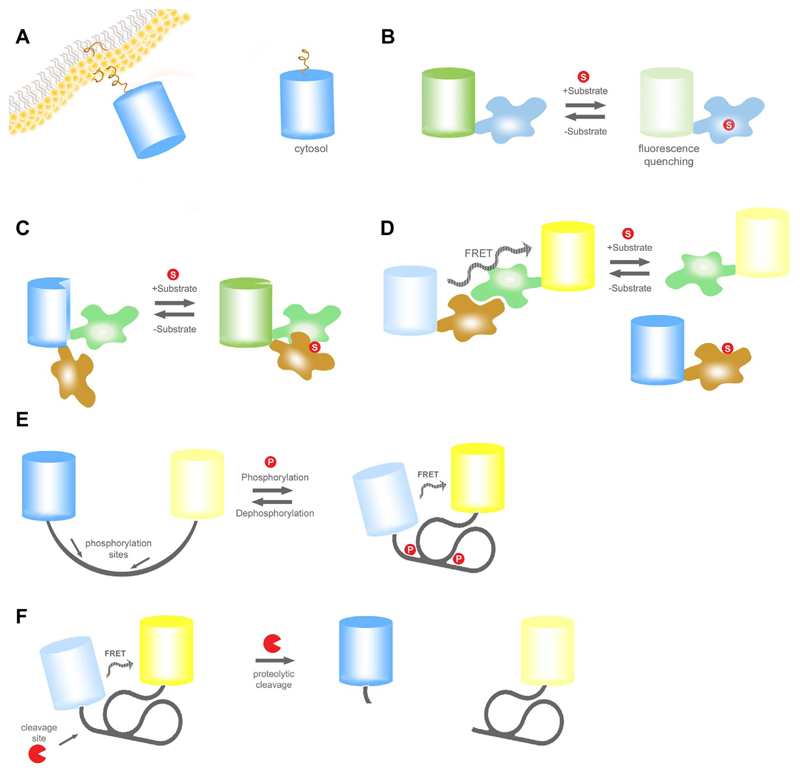
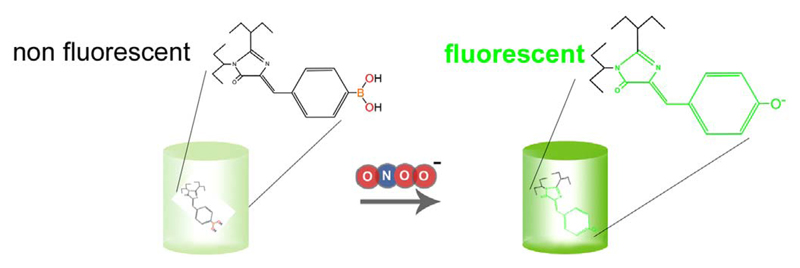
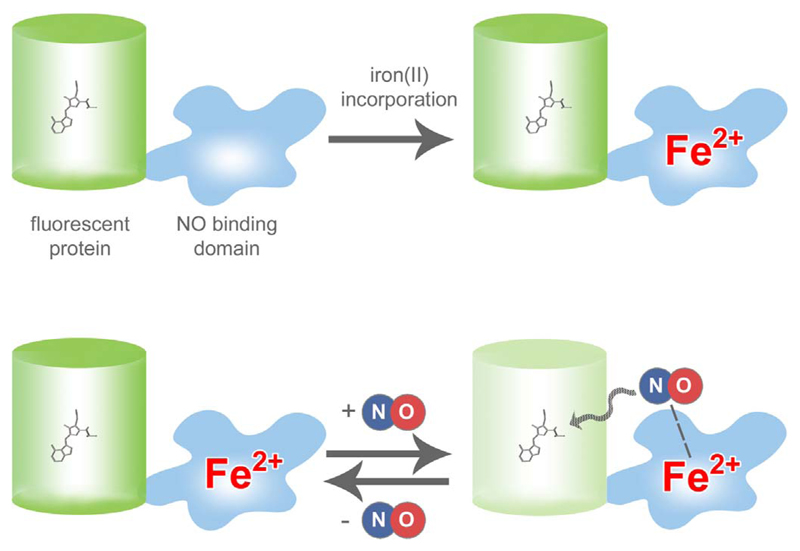
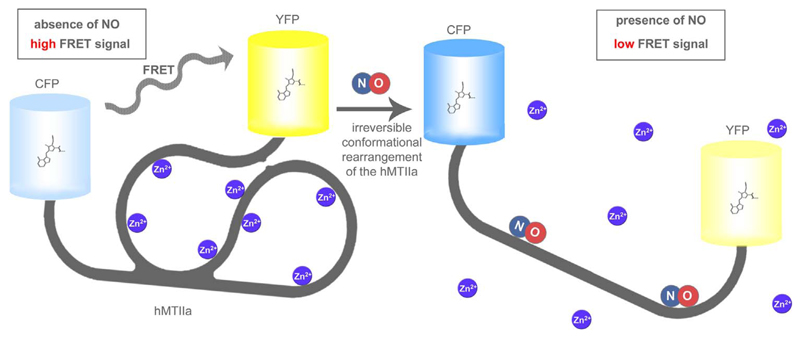
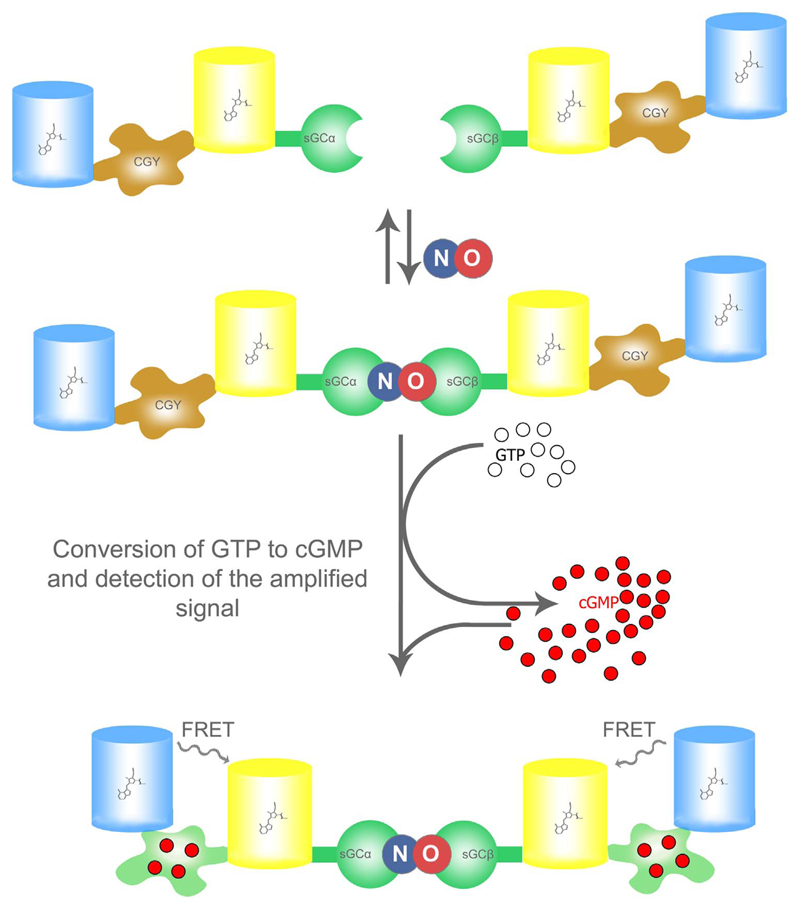
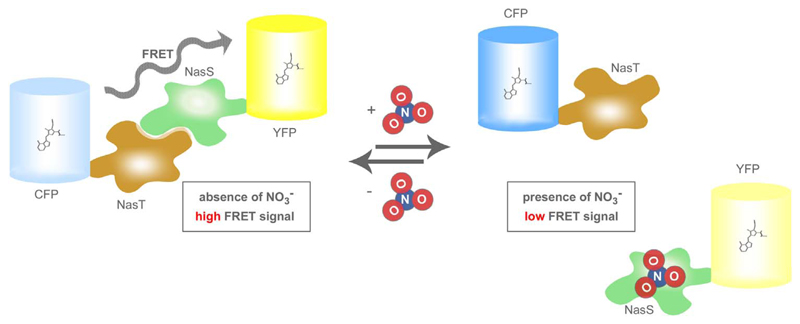
Over the last decades a broad collection of sophisticated fluorescent protein-based probes was engineered with the aim to specifically monitor nitric oxide (NO), one of the most important signaling molecules in biology. Here we report and discuss the characteristics and fields of applications of currently available genetically encoded fluorescent sensors for the detection of NO and its metabolites in different cell types.
Because of its radical nature and short half-life, real-time imaging of NO on the level of single cells is challenging. Herein we review state-of-the-art genetically encoded fluorescent sensors for NO and its byproducts such as peroxynitrite, nitrite and nitrate. Such probes enable the real-time visualization of NO signals directly or indirectly on the level of single cells and cellular organelles and, hence, extend our understanding of the spatiotemporal dynamics of NO formation, diffusion and degradation. Here, we discuss the significance of NO detection in individual cells and on subcellular level with genetic biosensors. Currently available genetically encoded fluorescent probes for NO and nitrogen species are critically discussed in order to provide insights in the functionality and applicability of these promising tools. As an outlook we provide ideas for novel approaches for the design and application of improved NO probes and fluorescence imaging protocols.
在过去的几十年中,人们设计了大量复杂的基于荧光蛋白的探针,旨在专门监测一氧化氮(NO),这是生物学中最重要的信号分子之一。在这里,我们报告并讨论了目前可用于检测不同细胞类型中 NO 及其代谢物的遗传编码荧光传感器的特点和应用领域。
由于其自由基性质和半衰期短,实时成像单个细胞中的 NO 具有挑战性。在此,我们回顾了用于 NO 及其副产物(如过氧亚硝酸盐、亚硝酸盐和硝酸盐)的最新遗传编码荧光传感器。这些探针能够直接或间接地在单个细胞和细胞细胞器水平上实时可视化 NO 信号,从而扩展了我们对 NO 形成、扩散和降解时空动力学的理解。在这里,我们讨论了遗传生物传感器在单个细胞和亚细胞水平上检测 NO 的意义。本文批判性地讨论了目前可用于检测 NO 和氮物种的遗传编码荧光探针,以深入了解这些有前途的工具的功能和适用性。作为展望,我们为设计和应用改进的 NO 探针和荧光成像方案提供了新的思路。