Busse Annika, Antiqueira Pablo A P, Neutzling Alexandre S, Wolf Anna M, Romero Gustavo Q, Petermann Jana S
Department of Biosciences, University of Salzburg, Salzburg, Austria.
Berlin-Brandenburg Institute of Advanced Biodiversity Research (BBIB), Berlin, Germany.
PLoS One. 2018 Feb 5;13(2):e0191426. doi: 10.1371/journal.pone.0191426. eCollection 2018.
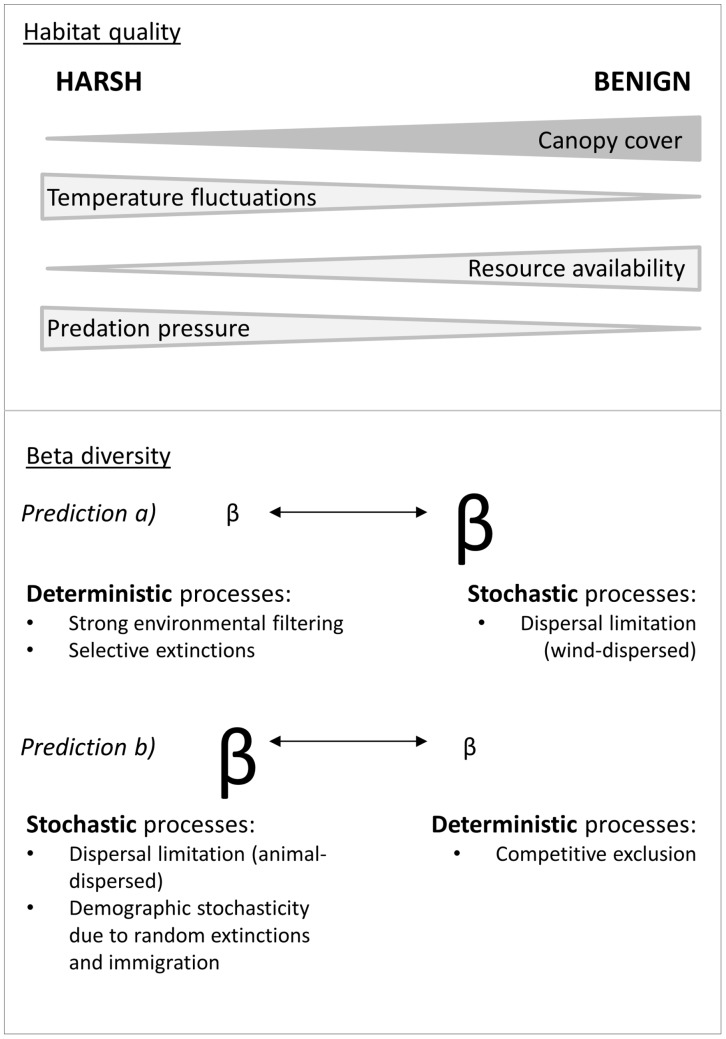
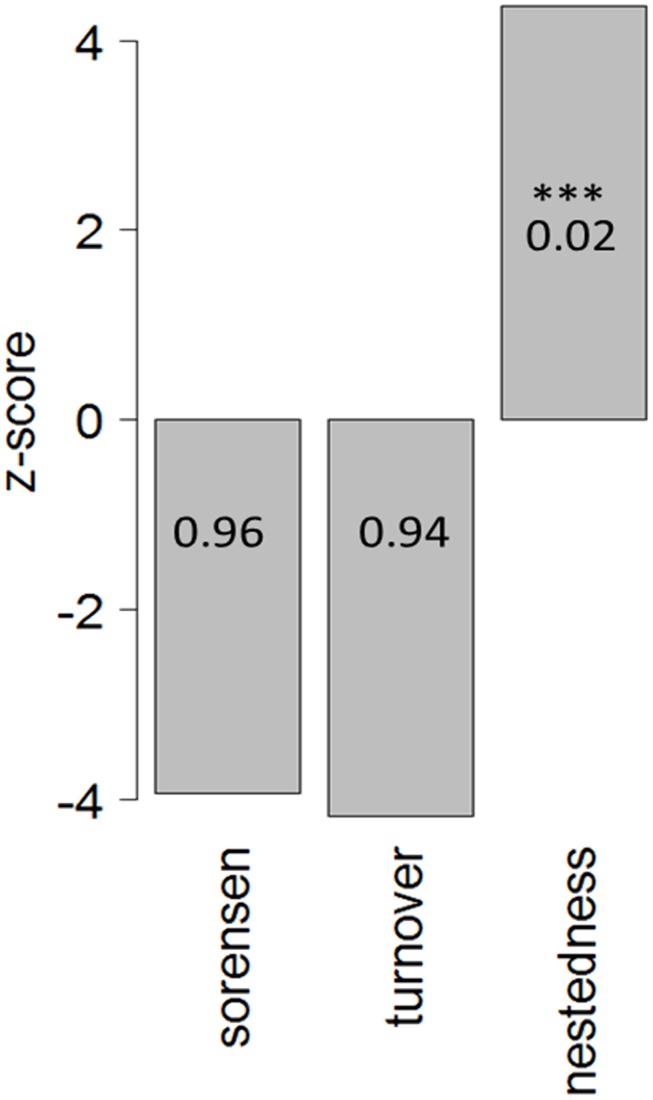
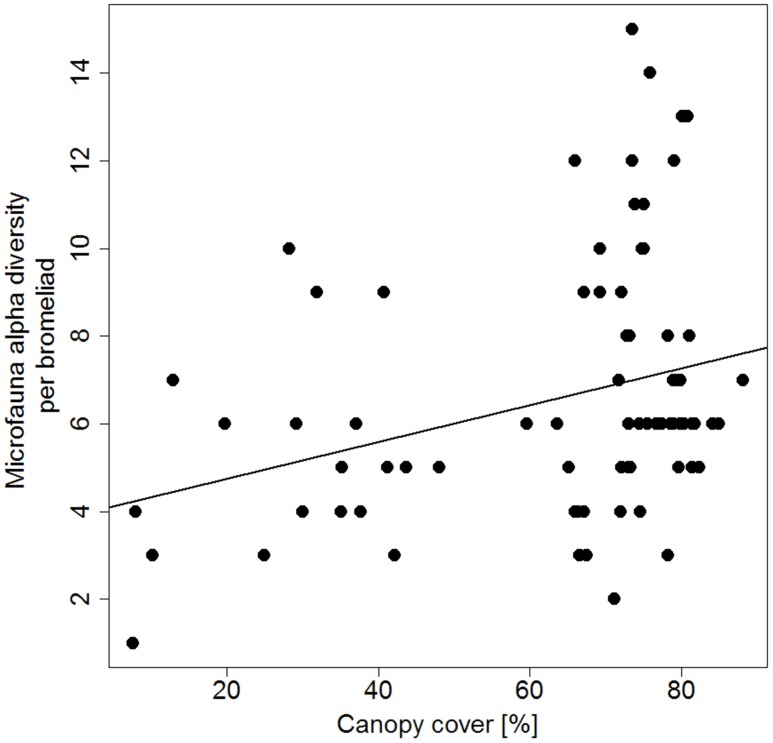
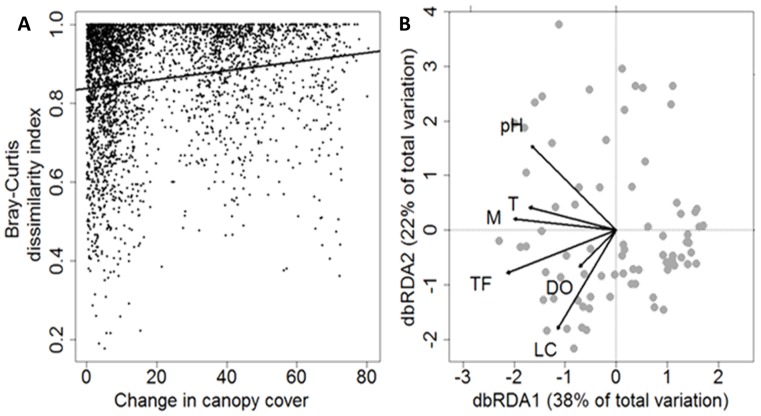
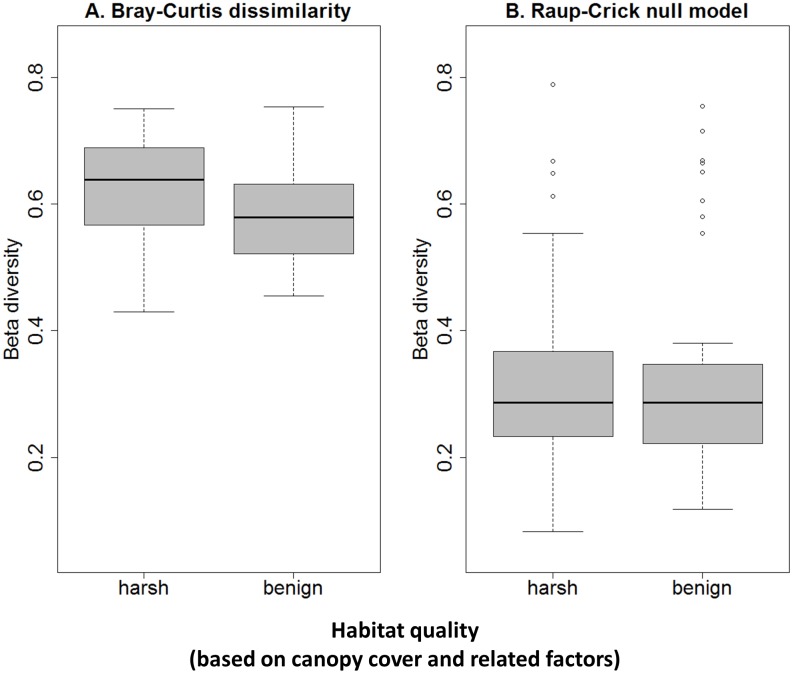
The mechanisms which structure communities have been the focus of a large body of research. Here, we address the question if habitat characteristics describing habitat quality may drive changes in community composition and beta diversity of bromeliad-inhabiting microfauna. In our system, changes in canopy cover along an environmental gradient may affect resource availability, disturbance in form of daily water temperature fluctuations and predation, and thus may lead to changes in community structure of bromeliad microfauna through differences in habitat quality along this gradient. Indeed, we observed distinct changes in microfauna community composition along the environmental gradient explained by changes in the extent of daily water temperature fluctuations. We found beta diversity to be higher under low habitat quality (low canopy cover) than under high habitat quality (high canopy cover), which could potentially be explained by a higher relative importance of stochastic processes under low habitat quality. We also partitioned beta diversity into turnover and nestedness components and we found a nested pattern of beta diversity along the environmental gradient, with communities from the lower-quality habitat being nested subsets of communities from the higher-quality habitat. However, this pattern resulted from an increase in microfauna alpha diversity with an increase in habitat quality. By providing insights into microfauna-environment relationships our results contribute to the mechanistic understanding of community dynamics in small freshwater bodies. Here, we highlight the importance of habitat characteristics representing habitat quality in structuring communities, and suggest that this information may help to improve conservation practices of small freshwater ecosystems.
构建群落的机制一直是大量研究的焦点。在此,我们探讨描述栖息地质量的栖息地特征是否可能驱动凤梨科植物栖息的微型动物群落组成和β多样性的变化。在我们的系统中,沿环境梯度的冠层覆盖变化可能会影响资源可用性、以每日水温波动形式存在的干扰和捕食,因此可能通过沿该梯度的栖息地质量差异导致凤梨科微型动物群落结构的变化。事实上,我们观察到微型动物群落组成沿环境梯度有明显变化,这可以由每日水温波动程度的变化来解释。我们发现,在低栖息地质量(低冠层覆盖)下的β多样性高于高栖息地质量(高冠层覆盖)下的β多样性,这可能是由于在低栖息地质量下随机过程的相对重要性更高。我们还将β多样性划分为周转率和嵌套度成分,并且发现沿环境梯度β多样性呈嵌套模式,低质量栖息地的群落是高质量栖息地群落的嵌套子集。然而,这种模式是由于微型动物α多样性随栖息地质量的增加而增加导致的。通过深入了解微型动物与环境的关系,我们的结果有助于从机制上理解小型淡水水体中的群落动态。在此,我们强调代表栖息地质量的栖息地特征在构建群落中的重要性,并表明这些信息可能有助于改进小型淡水生态系统的保护实践。