St-Patrick Research Group in Basic Oncology, CHU de Québec-Université Laval Research Centre (L'Hôtel-Dieu de Québec), Laval University Cancer Research Centre, Quebec City, Québec, G1R 3S3, Canada.
Sci Rep. 2018 Feb 5;8(1):2334. doi: 10.1038/s41598-018-20837-9.
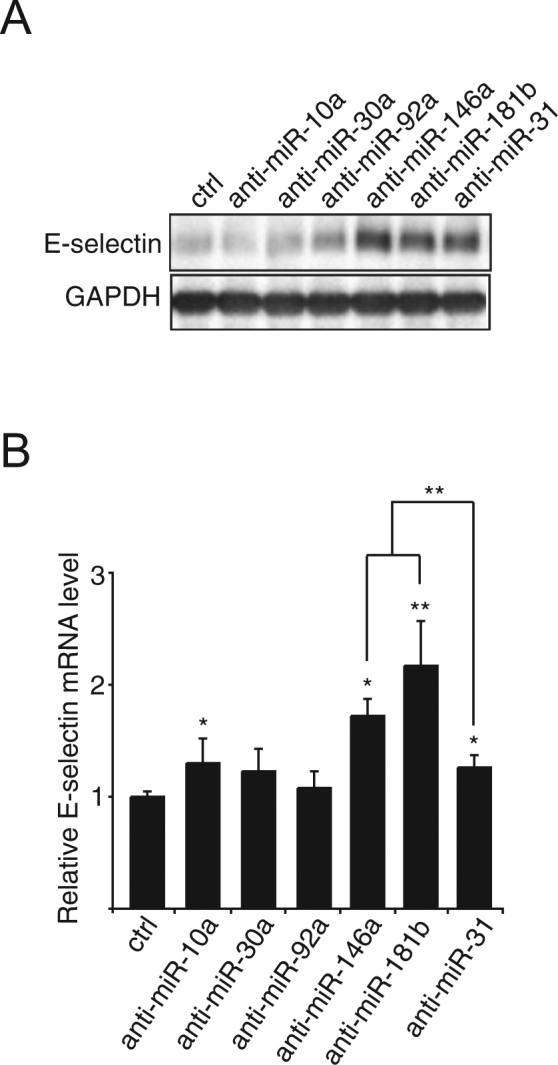
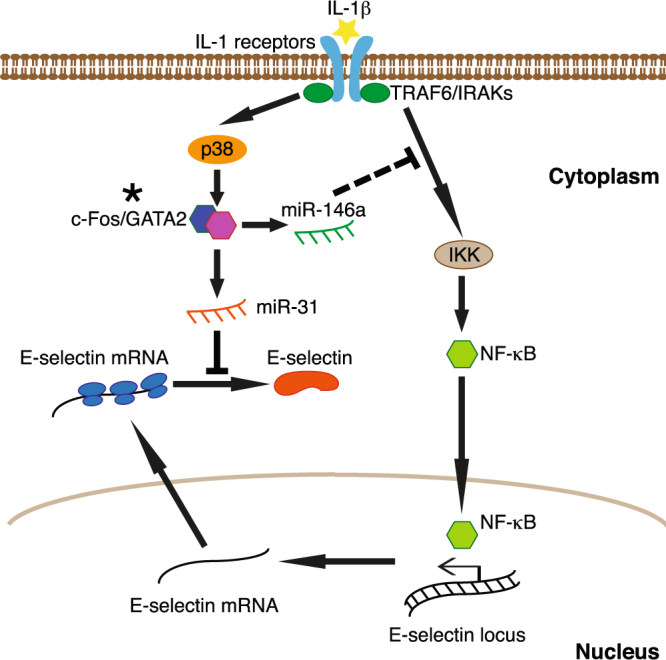
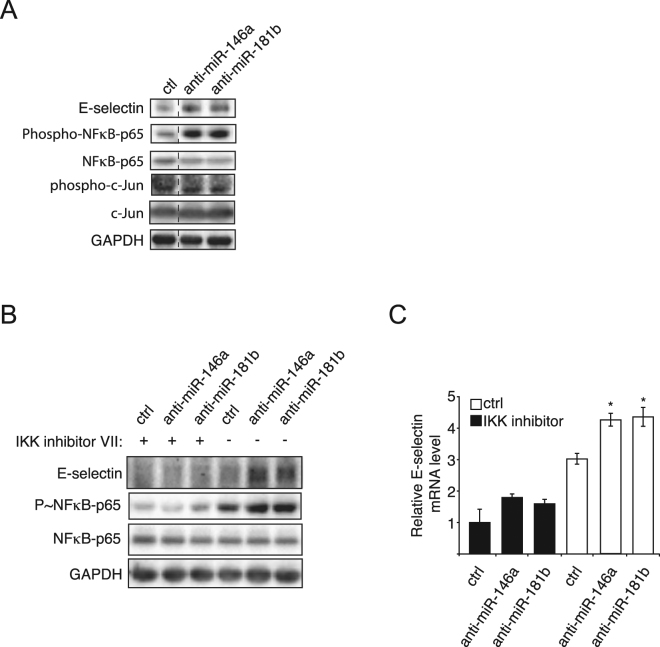
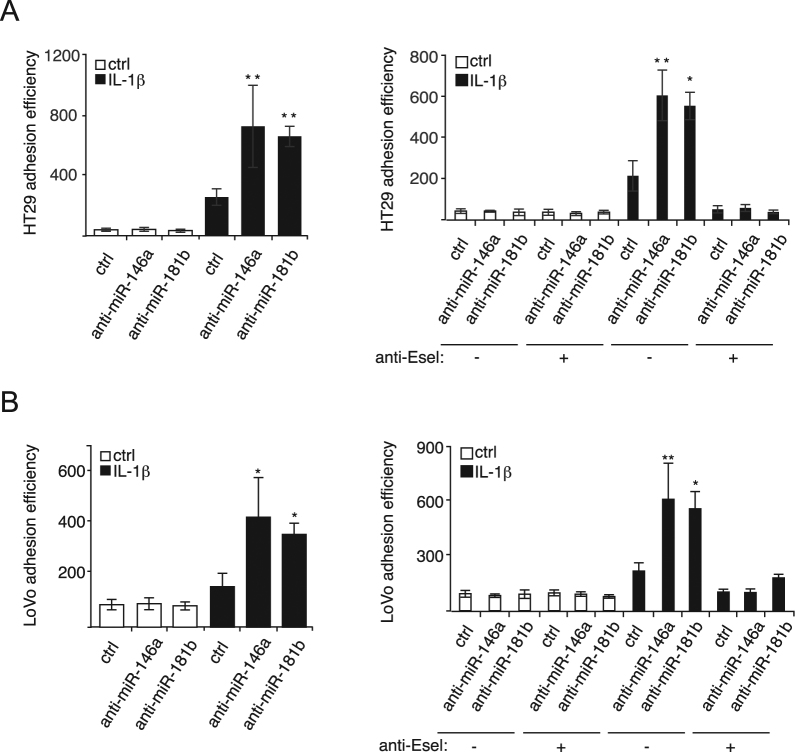
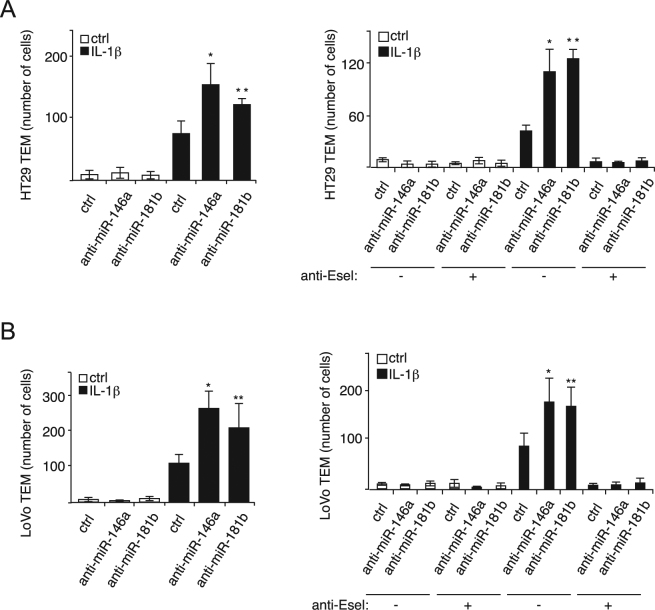
Extravasation of circulating cancer cells determines their metastatic potential. This process is initiated by the adhesion of cancer cells to vascular endothelial cells through specific interactions between endothelial adhesion receptors such as E-selectin and their ligands on cancer cells. In the present study, we show that miR-146a and miR-181b impede the expression of E-selectin by repressing the activity of its transcription factor NF-κB, thereby impairing the metastatic potentials of colon cancer cells by decreasing their adhesion to, and migration through, the endothelium. Among the two microRNAs, only miR-146a is activated by IL-1β, through the activation of p38, ERK and JNK MAP kinases, as well as their downstream transcription factors GATA2, c-Fos and c-Jun. Inhibiting p38 MAP kinase increases NF-κB activity, at least partially via miR-146a. Inhibiting p38 also increases the expression of E-selectin at the post-transcriptional level via decreasing miR-31, which targets E-selectin mRNA and also depends on p38 for its expression. In response to IL-1β, p38 MAP kinase hence represses the expression of E-selectin at the transcriptional and the post-transcriptional levels, via miR-146a and miR-31, respectively. These results highlight novel mechanisms by which p38 downregulates the expression of E-selectin through different microRNAs following inflammatory stimuli associated to cancer progression.
循环癌细胞的外渗决定了它们的转移潜力。这个过程是通过癌细胞与血管内皮细胞之间的特异性相互作用启动的,例如内皮细胞黏附受体如 E-选择素与其在癌细胞上的配体相互作用。在本研究中,我们表明 miR-146a 和 miR-181b 通过抑制其转录因子 NF-κB 的活性来抑制 E-选择素的表达,从而通过降低癌细胞与内皮细胞的黏附和穿过内皮细胞的迁移来降低结肠癌的转移潜力。在这两种 microRNA 中,只有 miR-146a 被 IL-1β 通过激活 p38、ERK 和 JNK MAP 激酶及其下游转录因子 GATA2、c-Fos 和 c-Jun 激活。抑制 p38 MAP 激酶会增加 NF-κB 的活性,至少部分是通过 miR-146a。抑制 p38 还会通过减少靶向 E-选择素 mRNA 的 miR-31 来增加 E-选择素的表达,miR-31 的表达也依赖于 p38。在炎症刺激与癌症进展相关的情况下,p38 MAP 激酶通过 miR-146a 和 miR-31 分别在转录和转录后水平上抑制 E-选择素的表达,从而导致这些结果。这些结果强调了 p38 通过不同的 microRNA 下调 E-选择素表达的新机制。