Le Centre de recherche en cancérologie de l'Université Laval et Centre de recherche du CHUQ, l'Hôtel-Dieu de Québec, 9 rue McMahon, Québec G1R 2J6 Canada.
BMC Cancer. 2011 Jul 1;11:285. doi: 10.1186/1471-2407-11-285.
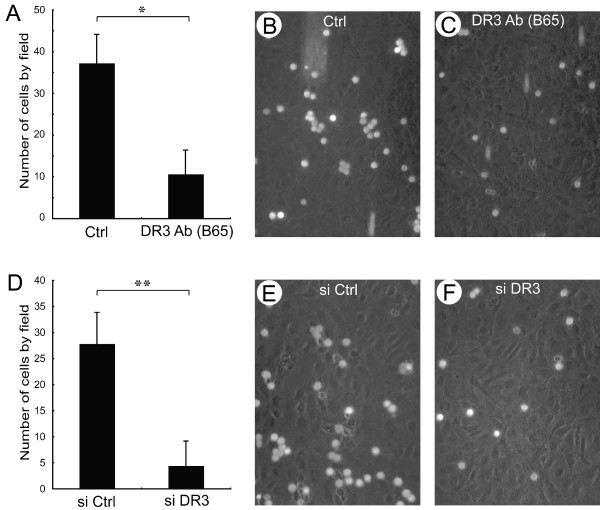
Extravasation of circulating cancer cells is a key event of metastatic dissemination that is initiated by the adhesion of cancer cells to endothelial cells. It requires interactions between adhesion receptors on endothelial cells and their counter-receptors on cancer cells. Notably, E-selectin, a major endothelial adhesion receptor, interacts with Death receptor-3 present on metastatic colon carcinoma cells. This interaction confers metastatic properties to colon cancer cells by promoting the adhesion of cancer cells to endothelial cells and triggering the activation of the pro-migratory p38 and pro-survival ERK pathways in the cancer cells. In the present study, we investigated further the mechanisms by which the E-selectin-activated pathways downstream of DR3 confer a survival advantage to colon cancer cells.
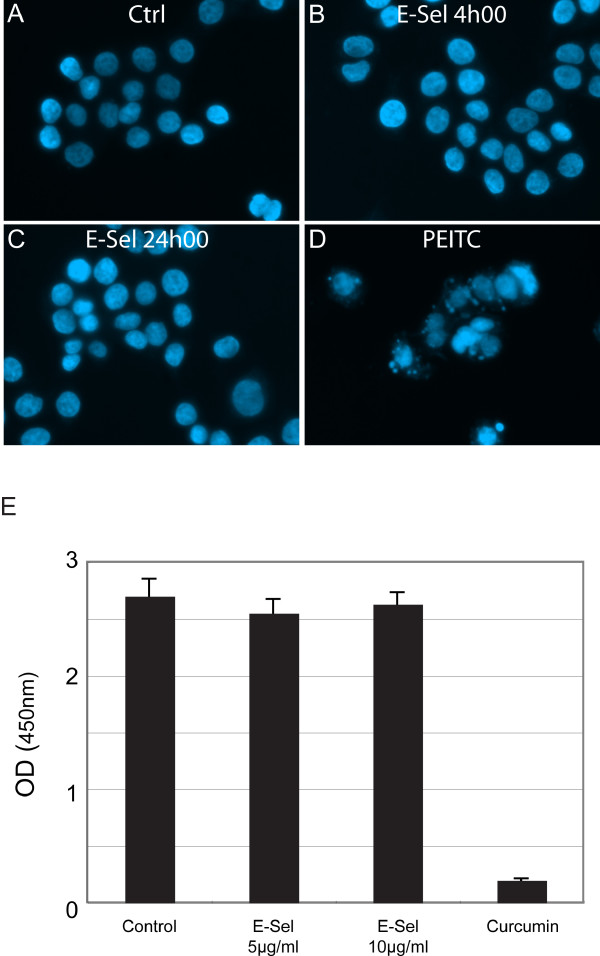
Cell survival has been ascertained by using the WST-1 assay and by evaluating the activation of the PI3 kinase/NFκB survival axis. Apoptosis has been assayed by determining DNA fragmentation by Hoechst staining and by measuring cleavage of caspases-8 and -3. DR3 isoforms have been identified by PCR. For more precise quantification, targeted PCR reactions were carried out, and the amplified products were analyzed by automated chip-based microcapillary electrophoresis on an Agilent 2100 Bioanalyzer instrument.
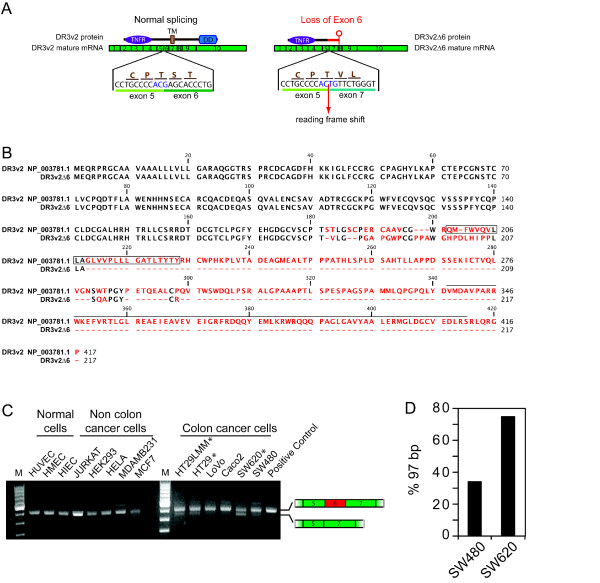
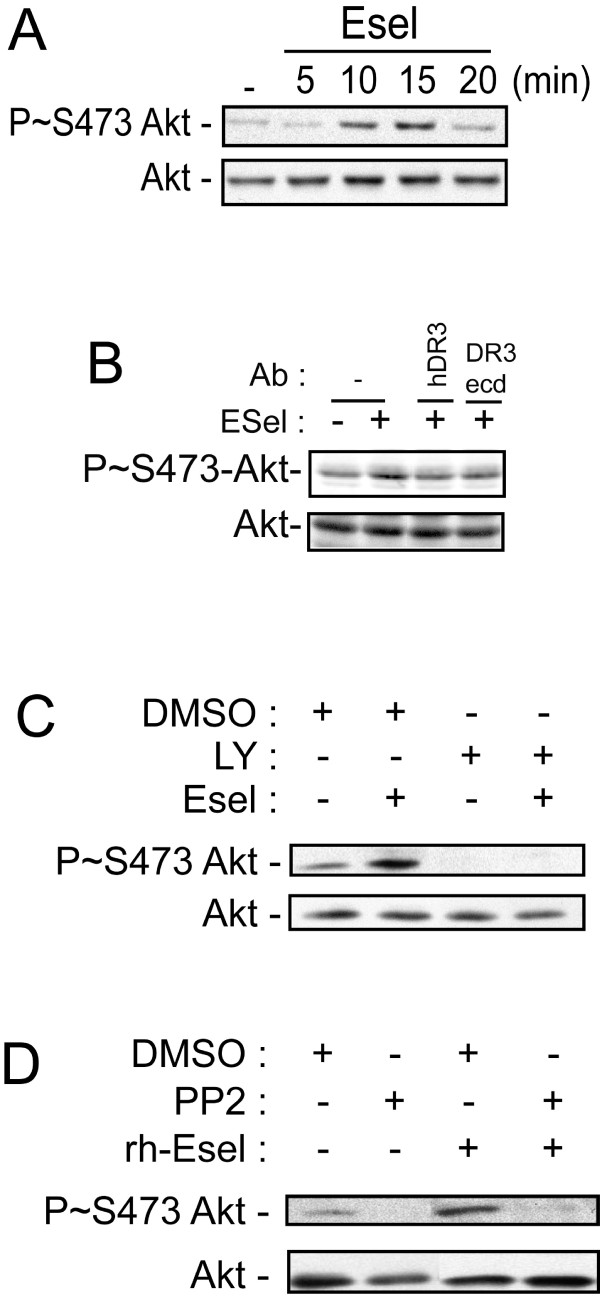
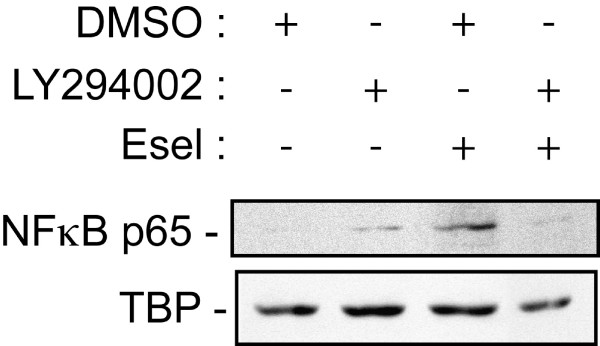
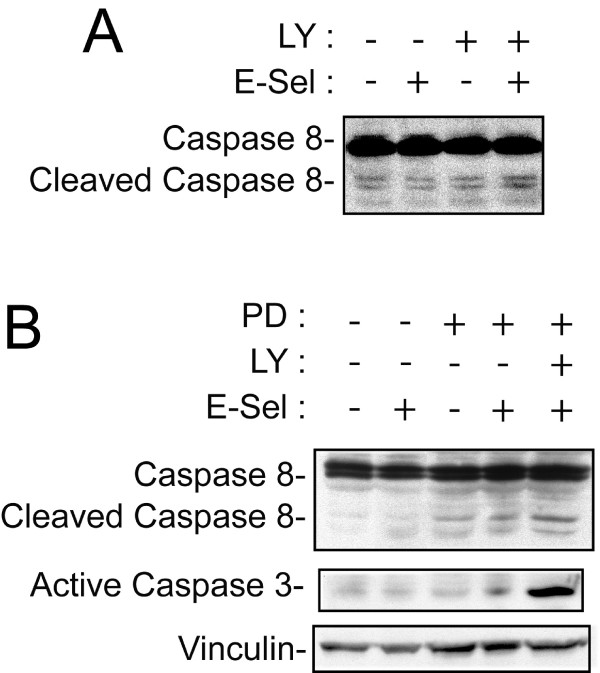
Interaction between DR3-expressing HT29 colon carcinoma cells and E-selectin induces the activation of the PI3K/Akt pathway. Moreover, p65/RelA, the anti-apoptotic subunit of NFκB, is rapidly translocated to the nucleus in response to E-selectin. This translocation is impaired by the PI3K inhibitor LY294002. Furthermore, inhibition of the PI3K/Akt pathway increases the cleavage of caspase 8 in colon cancer cells treated with E-selectin and this effect is still further increased when both ERK and PI3K pathways are concomitantly inhibited. Intriguingly, metastatic colon cancer cell lines such as HT29 and SW620 express higher levels of a splice variant of DR3 that has no trans-membrane domain and no death domain.
Colon cancer cells acquire an increased capacity to survive via the activation of the PI3K/NFκB pathway following the stimulation of DR3 by E-selectin. Generation of a DR3 splice variant devoid of death domain can further contribute to protect against apoptosis.
循环癌细胞的漏出是转移扩散的关键事件,它是由癌细胞与内皮细胞黏附引发的。这需要内皮细胞上的黏附受体与癌细胞上的相应受体相互作用。值得注意的是,E-选择素是一种主要的内皮黏附受体,与转移性结肠癌细胞上的死亡受体-3(DR3)相互作用。这种相互作用通过促进癌细胞与内皮细胞的黏附和触发癌细胞中促迁移的 p38 和促存活的 ERK 通路的激活,赋予结肠癌细胞转移特性。在本研究中,我们进一步研究了 E-选择素激活 DR3 下游通路如何为结肠癌细胞提供生存优势的机制。
通过 WST-1 测定和评估 PI3 激酶/NFκB 存活轴的激活来确定细胞存活。通过 Hoechst 染色测定 DNA 片段化和测定半胱天冬酶-8 和 -3 的裂解来检测凋亡。通过 PCR 鉴定 DR3 同工型。为了更精确的定量,进行了靶向 PCR 反应,并在 Agilent 2100 Bioanalyzer 仪器上通过基于芯片的自动毛细管电泳分析扩增产物。
表达 DR3 的 HT29 结肠癌细胞与 E-选择素的相互作用诱导 PI3K/Akt 通路的激活。此外,p65/RelA,NFκB 的抗凋亡亚基,迅速易位到细胞核中,以响应 E-选择素。这种易位被 PI3K 抑制剂 LY294002 所阻断。此外,抑制 PI3K/Akt 通路增加了用 E-选择素处理的结肠癌细胞中半胱天冬酶-8 的裂解,当同时抑制 ERK 和 PI3K 通路时,这种作用进一步增加。有趣的是,转移性结肠癌细胞系,如 HT29 和 SW620,表达更高水平的缺乏跨膜域和死亡域的 DR3 剪接变体。
DR3 由 E-选择素刺激后,结肠癌细胞通过激活 PI3K/NFκB 通路获得了增加的存活能力。缺乏死亡域的 DR3 剪接变体的产生可以进一步有助于防止细胞凋亡。