Reddy Ambavaram Vijaya Bhaskar, Venugopal Nandigam, Madhavi Gajulapalle
Department of Chemistry, Sri Venkateswara University, Tirupati, A.P.-517502, India.
J Pharm Anal. 2013 Dec;3(6):394-401. doi: 10.1016/j.jpha.2013.04.008. Epub 2013 May 23.
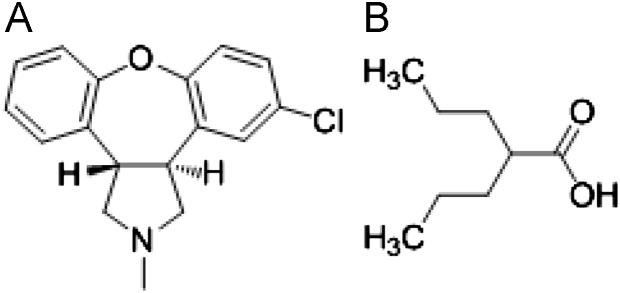
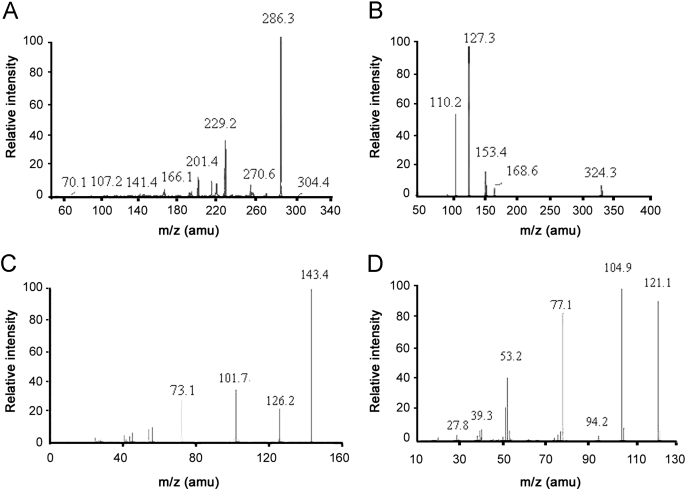
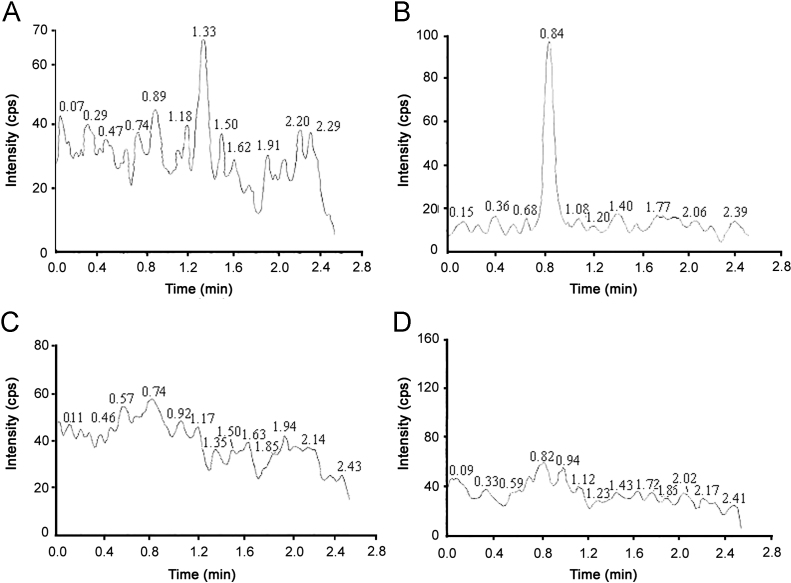
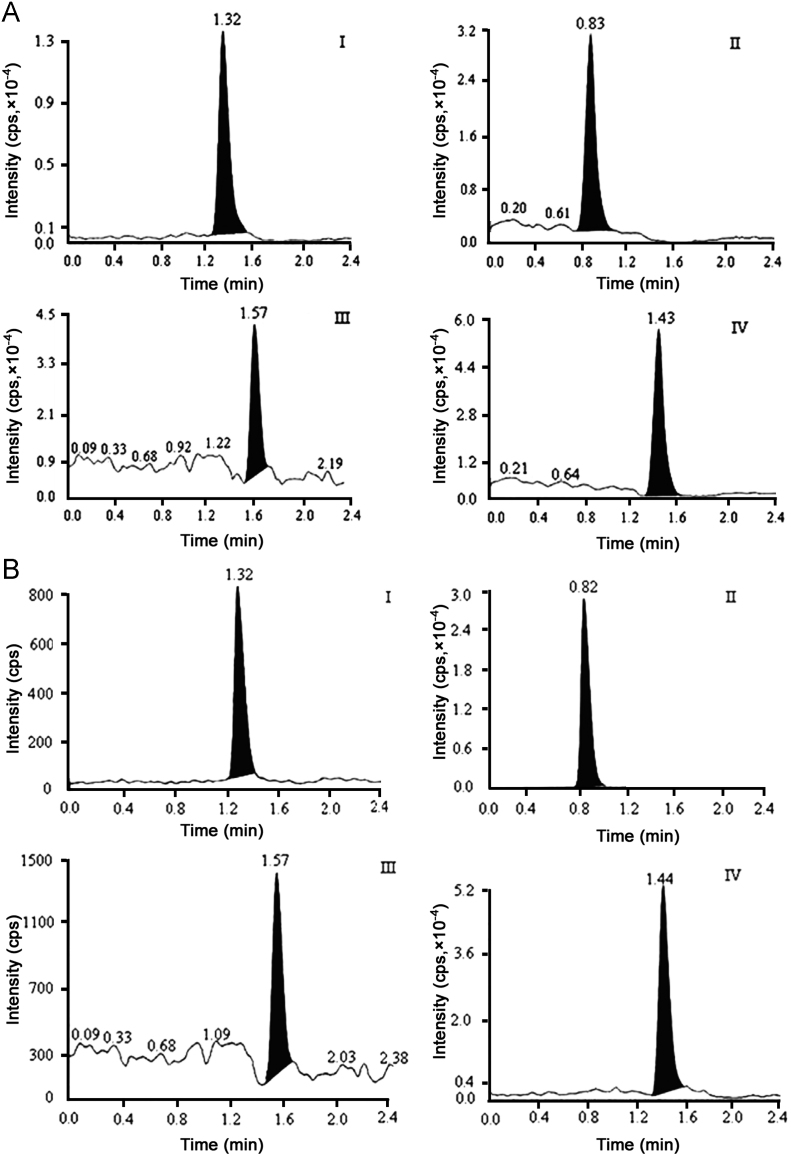
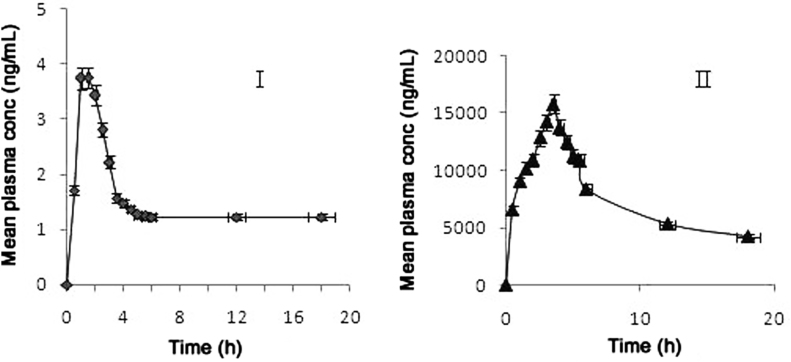
Combination of asenapine with valproic acid received regulatory approval for acute treatment of schizophrenia and maniac episodes of bipolar disorders. A simple LC-MS/MS method was developed and validated for simultaneous quantification of asenapine and valproic acid in human plasma. Internal standards were added to 300 μL of plasma sample prior to liquid-liquid extraction using methyl tertiary butyl ether (MTBE). Chromatographic separation was achieved on Phenomenex C18 column (50 mm×4.6 mm, 5 μm) in isocratic mode at 40 °C. The mobile phase used was 10 mM ammonium formate-acetonitrile (5:95, v/v) at a constant flow rate of 0.8 mL/min monitored on triple quadrupole mass spectrometer, operating in the multiple reaction monitoring (MRM) mode. The injection volume used for LC-MS/MS analysis was 15 μL and the run time was 2.5 min. These low run time and small injection volume suggest the high efficiency of the proposed method. The method was validated over the concentration range of 0.1-10.02 ng/mL and 10-20,000 ng/mL for asenapine and valproic acid respectively. The method recoveries of asenapine (81.33%), valproic acid (81.70%), gliclazide (78.45%) and benzoic acid (79.73) from spiked plasma samples were consistent and reproducible. The application of this method was demonstrated by a pharmacokinetic study in 8 healthy male volunteers with 5 mg asenapine and 250 mg valproic acid administration.
阿塞那平与丙戊酸联合用药已获得监管部门批准,用于精神分裂症的急性治疗以及双相情感障碍的躁狂发作。开发并验证了一种简单的液相色谱-串联质谱法,用于同时定量测定人血浆中的阿塞那平与丙戊酸。在使用甲基叔丁基醚(MTBE)进行液-液萃取之前,向300 μL血浆样品中加入内标。在40℃下,于Phenomenex C18柱(50 mm×4.6 mm,5 μm)上采用等度模式进行色谱分离。所用流动相为10 mM甲酸铵-乙腈(5:95,v/v),以0.8 mL/min的恒定流速流动,在三重四极杆质谱仪上进行监测,采用多反应监测(MRM)模式运行。用于液相色谱-串联质谱分析的进样体积为15 μL,运行时间为2.5 min。这些较短的运行时间和较小的进样体积表明该方法效率很高。该方法分别在0.1 - 10.02 ng/mL和10 - 20,000 ng/mL的浓度范围内对阿塞那平与丙戊酸进行了验证。从加标血浆样品中回收阿塞那平(81.33%)、丙戊酸(81.70%)、格列齐特(78.45%)和苯甲酸(79.73%)的方法回收率具有一致性和可重复性。在8名健康男性志愿者中进行的一项药代动力学研究,给予5 mg阿塞那平与250 mg丙戊酸,证明了该方法的应用。