Bertuzzi A S, Walsh A M, Sheehan J J, Cotter P D, Crispie F, McSweeney P L H, Kilcawley K N, Rea M C
Teagasc Food Research Centre, Moorepark, Fermoy, County Cork, Ireland.
School of Food and Nutritional Science, University College Cork, Cork, Ireland.
mSystems. 2018 Jan 30;3(1). doi: 10.1128/mSystems.00211-17. eCollection 2018 Jan-Feb.
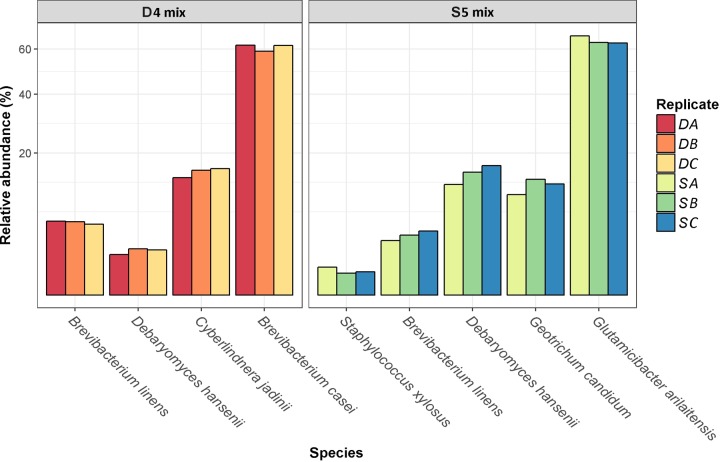
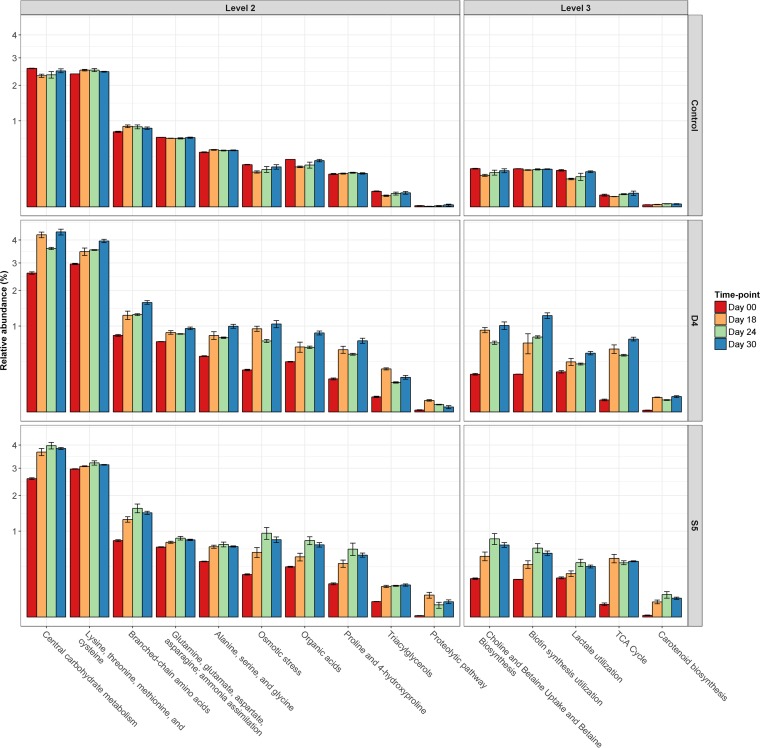
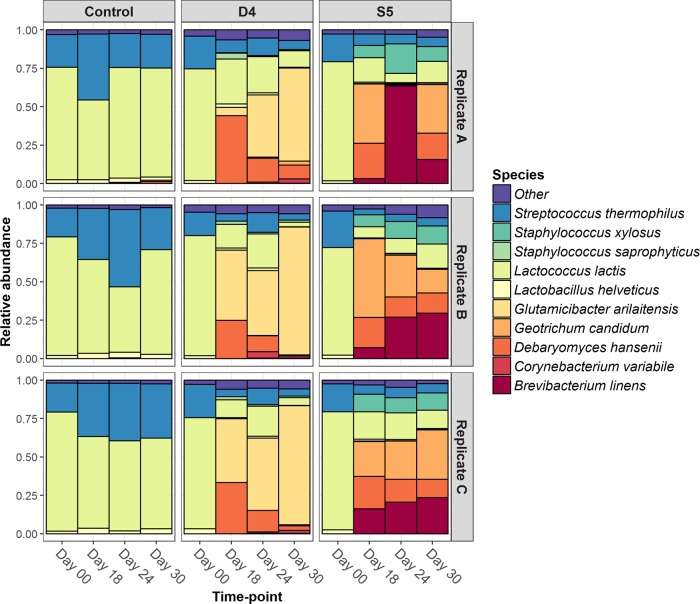
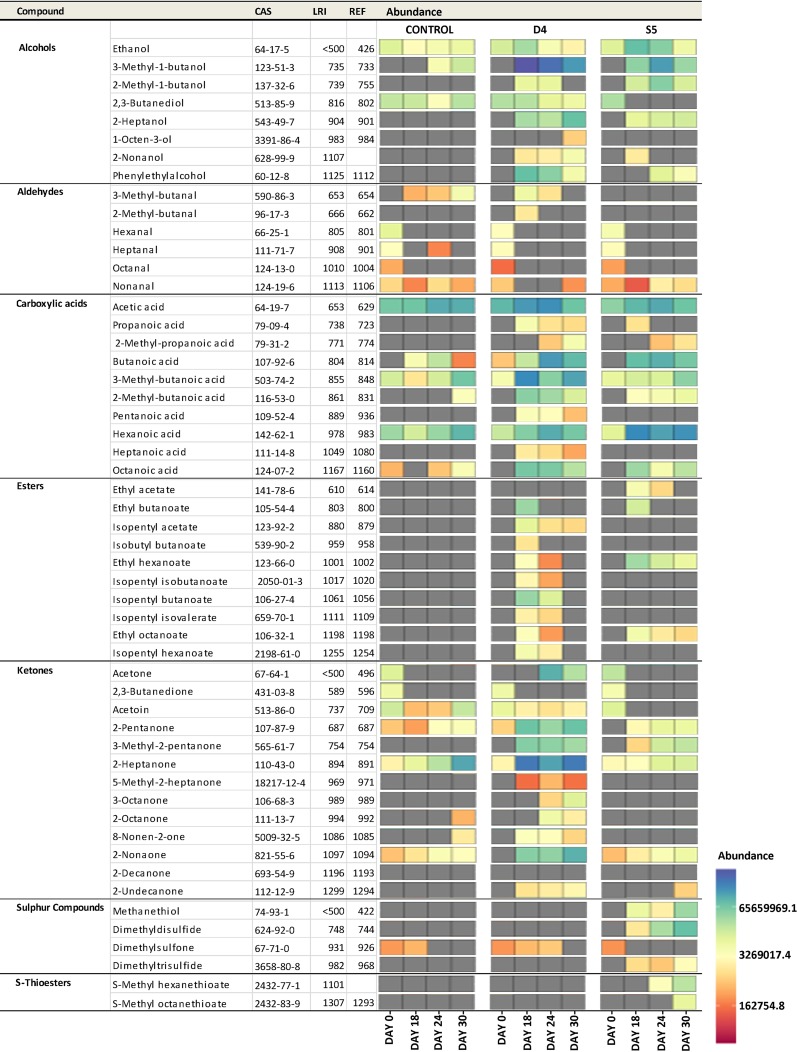
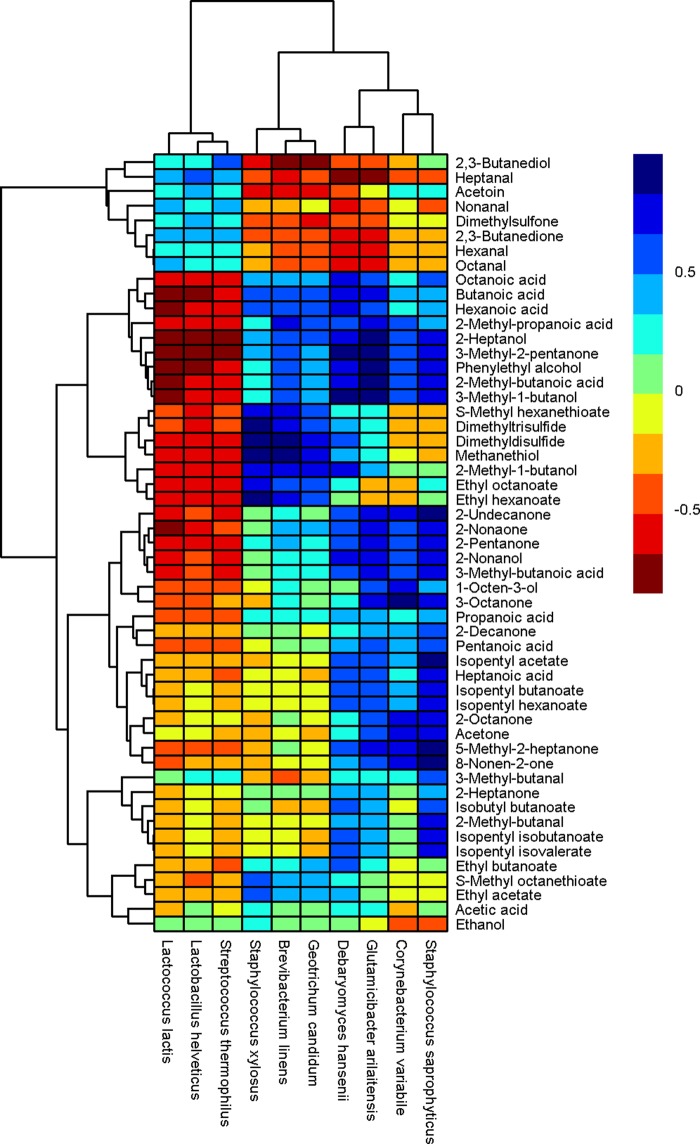
In this study, a young Cheddar curd was used to produce two types of surface-ripened cheese, using two commercial smear-culture mixes of yeasts and bacteria. Whole-metagenome shotgun sequencing was used to screen the microbial population within the smear-culture mixes and on the cheese surface, with comparisons of microorganisms at both the species and the strain level. The use of two smear mixes resulted in the development of distinct microbiotas on the surfaces of the two test cheeses. In one case, most of the species inoculated on the cheese established themselves successfully on the surface during ripening, while in the other, some of the species inoculated were not detected during ripening and the most dominant bacterial species, , was not a constituent of the culture mix. Generally, yeast species, such as and , were dominant during the first stage of ripening but were overtaken by bacterial species, such as and , in the later stages. Using correlation analysis, it was possible to associate individual microorganisms with volatile compounds detected by gas chromatography-mass spectrometry in the cheese surface. Specifically, correlated with the production of alcohols and carboxylic acids, with alcohols, carboxylic acids and ketones, and and with sulfur compounds. In addition, metagenomic sequencing was used to analyze the metabolic potential of the microbial populations on the surfaces of the test cheeses, revealing a high relative abundance of metagenomic clusters associated with the modification of color, variation of pH, and flavor development. Fermented foods, in particular, surface-ripened cheese, represent a model to explain the metabolic interactions which regulate microbial succession in complex environments. This study explains the role of individual species in a heterogeneous microbial environment, i.e., the exterior of surface-ripened cheese. Through whole-metagenome shotgun sequencing, it was possible to investigate the metabolic potential of the resident microorganisms and show how variations in the microbial populations influence important aspects of cheese ripening, especially flavor development. Overall, in addition to providing fundamental insights, this research has considerable industrial relevance relating to the production of fermented food with specific qualities.
在本研究中,使用年轻的切达干酪凝乳,采用两种商业化的酵母和细菌涂抹培养混合物,制作了两种类型的表面成熟奶酪。采用全基因组鸟枪法测序,对涂抹培养混合物以及奶酪表面的微生物群落进行筛选,并在物种和菌株水平上对微生物进行比较。使用两种涂抹混合物导致两种测试奶酪表面形成了不同的微生物群。在一种情况下,接种在奶酪上的大多数物种在成熟过程中成功地在表面定植,而在另一种情况下,接种的一些物种在成熟过程中未被检测到,并且最主要的细菌物种不是培养混合物的成分。一般来说,酵母物种,如 和 ,在成熟的第一阶段占主导地位,但在后期被细菌物种,如 和 ,所取代。通过相关性分析,能够将单个微生物与气相色谱 - 质谱法在奶酪表面检测到的挥发性化合物联系起来。具体而言, 与醇类和羧酸的产生相关, 与醇类、羧酸和酮类相关, 以及 与含硫化合物相关。此外,宏基因组测序用于分析测试奶酪表面微生物群落的代谢潜力,揭示了与颜色改变、pH值变化和风味形成相关的宏基因组簇的相对丰度较高。发酵食品,特别是表面成熟奶酪,可以作为一个模型来解释调节复杂环境中微生物演替的代谢相互作用。本研究解释了单个物种在异质微生物环境(即表面成熟奶酪的外部)中的作用。通过全基因组鸟枪法测序,能够研究常驻微生物的代谢潜力,并展示微生物群落的变化如何影响奶酪成熟的重要方面,特别是风味形成。总体而言,除了提供基础见解外,本研究对于生产具有特定品质的发酵食品具有相当大的工业相关性。